
Blog: Make Change Fun And Easy
Be. Act. Change. The Powerful Formula To Be An Effective ChangeMaker. Paul Rivera & Samia Bano
Be. Act. Change. The Powerful Formula To Be An Effective ChangeMaker. Paul Rivera & Samia Bano
Want to make a real, meaningful impact in the world? Not sure what's holding you back? Need to better define your goals and create a #roadmaptosuccess?
Want to know how to #stayoncourse when life throws curveballs?
Listen now to this interview with Dr. Paul Rivera, co-founder of BeActChange, to understand how you can #unleashyourpotential to #transformyourworld and beyond.
Dr. Paul reveals:
-- The powerful "Be.Act.Change." formula to #changeyourlife and #changetheworld
-- How to let go of “Safe” to follow your purpose and #followyourdreams
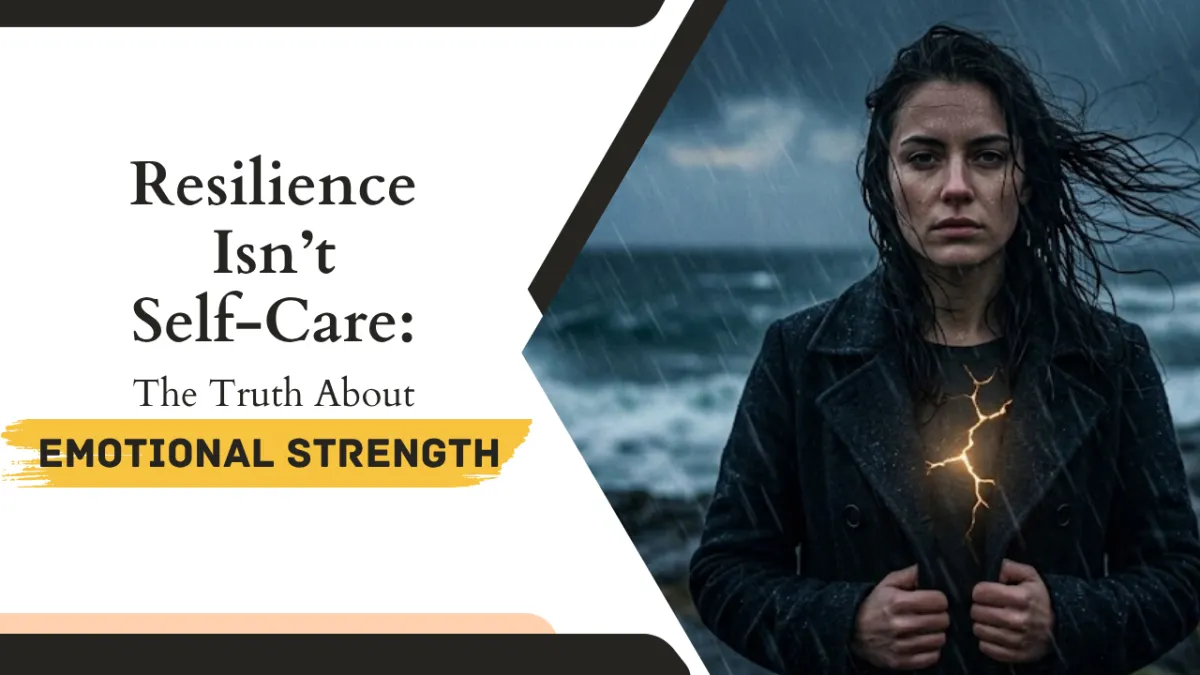
-- The huge difference between maintaining positivity and building true resilience!
-- How to Take #SmallSteps to Create Massive Change
-- The real tools that help us #riseagain after life knocks us down
-- And so much more!
Connect with Dr. Paul now at: https://beactchange.com/
To Book your Free HAPPINESS 101 EXPLORATION CALL with Samia, click: https://my.timetrade.com/book/JX9XJ
#FearOfFailure #AbundanceMindset #ScarcityMindset #PersonalGrowth #SpiritualAwakening #EmotionalHealing #Resilience #MindsetShift #SelfDiscovery #PurposeDrivenLife #HumanConnection #HealingJourney #InnerHealing #CollectiveHealing #AuthenticLiving #SelfAwareness #MentalHealthAwareness #ImmigrantStories #ConsciousLiving #Breathwork #SettingBoundaries #SelfLoveJourney #Empowerment #Transformation #liveyourbestlife #followyourpassion #followyourbliss #followyourvision #followyourcalling #smallstepsmatter #smallstepsbigchange #smallstepsbigimpact #smallstepsbigchanges #smallstepsbigwins #riseup #unleashyourstrength #transformyourlife
Here's the audio version of this episode:
Transcript Automatically Generated
Hello, Salaam, Shalom, Namaste, Sat Sri Akal, Aloha, Holah, Ciao, Bonjour, Buna, Privet, Mabuhay, and Dzień Dobry…
It's really, really good to be with you again. And I know you will be so happy and pleased you have joined us today because you have a very cool guest with us.
And it's Dr. Paul. And Dr. Paul, please help me.
Rivera.
Thank you.
Thank you so much.
I was practicing your last name's pronunciation and then I was like, Oh no, wait, I think I lost it...
It happens. It is not a problem. I'm so, so glad and so honored to be here.
I'm going to add some more to your list. I love the polyglot greetings. So in Mayan, in the south of Mexico, where my mom's side of the family is from, you say ma'alub kin, which means good sun or good day to you.
But my favorite one, I saw that you had aloha in your list. My favorite one is actually from the island of Fiji. In Hawaii, where they say aloha, aloha is this very beautiful greeting, right?
And it can have multiple meanings and it's very soft. In Fiji, the word they use is bula instead of aloha. But they don't say it like a Hawaiian would say aloha.
It's a much more emphatic greeting. It's loud. It's bula.
So everywhere you go in Fiji, you have these huge Polynesian guys who are greeting you with bula everywhere. I love it. I think it's one of my favorite greetings in the world.
Oh, that's wonderful. I love it. I love it.
I'll see if I can incorporate that into the-
You have a good list going already. I just like to throw things out there.
Yes, I love it. Thank you so much, Dr. Paul. Actually, Dr. Paul, before I ask you any other questions, please tell us more about who you are and what you do.
Dr. Paulʼs Identity
Lovely. Thank you. So please call me Paul.
You don't have to call me Dr. Paul. My students call me Dr. Paul and that's more than plenty. I think of myself, one of the best pieces of advice that I've ever gotten, and I don't think it was advice, it was sort of life philosophy.
Somebody said to me that the quality of your life is measured by the stories you can tell. And I love that, that really impacted me, because I think of myself as a storyteller. Anybody who knows me, anybody who you talk to about me will tell you that Paul can tell you stories all day long.
And I, that makes me actually really happy, you know, that people think of me that way. And when I say stories, you know, it's stories about empathy and authenticity, stories that inspire people, that empower people, you know, all of that. So I also think of myself, though, as something of a translator, in a lot of ways, and not so much in language necessarily, which could be also, you know, I speak several languages and I love that.
But I've discovered over my, over the course of my life that one of my biggest skills that I bring to any situation is the ability to take something that is complex and make it understandable, make it comprehensible, implementable, and actionable, you know, and that's something that's really nice. I would say the third part of who I am, I hope, my aspiration, I think, is to be seen as a kind of healer, in the sense, you know, it's a long story in my life, but I have always felt that I was a frustrated doctor, medical doctor. I always thought that I should have gone into the medical field.
And I do love that and I do have a kind of calling to that. But I know now that that's not really what healing means for me. And I know that healing for me is more about creating the spaces for and with others, for their healing to occur.
And that the healing, the wounds and the trauma that I am meant to work with are not really physical ones, right? They're the ones that live inside of us. And so that's how I think of myself.
When you ask me, who am I? I think of myself as a storyteller, a translator, and someone who aspires to be a healer, right? And so how do I do that?
I have this business, as you mentioned. I'm the co-founder of BeActChange with my spouse, with my wife, Esther. And she and I bring very different skill sets to this.
And to be honest, we think of our work more as a movement. Like, it's a business and it does sustain us and it makes us money. But really, the reason that we do it is because we see it as a movement, right?
A movement towards positivity for people to be who they are, to act, to live their lives in accordance, and through that, change the world, right? So that's where BeActChange comes from. And so in that process, I see myself as someone who guides, someone who supports, someone who gets people started on that path, you know?
And whereas my wife, she's the visionary, she's the one, Esther's the one who sees the person and not only helps them see what their massive potential could be, but how to make it feel tangible to them, how to make it see, how to make them see that those steps are there. But for me, it's really about the person at the ground level, meeting the person where they are right now and having them understand that there is within them an incredible and beautiful superpower, that you and I and each of us have this incredible talent and this incredible gift that we bring to the world. And that once we start to acknowledge that within ourselves, what we start to see is the clarity that we've looked for all this time, that little voice that's been inside of us all this time, telling us that there's something else in your life, that there's something more.
That voice starts to make so much more sense and we start to listen to that voice. And then we start to see each other, we start to see each other for the superpowers that we each bring. And so, my ultimate mission is to help us create a kind of collective power where it's not just, it's certainly not you against me, it's you and I together and how can we uplift each other and together create more than what either of us individually could ever possibly do.
So, it's a big picture summary, but that's, if you ask me who I am, that's how I feel.
Cultural Connections
I love it, I love it. Thank you so much for sharing that. I learned so much just listening to you sharing that.
When you were talking about how you feel like you're a translator, you know, that's a word that I think of when I think of myself as well. You didn't say this explicitly, but like for me, one of the ways that I have been a translator for a long time, I mean, maybe for even as long as I can remember being alive and being able to think for myself, because not only do I also speak multiple languages, but the reason that I speak multiple languages is because my family, my dad's side is from India, my mom's from Pakistan, and I've actually lived in both countries, and then I've also lived in the Middle East for a few years. Now I'm living here in America.
So even from the time that I was born, I was sort of like very cross-cultural in the sense of, at the very least, I had these two parts of my family, India and Pakistan. And if you know anything about the history of India and Pakistan, those two countries don't get along very well. And my parents, after they got married, they, we tried to make it work.
I mean, that's why we first, you know, lived in one place and we lived in the other place. And then it was just, you know, unfortunately, the international politics was having an impact on our personal family life and had to literally leave both of our home countries to try and find neutral ground elsewhere. But even when we were trying to make it in India and Pakistan, I felt like I was constantly translating for my Indian family, things about my Pakistani family and think to my Pakistani family about my Indian family.
And, you know, now here in America, there's even more layers of translations that I'm doing all the time. When I step out into the community or even at home, because especially with my mom, you know, she still struggles a lot of times to understand American culture, American ways of thinking, etc. And so translating in all of these different contexts, including literally doing language translations, is so much a part of who I am that it's actually, but I never, like if I was to introduce myself, that's not necessarily something that I would have immediately brought up, but I love that you did.
Hey, thanks for tuning in to this episode. Hope you're getting value out of it. For your information, this episode has been sponsored by The Happiness 101 Program.
Are you a ChangeMaker, coach, trainer or healer? Are chains of fear holding you back from making the impact and income you desire? Using a unique combination of positive psychology and the spiritual wisdom of our most effective ChangeMakers, The Happiness 101 Program helps you break through your limiting beliefs and manifest the abundance and success you desire with fun and ease.
Interested? Book a free Happiness 101 Exploration Call with me, your happiness expert, Samia Bano. Just use my online calendar link in the show notes.
Now back to the show.
It's a fascinating thing. You know, I think it's an inherent facet of the immigrant experience for sure. You know, my mom is from Mexico and my dad is from El Salvador.
They met in the United States. And my mom actually, they moved when she was fairly young. My mom was 15 when they moved and my mom's in her 70s now.
And still, there are aspects of US American culture that make no sense to her and that I have to explain to her. And it's an ongoing process, you know. And your story is one that I am strangely familiar with because one of my best friends since I was about 12 years old and to this day, I texted her just this morning, actually, has the same story.
Her mom is Pakistani, her dad is Indian, and the same thing, they... Before she was born, they spent time in Karachi, they spent time in Delhi, and it just wasn't working, and they had to... It wasn't right, it wasn't safe.
They couldn't build their lives together, and they ended up in the United States, along with a good amount of their family. So, I have great memories. I'm, you know, as a Latino, I'm brown enough that I could be, you know, a few years ago, I spent about four months in Islamabad.
And once I let my beard grow, nobody really can tell that I'm not from there. And so I remember one of my friends, her name is Seema, one of her uncles, and I was, one of the first times I went to their house, I must have been maybe 12 or 13 years old, I went to their house and her uncle pulled me aside and he asked me what was my favorite song from Nusrat Fateh Alikan. And I looked at him at that time with the blank face.
And I remember her saying, uncle, he's not Indian, he's not Pakistani. And he looked at me like, really? Well, you're gonna learn now.
So he sat me down and he made me listen to Nusrat for about four hours. Which has impacted me to this day, because whenever I hear that music now, I think of them. But I also think about my time in graduate school, because that was my go-to music when I was studying.
And it's wonderful music to have in the background, the melodic aspects and the syncopation that's there and all of that. So I have a great love for it as you were telling your story.
Oh, my gosh, it's like, you know, I think Latino people and us, Desi people, we have some kind of deep connection, because it's not just that, you know, our skin colors match, but there's so much more to it. People are constantly here in America thinking, I might be Latina.
Right.
Even beyond just the looks though, you know, when you begin to delve into the cultures that we have, there's like so much that we share in terms of our understanding about family, importance of family, our love for food, our love for spicy food.
Yes. I remember once, not to go off, I told you I'm a storyteller, so this is what you get. I remember once I was at her house, and her mom asked me to help make a salad, and the salad had cucumber on it, and her aunt was there, so her mom's sister was there, and I cut off the top of the cucumber and I rub on the top, and her auntie says, why are you doing that?
I said, well, that's how my grandmother taught me, but why? At the same time, we both said, because if you don't do it, the cucumber will be bitter. And it was so interesting.
Imagine my grandmother, my grandmother is from Mexico, and that's how I grew up, that's how you cut a cucumber. And this lady from from Karachi had the exact same experience and the exact same belief about the cucumber. And so it's amazing as you travel around the world, it blows my mind now to see the divisions in the world and the hatred in the world and all of that, and to see how much of that comes from one fear and how much of it comes from just an unwillingness to engage with people on a human to human level.
You know, I've had the good fortune to travel to well over a hundred countries in my life. And I find it so beautiful how much actually connects us and how much actually brings us together. And really to find those things that are tearing us apart, it feels like so much work.
It's so much easier to just see people as human and to accept them as who they are and see how when we talk about this brotherhood of humanity and this one family of humanity, you see that people doesn't matter where they are, what their situation is. You can feel that people radiate the same energy and people seek the same goodness in their lives, you know, and how much better the world could be if we engaged with people on that level, you know.
Overcoming Fear
Yes. What is a fear that you see people struggling with because of which we can't connect in that way?
You know, at this point in my life, it's interesting to, I have trouble seeing it from my perspective at this point, right? Like, I'm someone, I've dedicated my life to building, as I said, this collective power, right? And we built this collective power by seeing each other's, by seeing each other's superpowers and uplifting us that way.
And that's the lens through which I see the world and the lens through which I see people, you know? And so I think that that fear comes from what I'm going to call a scarcity mindset, right? So, you know, this idea that whatever you have or whatever you gain comes at my expense, that you winning means that you're taking from me or that you improving your life somehow is going to risk, put at risk the quality of my life.
And I think that that's what we see, you know, and I say that, for example, from the immigrant perspective in the United States and a lot of the challenges that come with being an immigrant in the United States and how we're perceived and all of that, I think comes from a scarcity mentality. As you look around in the world, you see the wars and the fighting and the importance that people place on borders and border lines. And, you know, I think a lot of that comes from an inability to see that, you know what, we actually are very, very all very similar.
We're fighting at the end of the day for the same thing. And if we could find a way to adopt a mentality that is much more encompassing, that it's expansive and understanding that, you know, the energy of the universe is infinite. And if we could together tap into it, all of us would be better off.
Yeah. Yeah. Scarcity mindset underlying the fear that keeps us apart.
Yeah. I definitely see that a lot as well. And I'm wondering, you know, recently I've been having many conversations about fear because it just keeps happening that so many of the problems that we're facing, that we're dealing with, you dig a little bit and you realize, oh, there's fear underneath that for people.
And then we start to look at the fear itself. It's like, what are you afraid of? And so much of it comes down to like, if I may think about it or talk about the fear of scarcity, and just slightly different way, it's like an issue of safety, you know?
That you don't feel safe, that you have enough, you don't, you know, or other kinds of not being enough. You know, there's, you know, and it's all, and you know, even when you're scared, you're not enough. It's like, oh, if I'm not enough, if I don't have enough, then I can't keep myself safe, I can't keep my family safe, you know?
So a lot of it, you know, for me, I've been realizing has been coming down to like issues of safety. Yeah. And, yeah, so then, you know, the question becomes, well, how do we help ourselves begin to feel more safe?
Yes. I love this. I love where this is going.
So, so many of the people that come to, come to me, come to us are people who by any definition are successful. They're, they are almost always fairly well-educated people. They're professionals.
They're, they are good at what they do in their jobs, and they're known and respected for that and in their families as well. And yet, all of them come to us because there is a dissatisfaction. There's an, there's an unfulfillment within them that nags at them, that chews at them, that little voice doesn’t go away.
And as we start to uncover the layers with these clients of what is your superpower? What is this unique gift that you bring to the world? What's this unique problem-solving approach that you bring to the world?
What do you see as your personal mission, vision, and purpose? And what are the things that help you advance that? And what are the things that hold you back or knock you off course?
And all of that, as we start to unpack all of that, these folks have a oftentimes a very clear idea of what it is that they want, what it is that they see, what it is that they want to feel in their lives. And why don't they do it? Why don't they do it?
Right. This is where the fear comes in and the scarcity comes in. So the things we hear so often are one, and it takes a while for them to actually say this because it's a weird thing to think about.
But one is a tremendous fear of losing what you've built, losing what you've had, especially, and these happen to be most of the folks that we work with, but especially those of us who come from immigrant backgrounds. We know what it's like to come from nothing. We know what it's like to start over again.
To be at this point in your life where you feel like what you're going to do is take a risk. That the biggest risk is, as you say, the safety of myself, the safety of my family, and my putting at risk everything that I've built, and that is scary to people. But it creates a scarcity mindset.
You built it before, you can build it again. When you're thinking about it, when you're looking towards the future, I'm going to interject here. There was a time where I was wanting to leave a very safe, secure job that I had.
I'm a former US diplomat. I was, it's a very nice job. It's a prestigious job.
It was well paid and lots of benefits and all of that, but it did not align with me. And I wanted to leave that job, actually from, almost from the day that I started it, I wanted to leave that job. And my wife, bless her, every day said, quit your job.
Leave your job, leave your job, leave your job. And I couldn't, I couldn't, right? I have a wife, I have two children, I have two older children that also rely on me.
And it would have been the first time in my life since I was 14 years old, that I left a job without having another job already. Like I was going to leave the job and see what the world had for me. And it was terrifying.
I was stuck for months, right? And she had a business trip to Panama. And it happened to be right around my birthday.
She said, why don't you just come with me? We just just clear your head a little bit and whatever. So I said, fine, I go.
And we're celebrating my birthday at this hotel. And there was a guy there who was at the bar and we invite him over. We said, hey, he was by himself.
He said, you want to join us? It's Paul's birthday. We're celebrating.
So we had a couple of drinks. We had a good time. We started to get to know the guy.
He was a fascinating guy. He was an engineer who built airplane runways. So that was his specialty in engineering.
He built runways. Super fascinating guy. And he told us all about his life and all of that.
After a while, everybody leaves and it's just us and him. And he gets really quiet for a second. We hadn't told him anything about my situation.
He gets really quiet for a second and he looks at us. He says, you know what I've learned in my life? He said, if you have the knowledge and you have the skill, the only risk is not taking the leap.
And it's like he was speaking to my soul, you know what I mean? People come into your life for a reason all the time, you know? And he was knowing nothing about me.
He addressed with pinpoint accuracy exactly the fear that I had inside of me. You know, and so, so much of this process is starting to, one, listen to those little voices inside of you, but to really start to unpack that, you know, you know what? I do, I have this, I bring this, this is what I can do.
It was, that was a pivotal moment in my life, you know, when I suddenly said, you know what? You are right. It's not the first time I've had to do something scary.
I can do this. And I know that there's something better on the other side for me. And that is 100% what happened.
I look back on it now and I think what a mistake it would have been for me to have given in to that scarcity mindset and that fear. You know, when I look at my life now, which is to me defined by abundance in every possible definition of abundance, you know, to have missed out on this that I have today would have been a tragedy.
Yes. You know, as you were sharing your story, Dr. Paul, it made me think about…
I wonder if this is a struggle that men have struggled with more. And also, like, not just men anymore, though. Anyone who feels the responsibility of being a provider, not just for themselves, but also for their families.
And, you know, historically, it used to be that this was the role that men took on. And now, of course, with things changing more and more, women find themselves in that situation, too. But, you know, especially like when I think about...
You triggered a memory of a conversation I was having with my dad a few years ago when we had this person from Pakistan, a young man at that time, he was. He came here and our family sort of, you know, took him under our wing and we were trying to help him out in various ways, figure out how he could basically start earning a living and, you know, get settled here because then he has to provide for his family back in Pakistan. 29 strong family… family of 29 strong people, you know.
And, you know, by that time, I was already doing my happiness coaching, training work that I do now. And so my approach with my clients is always, hey, let's look at how you're going to be the most happy in your life, you know, and what's that going to take? And then, you know, if you need to make plans to make that happen, let's make plans to make that happen.
And that was, you know, like he, this young man that we were trying to help. When he started talking about what he would really love to do, he was like, oh, well, I love art of all different kinds, making art of all different kinds, that I would love to be a photographer. And then we dug a little deeper and be like, what else do you love?
And he's like, I love cars. And maybe I would love to be a mechanic. You know, he was just going through all these different dreams.
And it just so happened that my dad heard some of the conversation that we were having and he held it in for a while. But after a while, we had to sort of intercede because he was like, well, this is all well and good, but you have to be practical. You know, and at some point my dad brought up the fact that this young man had 29 people back in Pakistan who were depending on him, earn a living.
And he was like, you can become an artist, but it might take you years before you're earning any money. And even if you want to become a mechanic, and he currently had no, at that time, no skills as a mechanic.
Yeah.
You know, so it'll take you months of, you know, schooling, education, whatever. So what can you do now? What can you do now?
How can you start earning now? So that was like my dad's focus. And like I, in that moment, you know, like I, from my dad, I felt, you know, this sense of anxiety about, you know, like you have to be responsible.
You're the provider. You have to do whatever it takes. And what makes you happy is like something to think about if you have the luxury to do it.
You know? And I mean, and I mean, I can see the validity in that perspective, but I mean, it can really lead people to lead lives that make them feel very miserable.
Absolutely. Absolutely. So I have multiple thoughts on all of that.
That story is incredibly familiar to me. I've seen that in the Latino community, in the African-American community, all, you know, that story is repeated millions of times. You know, the, actually, as an economist, my dissertation, my PhD thesis was written about the remittances that Salvadorans send back to their home country.
You know, that's, it's a, and at that time, it was almost 20% of El Salvador's gross domestic product was coming from Salvadorans who were living abroad and supporting their families. So it's a massive worldwide phenomenon, right? There's a couple of things.
One is, and our clients come to us with this all the time, change does not happen instantaneously. It's not overnight, right? And so people really, people overestimate what can be done in one year, and people underestimate what can happen in five years.
So, you know, it's about, so people see time as a linear sequence. So they kind of make a plan for one year ahead, which is about all that people can really sort of wrap around their minds, but they make it too ambitious. They get frustrated about a third of the year through, and then everything sort of falls apart.
And what they have is negative reinforcement. What people fail to see is that the small steps that you start taking today add up, they snowball, and within a five year period are exponential, right? So one piece is, I get it, I completely get it.
And our clients come to us with this all the time. I get it. You have a whole village of people who are depending on you, whether they're in your home, whether they're on the other side of the world.
There are people who rely on you. This is why you're the high achiever, right? These are the people that come to us, the people, as I said, they're successful, they bust their butts, and they're the ones that people rely on.
At the same time, the only way that you see the value in continuing to do that without losing your essence, because that's what happens, right? These people wake up and they look in the mirror and they say, I don't know who I am anymore, right? Without losing your essence, is to start taking those small steps.
You know, I've had clients like this. So we've had clients, for example, who one of our clients is a scientist. She works for a large corporation.
She has advanced degrees. She manages a large team, several million dollars under her control. And at the same time, what she wants more than anything is to be a poet, right?
Fine, that's great. But the husband didn't really work. She supported not only her nuclear family, but her extended family and his as well.
And it's the same situation. The pressure for her to just stay and keep grinding was massive. There's no way that she was going to just quit her job and say, I'm gonna become a poet now, right?
But that doesn't mean that you can't join an online poetry community, where you write poems and you share them with each other once a week, right? Where you start finding your group of allies and champions. It doesn't have to be a radical move, but it has to be a little something to ignite that spark, that little flame inside you that gives you that humanity, that over time starts to grow and grow.
And that is really, really important, because that's also part of your resilience tools. It makes you feel good, you know? When life comes, when things happen, you need to have that thing that makes you feel human, that thing that connects you with who you are on the inside, you know?
So I sympathize with that story, and it's such a tough one. But, you know, I think it's not hopeless either, you know?
And yeah, the point that you just made about us overestimating what we can do in one year, but underestimating what can be done in five, I love that. That is such a key insight. And I think you're so right.
I remember when I was in college at UCLA, I was taking a class, and the class was titled The Most Effective Methods of Creating Social Change. And this has actually been one of the most impactful classes I've taken in my entire life. And this was actually one of the lessons that our teacher was also teaching us, that, you know, he actually had us do an exercise where he made us imagine, actually not even five years to start, because for a lot of people, even that time frame, when you start to think about it, it feels like impossible.
And so he actually had us begin to imagine it was 30 years later. And he was like, now, imagine you are living the life that you would love to live, where you're creating massive, positive change in the world. And think about what is that change and how you're making it.
And, you know, in 30 years, even if your goal was, I want to become president, you could make it happen in 30 years. So, but he had to, like, to crack open us, to crack open our, even ability to imagine ourselves without fear, he had to first take us 30 years ahead. And then it was like, okay, now, let's bring it back to closer and closer and closer timelines until by the time you were done with our class.
One of the missions that we had or goals that we had was to create a blueprint for creating social change. And that included creating a vision for a concrete kind of organization or movement that we could get going with. And, but yeah, to start with the longer term thinking and not to try to do too much at once.
You know, I feel like you're inside of my head because that's actually one of the main techniques that we use. We used exactly, we don't do 30, we do 20, but now you're making me think maybe 30. But we do, we have people do that exercise of imagine what does the world that you want look like 20 years from now?
And in order to start moving towards that, what has to happen 10 years from now? I was sort of identifying milestones at the 10 year mark, at the five year mark, at the one year mark. But as you said, it starts with that vision that you have right now.
And that's really important, unpacking that vision from now and seeing that that 20, that 30 is not only an idea, but that's, it is real, it's out there.
Yes, and you know, one of the most amazing things also about taking this approach was the 30 year vision. At some point, we went back to it. And our professor, he was like, okay, look at all the different aspects of what you say you're doing and feeling that makes this vision happen 30 years from now.
But also, I want to look at it now from the lens of what of these things could you be doing right now with ease? You know, and so when I learned about your organization, BeActChange, so that was so brilliant and on point because it's like when we started to look at what could I be doing right now from that vision, there were like so many things. It's like, oh, I'm doing this right now, I could be doing this right now, I could be doing this right now.
And a lot of it came down to, oh, just start being the person that we want to be, and then start acting as a person who wants to act, so then you can create the change that you want to create.
Resilience Tools
It's really fascinating for us. I'm glad that you picked up on that, because that means the messaging is working. But one of the things that we talk about with people is, we start with the B part, right?
Who are you and what do you see yourself as and all of that? And then there's the change part, like envisioning the future and what it could be. Lots of people get to both of those.
There's a lot of B and there's a lot of visualization of change, and the hardest thing is to get people to take that first step into act. That's the hardest thing because that's what connects the two. That's the bridge that takes you from being to that big change that you envision, and it's tough.
And the other thing I will say is that, as I mentioned before, every year around New Year's, everybody wants to give you their New Year's resolution, right? What's your resolution for the New Year? And the statistic is that by March, almost everyone has given up on their New Year's resolutions.
Why? One, they overestimated what they could do for the year, right? But the second thing is that life gets in the way.
Things happen. Things happen to knock you off your path. So I would say that a big part of what we do also involves resilience.
And not so much creating, but identifying for each of us, what is it that picks you up when you're down, right? When you've been knocked down before, how did you find the strength inside of you to stand up again and keep going? And then incorporating those things into your daily life, making them part of your routine.
And that is really big. And I say this, it's a funny way, I think, of saying something that people say off handed pretty often, right? So like, folks say you should do yoga, or you should exercise, or you should journal, or something like that.
And the problem is that when you're in crisis, it's really hard to use those tools to pick yourself up again, right? And it's about incorporating whatever it is. Like for me, yoga is a tragedy.
I do not, yoga does not calm me down. It doesn't get me in touch with anything. It's a nice stretch, but that's all it is for me, right?
For me, it's actually breathwork. I've become actually a breathwork facilitator. And for me, it has been this gorgeous, beautiful thing that really helps me, one, calm down and be grounded.
And at the same time, it helps me connect to the higher energy. And that's that has been magical and transformational for me. And in fact, magical is the wrong word, because it's so real that I understand it.
And it's not even magical anymore, you know? But it's that it's incorporating whatever your tool is into your day, into your day to day so that you have that built up resilience so that when life happens and there's always something, there's sick children, there's sick parents, flat tires, things happen at work and all of these things that are just trying to knock you off your path, you have your resilience tools and they're ready to keep you focused on your path and your direction so that you can go from being, keep acting and make that change.
Gosh, you just brought up something that I'm super passionate about because, you know, as a happiness expert, this is something I work on so much in my work as well and on myself. And, you know, what I find is that people don't, in the context of my framework that I use, I find that people don't really understand the difference between what I would call our positive mood skills and resilience. Because, you know, when people say things like, okay, you know, do yoga or, you know, go to the spa or whatever it is that we think of in context of self-care, self-love, do these kinds of things.
Well, those are great for maintenance, you know, those are great things for helping you create and maintain a positive mood when things are going okay and you want to make them, have them get better and better. And, you know, like for me, it's all related to having a positive mood where you're feeling good, you're thinking in a positive manner and so forth. But resilience is something different because resilience is something that you require when you have a fall, when you have a traumatic experience, when something goes wrong and you have to pick yourself back up, you have to recover.
And so the things that you do to maintain yourself, your positivity, when things are okay or going well, those are not the things you need to help you with the recovery process when something out of the ordinary has happened. And so for me, you know, resiliency is a skill. It's its own.
It's its own skill that you have to really think about. And I love that you shared the example of breathwork. And by the way, you know, I won't let you say yoga is not your thing, because what?
Yogis invented breathwork.
That's right. No, that's absolutely true.
And actually, you know, yoga has this whole it's just, you know, in the Western world, people are not familiar with the true.
I mean, there's so much about yoga, people in the Western world do not understand. They're not familiar with it because they've just turned it into a form of exercise. They're physically focused on just physical fitness.
But actually, yoga.
The subset of learning or discipline within yoga, because there's multiple disciplines within yoga. So one of them is actually literally breathwork. The word in Sanskrit is prayanam.
You know, and prayanam is actually all about, you know, focusing on learning to take control of your breath. And, you know, there's a saying that if you can control your breath, you can control your life. So, you know, I would not claim German to be an expert in breathwork or prayanam by any means, but just being Indian and being from a family that valued yoga, beyond just, you know, physical fitness reasons, we actually studied some basic techniques of prayanam.
And, you know, there's like different techniques to help you achieve different results. There's breathing techniques you use to help you calm down and you need to calm down. There's techniques to help you cool down if you're like physically hot.
Yes.
Physically cool yourself with your breath. There's techniques to actually the one of the breathing techniques. It's like you're doing intense cardio workout.
That's the fact that it has like, you know, in terms of your heart rate will rise and you'll burn so many calories, just breathing, you know, in that specific pattern. So there's like so many different breathing techniques and patterns to help you achieve different goals. It's like a whole sub-discipline of its own.
That's right. And what I will tell you is that it's really fascinating because as you study sort of ancient cultures throughout the world, as you study, for example, the Mayans, which is what I'm most familiar with, is that's my heritage. They also had a practice of a kind of breathwork.
I happen to be calling you from Santo Domingo in the Dominican Republic, and here also the Taino Indians here had a kind of practice that was also a kind of breathwork and all of that. And what's fascinating is that when I talk to my people, I get a lot of resistance to the idea of breathwork and yoga and all of these things, because what they tell me is that that's for white people. That's a white people thing, you know?
And I go out of my way saying, you're absolutely wrong. You're completely wrong. This is actually ours.
All of our people created this, you know? This is our ancestral knowledge that's been forgotten and arguably systematically taken from us. But it's something that is incumbent on us to revive it, because when you do it, you understand how natural and how familiar it is to you.
And not to mention, tremendously beneficial. So for anyone out there who might be a doubter, I promise you, this is for you.
Yes. Oh gosh. Okay.
I've been keeping an eye on the clock. So I have to ask you at least one more question.
Okay.
Let me begin to wrap up. And that is because resilience is such a key, such a key aspect of what enables us to be act change. Can you share with me another resilience tool or factor that we can share with our audience?
I will tell you. And it's a hard one. It's a hard one.
I would say that one of the biggest resilience tools that I have developed for myself is setting clear boundaries. And it's really hard because in my case, the boundary that I have to set is with my mother, who it's a very complicated relationship with a lot of history that's there and all of that. But I understand that my well-being and my family's well-being is directly impacted by the degree to which I am able to keep her at arm's length.
And a boundary that in English anyway, in the English language, we distinguish between limits and boundaries, right? And so your limit is a binary, right? It's either yes or no.
It's either a behavior that I will undertake or won't, or a behavior that I will tolerate or won't. Whereas a boundary is a fence, right? The boundary is the fence line that I put around myself or around my family, and the beauty of a fence is that it has a gate.
And you choose who comes inside of the boundary and who will remain outside of the boundary and when. Because there are people who might not be able to come into your boundary now, but they might in the future, right? And so those boundaries are really hard.
And I will say it because I know it's true in your culture as well, that our cultures don't believe in boundaries. You're in this family, everybody knows your business, everybody's entitled to say something about your business. And those boundaries are really, really difficult for you to enforce, to say, that's not a behavior I'm willing to tolerate anymore.
I don't want to, and all of us have different ones. I know that, for example, my wife with her family has boundaries about what are the discussions that we're willing to have, what kind of conversations, and how do we speak about people and their aspirations and their dreams. That's a hard boundary to put on people, because in our culture, in Latin American culture, one of the things, like if you look at Latin American memes on the internet and all of that, there's so much about chisme, and chisme means gossip, gossip culture, right?
And it's a terrible thing. It's so hurtful. It's so, it's by definition meant to be hurtful.
You know, even when it's said in a different voice, the purpose of it is to be hurtful, you know? So why would we want to engage in that? And so setting that kind of boundaries about what we're willing to tolerate and all of that, it is something that directly not only affects your mental health on a day-to-day basis, but it also creates that resilience for you because you already have started creating that habit of making that buffer, of having a little bit of a shield, you know?
So when things come to a head, when life comes to knock you down, you already have this practice. And we see it because oftentimes people are afraid to place boundaries because it only occurs to them to place the boundary in the moment of a crisis. When you create that boundary or that limit in the moment of a crisis, it's going to come across very harshly, right?
It's going to come across very rough because you're in that crisis moment and you don't have the capacity necessarily to communicate it in the softest or most gentle way. Whereas when you start to create that boundary from a place of goodness, you are able to communicate it differently. You're able to socialize it over time such that everyone begins to respect it.
And that's when it becomes really a resilience tool. Everyone knows this about you. They start to respect that boundary that you've created, and it becomes a huge, huge tool in your resilience arsenal.
And there are whole courses that you can take about limits and boundaries. And it's just, you know, all I can give you is sort of the tip of the iceberg, but it is such an important tool. It's really tough, but, you know, it yields incredible mental health, emotional, the anxiety level that you experience goes down so much once you start to see people respecting the limits and boundaries that you've put forth.
Yes.
Oh, gosh. I need to have to force myself for us to wrap up for today. Oh, gosh.
You just keep bringing up things. I want to follow up on it. We need to wrap up for now.
Oh, gosh. Okay. So, do you have any last words that you would like to share for right now?
I've been saying all along, you know, and it bears repeating. If, you know, if there's one thing, and this is probably the only thing, but if there's one good thing that I've learned from the political candidates out there, it's that when you repeat something often enough, people start to believe it. And here's what I want people to start to believe.
I want people to start to believe that there is a superpower within you, that that is a special gift from the universe that you bring to this world, that we are all best off when we see that superpower in each other, when we uplift each other and we create the collective impact that makes our world, our society, our homes, our families better, better, better.
Thank you for that. Thank you so much. And for my last reminder, I will remind our audience, to all of you who are listening, please make sure you check the show notes because I will be dropping Dr. Paul's links in there so you can connect with them and continue to learn and get the help and support you need to be a change.
And until we connect next time, I wish you lots and lots of peace and joy.
Want to check out even more amazing episodes?
All of our episodes are archived on our vlog page :)





OUR PEACE OF MIND GUARANTEE
Because we’re committed to doing onto others what we would have them do onto us, all our programs come with a Peace of Mind Guarantee.
We know you’re going to love our programs. We’re so confident about the quality of our programs we’ll give you full access risk-free for 30 days. If you decide the course isn’t right for you, then you may request a full refund up to 30 days after your purchase.
Copyright © 2018 Academy Of Thriving