
Blog: Make Change Fun And Easy
From Grief to Grace: Finding Healing After Deep Loss. Marcia Earhart & Samia Bano
From Grief to Grace: Finding Healing After Deep Loss. Marcia Earhart & Samia Bano
What if your pain isn’t the end of your story—but the beginning of your healing?
Listen now to this interview with Marcia Earhart, a #certifiedcoach in #grief, #trauma, brain, and #mentalhealth as well as a HeartSync Minister. Marcia brings a unique blend of professional expertise and personal experience as she shares how grief, trauma, and #faith can lead you back to life, love, and peace.
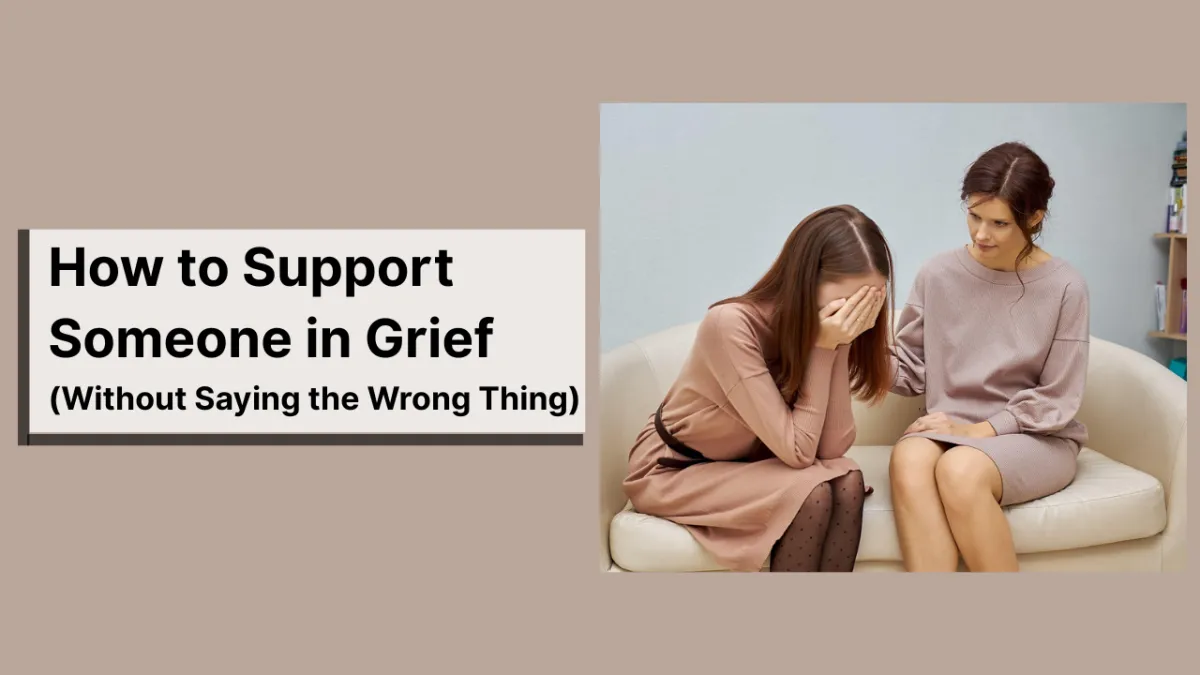
Note: If you're trying to support someone in grief and are not sure what to say or do, this episode is a must-listen for you!
Having endured seventeen personal losses by age eighteen and #heartbreak as a mother, Marcia’s resilience is more than inspirational—it’s a powerful invitation for others to #choosehope. Marcia offers practical, #compassionatesupport and guidance on how to truly show up for others in times of grief. Marcia’s spiritually grounded methods help others honor their pain while gently guiding them toward #healing, #growth, and renewed #joy, all rooted in both faith and effective #brainhealth strategies.
Learn more and connect with Marcia at: www.thesterlingrosesanctuary.us
To Book your Free HAPPINESS 101 EXPLORATION CALL with Samia, click: https://my.timetrade.com/book/JX9XJ
#GriefHealing #TraumaHealing #MentalHealthAwareness #EmotionalHealing #SpiritualHealing #FaithAndHealing #HealingJourney #YouAreNotAlone #InnerHealing #SelfHealing #GriefSupport #MentalHealthMatters #HeartHealing #PersonalGrowth #HealingFromWithin #ForgivenessJourney #HopeAfterLoss #MindBodySpirit #SpiritualAwakening
Here's the audio version of this episode:
Transcript Automatically Generated
SAMIA: Hello, Salaam, Shalom, Namaste, Sat Sri Akal, Aloha, Holah, Ciao, Bonjour, Buna, Privet, Mabuhay, and Dzień Dobry…
It's so good to be with you guys again.
And I know you're going to be so glad that you have joined us today because we have a very cool and a very special guest with us today. And that is Marcia Earhart, who is a certified coach in grief, trauma, brain, and mental health, as well as a HeartSync minister and author. I'm so happy to have you with us, Marcia. Welcome.
MARCIA: Thank you so much for having me, sweetie. I'm looking forward to our time together.
SAMIA: Yes, me too. And Marcia, please tell us more about who you are and what you do. Well, I'm the co-founder of the Sterling Rose Sanctuary, which is a 501c3 nonprofit. We help people breathe again, move again, live again from trauma and grief. And as a life grief trauma, mental health, brain coach, and a HeartSync minister, we love to come alongside of individuals and bring them in the place of healing as they were created to be. So our desire is to see all people healed, because we have a mental health crisis. And in scripture, God tells us that he came to heal all people. So we want all people to be healed so that they can live the way they were created to live.
SAMIA: You just, even in those few words, you shared so much, so much that I want to dig into. Just the idea of, you know, grief and the need for us to heal from the grief and the mental health impact. I mean, absolutely, we have a mental health crisis going on. And the fact that people are not in control of their mental health and well-being. I agree with you is one of the biggest hurdles in our way in terms of being able to live with peace and harmony, whether it's in the context of our relationship with ourselves or our relationship with others.
MARCIA: Yes. And our community, because if we are not healed, then not only do we not, we're not able to function within ourselves and within the relationships, but also within our community.
SAMIA: Yes. I was definitely thinking about our wider communities. In fact, that we are a part of not just our personal relationships. When I talk about others, because it's sort of like the relationships that we have with our wider society, with our wider community, it's all in some ways a reflection of our inner self. And the turmoil that we face on the inside, there's no way it gets held in. You know, it definitely reverberates in different ways into the communities at large. And even like, I'm thinking about, you know, the people in the highest positions of power in our world. And I look at so many of those public figures, those leaders, supposed to be leaders of our world, of our communities. And I see so much in them that is in need of healing.
MARCIA: Amen. Yes. Yes. Well, you know, in the way we were created, we were never created really to have the kind of pain and loss that we go through. And for me, I'm a faith believing person. And so my relationship with Jesus really is what secures me. But he's my companion. He has compassion for me. I lost my son, my first son, in 2014. And honestly, sweetie, I would not have made it if he had not entered that pain with me and wept with me. And so he was my constant companion, but showing compassion, holding me, loving me, and breathing life back into me and healing me stitch by stitch. And I think it's a culture we are not comfortable with grief and trauma. It's all around us. It's all around us. We need to be comfortable with it, and we need to know how to be present. If we're not in grief and trauma, we need to be present with other people in grief and trauma.
SAMIA: Yes.
MARCIA: To love well, to hold space, to listen actively to what is being said, not to give them a platitude. That is not helpful, not to tell them comments like, well, I can understand your pain. No, you can't. What you need to say is, I know you're hurting and I'm here with you. First of all, don't try and align yourself with their pain. You're not them. And it doesn't really matter the losses any of us endure in the sense of, I can't attach my loss to your loss. What I can do is bring my compassion, be empathetic to you. And I don't need to compare our losses either. People love to compare. It's just like when you're pregnant with a child, everybody wants to tell you their pregnancy story. And they go, oh my gosh, this is what happened. And I'm like, oh my goodness, everybody should not do that. So we need to be careful not to do a comparison. And to know that there's seasons of lament. And when I say that, we're going to groan for things to be restored the way it was meant to be. But we have tools that we can use and have accessible to us to work through our own pain, our own losses, so that we are healed. And I believe we can be completely healed. I don't think we have to carry remnants with us.
SAMIA: Yeah, yeah. Again, you said so much that I want to dig deeper into. One of the things you said was that we are not meant to… I'm forgetting the exact words you used. But something about we're not meant to experience or...
MARCIA: We were never created for this kind of loss and grace. I mean, when we go back to the creation of the world, it was created in perfection. So therefore, it was perfect. We're wanting that which is not in existence. That's why for us, as we look and we go, Jesus came for us because he said that he was taking on the manship of humanity so that he could relate to us. I honestly don't know how I'd be here today if he didn't do that. Based on the traumas I've had in my own life and the losses.
SAMIA: Yeah. So you're saying that these kinds of experiences of pain and loss and trauma were not meant to be a part of our lives, but they are now. And so now we have to figure out, so now we're on a journey of figuring out how we not only go for them, cope with them, but actually heal from them, and it is possible for us to heal. And I'm with you on that. I'm with you on, it is possible for us to heal.
MARCIA: Well, it is, and it goes back to when we're grieving. Sweetie, we have a choice whether we choose to grieve from the tree of death or the tree of life. So the tree of death is or the negative thoughts, the fractures and the failures and the fabricated lies that we believe that keep us recycling some very negative patterns in our life. It puts us in a fight syndrome. It keeps us finding fault. All the things that are just birth negativity. Whereas if we grieve with or if we choose the tree of life in our grief, then we are looking for not just things of ourselves, but we look to our father. We look for the fruit that can come from the new birthing of the beauty out of the ashes. So to say, we can look for that fortification, for that redemption, because see, we're promised all that. It's a matter of whether we choose to first believe it and then receive it, because there's two sides of that. Whatever I believe here, quite often I start receiving here. And the soul is where toxicity comes in. If I'm doing a lot of negative stuff, it's going into my body and then I'm going to have physical ailments. Because the body keeps the score. So if I'm not dealing healthily with my pain, with my trauma, this is where mental health becomes a problem. Then mentally, I'm having a breakdown. Physically I'm having a breakdown. Emotionally, I'm having a breakdown. And it can even be spiritually. I'm having a breakdown.
SAMIA: Yes, and actually what I've been finding for myself, especially in the last few years since I've been working more on getting more in touch with my own spirituality and so forth, is actually, then what I used to think about as primarily a mental health challenge is in some ways actually only surface level mental health. The deeper challenge is actually a spiritual challenge, you know? And so it's like weather, and of course both things are very much connected. So we can work on our mental health and it improves our spiritual health, but we can also work on our spiritual health and improve our mental health.
MARCIA: So and it is tied in. So it comes down to one, you know, what do you believe about yourself? And after what you believe about yourself, then you're operating out of what you believe about yourself. Then it comes down to not only what do you believe about yourself, but what do you believe about others? Then you operate out of that system of beliefs as well. So, you know, to me, we have to have truth. And nobody wants absolute truth anymore because we don't like that. But there is an absolute truth. So we have to have absolute truth at the definition of our core beliefs. Therefore, if we have that and we keep returning to that, then we continue to heal because we're speaking the truth over the lies that we've been believing and that are being spoken into our heads and possibly that we're reading.
SAMIA: Yeah. And to have like that truth, knowing that truth sort of functions like that anchor that we need, that we can keep coming back to. It's one of my sister's favorite questions. And when she thinks about and speaks about questions of faith, she talks about how the essence of faith is trust. And then she's like, well, what do you have trust in? And it's like not just an all or none question. It's like there is depth of experience in the context of trust. You can have varying degrees of trust in things and people and beliefs and ideas. And so it's like, well, what do you have trust in? And where is the deepest trust that can hold you steady, particularly in moments of trauma and grief and other life challenges?
MARCIA: Well, I believe that trauma and grief expose faulty thinking. It can if we let it. So if you have a belief system, and all of a sudden you're in a trauma period or grieving, and then we're questioned with that moment, and this is where it kind of bubbles up, and you can see, wow, that's faulty thinking. And I've either, I've got a choice again, whether I choose to keep walking in the faulty thinking, or I'm willing to have it replaced with truth.
SAMIA: I really like that perspective, Marcia. I really like that perspective. Yeah, because, you know, I'm also more and more convinced that our essential nature is, you know, a nature of joy and happiness and love. And so any time we are not feeling that, we are sort of disconnecting from our own essence, and that is led by faulty thinking.
MARCIA: And you just hit on what the hearts think. We do heart healing. So heart healing is where we go in and we take the negative emotions in the presence of Father Jesus and Holy Spirit, because the goal for each of us is to return to joy quickly. So if we have a negative emotion, which you just said, then that takes us away from experiencing that joy, that contentment, the rest, that we were created for, because there's an internal battle if we're angry, if we have lack of forgiveness, if we feel unworthy, we feel shame, we feel guilt. They're all negative emotions. However, they're validated that they are emotional parts that need to be validated and affirmed, hey, I am hearing you. But there's one who can bring healing to you because the desire is for you to be able to return to joy and to know your identity even in that emotional part. What were you created for? You weren't created to walk in unforgiveness. You were created to walk in forgiveness by the only one who can give us the ability, which is Jesus. So we have all of these accessibility tools to us, but we are so unaware because we get trapped here and here. And we just think that it is useless. And this is how the rest of my life is going to look. And it's not. I'm here to tell people it's not. I'm a walking example that there is healing.
SAMIA: Yeah. Tell me a little bit more about that. I know you wrote a book recently that came out, and you share some of your experiences in the book.
Tell me a little bit more about your journey that you've been through in terms of the healing and coming out of grief.
MARCIA: Well, the book really is, I would say, how my journey began and where it continued. I started writing kind of from the inception of when my son passed in 2014. It was one of the ways for me to process my pain.
And it was a great way for healing to also be able to take part in my life. Because there's something very valuable about speaking about our trauma, about writing about our trauma. And so I just really was writing to the Lord.
All of this was me writing to the Lord about the pain of losing my 21-year-old son and a tragic car accident. And it was the outcry of a mom that missed, but also knew the promises. I did, I still know the promises that the Lord has given me.
And claiming those promises in the midst of my pain, allowing, and inviting, because here's the reality, the Lord's not going to come in unless we invite him. He doesn't force himself into our lives. He very much is a respecter of us as people.
And so I invited him. And inviting him, what I said is, let me see all the things that you're doing in and around me. And so the book has a lot of photography because the Lord gave me all these amazing pictures.
He showed up in ways when the outcry of my heart was right there. And then there's this beautiful picture displaying just his depth of his love for me because it also connected me back to my Creator in creation. I mean, so I got outside, I was walking the beach at the beach.
SAMIA: I loved it.
MARCIA: So the journey really is about losing. But in that moment, I died.
Who I was died. That person will not ever emerge and we have to give ourselves permission to let that person die. And I don't want that person because my son's not here to be that person.
And it can't be because he's absent. And as we continue the journey down the road, my mother passed and my mother had dementia. So it's the journey of kind of the dementia and just the then, the ending of her life and what that looked like and the ending of what life where it had been, where it was.
It was a letting go of who we were as a family through the traces, letting go of the relationships of my son's friends because they eventually would, most of them would go on an ebb away. And so there's a multitude of losses, but in it, there were also new things that were happening. And again, I had a choice whether I'm going to allow for there to be birthed to the new thing or I'm going to keep looking back and wanting the old thing and try and keep bringing something back they can't.
So then as the journey continued, my youngest son, who was 12 at the time, he started struggling with mental health issues because he wasn't sleeping and we didn't know that. He hadn't slept for a very long time and became very depressed and very suicidal. So we walked through that journey of healing with him.
And at the point when he really had healing, my second son was murdered with his girlfriend from an estranged boyfriend of a year and a half. And so then we embark on what that looks like. To have a child murdered, to have, you know, his life murdered, the ability for him to parent his children, and then the forgiveness for the one who murdered him and her.
Because I've been forgiven, I forgave. I understand the depth of my own forgiveness. And so, I think grief and trauma causes us to be very introspective, it can be.
So, in the book, there are introspective questions for people to be able to ask in their own journey, to personalize things. You know, how am I processing my grief? What am I doing to process it?
What things help me? We give, you know, I give some ideas in there, but also helping them to understand some things they should do. Like, one, you need to have really good boundaries when you're grieving.
Everybody doesn't get invited into your grief story. You get to choose to invite. And just because they're family doesn't mean they get to walk in.
You know, we have to be very careful because everybody cannot handle, much less really be a positive imprint within that story. And so, you want to surround yourself with people who will speak truth and love, but also hold space, be compassionate, be tender, be attentive to your needs, help you, pray for you, show up for you when you need it.
SAMIA: Yeah. Yeah. I take that point, and when we first started speaking, you had also mentioned about the role of other people in our life in the moments of grief.
And you're right. I mean, there's many people who are well-meaning, who are well-intentioned, who may even love us. And they just don't know how to be there with us in a helpful way.
And sometimes, inadvertently, people can give us very bad advice. Yes. Sometimes they can act in ways that are just very unhelpful, even though they're coming with a helpful intention.
And I think one of the aspects of that behavior that I know, I have identified that when I was going through some trauma, it's the forcing part. You know how you said, the Lord never forces himself on us? And that's such a precious aspect of how to really love somebody.
And I think as humans, that is very difficult for us to accept. Because especially like with our close, in some ways, our closest relationships, when you see the one that you love suffering, the instinct many people have is like, I just want to wrap you up in my loving hug, both metaphorically and literally, perhaps. And in that context, they just want to do whatever they can do, but also what they think needs to be done to comfort you, to help you, and so forth.
But oftentimes, what they think you need is not what it is that you need. And so then, there is that element of forcing that can happen. And it's sometimes like when you try to set the boundary of, no, don't do that.
I don't want that the other person can receive it as a rejection of their love. And then, they're like, what do I do now? It's like, you're not letting me love you.
What do I do now? And so it's sort of like difficult on both sides, like difficult for me as the person who is in trauma right now, but it's also challenging for the other person who's trying to love me but doesn't know how.
MARCIA: Right, but I think you raise, I mean, you raise a really great situation because it happens continuously. First of all, most grievers, and depending on what you're grieving, and this is what we try to encourage people that we're talking on the side of those who are the friends and the family members of the person grieving. You can ask them, do you know what is important that you need?
If you do, could you tell us? If not, here are some things that we feel we could do for you, and I'll just give you some examples. We can give you gift cards to go grocery shopping.
We can pay for someone to come clean your house. We can give you a gift card to go get a massage. We can come go pick up your children.
We can bring meals to you. We can get someone to come and do your laundry. It's doing the practical things because the mind is overwhelmed and the body is overwhelmed in grief.
We can be present when you need with quietness. So we tell people if you're going to be stepping in to where the grievers are, you need to be able to make sure that you're able to be present in that space without feeling like you're trying to fix the problem.
SAMIA: Yes.
MARCIA: And what we tell the griever is if you know what you want, make a list and send it out to you, the people that you've invited in your space. And tell them that this may change, but this is where we are today. Because you may not be there tomorrow.
Your list may change tomorrow. And so we try to help educate both sides of this because what I need today or this week may change dramatically next week.
SAMIA: Yes. Yes. And hopefully it will because as you heal, your needs will change and wants will change.
MARCIA: Right. But most important to every griever is someone being present with them to hold space and to really hear them. And so whatever it is that someone is grieving, the person who's there can sit silently and then say, if you feel like sharing anything, just know I'm here to be present for you.
And to the person who is there for the griever, do not ask questions. Do not ask them about their grief. Do not ask them how they're doing.
Obviously, they're not doing well. If you want to ask them a question, you can say, today, from a scale of one to five, one being the worst, five being the best, where are you today? Okay, because that just gives me context, and I just want to be able to be in this space with you.
They don't need to say, now, what's making it a number one, or what's making it a number three? What's making it a number? They don't need to do that.
They're just asking for context so that you know, I'm doing a mental health check on you today, and if you want to talk to me, the door's open, but if not, I know where you are and I got you.
SAMIA: Yeah. I like that. I like that.
And I mean, there's also obviously a little bit of learning that we need to engage in with each other in terms of, well, if I am at a one or if I am at a five, what does that really mean in terms of how I need and want support? Again, if I don't have experience in that context that requires some, there's a bit of a learning curve there. But again, the question, if I need to better understand, the questions are more like, okay, if you know what you need, let me know what I can do.
Rather than trying to get them to tell you the story of why they're feeling what they're feeling or stuff like that.
MARCIA: Well, and the other thing is, like in our book, we have helpful tools for grieving and mourning. There are two different things. Grieving and mourning are not the same.
Grief is internal and mourning is external. So, I mean, you know, we tell people first, they've got to give themselves, the griever has to give themselves permission to grieve. We tell the non-griever, the one who's entering the space, you need to come in with a permission being given to the griever too.
Because if they feel that you're not giving permission, they're going to shut down. And we don't want that. And then, you know, it has to be where I feel we have to dedicate ourselves to renew our mind.
For me, it's renewing it in the Word of God, renewing that mindset. It's having the truth resonate that hope. Because what happens is we can go into a spirit of grief where it is all-consuming, and it takes over our life.
And I did not want that. I did not want my family to walk in that. And then everybody has to personalize their own morning experience.
For whatever you're going through, you have to be able to personalize. But it's yours. So I can't tell you what you need to say or how it needs to be.
You need to be able to do that and have the freedom to express that. And then we talked a little early that selective inviting people into your journey and then finding grief, grieving landscapes. And someone said, what does that mean?
And I said, find the healing places for you. Your healing place is not going to be necessarily the same place you've always thought healing would be. So you have to give yourself room to find where you're, for me, it was going to the beach.
It was being out in nature. It was taking walks with the Lord. It was talking with him.
It was being out there at the, watching just the gloriousness every day of what, you know, well, I didn't go every day, but the days I did, it was just like, wow. Every time just to see the majesticness of it. Because what it did for me was put in perspective, my own pain when I'm seeing such a large, beautiful landscape ahead of me with beauty.
And it just, it was like pouring into me, light. So then you have to create healing conversations. There are some people that I call them the naysayers, and they are not the people you won't walk in beside you because they have everything negative to say.
So having that healing conversation, finding the people that you know, that even if you're sharing, they're not going to jump on the ship and go, yeah, this is the worst thing and you're never gonna get over it. That's not what you want to hear. What you want is, I can hear your pain right now.
And you know, I understand. They're not speaking that you're gonna stay in that place. They're not telling you to move on from that space.
They're saying, I hear you and I understand. So see, that's what we consider a healing conversation. And then we do something in the sanctuary where we help people do scheduled grieving for the griever.
Sometimes they need scheduled grieving because they get so... So we've had some people that in that at certain times of the day, they'll take about 45 minutes. They'll schedule their grieving.
They go into the presence of a space. They put on some music. They enter in, they cry, they grieve.
And then we always say before you come out, always start giving thanks, start speaking thanksgiving and praise because that fills us back up with like, we're not left in a place of death. Yes, we feel that. And we're giving, we're given opportunity to express that.
And then, you know, to be open to the new memories because if we're so busy looking back and we want that, which is behind us, we're not willing to embrace the new things. And I do love this one scripture that says, do you perceive I'm doing a new thing? And I've not only got to perceive it, but then I need to allow the new thing.
SAMIA: Yeah. Yeah.
MARCIA: So, I mean, and then just being thankful. I mean, having thankfulness. If we can start seeing things to be thankful for, it doesn't mean that we don't feel some of that pain and some of that sorrow.
But what it's saying is not everything is horrible. I still have this that I can give thanks for. That might, you know, I can take a breath today.
I can walk today. I have sustenance today.
SAMIA: Yeah.
MARCIA: And then just to practice this, we talked about practice forgiveness because I think a lot of people in grief hold to a lack of forgiveness because they believe that people have failed them in their grieving and they get angry and they personalize and we tell all of our people that are grieving. First of all, it's not personal. Those people only can work out of the context of what they've experienced, what their schema is.
SAMIA: Yeah.
MARCIA: So if they don't have that, then you need to not expect it. Now, and I've asked the question, in your own life before this situation happened, and you were in someone's life, would you have had the context, the empathy, the compassion, to have been present the way you're expecting someone right now? And quite often, I'll get, I don't know that I would have.
And I said, there you go. So give grace, give grace to those people.
SAMIA: Yeah, yeah, now this is, you made me think about one of my people that I know. After she lost her husband, which is obviously, you know, a huge trauma and a period of grieving.
And that was one of the things that... There was this period where she was just so angry at everyone around her because she was like, no one's supporting me, no one's loving me, no one's helping me. And actually, what it was that those of us who were around her, we didn't know what she was needing and wanting and how to help her best.
So there were little things that, you know, eventually, like someone stepped in, they figured out, oh, this is what she needs. And so she was able to get the help and support that she needed in bits and parts. But for a while, it was that not just that we couldn't figure it out, but she couldn't verbalize herself.
MARCIA: Right, right. It took some time for her to figure out what she needed and wanting. It took some time for us to figure out how to be there in support of her in the best way as well.
And it was just, it was a little bit, you know, hard to see her going through that angry phase. Because when you have that kind of anger directed at you, if you're yourself not in a really stable state in terms of your own mental health, and not because, so like, for example, it's like, I'm like, I've not, like, in the moment, like, I haven't lost my husband, right, or anyone else. There's no major trauma that I've experienced in recently.
SAMIA: So in that context, I'm OK. But that doesn't mean that when I'm OK in the sense of just generally having the capacity to be in control of my own happiness and mental health and well-being, like, when someone directs really a lot of their anger and pain, and they say, you, you are at fault. You're doing it wrong.
Do I have the capacity, even though I'm not going through a specific trauma or a moment of grief myself, do I have the capacity nonetheless to be able to hear that from that person and not take it personally and not feel blamed and shamed and just be able to be with that person just in recognition of what they're going through, recognizing that, oh, this is just them hurting. It's not about me. And there's so few of us who actually have that capacity.
MARCIA: Well, and that I work with a lot of people over that because it is about capacity, but it's also understanding, first of all, what is true? If you break down what is true, have you been a good friend? Yes.
Are you showing up? Yes. So let's do have you have you done something to hurt?
No. Okay. So all that's true.
Is she hurting? Yes. Is she angry?
Yes. Is what she's saying and doing intentional to you?
No.
If you do that in your own head and break that down, it makes it so much easier to be present in someone's space, realizing this isn't about me. But you know what? I know she's hurting and I know what it's like to hurt.
Yeah. But she's lashing out. And then everybody doesn't lash out in the hurry.
Some self-punish, some punish everyone else.
SAMIA: That's right. That's right. That's right.
MARCIA: But in the sanctuary, well, there's something else we do. People either process internally or externally.
SAMIA: Yeah.
MARCIA: The internal processors really don't want to sit and have a conversation about everything. The external processor wants to talk about everything. And if an external and internal are together, Lord have mercy because they're gonna...
The internal processor is gonna be ready to take and put this one, the external, against the wall and choke them out because it's like, I don't want to hear anymore.
SAMIA: Yeah.
MARCIA: I'm over it. I'm over it. Go somewhere else and talk.
And again, it's not personal. Yeah. If you're both grieving in the same grief space, and you've got an internal and an external, it can cause conflict.
So we help people know how to deal with that so they can have success in their relationships moving forward. We experienced that in our own family. Two of us were external, two were internal.
And even for someone who's a life coach, grief coach, trauma, all of that, that had the non- I finally had to tell my husband, honey, you need to go talk to someone else. I cannot do this.
I can't. I said, because I'm processing this with Jesus, I cannot listen to every single thing that comes to your mouth and your mind that comes out because it's too much. I'm in my own grief right now.
SAMIA: Yes.
MARCIA: I love you. I want to support you. But I can't do this right here continuously, every now and then.
But continuously is a lot. So we have to find that balance.
It's not what we've been trained to do sadly. So we're training people now.
SAMIA: Yeah. That's right. That's right.
You're so right. Because the family dynamics, like, for example, when someone passes away, I mean, it's common that they have multiple relationships that will be impacted by their passing away. There might be a wife, but there might be parents, there might be children.
MARCIA: And so if there are all of these relationships and they're all grieving, but they have these different needs, that is indeed something to be aware of in terms of like, if I want to step in as a support person, as a friend, of the family and so forth, it's like, okay, who needs what? Where is the different people? And everyone will have like different speeds also.
SAMIA: That's right. That's right.
They're grieving and healing process. And so I guess we just have to meet people where they're at.
MARCIA: Well, we do, but the ones that are grieving, I really want to encourage the ones that are grieving to come together and sit at the table and talk about what we do is we tell people what may bring you healing may trigger me. So we all need to sit down and talk about the triggers for everybody. And then on a scale of one to five, what is most important of each of those?
How triggering is it from one to five? And for the other person, how healing is it from one to five? Does that make sense?
Because we've got two sides of the equation. So then we come to a common ground that, okay, so this is not a major trigger for you. So we can compromise on this one, because this really does evoke healing for these individuals.
But then there may be something else that's extremely triggering to that individual. And it could be over a tradition that's done at birthdays or holiday. So we need to find something new.
What can we do new instead of have this, because that's going to trigger? So we really, that's why we come in, because we kind of mediate the family and help them with tools. And we work in that space with them, because we really, first of all, if everybody's grieving, nobody really has time to think about the other people.
And when I say that quite often, because you're so consumed in your own grief, they're just taking... If someone else responds or reacts in a certain way, it becomes personal again. So then we start becoming walled off.
So we try to come in and prevent that barrier from building.
SAMIA: Right. You know, this was such an important lesson for me to learn. I can't remember the name of the buck.
But basically it was a book on nonviolent communication. And the author was talking about... When we talk about nonviolent communication, one of the things I really appreciated about it was that they say, you know, violence, when you think about violence and communication, we're not talking about physical violence, people hitting each other and so forth.
So then what are you talking about violence in communication? It's about the way you think and judge and then speak, those thoughts and judgements. And when your thoughts and speech is, you know, blaming, it's shaming, criticizing, judging, that's a kind of violence, you know, that we are engaging in and it hurts, right?
And so, there were, so one of the points though, that the author made that really hit me, that I never appreciated enough before, is when you are in pain yourself, and whatever your threshold of too much pain is, when you are in too much pain for you, then it's pretty much impossible for you to hold empathy.
MARCIA: That's right. Compassion for someone else, because you're in too much pain yourself. So you actually have to first work on healing yourself, managing your own pain, reducing your own sense of pain and suffering, and then you can begin to have more empathy and compassion for whoever is around you, or maybe even triggering that response in you and so forth.
But you're bringing it back to capacity. Yeah, because we can't deal without capacity, and we have to have tools to be able to have that ability. And if we don't do anything to help the process, we're going to stay in that place, and it's going to continue to affect us mentally, emotionally, spiritually, and every aspect, which is why we're seeing the mental health crisis at the level we're seeing today.
SAMIA: Yeah, yeah, yeah. And it is a matter of capacity, because I think that was one of the lessons that Jesus came to teach us, right? That, like, for him, he witnessed so much.
People directed so much at him in terms of their anger, their grief, their trauma. But he had the capacity to stay present for them in compassion.
MARCIA: Yes. He had the capacity to not personalize and take on that, you know, like he, like someone might say blaming words to him, but he didn't take on the blame.
Right. But I mean, I think in essence, we have that same ability to be like him if we press into him and if we abide in him and that our peace is from him and it is in us and we resonate from that. So that's where I stayed when my son passed because first of all, I did when was able to hold space for other people.
There were a lot of fallout from my when my son passed because he had such a large community of people that loved him.
SAMIA: Yeah.
MARCIA: And so the Lord gave me the ability to hold space for those people, not because I was already healed, but because I was in his presence and because I was not owning, taking ownership of everybody else's grief, but I was able to hold space and direct them to him and pray for them as they desired or wanted or needed. And I could be that encourager. And we have that same ability that Jesus walked, he talked, he lived.
But what did he do? He went and he spent time with his father. And so we can't do that without going and spending time in the presence and being poured into.
HeartSync is all about building capacity. Do you know the only way we build capacities in the presence of the Lord?
There is no other way. Because he is the one who gives capacity. He is our creator, our maker.
SAMIA: Yes.
MARCIA: So your children, when your children get hurt, who do they run to? Mom. Why?
Because mom's going to nurture, mom's going to... Are you with me? Because they know mom's there.
And then they could still be bleeding out, but they're okay because mom's with them. And then their brother may fall or sister, and they're like, you're okay. Do you see what I'm saying?
They may have the ability. That's how the Father, Son, and Holy Spirit are for us, that when we run to them, I'm right there. And so I can lend my hand out to someone else, even though Jesus is taking care of me.
SAMIA: Yeah. Yeah. Marcia, you keep sharing things that I want to keep digging deeper into.
And we're running out of time, seriously running out of time. Do you have any last thoughts you want to share for right now?
MARCIA: I just want every, all your audience to know there's hope. And it's not just a word that we use, but it is an anchor that we have in this life and that it may seem grim where some of the audience may be right now. They can reach out to us.
We'd love to walk beside them. We can give them resources. They can go to our website.
We have resources for them. Some of the things we talked about today for people who are grieving. But what I want them to know, they're not alone.
That to me is the most profound thing I think they need to walk away with. They're not alone. They have a community of people that are there for them.
But they've got to allow for people to come in that space and not in an invasive way, but just to be present with them. And that through that, there will be greater healing. And where they are today is not where they're going to be tomorrow.
It's not where they're going to be next year. So that those overwhelming moments do not let it define a permanent decision, because it is a temporary place that you're in, even though it may not feel that way. So that is what I want to say, and that they are deeply loved.
And there is one who will bring full healing to them, because it's who he is, and it's what he does.
SAMIA: Thank you so much for that, Marcia. And for my last reminder to our audience, is please make sure you check the show notes, because we will be dropping Marcia's links in there, so you can connect with her and get the help and support you need whenever you're ready for it. And until we connect next time, I just wish you lots and lots of peace and joy.

Want to check out even more amazing episodes?
All of our episodes are archived on our vlog page :)





OUR PEACE OF MIND GUARANTEE
Because we’re committed to doing onto others what we would have them do onto us, all our programs come with a Peace of Mind Guarantee.
We know you’re going to love our programs. We’re so confident about the quality of our programs we’ll give you full access risk-free for 30 days. If you decide the course isn’t right for you, then you may request a full refund up to 30 days after your purchase.
Copyright © 2018 Academy Of Thriving