
Blog: Make Change Fun And Easy
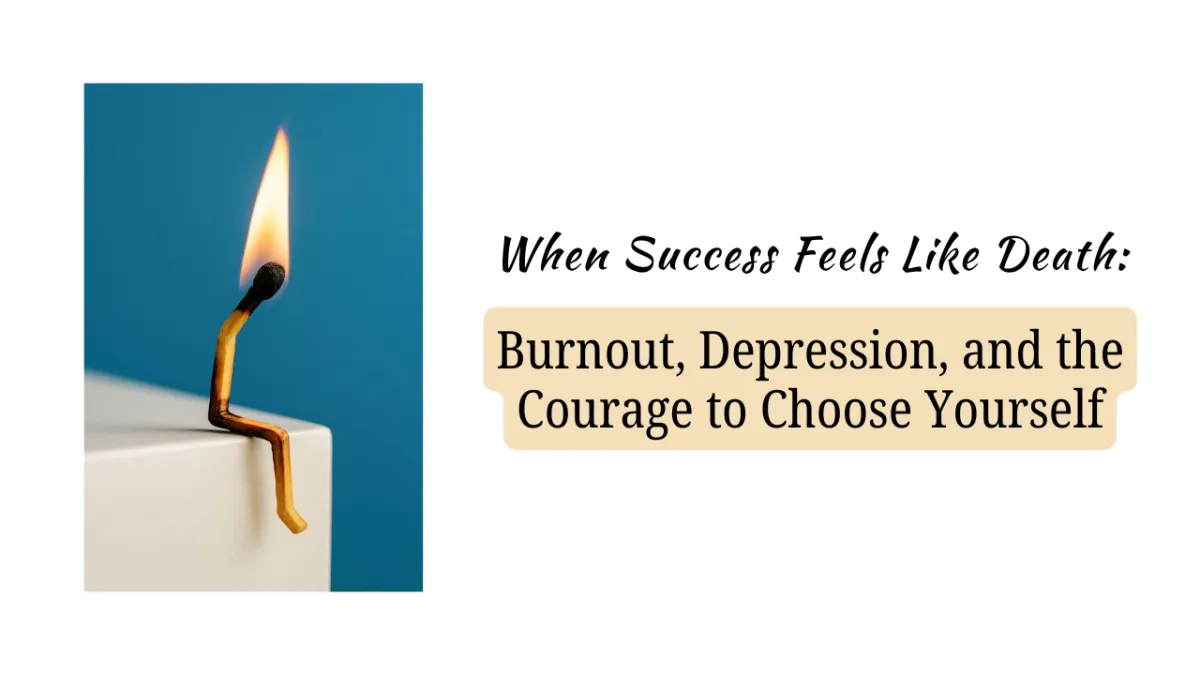
How To Break Free From High-Pressure Expectations & Self-Doubt. Dr. Toni Liu
How To Break Free From
High-Pressure Expectations & Self-Doubt.
Dr. Toni Liu & Samia Bano
Have everything you're supposed to want, but still feel empty and exhausted?
Listen now to this interview with Dr. Toni Liu, #Cartoonist, #HolisticHealer, #Physician, #Educator, #RelationshipCoach, #MentalHealth Advocate, and Anti-Tiger Mom🐯. Dr. Toni Liu shares her journey of growing up with high #culturalexpectations, becoming a physician, and eventually realizing that obedience came at the cost of her #authenticity. This conversation gently explores what it means to step out of prescribed roles and return to who you truly are.
We explore the grief of hiding parts of ourselves and the #healing that comes when creativity is reclaimed as medicine.
This conversation offers gentle insight into why authenticity is not selfish but necessary for #mentalhealth, #emotionalhealth, and #spiritualhealth.
Connect with Dr. Toni and learn even more at: https://www.transcendthetiger.com/
To Book your Free HAPPINESS 101 EXPLORATION CALL with Samia, click: https://my.timetrade.com/book/JX9XJ
#healingjourney #burnoutrecovery #traumahealing #identityhealing #innerchildhealing #somatichealing #nervoussystemregulation #selfworth #selfcompassion #authenticliving #leavingmedicine #holistichealing #creativehealing #intergenerationaltrauma #conditionalbelonging #womeninhealing #physicianburnout #mindbodyconnection #healingfromwithin #choosingyourself #mentalhealthawareness #emotionalhealthmatters #mentalhealthmatters
Here's the audio version of this episode:
Transcript generated automatically
SAMIA: Hello, Salaam, Shalom, Namaste, Sat Sri Akal, Aloha, Holah, Ciao, Bonjour, Buna, Privet, Mabuhay, and Dzień Dobry, and… I hope I didn't forget any of my usual greetings. So basically, welcome to everybody who is joining us, and I'm so happy you're joining us. And I know you'll be so happy you're joining us because we have a very cool guest with us today, and that is Dr. Toni Liu, a.k.a. Dr. Toni, who is a nomadic cartoonist, physician, educator, relationship coach, mental health advocate, and an anti-tiger mom. How cool is that?
Welcome, Dr. Toni.
DR TONI: Thank you so much.
SAMAI: Yes. And Dr. Toni, please tell us more about who you are and what you do.
DR TONI: Oh, I think you summarized me pretty well. So I'm Dr. Toni, a cartoonist. That's my main essence of who I am. I am an artist, but I used to be a physician in women's health and primary care. And I've really incorporated that now into being more of a healer of mental health, energy healing, relationship coaching, self-love, really. Just helping people come home to their best health and their most authentic lives.
After going through my journey of really finding my authentic self as well and going through my rock bottom.
SAMIA: Oh, gosh. I mean, you do so many interesting, amazing things and I can't wait to dig deeper into what your journey has been. So tell me a little bit more about your journey.
Like, you started out as a physician, at least in the context of your professional context. How, like what motivated you down that path?
DR TONI: Yeah, great question. I am a Chinese American immigrant, so I was politely, but not so politely, pushed into medicine by my well-meaning parents. That's the term Tiger Mom, where it's a mother who has very high expectations and can even be authoritarian, meaning she thinks she knows best.
So my parents really thought they knew best in what they did. But realizing I was always an artist at heart, I was always drawing, and that was never nurtured as a kid. So I just put my head down and was obedient until my 30s doing that path.
But I really burned out and hit such a rock bottom in my mental health, where I really didn't want, I felt like I was already dead. What's the point of living, doing that life? And so I'm so much happier now that I've made the change to honor who I truly am.
Seven years ago, I took that leap to leave the medicine behind and really find my own soul's true expression. And I found that I do really care. There was a reason I went into medicine, because I do really care about healing and helping others.
And just not in the boxes of Western medicine, which sometimes I feel like is making people sicker than actually better.
SAMIA: Ah, thank you so much for sharing that. I’m not Chinese, but I'm half Indian, half Pakistani, and, you know, similar, like, thing in our culture. And I think it's true in a lot of Asian cultures in general, where, I mean, there's so many layers to, like, the parent-child relationship that can make it, like, really challenging.
But definitely, when it comes to profession, what profession you're going to have, if any, at all. Like, for us, a lot of it is actually very impacted by class. So if you are middle class or if you are lower class, like your parents are trying to raise the family up to the status of middle class, then, you know, the goal is always, we have the options, three options.
You can either become a doctor or an engineer or a lawyer. And it's like whatever you can get into from those three professions. And actually, like in my case, also, the one other layer that I dealt with was interesting because the men and boys in my family faced that pressure a lot.
And I'm talking about in my extended family, because I lived as part of a joint family, and I saw the pressure that the boys in my age group were going through. But interestingly for me, it wasn't like that because that was the girl.. And like for me, the expectation was that you get trained from when you're young to learn to take care of the house, and sort of become more of that nurturer.
And you know, just get ready to get married and have kids and live that kind of family life. And in some ways, you know, so it's like I didn't have to worry about pursuing any kind of career. I didn't have to, you know, like if I didn't want to take my studies seriously and going to school or pursuing higher education, I didn't face any of that kind of pressure.
But, you know, I would say like for me, the social duties that I was or the role that I was being expected to step into, like for me, that was a big like, oh, no, I felt challenged to step into that role because I had really bad mental health. I was very socially challenged.
And, you know, so, you know, and, you know, like, seriously, if I, like, that pressure of, you know, you have to fit into this role that's been determined for you, it does make you feel like, you know, either, like, you're going to go crazy or you are going crazy because you just, just find your, if you find yourself challenged with it, like I did, it was, you know, not a happy time either.
DR TONI: Yeah, I relate to that. I had difficulty socially as well and fitting in and feeling like I didn't belong. We also moved a lot when I was growing up, too, so, but yeah, I think it's challenging for anyone to be forced into a box and not having that autonomy to really choose for themselves.
SAMIA: Yeah, yeah. Oh, and it's, what was it for you that you found particularly challenging about being forced to fit in the box?
DR TONI: Yeah, I think it was just being told to hide most of who I am, because I had all these creative dreams and niche interests like anime and even, for example, yeah, writing stories about fictional characters. There were all these sides of myself. I felt like I couldn't show to my family or they were unprofessional.
And being forced to do something that didn't truly align with my values was also really hard. I think, yeah, those were the main reasons. But I think it's the hiding, the not being authentic.
It's really exhausting pretending to be someone you're not.
SAMIA: Yes. Oh, my gosh.
Yes, that pretending to be someone else. Like for me, I did that too. And to me, it was like, such a, like a feeling of burden.
You know, like, you're carrying this big secret almost, kind of a burden, and it just feels so dark and so heavy. And it makes you, like, really question, like, I remember, like, really, I think it was, I was maybe in my late teens, when I sort of came to this realization that not only did I need to feel loved, but I needed to feel unconditionally loved. And I was not going to get that unconditional love, as long as I felt like I had to hide my truth, my true self and my truth, whatever they were that I was hiding.
And it was such a, it was such a depressing realization to have that I couldn't experience unconditional love because I couldn't tell the truth about myself. You know? And oh my gosh, I think that was part of, like for me when I was heading to my pet, that was part of what took me there.
DR TONI: Yeah. Yeah, I think it's the fear as well of not being unconditionally loved. But we actually don't know that if we never show our true self.
But sometimes there are enough, I guess, signs or hints, like my parents had used language that made it sound like, well, if you don't do medicine, we're going to disown you or you can't rely on us because if you choose art, you'll be living in a box and be a burden to us. And that was the last thing I wanted. But in hindsight, I realize that sort of conditional love isn't healthy and making a child feel like a burden also isn't healthy either.
SAMIA: Yeah. And sometimes it's the, I mean, they don't mean it literally. I mean, not that they don't mean it literally, but they don't mean it like, like I know, like in my experience, push comes to shove a lot of parents, like my parents, for example, they do love me unconditionally.
Like when I came out in my truth and said, they actually did embrace me. And like, they're like, no, of course, we're gonna continue to love you. And so like, whatever the fears were that were expressed by them and that were harbored by me in terms of what would happen if the truth came out.
A lot of it was, you know, it was that, it was fear. And not to say that it was completely false, that it wasn't based in any kind of reality, but that, you know, there's more to reality than whatever it was that gave, generated that fear for my parents and other people in the family for that matter. You know, so, yeah.
And another thing I was like feeling a bit curious about is, like in your case, like these, you use the terminology of like these side passions that you're at. And like I've seen with folks, other folks, that, you know, as long as it's like, okay, as long as you're being obedient to the overall path that's been laid out to you, it's okay if you take some time on the side to do whatever it is that, you know, you want to follow a side passion. Just not, just make sure you don't do it to an extent that interferes with your career that you're supposed to work on.
Did you try doing that? Just doing your passion stuff, like as a hobby on the side in your free time and seeing if that would be enough for you as opposed to, you know, like having to leave the MD profession?
DR TONI: Yeah, I did try that and I was just so exhausted because when you live so much of your life pretending and as a mask, there was very little energy that I had for creativity in my free time. I could barely just keep up with my self-care, eating nutritious foods and exercising and sleeping enough, especially when I was working 80 hours a week. It's violating labor laws, but the medical field doesn't care.
Even after you graduate medical school and residency training, a lot of doctors are still working. Way more than 40 hours a week because of all of the paperwork and documentation and answering patient messages. So it's really hard to find a work-life balance in my fields.
And same with many other jobs too. In corporate, there's this unhealthy standard in society that it's noble to overworking ourselves, whether it's for our job or for our families, if we're in the role of caregiver or homemaker, and it leaves very little time for ourselves, let alone our passions and just makes life really even more difficult than it needs to be. So believe me, I have tried finding that balance and doing what I love.
But when you have to work, that's most of your waking hours. That's a third of your life and you sleep for hopefully eight hours a day. So that is at least half of your waking hours, if not most of your waking hours.
SAMIA: Yes, thank you for sharing that because, I mean, some people manage to make that a strategy that works for them. But you're so right, for so many, that is not even a workable strategy. It's not even remotely realistic.
And yet, when someone expresses, you know, their discontent and so forth, that is oftentimes the solution they're offered. And it's like, no, that's not enough. That's not enough.
And you have to allow people the freedom to decide for themselves when that may be enough and when it may not be enough. And, you know, again, it just comes down to being able to choose for yourself.
DR. TONI: And some people find a good balance in working part-time, but that can be hard because a lot of jobs don't give you health insurance, if you work part-time, and then if it is really draining, it can impact you. For example, I felt like I lost my creativity for the whole decade I was in medicine. I just felt like, I guess it's part of growing up and being an adult to just lose that level of creativity I used to have.
It really took me some time to get it back, almost a year of allowing myself to rest and reconnect, and build those muscles back up again. I urge everyone to take that time for themselves, save up, take a sabbatical if you can, or cut down your hours or find some way to do that. Because it can take more to recover your mental health.
SAMIA: But tell me a little bit more about this part of your journey when you took this time for yourself and you started the journey of recovering and healing. What were some really important lessons that you learned in that context that you can share with our listeners in that context of how you help yourself feel and recover?
DR TONI: Yeah, absolutely. It was really learning to be gentle with myself and doing a lot of tuning in on what helped me feel alive again. Because I think many people can relate when you are in a state of deep depression, it's hard, you can feel numb, things that you used to enjoy, you may not enjoy them anymore.
I thankfully didn't get to that bad of a place, but I think certain things were muted, and I felt like I had to rediscover what brought me that joy again. Just giving myself permission to try whatever I was curious about, what made my heart sing, changing my environment really helped too. When I say I'm a nomad, I really am a nomad.
I change locations every month or two. I have been to 30 plus countries, just experiencing new cultures, meeting different kinds of people. Because I think if you're in one country all the time, you can get into this bubble of not being grateful for what you have.
For example, if a lot of the listeners are in the US, we are bombarded with all of the ads about the things we don't have in our lives. Buy this, buy that, get a bigger house. And meanwhile, so many people in other parts of the world don't even have AC or hot water or food or clean water every day.
And just seeing that reminds me of how much that I have. It gives me a new perspective, stimulated my creativity. And I really encourage just the change of environment too, can help you access a different side of yourself.
SAMIA: That's right. That's right. And hopefully you get to meet some of the people, like if and when you travel, the people who are living in different cultures, with different standards, different beliefs.
I, you know, I agree with you. I love. I haven't actually traveled so much myself, but my family has moved around a bit.
And it's so happened that I've moved around. So America is the fourth country that I'm living in. So I've lived in India, I've lived in Pakistan, and I've lived in the United Arab Emirates, which is basically in the Middle East.
And now here we are in America. And I must say that the moving around that we did has been a huge aspect of what has also helped me to create a positive change in my life. Because what you were saying about, you know, like the different perspectives, you know, that is so true.
It's like, as long as I was, for example, living in India, I had just one idea of how life could be. And in some ways, you know, I was like, okay, you know, just kind of accepting that this is what it is and just kind of molding myself into it the best I could, regardless of the struggles that I may have. But when we moved, our first move was actually to the Middle East.
And it was like a huge, that was probably the one move that was the most difficult for both myself and my family to make. Well, I won't speak for the rest of my family, but certainly it was the most difficult move for me to make for a number of reasons. But one of them was that it was the first time when I was not living in a joint family system.
And it was just my parents and my brother and sister. And we had also moved to the Middle East. And so we were in a country where we didn't speak the national language, like Arabic.
There's the national language there. We didn't speak Arabic. We had some…
I had a tiny bit of English fluency. Thankfully, I was still young at that time, so I learned English fast enough. And English became that bridging language that we were able to use to communicate with the people over there, because there were a lot of immigrants there.
So most people actually didn't speak Arabic. And they spoke so many different languages. So English sort of became like a bridge language, and that helped.
So there was the language barrier, but there was also like the culture was so different, because in India, we had been living in a small town, like I mentioned, in a joint family system. And then in the United Arab Emirates, we were in a relatively modern city context. And like, I was really, like, that's really when my socially challenged self was really socially challenged, because everyone I knew was left behind.
And I was like, I don't even know how to make a friend or keep a friend. And I became very isolated. And there were other reasons for my social isolation as well.
But that was a seriously challenging move. But once I got sort of used to being there and overcame the language barrier in particular, and things got easier, it's like a whole new opportunity, particularly in the context of academics opened up. That's, you know, like my parents put me in a school and you know, when you're like over there, it was like, oh, my life became centered around school.
I didn't have any friends at school as such. But just going to school, studying, that became my life, which never would have been true. I don't think if I had to continue to live in India, because over there was all of our family.
And so it also like gave me the time to just like in, when I was like living in the United Arab Emirates, I spent pretty much all my time with my nose in a book. And you know, I was able to avoid being forced into like all the social roles and duties that I would have undoubtedly been forced into if we had continued to live in India. And in that context, like my mom did her best to train me to, you know, learn all the things I was supposed to learn.
But because it was just her and me who sort of had to struggle at that point as opposed to having to deal with the whole extended family, she gave me a lot more leeway and a lot more freedom. And I still learned all the basic skills, like I can cook well enough to save my life. And I'm really good at cooking, I mean, cleaning and doing all the, like I can sew and knit and you name, they call these kind of householdy thingies.
But I was able to do it in a context where I didn't have to face as much pressure to do it and so forth. So it was like a huge blessing for me that I moved.
DR TONI: How old were you when you moved?
SAMIA: I was like around nine years old. I was just starting fourth grade when we made the move. And I think it came at the right time for me.
DR TONI: Yeah, it sounds like that. I moved around a lot and finally settled somewhere stable when I was 10. So I don't have childhood friends before that.
And I sometimes get envious when I see people who've known each other when they were in diapers. But it's okay, because I believe friendships is not about the length of time. It's the quality and depth of the connection.
So I wanted to say before about changing your environment too, especially if you had trauma or difficulty with your old environment, then just not having reminders of that can help you feel have more energy, feel more in your power. And if you can't escape because a lot of people can't afford to travel, you can still change your routine and go somewhere that's different from where you went before in your own area. Or even meditate, doing a meditation retreat where it's silent and you just go inside yourself.
Or even one day or half a day can make a great difference. I've done as long as 21 days of meditation retreat in silence and it's really amazing and I recommend it for everyone to try but everyone's style is different on what works for them so I also found journaling is really helpful for me just to organize your thoughts which can sometimes be racing and see the patterns or just see it out in front of you makes them less scary like the less of the fear and meditation journaling, prayer or just whatever helps you are going to a community who is supportive or talking to somebody like a therapist or healer or coach or anyone who can hold space for you and just reflect back what they're hearing to help you see yourself deeper.
Yeah, that is such a good point, Dr. Toni. Thank you for bringing that up because you're so right, like as helpful as a physical change in the environment can be, it's not always within our control to make it happen. And in some ways, even if you do change the physical environment, you still need to learn how to create that kind of more calm, peaceful, separate space for yourself within anyway, because even if you are in a different environment, but you don't learn that skill of going within yourself to create a new, different space, you can still find yourself feeling triggered, like again, especially if you are dealing with some kind of trauma, you know, memories of the trauma in your children in any environment, even if it's a completely new, different environment.
And so, it's like, definitely change an environment can be helpful, but it's not necessarily sufficient. And so, definitely, definitely that inner, like, how do you go and find something new and different within yourself? Like, let's work on that, regardless.
DR TONI: Yes, and that's everything. There's, you know, you carry the same baggage and problems and the lens that you view the world. It was really mind-blowing to learn that we receive, we're bombarded with so many stimuli, pieces of information, but we can only process maybe 1% of them.
When you hear that your brain, you're only using 1% of your brain, it's a little bit of a false phrase, but you're really only taking in 1% of everything you can be around you, but it's filtered by what you already believe. So your beliefs determine what you see, what you focus on. So in reality, it's almost like we are, our internal world creates our external world, because the perception, the same thing, for example, can happen to 2 people and they take it to very different ways.
Yes. Even if you change the outside, if you don't change the inside, the inside is going to follow you.
That's right.
There's a great book about mindfulness, and I don't think this was their intended message, but what do you think of when you hear the title, Wherever You Go, There You Are?
SAMIA: Wherever you go, there you are. Hmm. I could see different interpretations of that, but the first one that I would want to really share, Wherever You Go, There You Are.
Yeah, it's just that idea of you're always with you. Like, you know, like, I don't want to use the word escape yourself. Like, you're trying to escape yourself.
But yeah, I've been there where I tried to escape myself, and I couldn't. Like, you can't escape yourself. I mean, my...
I mean, you can try, but it doesn't... It just doesn't work in the long term. I would say I spent several years trying to escape myself.
Like, I was in a serious denial and suppression mode, where my mean coping mechanism, in terms of trying to deal with whatever trauma I was going through, was to just not... Like, I didn't want to have to think about my own life. I didn't want to have to think about my own, like, whatever I had to do.
So that was actually one of the reasons why I spent my... a lot of my... Especially after I moved to the Middle East, I found the joy of books.
Like, spent the next maybe decade and a half, my nose buried in books, because I didn't want to deal with the reality of my own life. But it's like, it just keeps breaking through, because at some point, you have to put down the book and you have to face your own reality and... Or somebody...
I mean, it used to set me into, like, the fits of annoyance and feeling angry and, you know, like, just my mom calling me to, like, go out somewhere with the family or even take a break to eat. It's like, I was like, no, don't disturb me. I can't tell you how many fights I've had with my mom, because she would be like, stop it.
Put down that bug. Come here and eat, you know, with the family. And I was like, no, I don't.
DR TONI: Yeah, many people do that. We find our own unique ways to escape.
SAMIA: Yeah.
DR TONI: As you said, books or overeating substances, even into relationships, we focus so much on what we can do for other people that we don't turn that attention back to ourselves. We avoid that.
SAMIA: Yeah. Yeah. And I mean, if that's the best you can do for some time, that's the best you can do.
But it's just in the long term, it doesn't work. Your own inner self rebels. It's like, you know, you get, I got to a point where I'm like trying to continue with the strategy that's worked for me for so many years, but now I can't even focus on what I'm reading.
It's like, oh no, no, it's like all these thoughts intruding, can't focus, literally just can't focus on my reading anymore. And so then it's like, oh, like my own inner self rebels against, you know, using that kind of avoidance and suppression strategy, so.
DR TONI: Definitely. Yeah, and the neglect that we get in ourselves or the abandonment we're not addressing.
SAMIA: Yes. Yes. I mean, talk about, you know, like going back to that point of being like, okay, yeah, realizing I want unconditional love and being afraid, I know I'm going to get that unconditional love.
But then you realize, oh my gosh, I have not been giving myself unconditional love.
DR TONI: I have to model what I say I want. Yes.
SAMIA: Yes. And in some ways, isn't that like not just even a question of modeling what I want for myself, but that even if someone else is trying to love you unconditionally, but you don't love yourself unconditionally, it's really hard to receive that unconditional love from someone else.
DR TONI: Yeah.
SAMIA: Oh. Like.
DR TONI: Yeah, I know that from first-hand experience, too, or it's never going to feel like enough to fill that void. You have to.
SAMIA: Yeah.
DR TONI: Meet you, too.
SAMIA: Yeah. Or either it's like not enough, and you're like, oh my gosh, oh my gosh, that's when you can sort of develop that sort of unhealthy dependence on other folks in your relationship, or you're constantly seeking the validation and so forth. But also the other thing that I experienced was the just sense of not being able to believe the love that other people were expressing for me, because I was like, no, I'm just not unlovable enough. I mean, I'm just not, not, not, not, not that I'm-
DR TONI: Unlovable enough.
SAMIA: Exactly. I'm not, I'm just not lovable enough. The love that people are expecting.
I'm not worthy of it. I'm not deserving of it. Because I was just full of so much negativity towards myself.
I couldn't believe that other people could see me as lovable. The way that they were expressing, I just couldn't believe it. So that was also really, really sad, actually.
Yeah. Okay, okay, so we started talking a little bit about some of the solutions, in terms of how you started creating change. So I was keeping my, I just realized I've, uh, uh, uh, we have taken up a lot of time, like, exploring these challenges, which is amazing.
But let's transition a little bit more, talking about the good stuff that you're doing, the positive things that you're working on, and how you're helping other folks now that you're working with. Tell me a little bit more about that.
DR TONI: Oh, sure. I mean, there are so many ways, as I said, for healing, and each method resonates differently for each person. I have found what's personally been helpful for me is, number one, truly being honest with yourself, and living, expressing that in some way, authentically like channeling who you are, your emotions through some form of creativity.
It doesn't have to be a traditional form like art or writing or music. The way you cook, the way you may dance or move, or even plan your schedule is a form of creativity. So transmuting that, bringing your own style, just finding what relieves stress for you or helps you feel more like yourself.
Something else that really has been helpful in my journey has been somatic work, working with a somatic practitioner or hypnotherapist, just someone who, or body worker, someone who can address the trauma and emotions that are stored in your body. Because we remember things, even if our conscious mind didn't form the memory, but we carry it in our bodies from when we were young, or sometimes when we've experienced severe trauma, we even, our mind blocks that out, the memory, to protect us, but it's still there. And releasing that, really learning how to hold space for ourselves and the emotions, and really letting go of shame around anything.
And recognizing that all emotions are valid, and learning to be kind to ourselves, and give ourselves that self-compassion, and allowing it will, with love, dissolve away. But it helps to be guided if you don't know how to do that for yourself, and to also experience a different dynamic, because I had grown up with all that conditional love, and as you said, it's so foreign to meet someone who loved me unconditionally, and it was really hard to let that in at first. But just, I think, repetition, repeated exposures to that really helped.
And even if that needs to start with someone you have to work with professionally to give you that love, I think once you experience that and you know it on a body level, then it opens you up to being able to experience that more with your other relationships and with yourself.
SAMIA: Yes, you make so many excellent points. And you just made me think right now of my experience that quite a few of the clients that I have worked with, and I'm sure that I will continue to encounter, is like I'm oftentimes one of the first people in their lives that is modeling and practicing very different kinds of boundaries and different kinds of expressions of just being unconditionally present in a loving way. And I don't mean love in a romantic sense, but we're talking about in a professional context where, you know, about being present with someone with compassion and non-judgment.
And I see it a lot where, you know, people, like, right now you triggered the memory of this one particular client I had in my mind. And she asked, she like literally came out and she was like, why are you being so nice to me? Why are you doing this for me?
You know, and we were already, like, working. We had already spent several weeks working together. And I just offered to, you know, take her through another session and do something with her to help her out.
And she was like, why are you being so nice to me? Why are you, you know? And I mean, just this, I don't know how to say it.
I mean, her surprise that someone was being that kind to her and just being, just being there without demanding this or that or, you know, whatever. And yeah, it sometimes, you know, you may need to find a professional someone to experience that with.
It's a bit sad that, you know, we may find ourselves in that situation, because, like, especially in our cultures, you know, the expectation is that, no, you know, your family is always there for you and with you, and whatever you need in terms of emotional love, support, you know, your family is there for you. And in fact, in some ways, it's actually considered a no-no to go outside of your family and talk about personal things that might be going on with you, because, you know, it can be perceived as, you know, bad-mouthing other people in your family, or, you know, revealing things about your family that might create a bad image for your family and society. And so, in some ways, going outside of your family is not even considered a good thing.
But the reality is that sometimes our family just not, I mean, not that they wouldn't even want to give us the love that we need and the care that we need, but sometimes they just don't know any better. They're doing their best that they can, you know, but it's just that we need something different and we're not able to get it from them. And so then you have to find it elsewhere.
DR TONI: Yeah. And as you said, it's really heartbreaking that so many people haven't experienced that form of conditional love and positive regard and just someone really being there for them and present with them, as you said. And it's passed down for generations too. It's our parents didn't know better because their parents didn't know better.
And you actually carry it in your DNA too.
SAMIA: Yeah.
DR TONI: For fun facts, the intergenerational trauma can go back. I've seen resources that say seven generations back, but some even say 14 generations back. You're carrying all of that.
And so it's really a lot of work to finally address that pain and those wounds. And not just from your experience, but what your cells carry from other people's experience too.
SAMIA: Yeah. So it can be a lot of work, but is there any ways to make it more fun and easy?
DR TONI: Absolutely.
SAMIA: Let's wrap up on that happy thought.
DR TONI: It's true. Yes. Yes. There are. There are. And I would say, you know, that's why choose your healer or your healers to someone who resonates with you.
I have a lot of fun and ease with my clients. We use art, we use play, we use dancing, somatic shaking, just all these ways because the healing work is heavy enough. You don't need to make it even more difficult.
SAMIA: Yeah. I love that. Actually, one of the things that I really love about exploring different ways of creativity, as you were mentioning, and they don't even have to be the traditional ways, but because there's something about when you allow yourself to go into your creative spirit, and we all have something of a creative spirit within us.
It's just part of our human nature that taps into play, that taps into fun, and that way we are able to also create the ease that we desire.
DR TONI: Yes, absolutely.
SAMIA: Awesome. Thank you so much,Dr. Toni. I know I promised to let you go at a certain time, and I actually kept you over, but I'm so thankful for everything that you have shared with us and for giving us your time and wisdom.
Do you have any last words or last thoughts you would like to share as we wrap up?
DR TONI: Oh, thank you so much. Regarding the play therapy, I don't do this, but I have a colleague who brings people to experience these retreats playing with dolphins and whales in the wild. I think she does it very ethically in a way that doesn't disturb them much.
But yeah, just thinking of all kinds of creative ways to heal. It's really limitless, really infinite. If don't be, I would say don't be discouraged if things haven't worked for you so far.
Your turn around at where the turning point could be just ahead. It could be the next day or the next hour or so. Don't give up.
And I also tell everyone this and I say it in my book and free online programs that and of course that anyone can check in the links or a talk I give given around the world in five plus countries now is just truly that you are enough, worthy, lovable just by existing. You know, you already have such an important job to do, which is to keep yourself alive and take care of yourself. Because when you do that, you can be kind to others, you can give to others from a full cup that overflows rather than depleting yourself to give to them.
It's really underrated how much it takes to keep ourselves alive. We have to feed ourselves, clothe ourselves, house ourselves. And we are making an impact, even if we feel like we're doing nothing, because we choose what food we eat, what businesses we support by the things we choose to buy, for example, where we choose to live, leaves a carbon footprint, all these things we don't think about..
So I think that whatever else you choose to do with your time, your career, your life purpose, that's just a bonus, you know. So don't be so hard on yourself, don't put so much pressure. Truly, if you just take care of yourself, that is enough, and you are deserving of good things and love simply because you exist.
SAMIA: Thank you so much for that. And you know, you just brought up another such key point. Oh, I wish I had another hour to talk with you.
Maybe we'll have to bring you back for another hour to talk about it. But for now, I'm going to resist making any more comments myself. And just end with my last reminder for our audience, which is to please make sure you check the show notes.
Because we will be dropping Dr. Toni's links in there. So you can connect with her and continue to learn with her and get the help and support you need whenever you are ready for it. And until we connect next time, I just wish you lots and lots of peace and joy.
Want to check out even more amazing episodes?
All of our episodes are archived on our vlog page :)





OUR PEACE OF MIND GUARANTEE
Because we’re committed to doing onto others what we would have them do onto us, all our programs come with a Peace of Mind Guarantee.
We know you’re going to love our programs. We’re so confident about the quality of our programs we’ll give you full access risk-free for 30 days. If you decide the course isn’t right for you, then you may request a full refund up to 30 days after your purchase.
Copyright © 2018 Academy Of Thriving