
Blog: Make Change Fun And Easy
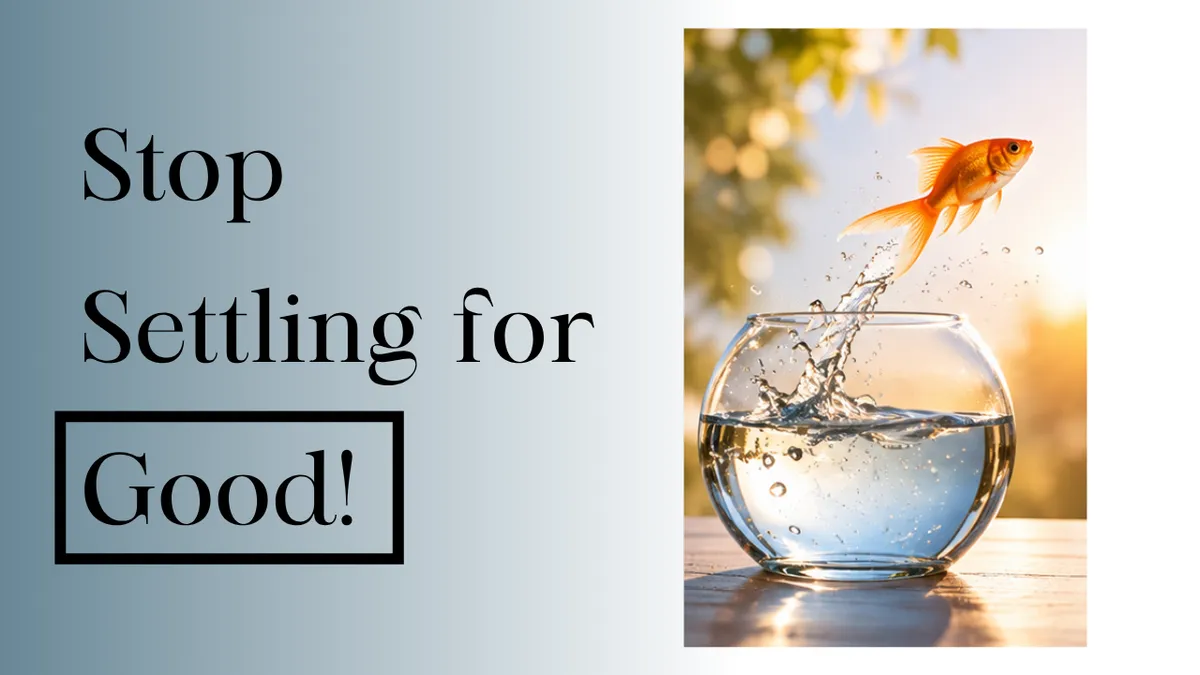
How to Kill Complacency and Thrive. Marty Hofmann & Samia Bano
How to Kill Complacency and Thrive. Marty Hofmann & Samia Bano
Are you settling for a life that's good when it could be great?
It's time to #stopsettling and start creating #yourbestlife, a life where you can truly #thrive.
Listen now to this interview with Marty Hofmann an #entrepreneur, #speaker and #author of “Kill Complacency” where he focuses on #intentionalliving, #discipline, and #longtermgrowth.
Marty shares how to recognize complacency and start making meaningful changes.
Discover:
- why #growth often requires us to do things that feel difficult.
- how to #challengeyourself and start living more intentionally.
- why #smallhabits and #consistentaction can make a difference.
- how to #balance seven key areas: faith, family, fun, finances, fitness, friends, and future self.
- and so much more!
Connect with Marty now at: https://www.killcomplacency.life/
To Book your Free HAPPINESS 101 EXPLORATION CALL with Samia, click: https://calendar.app.google/fT19wX8hhiqgSEwx8
#KillComplacency #PersonalGrowth #OvercomeFear #SelfImprovement #MindsetMatters #PersonalDevelopment #GrowthMindset #LifeTransformation #IntentionalLiving #BreakBadHabits #GoalSetting #HabitTracking #WorkLifeBalance #FindYourWhy #Motivation #SuccessMindset #EmotionalWellbeing #LiveInThePresent #OvercomeAnxiety #FearOfChange #HealthyHabits #LifeBalance #EntrepreneurMindset #PositivePsychology #LiveYourBestLife #balancedlife
Here's the audio version of this episode:
Transcript Automatically Generated
Hello, Salaam, Shalom, Namaste, Sat Sri Akal, Aloha, Holah, Ciao, Bonjour, Buna, Privet, Mabuhay, and Dzień Dobry. It's really, really good to be back with you all, and I know you'll be so glad you have joined us today because we have a very cool guest with us. and that is Marty Hofmann, who is an entrepreneur, speaker, and author of the book Kill Complacency. I'm so happy to have you with us, Marty. Welcome...
Thank you. I'm so happy to be here.
Yes, Marty, please tell us more about who you are and what you do.
Yes, I'm just a regular guy. I was a… I grew up as a farm kid. I'm, 4… I'm the 4th kid of 10. Kind of makes me special. There's a big family. And, I grew up just working hard and doing the things. I was a youth pastor for a little bit, like for 8 years. I have 6 kids. And in the meantime, I got into real estate. And as we started becoming successful with that. We started a podcast kind of to just want to give back. And you and I were talking before the show just about how ideally, you know, you come full circle in your life and you go from, you know, this time of maybe conflict or struggle, and then you get whole, and then you start becoming a teacher or helping others. And so that was kind of our podcast. We wanted to help other people do great things with their life. And so we started a podcast, and from the podcast I wrote a book, and we speak, and we just… I just love the entrepreneur opportunities here given to us. So yeah. That, I must say, is something I also very much appreciate the entrepreneurial opportunity, the mindset, the encouragement to that. That was something that was very much missing thing in my life when I was not in America. So I moved around a bit. I started out life in India, and then, you know, we moved to the Middle East for a few years, and then I was in Pakistan for a few years, and now I'm here in America. It's the longest I've ever lived in a country. America has very much, been home now, and but I didn't get here until I was almost 18, you know. And so that one of the biggest differences that I felt in terms of culture was, you know, this focus on independence and encouraging leadership. Like, I don't know if everyone gets to be as lucky as I have been here in America in terms of my experience here, but I came here, I was almost 18, so my first foray into America was in the context of college life, you know. Okay.
And in college, I had… I mean, I mean, in India, in Pakistan, in the Middle East, the focus was very much like, as a student, it was very much on, okay, like, I went to school, I did my academics. And that was pretty much it. And even in the context of my academics, it was like very focusing on rote memorization. You know, like to pass my high school or the version of high school that I did, I had to give an exam that was cumulative of 3 years worth of studies. That we had done, and in some systems, other schooling systems over there, you have to do cumulative exams with four years of study. You know, and that's so normal. It's just part of how we do things. So it requires a lot of memorization, and what makes you a great student is if you're able to reproduce as accurately as possible everything that you have. memorized and learned. But here it was like so different. And over here I found… I mean, I used to laugh at people struggling to give cumulative exams at the end of a semester. I was like you didn't have to memorize that much. Yeah.
Yes. I was like, what? You find that challenging? No way. So I mean, what I did find challenging was all the independent thinking, right? Like, professor was like, no, you can't just regurgitate what you're reading. You have to present an argument, your own opinion, you know, it's encouraged.
You're saying it's way more encouraged even in the school system?
I mean, I never went to school over here, so I don't know. But college?
In college, you know, that was like a huge shift that I had to learn to make in terms of being a student and how I approached my academics. There was just so much more emphasis on research, on writing, you know, like original papers, and just and it was like, not like I took so many classes where the teacher wasn't telling me what to write the paper on. They were like, you select your topic, find all the resources you need, to, and to write it, you know, and all of that. So it was like a big learning curve, but also the, all the outside the classroom, stuff that would happen, the out, you know, there was so much encouragement to get involved in different clubs and in the student government. Mm-hmm. government and to see yourself as a leader. And I mean, that's actually, it was in college that I took a class where we were learning about the most effective methods of social change. And that's, in that class, our professor had us actually develop a blueprint of an organization that we could create that you know, work on the social change project that we were most passionate about. And so that was my first time that I was like, oh my gosh, I don't want to do a job. I don't want to go work somewhere else. I want to create my own organization. And here I'm like writing up a blueprint.
Yeah. So, you know, it's just like, for me, it was such a different approach to learning and you know, just understanding how you can create change.
Yeah, no, I love America because of our entrepreneurship opportunities. You know, I always say land of opportunities.
Yeah. So it's fun to hear you, you know, you've lived a lot of places, and it's fun to hear you recognize that and say that.
Yeah, yeah. So I know that a lot of like what you do, I mean, you're an entrepreneur yourself, but one of reasons you talk about killing complacency… I mean, your book is Kill Complacency, but you're talking about killing complacency, it's because that's, I imagine, such a key aspect of how to be successful as an entrepreneur. Am I making a correct. Well, I meant, yeah, Samia, right? Yeah.
Samia. Samia, I really believe that, I mean, it's much bigger than entrepreneurship. It's in our relationships, you know, because you can get… I've been married over 20 years and I can be complacent in my marriage. I can become complacent as a parent.
Yeah. My finances, like I could have a bunch of subscriptions that I never pay attention to and it's draining my account. So I think complacency is everywhere. And so my battle cry is just that we'll kill complacency, we'll be more intentional, and we will, to use your words, thrive. Like, we'll be… we'll make the world a better place because the ways that complacency is showing up in our lives, we're killing it. And it's, yeah, it's all the time.
Oh, I love it. I love it. You just made me think about one, a saying, and 2, a book. The saying is, good is the enemy of great. Yes.
You know, it's like you settle for good, and so then you never strive for greatness. You're never able to achieve greatness. Yes.
And, you know, when I heard that the first time, it just really stuck with me. And then I came across this book that was literally on this topic, From Good to Great, and that was actually also a book about entrepreneurship, sort of. Yes. It was a case study. This book features case studies about different businesses and sort of draws a distinction between businesses that are good and there's lots of them, but then there are some businesses that are great. And it's like, what's the difference between the businesses that are just good and the ones that have become great? And how can we move from being just good to great?
And it's, you're right. That's a really good book. And I think he talks in there about even businesses that are great, but they don't adapt, right? Or, or the word I would use is they got complacent. Yeah.
And instead of seeing the opportunities and how they needed to change, because I think he talks about Sears in there.
Yes, there's a lot of different case studies.
JCPenney's. But JC, kind of like, like I think about how long is Amazon going to be around? Are they going to be able to evolve and change? I mean, they're the biggest right now, right?
Yeah, I've been reading a lot about Walmart, for example. Yeah, they're, I mean, obviously Walmart was so dominant at one point in time, but they're now threatened by Amazon and a host of other things going on. And so If they don't, you know, if they, if they were to get complacent, they wouldn't survive. So Walmart is actually going through like major, major… I won't call it a crisis, but sort of like a reckoning with their own identity and their approach to business and, you know, how they're going to reinvent themselves so that they can continue to be there, you know, not just exist, but be there in a significant way and, you know, continue to be a…
Yeah, Because that book talks about that. Because I think it was JCPenney's or Sears, you know, there used to be the Sears magazine. And that's what everybody went to, but they didn't adapt. And then Walmart kind of took them out of business. And Walmart has been the giant, but now Amazon is slowly taking over their market share. So yeah, you're right.
Yeah. So complacency, I loved how you pointed out that, I mean, of course it's relevant in the entrepreneurial context, but also that it can be there in so many other aspects. of our life. What context, if any, do you love to deal with or teach about killing complacency?
Yeah, so I, we, we, I talk about the 7 Fs, and this is kind of because when I started getting more intentional and wanting to improve my life I would, I would make goals around these things. And so there's faith, there's family, there's fun, there's finances, there's fitness, friends, and future self. Uh-huh. And so I would set goals sort of around these things because I wanted to they talk about like the wheel of life, and I didn't want to be like a flat tire. where maybe I had a lot of money, but my family was gone. In other words, I went and pursued that. Yes.
Or, maybe I had a great fit body, but, but, you know, I never worked a job, so I was poor. Like, so I wanted to be well-rounded and, and be like a they call it the wheel of life. And so I make all my goals around those things. And so those are the 7 things that we talk about. They just happen to be Fs. but it's so that my life will be more complete so that I can add value and thrive and help other people as well.
Yeah, no, I love it. I love it. That is such an important perspective to take that, you know, like, don't because I think this is also something that in America we are particularly, I think, prone to do, that we become too focused on certain things and ignore other areas of our life. And most I see this in the context of not having like too much focus on work. For most people, they're like spending too much, too much time, just not only at the job when they're at the job, but there's all these expectations, especially like in corporate America, or even if like, if you're an entrepreneur and, or you're a small business person, you know, you're spending 60, 70, 80 hours a week just working the business, trying to make it successful, to keep it growing. And in that pursuit, you know, your relationships suffer, your health suffers, forget about, you know, like so many of the other Fs that you mentioned, like pretty much everything ends up suffering because you're so focused. Yeah.
Oh, I agree. And that's, that's kind of why we wrote the book. That's kind of why I mean, that's what we talk about on Kill Complacency is just be, because I can be complacent with my family, right? Or my fitness. And I can just be focused on the financial part of work, but I don't want to get to be an old man and look back and just have a big bank account. So I want to, I want to have a family around me and I want to have a fit body and I want to have friends and I want to have experiences that are fun.
Yeah. So I build those in now as we set goals, we build those into our calendar because otherwise we just won't do it. And, and all, I love to work. And all I'll do if you don't, if I don't put them in the calendar is I'll just work, work, work, work, work. Because it's fun. It really is. For me, it's fun and it's fun to chase a dollar and get rewarded in that way. But I know, I know I, what I want is to have that legacy of those other things. And so I build my life around that.
Ah, so do you have like a strategy for how much time you allocate? to the other apps? I mean, other than the finances or the work part of it?
I wouldn't say, I wouldn't say there's necessarily a tit for tat. It's not always necessarily the same. But I do track habits. And so like, on the, on the family one, like I do a date night every week, and I track that. And we do 3 family times a week. And I like, I seriously, I track those things. So it, for me, it's just a matter of tracking it and making sure I'm doing it because I know it's important. It's not the same amount of time allotted, you know, for like fitness. My goal is to move my body 25 minutes a day. If it's a walk, it's a walk. If it's weights, it's weights, but it's just 25 minutes. Yeah. But it's just that purposeful, intentional time doing that activity so that I will be a better person.
Yeah. And tell me more about, like, over time, have you, like, adjusted, for example, how much time you might devote to your fitness or family or date night, like reduce some or increase some, like, you know, that kind of thing. I mean, I imagine, you know, like for a lot of people, life changes over time, and so there's a need to be adaptable. How do you, how do you respond to that kind of change happening in life?
I think, I think you have to be gracious with yourself and you have to realize that yes, life isn't always Groundhog Day. It's not always the same old, same old. And if my goal is to move my body for 25 minutes, it might be a walk, you know, and it might be a walk with my wife. And now we're calling that date night. You know what I'm saying?
Yeah. Because it's just us and we're going for a walk, but I'm, but I'm, I'm getting 2 birds with one stone here. And so, but it's the intentionality of doing these activities. And I can be flexible with it. I've ran ultramarathons. And when you run those, you have to do a lot of training. So it's it's more than 25 minutes a day. So yes, there's seasons where it does this, and there has to be. We have to be, we have to be gracious to ourselves in that. But yeah, sometimes I try to habit stack and I say, hey Ginger, that's my wife's name. I say, hey Ginger, like, let's go for a walk and it'll be date night or whatever. So.
Oh yeah, it's like a walking along the beach. I mean, that's what I would do.
Yeah, you're, you're in California. I'm not. Oh gosh. So, you know, when I mean, I absolutely agree with you. We should avoid complacency, and, you know, strive for really living with Fun and ease, creating more and more fun and ease in all these different areas in our life and so forth. But the main challenge that I know a lot of people struggle with, and I just want to get some of your feedback on this, you know, it's sort of like the hardest thing oftentimes is getting started with change-making because it's like You know, for somebody who is working 60, 70, 80 hours a week, you know, they have all of this momentum that's pulling them in that direction, that wants to keep them going in that direction. And so for them to somehow put a pause to that and be like, no, you know what, I'm going to take out some time and say no to something that I'm doing too, so that I can say yes to doing something else, something different in this other part of my life. It takes not only a lot of intention, but energy and effort to create change. And a lot of people just get stuck right there.
Yes. They're not able to even begin to it's like, I realize I need to make the change because I'm miserable, I'm unhappy, my, my health is suffering or whatever, but I'm not able to make the change. I'm not able to get started with it. I'm struggling with it. Like, ah, what do I do? So what, like, what are some of the first, first steps? Or the first issues to address?
I think, Samia, the one thing I talk about a lot is measure it. So if you are wanting to improve one of these areas, and I'm gonna use, I'm gonna use someone's weight for an example. Like, it's pretty easy illustration. We all wanna lose weight or gain weight. I mean, it depends who you are. But if you will just get on the scale every day and write it down, you will see change because you're paying attention to it. And, and there's a saying, what we, what we inspect, we will respect.
Oh. And so if on the, on the weight thing, if you just, if you wanna lose 5 pounds, like all you have to do is weigh yourself. And now you're going to think about the food you eat. So that's what I would say, that the easy change, put this scale right next to the toilet and first thing in the morning or right before bed, just hop on and know what it says. And I think by that smallest, the smallest thing of tracking your weight, you could, you would literally become aware of it. And you will know when it goes up and you will know when it goes down.
Yeah. And you will start to make more changes. So what I would say, if somebody wants to make change, just figure out how to measure it. For me, with my wife, I track date night because I wanna measure it. I wanna see that we did it this week. Yeah. Because otherwise, if I don't track it, 1 week becomes 2 weeks and 2 weeks becomes 3 weeks. And I don't even realize it, but we haven't been on a date in a month.
Yeah. And it's because I'm not paying attention. Yeah. So for me, that's the smallest thing to do is track whatever you want to work on, track it.
That is such a great insight. And I have heard this from so many other coaches, in different contexts. You know, I've spoken, for example, with financial coaches and they're like, the first step to improving your finances is you have to start tracking and keeping, like a clear record of where your money is already being spent. You know, like, only when you know, and not just like, I think I know, I think I have an idea, but you see it actually written down.
Yes, you know, in front of you that this is where my money went, this is how much got spent, like you cannot even begin to make changes, like you've not even begun to plan to make changes. I've also heard the same thing from like when I was working with a health coach. So in that context, we weren't really like, weight loss wasn't the goal, but it was to, to create changes in our eating habits to make them more healthy and mindful. And she was also like, I have done this for years. And the people who track, who keep a diary, who keep a food journal, they're the ones who are most consistent. and actually get results, you know, whereas people who don't keep that food journal, who don't track what they're eating. Yeah, exactly.
They just fall off, or not… Don't even manage to, you know.
Yeah. And again, if you don't track it, like, you don't realize all those subscriptions on your finances that are costing you, or you don't realize how much that bowl of ice cream actually adds up. So, and, but when you have to write it down, ate a bowl of ice cream, now you're like, I don't want that bowl of ice cream that bad. Well, I mean, with that, there is a sense of accountability, right, that gets created. And especially if you're working with a coach and sharing that data. So it's like, oh, I have to share this data with my coach. What's my coach going to say? I mean, I don't generally encourage doing things because of your fear or concern of what people will say. It does help.
But in this particular context where you're working with a coach, I will excuse it. Yeah. Well, we shouldn't be, we shouldn't be afraid of what the coach is going to say. Yeah. But the reality is, they gave us their advice. Right. And we're either following it or or we're not following it.
Yeah, yeah, yeah. Like, even in working with the coach, I wouldn't be like, don't be afraid of what the coach will say, but the thought of what will my coach say to hold myself, help hold myself accountable from a more positive perspective, you know. It's like, like, obviously, like, as a coach myself what I'm like, look, just be honest. Don't feel like you have to hide things from me. We're not here to judge. I'm not there to judge my clients, people that I'm working with. It's just a matter of like, if you didn't meet your goals, then, you know, let's talk about what happened and what we can do different. If anything different needs to be done to make sure you stay on track, you know. So no blame, no judgment, just addressing, addressing whatever needs to be addressed. so from that perspective, you know, but it's just really funny because the reason I have a… I brought up the what will people think Issues because it is a huge issue, like in my Indian Pakistani community, where no matter what you're about to do in life, people will be like thinking about what will people say, and it becomes a literal constraint on your life choices and your life decisions. And like for me, it got to a point where it just got too much and it got really unhealthy, and so I had to do a lot of work on myself to break free of that. And so, like, I'm still, like, you know, careful about not falling back in that pattern.
But yeah. Yeah, it's hard… And it is very freeing if we can be independent in that. But yeah, it's the impact that someone else can have on us though. I mean, people can really make us better if they do it right.
Yeah, yeah, like positive influence, you know. I mean, that's what we are as coaches, trainers, healers that's what we are. That's the role we're signing up for, you know, what we want to be a positive influence on folks, because we are, I mean, social creatures, we definitely do influence each other. When, you know, I use in the context of my positive psychology training, we said, we would say, Our emotions are infectious, you know, so you can either infect people with negative emotions or you can infect people with your positive emotions. So you might as well choose to infect people with your positive emotions and not the negative ones.
Yeah, that's true. And I've seen this with my wife. Well, maybe I should say, maybe I should give this illustration. There's a video I saw recently of like 1 and 2-year-old babies, and they're put in a room with snakes.
And the parents are on, on the outside of the room, but these kids have no fear of the snakes. They haven't been taught that yet, and so they're playing with them. But the parents who are terrified of them, to your point about emotions are, yes, affected, yeah, they're scared for their kids. And so I think that, yeah, it's very true. We fear, for instance, I think is taught by people around us. So just reiterate your quote.
My gosh, you know, talking about fear is one of my favorite subjects, by the way, because it's just at the bottom of so many of the challenges that we face in life. And it's just amazing, like fear. When I was first introduced to this concept, it just blew my mind that fear is learned. Pretty much all fear is learned. Like, you can, you can test, they've done so many different tests with babies. The fear of height, for example, is learned. They've done tests where before babies learn the fear of height, they will just crawl over, like, they're totally safe, obviously, in the context of the experiment. It's basically like a glass block.
And it creates the visual, illusion of a drop. So you'd actually be completely safe crawling across it, but visually it looks like you're going to fall into this deep ditch. But before the kids learn the fear of heights, they just crawl across, no problem at all. But once they do learn the fear of heights, then they will not do it. They will not crawl even though their mom's standing across the way and they're like, come baby, come to me, whatever you do, then the baby won't do it. But before, no problem. And they've done this like variations on these experiments of like, what kind of fears do babies learn? Babies learn, what age do they learn these different fears? How do they learn them? Like, are they just somehow, like, being transferred by caregivers, or is it like environmental factors? You know, there are all these studies have been done, and basically the conclusion is pretty much all fear is learned. Sometimes it's just experience, like, you know, you have a fall from a height, and so then you can learn from that kind of engagement with the environment. And but a lot of times, you know, you're learning from other people, your caregivers who teach you to be afraid of things. But fear is learned.
Yeah. And it's, and it's often from the emotions of people around us. Yeah. You know, they say, oh, don't do that.
Yes, and isn't it also like at the bottom of a lot of times when we get complacent and why we're so complacent and happy to stay in complacency is because there's fear? Yes.
If you are going to create change and try to strive for greatness, like, you know, you're like good's not going to be good enough for me anymore. I want to strive for greatness. It can bring up a lot of fear, you know, because like, what am I going to lose? What if I fail? What will people say?
Yeah, and it's hard, Samia, because, you know, we're taught to try to be comfortable, but the difficulty with comfort is And number one, it's a lie because you, you have to, in order to grow, you have to do the hard things. You have to, you know, a baby doesn't learn to walk without falling down a lot.
And so we have to do the hard things in order to become better. But if we just do comfort, if we just feed ourselves soda drinks and sugar, like it's not going to lead to a good life. We think it will, but it won't. And so that's why it's deceiving. And so yeah, we have to, we have to kill complacency and, and make ourselves better. Yeah. So how do you, help or advise people to deal with, like, if someone's in the grips of fear specifically? around killing complacency in whatever area of their life. Like if you go back to, let's say, the example of, well, I don't know why someone might be afraid of weight loss. Sometimes people are afraid of weight loss. But they're… What they're afraid of is loose skin.
So their loose skin feels uncomfortable because their whole life they've gained a little bit and their skin is stretched and is tight. And so it is uncomfortable for them to have a lot of weight loss. Yeah.
And so, yeah, they have to and they have to deal with that extra loose skin now. And so, yeah, that can be a real hard thing for people because they have to, and then it's their identity as well. So that can be hard. And I think, I think what happens, Samia, is you just have to want it bad enough.
You know, I know you've been through some hard things and you've come through those, but you have to want the healing, the change bad enough to go through it. And so for me, one thing we do is we just ask why, you know, why, why do you want to lose weight? Why do you want to heal? Why do you want to be better? Why do you want that? And if you can help people understand their why and, and really go deep there, then that can be the motivating thing that helps them go through it when it's hard and when it's scary. and when there's fear.
Yeah, that's true. That's true. You know, I thought of some different contexts in which to talk about the fear thing, since you're a parent and you brought up the example of a child trying to learn to walk without falling. I mean, there's a lot of fear in the context of, you know, like parenting a child and I mean, like you said, if you don't let the child fall, they'll never learn to walk. But there's like so much fear a parent can feel in terms of I mean, like, you want to keep your child safe. Yes.
So, but you have to let them take some risks. How do you I mean, I'm actually right now I brought this up in a lot of recent episodes because it's just such a big part of my life right now. So I have little nephews and nieces, and I'm doing everything I can to stay in their lives, take care of them, help take care of them as much as I can because I love them so much. And, you know, so I'm seeing my brothers and sisters really struggle with this, like especially one of my sisters, first-time mom, like now she has a second child, but when she had her first baby, she had a lot of anxiety about keeping the baby safe, and it was like for a lot of us in the family, we were like, she's overreacting, she's overprotective. But she was like, her anxiety level was so high that, you know, we had to be really careful. Like, we couldn't be like, oh, you're overreacting, because that just did not work at all. It made her more anxious. But you know, just watching her go through that kind of anxiety to try and keep, and so she created like a lot of different rules around like how and where the kids could even be let free in terms of being able to crawl around and things like that. And it was just. I mean, just a very. Yeah, I mean, so… Unhealthy, right?
Yeah, I mean, you could see that, that it was unhealthy for her because it was creating so much stress and anxiety for her because she had taken on this responsibility to keep the baby safe, but also set such high standards and in some ways unrealistic standards of what that meant and what that required, that they were like very difficult to meet. And then also you're thinking about the babies, you know, it's like, how is this impacting the babies and their growth and their learning and their ability to learn and grow? you know, in the best ways. So, but the fear was so powerful. How do you like begin to deal with such powerful fear?
I think you, first off, you have to recognize to her that she loves her kids very much and just reinforce that to her. But you also need to help her realize that kids are way more resilient than we give them credit. And even if they touch the stove or put their finger in an outlet or fall down or whatever, they're going to get over it. They're going to get better. And, and I think the other thing you have to realize is just that we grow from difficulties. If life is always perfect and we live in this glass house and the bed's always made and the food's always like, we don't grow. And so as a parent, I think if you can reinforce that she loves her kids, you have to, you have to bring that into it then.
Yeah. If you want… if you really love your kids, you need to teach them to be resilient. And that means they're gonna fail, they're gonna get hurt. You know, you can't, you can't always walk with them to teach them how to walk. They're gonna have to fall down a few times. And I can tell you, because I have 3 adult kids, it gets harder and harder and harder because the consequences get bigger.
Yeah. You know, when they're 1 and 2, what's the consequence? They fall down on their bottom and cry a little bit, like it's nothing like, like I had my, my 19-year-old son was heavily addicted to video games.
Ooh.And that was really hard. But my prayer for him was that he would fail fast so that he could recover. Mm-hmm. And I didn't want it to have to take a long time, but I had to let him fail. I couldn't come in there and unplug it. I had to let him fail on his own. And I know that, but it was so hard.
Yeah. So having the right mindset in terms of how, how you understand fear and failure, that's really important. In terms of actions, in terms of behavior, is there anything that one can do, to act in the face of fear?
I think sometimes for moms, they just need to put a blindfold on.
Oh,or go in the other room, you know, and just watch. Like, we can be the helicopter parent, but just, just step back and don't do anything for an hour. Don't go in there and interfere, and you'll see that they're going to be okay. Yeah. So, that's what I think sometimes is the best thing you do is just observe.
And my wife, she gotten a lot better, but she's had a lot of fear about storms in Oklahoma. Here we get tornadoes, and she lost a neighbor when she was a kid, and so there's some trauma from that, but it's a fear-based thing. And it's real. Like, I'm not going to deny that's not real. But what we can do is we can step back and observe, and we can observe that majority of the time tornadoes don't touch down right here. And, and we don't have to be screaming and concerned. Like, it's okay. And so that's what I would say. Sometimes you just step back and observe and realize that fear is an emotion. And it's not real. You said earlier something like anxiety is a focus on the future, and I think that's really key too. Like let's be present right here right now. Yeah. So and not be focused on the what ifs because we don't know what the what ifs are.
Yeah yeah oh by the way. the anxiety thing, we were talking about that before we started recording. So just to clarify for our listeners, Marty and I were having a chat and I was sharing with him that by definition, anxiety is a state of mind that you're in where you're not in the present moment. You're focusing on something in the future. And your focus is like something where you're worrying about it, you're stressed about it, you know. And so when you, when you're worrying or stressed about something that's going to happen in the future, or you imagine might happen in the future, that is what we experience as anxiety. And so the cure for anxiety, if we can cure anxiety is one, you know, central component of that is to practice living in the moment, being present in the moment. Because anxiety, when I mean, again, definitionally, you don't feel anxious when you're present in the moment. You're feeling anxious when you're future-focused, you know. So by practicing being in the present moment, that is how you counteract or resolve the anxiety.
Yeah, that was a good quote you had, or good explanation.It's part of, you know, how we understand things in psychology. Positive… Well, my training is in positive psychology, so that's the framing that we utilize. And it's also like how you distinguish by thinking about it in this time context, you also distinguish between anxiety and depression. So depression is when you're too focused on the past and you're not in the present, you know.
Yeah, sure. So you're worrying about, or stressing about something that happened in the past. So you experience that as depression. And if you're, you know, so to be like to be happy, to be peaceful, to be in a more healthy mindset, you really need to practice living most of your time in the present moment. Ideally, we could live all the time in the present moment, except, you know, in the context of like when you need to plan for your future, you allow yourself to, you imagine your future. If you deliberately choose to think about some past memory, then of course you allow yourself to do that, but you realize and recognize that those are choices that you're making, and you're able to make those choices. But for the most part, you want to live in the moment, you know. So that's our goal. From the perspective of like living the most happy life. Yes. Cool, cool, cool. So I wanted to do a quick time check with you, Marty, because we've been talking a while and I, do you need to go? Or I can, if you need to go, I can begin to wrap up. Otherwise, I cannot… I need to go in not too long.Okay. So any last thoughts that you would love to share with us as we wrap up?
You know, I think that I would just want to encourage people to, yeah, make change easy and fun, but also go after it. Like, yeah, we can kill complacency. We can be a better version of ourselves. We can live in the present. And not live in the past and not live in the future, but just be present and be joyful and happy and live that life of thriving and impact because we know that we're killing complacency in our life and making the world better.
Yeah, I love that. Thank you so much, Marty. And we'll probably just have to bring you back so we can keep on talking. It's fun. Yes. And in the meantime, my last reminder to our audience is to please make sure you check the show notes because we will be dropping Marty's links in there so you can check out his podcast and his other resources, his book and so forth, and continue to learn with him and connect with him. Get the help and support you need whenever you're ready for it. And until we connect next time, I wish you lots and lots of peace and joy. Bye.

Want to check out even more amazing episodes?
All of our episodes are archived on our vlog page :)





OUR PEACE OF MIND GUARANTEE
Because we’re committed to doing onto others what we would have them do onto us, all our programs come with a Peace of Mind Guarantee.
We know you’re going to love our programs. We’re so confident about the quality of our programs we’ll give you full access risk-free for 30 days. If you decide the course isn’t right for you, then you may request a full refund up to 30 days after your purchase.
Copyright © 2018 Academy Of Thriving