
Blog: Make Change Fun And Easy
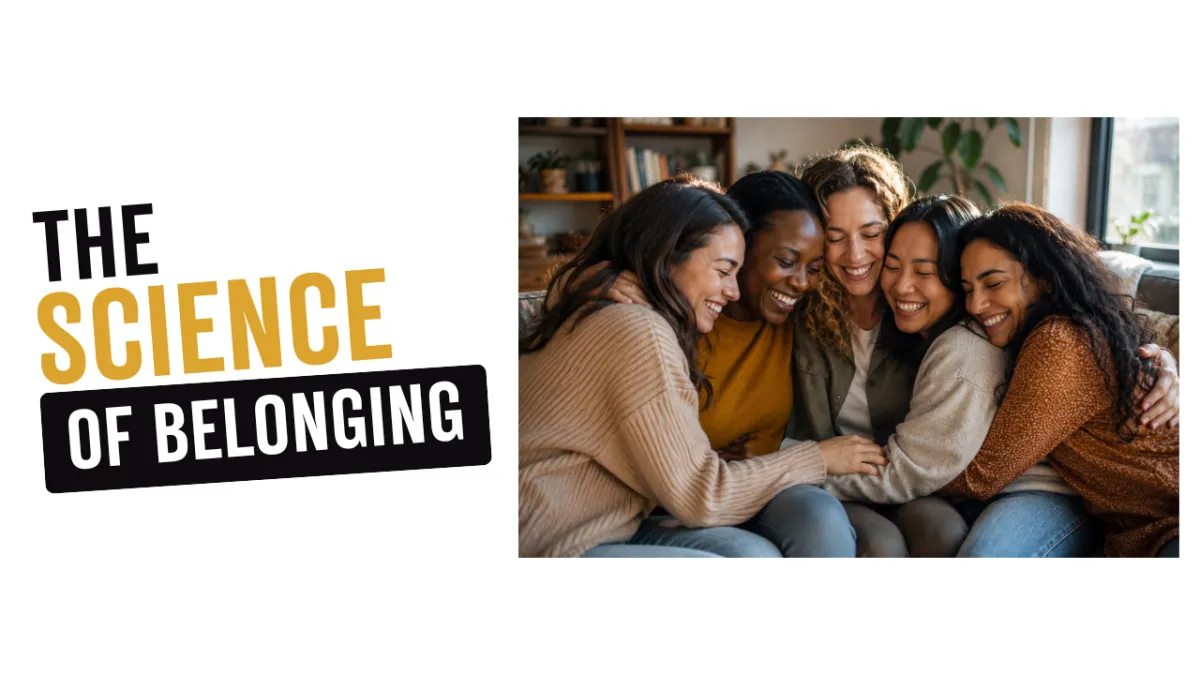
How to Overcome Loneliness & Find Your People. Tannaz Hosseinpour & Samia Bano
How to Overcome Loneliness & Find Your People.
Tannaz Hosseinpour & Samia Bano
You can have friends, family, followers—even a full social calendar—and still feel deeply lonely.
In this episode, Tannaz Hosseinpour, registered psychotherapist qualifying, #relationshipcoach, #podcasthost and #author, explores the hidden causes of the modern #LonelinessEpidemic, why it's becoming a global #healthcrisis, and practical ways to build meaningful #healthyrelationships and #community.
Tannaz explains how #belonging is one of the most powerful forms of #healing and shares the #latestresearch on #loneliness, #psychologicalflexibility, and why genuine community can improve #mentalhealth, #reduceanxiety, and even impact physical health.
Tanaz is the host of the Minutes on Growth #Podcast, and loves to leverage podcasting as a way to directly inspire her listeners with insightful tips and strategies on how they too can set and #achievegoals of #innerhealing, #spiritualgrowth and personal #purpose.
Learn more and connect with Tannaz now at: https://minutesongrowth.com/
To Book your Free HAPPINESS 101 EXPLORATION CALL with Samia, click: https://calendar.app.google/ycNkS9obhoQhiYXM6
#MentalHealth #EmotionalHealing #AuthenticConnection #EmotionalSafety #TraumaHealing #CommunityMatters #SelfAwareness #Psychology #Therapy #RelationshipAdvice #PersonalGrowth #HealingJourney #Connection #Vulnerability #PeoplePleasing #InnerHealing #EmotionalWellbeing #SocialConnection #AnxietyRecovery #DepressionAwareness #MindsetShift #SelfWorth #Psychotherapist #EmotionalIntelligence #HealingTogether #liveyourbestlife
Here's the audio version of this episode:
Transcript Automatically Generated
Hello, Salaam, Shalom, Namaste, Sat Sri Akal, Aloha, Holah, Ciao, Bonjour, Buna, Privet, Mabuhay, and Dzień Dobry…
I know you'll be so glad you've joined us today because we have a really wonderful and cool returning guest.
That is Tannaz Hosseinpour, who's a registered psychotherapist, qualifying relationship coach, and author. And I'm so happy to have you back with us, Tannaz. I'm just like really happy to have you back.
Welcome back.
Thank you, Samia, for having me back. I'm so glad we're having this conversation because I think it's much needed.
Indeed, indeed. You know, last time, we were talking about how to fight there. And sort of like in the context of like how to be, like if you have conflict, how do you deal with that conflict in a healthy way?
And like not, don't be afraid of engaging in conflict or being in conflict. You just need to know how to fight fair. So that was such a helpful conversation that we had.
I remember especially enjoying the very practical tips and processes that you shared with us. And one of the things that we started talking about, and of course we didn't have enough time to get really deeper into, is conflict at a larger level, like in terms of community, but also like just relationship challenges in general at a community level. So I would love to dig deeper into that with you today.
Yeah, let's do it because, you know, we are relational beings and we thrive in supportive communities. And there is a loneliness epidemic going on right now, so I think it needs to be addressed so that we can become aware of it, but also navigate out of it.
Loneliness Epidemic
Yes, what are some of the symptoms, if I may put it that way, that people could be in their lives, and if they see those symptoms in their lives, they can be like, hey, that's an aspect of the loneliness epidemic.
Yeah. Well, one misconception that people have about the loneliness epidemic is that it's just about being physically alone, but a lot of us are surrounded by people. However, despite being surrounded by others, there might be a lack of emotional safety, meaningful connection, and community, that sense of community.
So the advice of, well, go make more friends might not be the best advice, but how do we create healthier dynamics where we feel safe and emotional safety? And so kind of redirecting that to a research that I'd like us to lay as the foundation of today's session is the research that came out in 2023 by the US. Surgeon General.
And there are some key statistics out there that make me want to talk about this topic more because we're seeing that loneliness has health impacts that are comparable to smoking 15, 1, 5 cigarettes a day. So it's not only, oh, I'm feeling lonely, but how is the body processing this loneliness? We're seeing chronic loneliness be increasing the risk of depression, anxiety, cardiovascular disease, dementia, early mortality.
So social connection is no longer viewed as a luxury. It is a biological need. We are wired for connection.
Again, we're tribal beings, we're relational beings. So at our core, we all have this deep desire for belongingness, which we'll get into throughout our talk together. But really, really important to recognize, this report really helps us recognize a few things.
One, it's an epidemic. It's a big issue that we need to address. Two, we all have this deep desire for social connection and belongingness.
And one thing that the report brought up, and I thought it was so interesting, was that in their glossary section, right off the bat, there is a term called social negativity. And social negativity is the presence, how they worded it as presence of harmful interactions or relationships, rather than the absence of desired social interactions or relationships. And so that kind of ties into the previous call that we had of, okay, this is where therapy and coaching comes in, teach me how to cultivate healthy ones, so I no longer entertain toxic ones.
So that's really important too. Yeah. First of all, thank you for sharing that training.
Personal Loneliness
And you made me think about the experiences I've had personally with loneliness. Like for me, thankfully, it's not been a problem for a while now. But like when I was younger, particularly I think it was for me really pronounced when I was in my late teens and my early twenties.
Because, you know, at that time, I was dealing with my own traumas and I had not learned how to deal with conflict in healthy ways. And it definitely contributed in significant ways to the loneliness feeling. And like you said, I was surrounded by people.
Like I was never, I mean, I lived with my family for one thing. I never ventured like out on my own. It wasn't like, you know, I went anywhere to just be by myself, you know.
So I was always like pretty much surrounded by people, whether I was at home or in school or at college, et cetera. But the sense of loneliness was always there. And actually, interestingly, like now, when I look back at that time in my life, I in some ways feel grateful for how Intensive got for me because it was one of the things that really pushed me to finally try and find some solutions to get some help.
Because, you know, like I had, I mean, I think my one of my core issues was that I was traumatized and I didn't know how to help myself. I had been trying to help myself, but I wasn't succeeding. And so I got, but the loneliness, you know, like it just got so bad.
I was like, I can't deal with it anymore. Like, I just can't deal with it anymore. And if I don't get help now, if I don't feel, because, you know, it's like the, it was just like, I think for me, the thing was feeling like no one really understood me.
Like I didn't understand myself, honestly, very much, but also feeling that no one else understood me. And so if they didn't understand me, then I was like, like when my mom, for example, or my sister, or anyone expressed love for me, I was like, this can't be real, because they don't know actually what's going on with me and in me. And I was so scared that if they knew, like the mess that I was or that I felt I was, that they wouldn't be able to love me.
And that was such a terrible, like just a terrible feeling. And but then it did eventually, I think, push me to seek help. So that was the first time I went.
Thankfully, by that time I was in college and we had access to free counseling services on campus as students. And so like for me, I was like, let me go give that a try. And that became like a point of saving grace.
And it was, like, you know, again, I was like, oh, I'm so thankful I'm on campus. Because once I started to do something about, you know, stepping in, building connections with people without having this whole loneliness thing and the mindset behind it, like starting to overcome that, it's absolutely like changed my life for the better. And I mean, I feel like I've almost, I can thin down that moment or that point in time in my life in a very nice upward trajectory.
Not to say there have been no moments since, but that was, I mean, I can't remember a lower point. Like mentally, emotionally than that. Hey, thanks for tuning in to this episode.
Hope you're getting value out of it. For your information, this episode has been sponsored by the Happiness 101 Program. Are you a change maker, coach, trainer, or healer?
Are chains of fear holding you back from making the impact and income you desire? Using a unique combination of positive psychology and the spiritual wisdom of our most effective change makers, the Happiness 101 Program helps you break through your limiting beliefs and manifest the abundance and success you desire with fuan and ease. Interested?
Book a free Happiness 101 Exploration Call with me, your happiness expert, Samia Bano. Just use my online calendar link in the show notes. Now back to the show.
Belonging Action
Yeah.
Thank you for sharing that. And I think a lot of people will resonate with the feeling of not feeling understood or the worries and fears of if they saw who I am feeling I am, then they wouldn't want to be around me. I think that's a lot of people can resonate with that.
So thank you for sharing that. And it brought up two thoughts for me. The first is, in therapy, they've done a lot of research to see, okay, what's the best modality for depression?
What's the best modality for anxiety and so forth? And they have found that the most important modality is the therapeutic relationship between the client and the therapist. And the reason being is that that container becomes the container to which we start to feel seen and understood and accepted just as we are.
And as we start to feel that sense of belongingness in that relationship, that starts to project and manifest outwardly. So it makes a lot of sense to me that that's the moment you started to feel that and it trickled into other areas. In actuality, a new study came out very recently.
16,000 college students were part of the study by the University of Michigan. And they found out that psychological flexibility, so the ability to kind of stay open, stay present, stay engaged, even when things feel awkward, even when things feel uncertain, strongest predictor in whether students look to take the steps that produce belongingness. So belongingness isn't a feeling, it's actually an action that we work towards, and if we're able to stay open, and if we're able to stay present and engage, even though it feels so uncomfortable, that's the hidden sauce, the secret sauce.
So for you, kind of going into therapy, feeling that sense of openness, presence, and then taking actionable steps to put yourself in spaces that perhaps you might not have in the past. To ask the question without feeling of, oh my god, am I stupid? So regardless of the inner critic still taking action, we start to produce the notion of belongingness.
Yes, you know, you just made me think about, I think it's a documentary for sure. I can't remember the specific research it was quoting, but this one was, it's called Paper Tigers, and it's actually dealing or bringing to light some of the challenges that students, but more in the high school context face here in America, particularly in some of our underserved communities. And, you know, like with these communities, there's a lot of fallout, and there's like different stresses and challenges that young people have to face.
So it might be gang violence, there might be abusive relationships at home. There might be, you know, like a parent who is doing drugs or something like that. Sometimes the kids themselves will get into, you know, abusive relationships with each other.
So they just have a lot going on that they have to deal with. And in terms of solutions, also like when the documentary got to that part of what do we do about it, they actually also found that one of the most effective things in terms of what predicts certainly positive outcomes for the students is if they're able to have even one relationship in their lives, where they feel safe, where they feel that sense of belongingness. And the interesting thing in that context was that oftentimes that relationship could be just a teacher at school.
So, first of all, like, you don't need hundreds of relationships or even a dozen relationships or even, you know, like even one relationship in your life where you feel seen, you feel heard, you feel that sense of belonging, can be enough to put you in a better situation. I mean, obviously, if you can have more of the relationship in your life, the better. But even one can provide you with the needed grounding.
And interestingly, the fact that, you know, that it doesn't have to be like a relationship where you're there with each other 24-7. You know, like, if you think about a teacher and a student, how long do they get to interact with each other over the course of a day or the course of a week? It's not necessarily a whole lot.
You know, the teacher is not necessarily even doing a lot in terms of being able to change. Like, if the kid is in trouble at home, if there's something wrong, I mean, you know, there may be not a whole lot each can do about that. Mostly, maybe provide a listening ear, maybe point them to some resources, that kind of thing.
But even that can provide enough of a foundation for something good to happen for the kid, you know? And it makes me think about, oh, I mean, in the context of you mentioned, a therapist relationship, a therapist can serve that function. So again, it could be a relatively limited relationship.
Yeah. No, great, great example. And exactly as you said, it's mirroring that space, regardless of whether it's a big space or a small space.
Community vs. Audience
But in that space, I'm feeling seen, I'm feeling heard and understood. And I feel that I can show up authentically as my true self. And you're not going to judge me.
You're not going to make me feel less than or not enough. So that authentic connection is there. So whether it's in high school between a student and a teacher, or as an adult between you and a friend or you and a therapist, really having that safe space.
And I think it's a good time to kind of distinguish between community and audience. Because sometimes people will think, okay, I have an audience, I have many followers on social media, or I'm part of many networks. But that doesn't necessarily mean that there is that notion of true community and belongingness.
And let's distinguish between the two. Because community, what are the core tenets of it? It's reciprocity, so it's giving and receiving.
There's a safe space for vulnerability, so I can express my true self, or I can give you insight into my internal world without fear of judgment. There's consistency, so there's sense of reliability. This notion of being witness, you see me, yout to see me.
There's mutual support and there are shared rituals. So these are the elements that create community. So we can have a huge audience, we can have millions on social media, but that doesn't equate to community.
And I think because you brought in teenagers in high school, I want to make a quick distinction also between fitting in versus belonging. Because I think teenagers will resonate with this message or if there's any parents listening, parents to teenagers. Fitting in is what we see often happen.
I'm going to mask, I'm going to perform, I'm going to change myself to be accepted, I'm going to people please or I'm going to abandon parts of myself. And Brene Brown talks a lot about this between the distinction. And she says, okay, that's fitting in.
What is belonging? Belonging is I'm going to show up as my authentic self and I'm going to feel accepted and I feel emotionally safe to be real, to be myself, and I don't need to constantly perform. That's really important because social media right now is perhaps pushing teenagers and those that are more vulnerable into the fitting in category.
It's saying you need to be perfect, you need to look a certain way, accomplish a certain thing to feel a sense of belongingness. We're curating identities as if we're curating feats, and that increases fear of rejection. That makes us super anxious.
We don't want to be vulnerable. We don't want to show up. We just want to mask.
We are starving for authentic connection right now.
Authenticity Challenges
Yes, you know, that is such a key because I mean, you know, like I was mentioning my fear on a fan was such a strong fear of being unlovable even by my own family, my mom, like, especially, you know, it was like the craziest thing where, like, that, you know, I mentioned that I was afraid that if people found out how messy I was inside. And the person I thought about the most in that context was my mom. Because in some ways, you know, like, for me, my mom was the most consistent person around me, like, at least the adult, you know.
Our family moved around quite a bit. So, other than the fact that, you know, I was traumatized and socially challenged and therefore had a very hard time making friends, or keeping any friends, I actually had zero friends. My mom was always there.
She was like always there. And just that my mom is one of the most loving people you will ever meet. And, but I was afraid that, you know, she, like, what if she can't love me?
And it was precisely that, because, like, you know, I was like, because she doesn't know what a mess I am on the inside. So, it's like I couldn't be authentic, you know, I was too afraid to be authentic. And so, even though my mom loved me, and I knew she loved me, and I loved her, but it was not enough to prevent the loneliness because there was, like, I was not able to be authentic, you know?
And it had nothing to do with my mom in that case. It was like my inhibitions and fears that were keeping me from being authentic.
Well, I wouldn't put it all on myself. There are, like, cultural, I would say, forces that, you know, like, shape those kinds of fields as well, you know? Like, especially, like, in my culture.
And now I'm thinking about my culture as an Indian Pakistani person. You know, there is a lot of... I mean, these are collectivistic cultures.
There's a strong emphasis on group identity and getting along, you know, with the group. And, you know, almost like your individual person, your individual identity, your individual desires, they're almost like de-emphasized and almost like... You're like, no, no, no, don't be selfish, don't think about...
Like sometimes they can be...
treated that way, you know? And so you're always thinking about the group. And so there's just a lot of expectations in terms of your role and how you're supposed to behave.
And so like for me, you know, I was like, always very conscious of, you know, that I'm a daughter and I am a sister and I'm a niece. And, you know, in these other relationships, and with every relationship, you know, there's an expectation of how you're supposed to behave and be.
Right.
And for me, like, at one level, I was performing and doing okay in that performance, like meeting a lot of those expectations. But at another level, like, I felt very disingenuous or inauthentic in that performance. And I was, like, like, I was like, oh, I, like, I knew I was putting up an act.
Like, yeah.
So there was, you know, that also that if I was really being me, because, like, like, I'll give you one specific example of how I felt I was being inauthentic. So I had become a very, well, people said quiet child. Like, I hardly talked to anyone.
Like I had mentioned, I basically no friends and nothing like that. And I just quietly did what I was told. So to that extent, I was actually even perceived as a good child.
They were like, oh, Samia, so she's such a, you know, she does everything she's told. And, you know, so she's such a good child. She listens to her elders and stuff.
But, like, my internal state was I was constantly arguing. I actually had a big problem, like, in my head with authority and being told what to do. So even though I did what I was told what to do, like, internally, I had a big problem, like, with it.
Like, I actually hated being told what to do. And also, I had a lot of anger inside, and I could never, like, I could never feel free to just scream and shout and be angry in the way that I felt. You know, so there was just a lot that I was keeping in.
So, yeah, being not able to be authentic was a huge, huge, huge issue.
Yeah. Yeah. That makes a lot of sense.
And as you were sharing, I was thinking, kind of what you were alluding to was the fear of being seen. And because sometimes we think, when we're talking about loneliness, loneliness epidemic, there's so many different moving parts. And it's not only that like, oh, go out there and meet people.
If I have this fear of being seen, then I'm going to fear rejection. I'm going to mask heavily, kind of what you were describing. I don't feel emotionally safe.
So there was a lot of work that needs to be done around authentic expression, self-worth, emotional safety. And as you were sharing your experience, I kept thinking about, in schema therapy, there are five core needs that children have. And one of those core needs that you were talking about is the sense of autonomy.
Children need to develop a separate sense of self. So that they're able, the sense of agency. Now, I'm not saying that, I'm not advocating hyperindependence, but I'm advocating a sense of self that can help them lead towards healthy interdependence.
But children need to have that. Children need to have another core need, is the freedom to express their emotions and their valid needs. So that emotion of anger, do I have space to express that in a healthy way?
Again, I'm not advocating a child hitting you and you saying, okay, that's okay. No. But you can feel your anger.
You can release your anger within a safe container. That's where a parent comes in. I'm going to create a safe container for you to express yourself, for you to have agency.
What outfit do you want to wear? Do you want to wear this one or that one? So age appropriate, of course, but it makes sense.
If those needs are not developed, I might start to feel fear to be my authentic self. So then if I have that fear, perhaps now I have a fear of vulnerability. And we're seeing this now, vulnerability is feeling really hard for people to tap into because sometimes people think they're raised in environments where they start to think that emotion is weakness.
We see this more with men. Asking for help is unsafe, gotta be hyper independent. I can do it on my own.
And we're not leaning on other people or we feel I'm a burden. I don't want to be a burden. So I'm not going to ask for help or performative connection.
Remote work, remote work as well is causing this loneliness because I don't need to be close to you. I'm secluded. So I'm going to figure it out all on my own and I'm going to become hyper independent.
So a lot of these contribute to a society that's hyper independent, that struggles with vulnerability, that struggles with as a result with authenticity and intimacy. And despite technology and the illusion of connectivity, we're feeling pretty lonely and loneliness is different than solitude. Solitude is, it's a choice.
I'm going within. It's restorative. So for me, I'm pretty extroverted, but I still need solitude.
I want to come home, take a bath, read my book, be with myself, and that recharges me. That is very different than loneliness, which is a sense of I don't belong and I feel disconnected.
Yes. You know, and this was when I was in college. After I started to get the help that I needed, I came up with different words for myself to describe my relationship with silence or quietness and stuff.
Because I had been, you know, that perception of, oh, Samia's quiet child had been verbalized a lot to me. And I didn't feel that was true for me because I was like always so not quiet inside my own head. So I came up with, I was like, you know, I wasn't quiet, I was silent.
And now after I became, now, for example, I actually love being quiet. So for me, it's now a matter of, just like you were saying, first of all, a choice when I choose to be quiet or not. And also, it's like not just a choice like, oh, I'm choosing to be quiet, but it's like a choice that is an, it's like a empowered choice.
It's a loving choice. It's like, actually, there's so much beauty that we can experience when we are able to be quiet with ourselves.
And you know, it's coming from that healthy place. So I was like, yeah, I choose to no longer be silent. I choose to be quiet.
And I was like, so proud of myself for coming out with that terminology or that distinction in terms of how I thought, because it really makes a difference. Like the language, sometimes, you know, we don't have language to be able to describe or think about what we are feeling and experiencing. And when you're able to have some language, it just really, really helps.
And I think that's one of the most helpful aspects of actually working with a therapist or a counselor, is that oftentimes, you know, they can give you those concepts, they give you that language. And, or, you know, sometimes they help you develop it for yourself, you know. And so even just, that was just one example of language and how it helps.
But even now I'm thinking about all these other concepts. Like once I had the language to understand or frame my experiences, it was just so... It was like an essential part of the solution in some ways.
Building Community
Yeah, I love that. Thank you for sharing. And again, you're tapping into that autonomy, that agency of I'm making this choice.
This is my choice to go with and to be introspective, to stay silent. That autonomy agency is so powerful, and that's what we are trying to do with community building, of you have a choice to be in a space that feels safe, that feels authentic. And so where these spaces naturally happen, we want to village, but in order to want to village and experience it, we also have to be the village, right?
We have to be the village for someone else. We got to put ourselves out there. And I want to touch on this point called third spaces.
Third spaces is a terminology coined by sociologist Ray Oldenburg. And so what are third spaces? They're places outside of your home and outside of your work, where connection happens.
Modern day is taking away that third space. What are these third spaces? Book clubs, community centers, volunteering, gym, church, temple, cafes, hobby groups.
We're seeing a return to it. So if you go on social media, you see like running club, book club. But previous generations, we saw people going to church every week, people going to the community centers and playing bingo and all these activities.
For example, I'm living in Aurora, Ontario, and one of our community centers is being turned into a restaurant, which is still great for connection, but we're taking away community center. So we're taking away a space that historically was a place where we would come together and talk. So it's really important for us to say, okay, if I want to have that village, am I willing to participate in becoming that village?
So it's stepping outside of our comfort zone and leaning in into building these friendships. So if we're going to get practical, I'm not talking about grand gestures. I'm not talking about going over the top right off the bat, but maybe I'll sign up for a walking club.
Maybe I'll go and volunteer. I volunteer every Wednesday at a wonderful charity that we provide frozen meals to tackle food security. And every part of me was like, oh my God, this is going to be so awkward.
I have to go to a space I've never been before. And I went and I interviewed and I'm the youngest one. Everyone's in their 50s and 60s.
And it was super awkward the first 10 minutes. But then you build community and you build these friendships. And everyone who enters the door on Wednesday mornings, we start to build a relationship.
I'm curious. I'm interested to know what their week was like when they're picking up their meals, what they have, you know, that they're looking forward to the next week. We slowly start to build that.
They feel seen. I feel like I belong in my community. So whether, you know, it's check out your public library, there's community classes there, again, volunteering, even with your friends, some weekly dinners maybe, or monthly dinners.
Again, belongingness is not necessarily a feeling that needs to show up first. When I feel confident, I'll go, or you're hearing this podcast and you're like, you know what, when I stop feeling awkward or when I feel accepted, I'll speak, I'll reach out. Life works the other way around.
Take that small step towards connection and you're going to start to feel more that sense of belongingness and that fear of rejection becomes less and less and less because we really need to shift from passive consumption to participation. We're sitting on our phone, we're watching reels of people going to a community center, but we won't go to the community center. We'll watch people planning dinners with their friends.
There's so much content on. This is my weekly series of Dinner With My Friends and this is how I host. We'll watch it, we'll consume it, but we're not participating.
We're not creating, we're not gathering, we're not contributing. Community requires contribution.
Yes, you may think back to my college days again. And for me, the breakthroughs that came in terms of overcoming the loneliness thing was that my counselor actually encouraged me. She said, look, there's so many clubs on campus, and that's one of the easiest ways as a student to get involved.
And so she said, just join one or two. I ended up in five or six. But it's all good.
It's all good because, I mean, and I actually made it my mission. Like I had, it was so transformative for me that I made it my mission. I was like, okay, every semester, I'm going to be actively involved in at least one, like actively meaning like taking on even a leadership kind of a role.
And then in the other ones, I would just show up as a participant. So I would just sit and listen or enjoy, but I wouldn't get involved in organizing things and stuff like that. So I was able to be a part of different kinds of spaces.
That way without taking on too much in terms of, you know, then having to compromise my academics and stuff like that. And so like, it was, and one of the biggest lessons that I learned in that context was the very first, one of the very first clubs I remember showing up to was called the Eco Action Club. And it was one of the environmental clubs on campus.
And I was, you know, always interested in that issue, like caring about the earth and so forth. So that's why I chose to start showing up there. And the interesting thing was that, like a lot of the people who were showing up were very passionate, environmentalists, and they had all these different projects and ideas of things to be done.
And like when I stepped in, I was like, I was scared, I was shy, and I mentioned that I had like zero friends and very little confidence in myself in terms of being able to make fun. But it was like some kind of, it felt like some kind of miracle to me that I show up there and no one questions my belongingness or my right to be there. You know, they're just like, oh yeah, welcome.
And now you're a part of the club. And, you know, you just got. And then very interestingly, people just started.
And of course, doing what I was told had in some ways become my superpower. And so people just started telling me, hey, Samia, we need help with this. We need to get that done.
Will you do it? I was like, sure, I will do it. And so even though I don't know how long it took me to really start opening up to people and talking and stuff, but just the fact that I was showing up consistently and saying yes to doing things that people wanted and needed done, made them feel like, I think it helped people feel like, yeah, I was serious and I wanted to belong, that I did belong.
And the more I, they, like, I remember there was one or two club members in particular. I was sort of like, I think they realized what a, I mean, they just took pity on me, I think, but in a very nice way. And it sort of took me under that ring.
There was just extra find in terms of, like, making sure. Like, for example, I remember one time we were, like, all sitting and some people brought food to share. And so, like, this one person made sure that they were like, sorry, come here, why are you sitting all the way back?
Sit with us. You know, it, like, pulled me in. And just that little kind of gesture, it was so meaningful to me because, like, on my own, I was too shy or awkward or whatever to, you know, just, it just helped me feel that, oh, yeah, okay, people care, I belong, you know, and so, like, to take that step in myself.
And so it was just, so even though I wasn't necessarily at first opening up a lot, but just having that and not, it was like, and because it was an issue that I was authentically caring about, it really helped because I did build a genuine connection with the people in the club in the context of our shared passion around the issues that, you know, we discussed. And it was similarly true, the other club I got really active with was the Muslim Student Association. And there was like a sister there.
She, in particular, took me sort of under her wing and was super kind and just really helpful in helping me feel that sense of belonging, even though like I was being my shy, socially challenged self. But, you know, I learned that. And then, you know, it's like I got recruited into like these different leadership positions and I never.
And that was like also like, like what is leadership? Like that really changed my perspective because like just showing up and doing what needs to be done. They were like, oh, you are a leader.
You are a leader in the club. And I was like, what? But, you know, I mean, like I wasn't making any speeches.
I wasn't inspiring anyone to do great things. Like, I had a very restricted idea in my head of what a leader was and what they did. And this kind of experience and reframe really also changed because like, when people started labeling me as a leader in the club, and then I was like, okay, I guess I am.
It also like really shifted something in terms of that. To take on that label or that identity of a leader, it creates a sense of, an elevated sense of belonging in the group. Because if you are a leader in the group, then you know you for sure belong.
Because hey, not only are you in the group, but you're a leader in the group. And so there was also something about that, that was very transformative for me, you know? So that's why the whole understanding of what even a leader is, and being a leader, accepting myself in that leadership identity, was really helpful in helping me feel that belonging even more.
Blue Zones Community
I love that. I love both examples that you share, because, you know, when we are in a safe space, when we are in a space where we are seen, our strengths, our talents, our passions, they feel safe to come to the surface and be witnessed. And in that space, it was witnessed, that leadership quality in an expansive perspective was witnessed and came to the surface and took the lead.
And with the other example, you kind of tapped into, I'm being mindful of time, but you tapped into what the Blue Zones documentary really touched on, the beauty of eating together, sitting together. And that sense of purpose, hey, Samia, go do this, go do that, it gives me a sense of purpose. And so just to kind of summarize for those who are not familiar with the Blue Zones.
So Blue Zones are regions where people statistically live longer and experience lower rates of chronic disease. And so researcher and journalist Dan Wettner looked into this and there's a documentary on Netflix on it too, if I'm not wrong. And so these Blue Zones, for example, Okinawa, Japan, Ikaria, Greece, we have Costa Rica, we have Loma Linda in California, and we have Sardinia in Italy.
And the misconception was that the reason these people, residents in these areas are living longer lives isn't only because of diet, it's actually because there's the element of social connection and community embedded in all of them. They have strong family systems, they have intergenerational living, which is such a foreign concept in the West, consistent social rituals. We have that sense of purpose, belongingness, we have slower lifestyles.
We have more community accountability, and we have less social isolation. And kind of coming back to the notion of purpose. My brother lives in Japan and every time I go to Japan, I'm amazed at how they really have embodied these elements.
For example, in a parking lot, it's not at all foreign for you to see an elderly man just standing there and telling you, you should go right or you should go left. You could totally do that with signs on the pavement. You don't need him there.
But they know that it's important for members of the community to know that they belong and that they have purpose. So we will create jobs, we will create positions that again, you can do with paint on the ground. But what happens is that person is 80, 85, 90 and they still feel like I have a place in society, my presence matters.
And that again is what community is. So community is knowing that we have purpose, knowing that we belong, we're gonna eat together, we're gonna pray together, we're gonna walk together, we're gonna celebrate together, we're gonna care for our elders together, we're gonna raise children collectively, a village coming together, and we're gonna see our friends, and we're gonna feel safe, and we're gonna feel regulated, co-regulation. Again, I wanna be mindful of time, but I had a panic attack a couple of weeks ago, and I knew the moment I was having it, I'm like, this is textbook panic attack.
And I was doing the self-regulation. I was doing five, four, three, two, one. I was doing slow, deep breaths.
But what helped the most was having my husband sit next to me in absolute silence without judging me, just being there. And my body started to feel I am safe. I am surrounded by safety.
In this moment, I am safe. No judgment. He wasn't questioning me or being like, what's wrong with you?
Like snap out of it or breathe. Nothing, just pure silence. And that co-regulation is what helped me regulate.
So I know we covered, we covered so much. And by the way, it doesn't mean kind of, I want to end it on this note, that it doesn't mean that if we have community, we're not going to experience grief or hardship or conflict or financial issues and all of that. It just means that we're going to move through lives in inevitable ups and downs with community rather than alone.
So it's that sense of support. I pray we all allow ourselves to receive that, to be a part of that, because it's one of the best preventative health care as well, health interventions. Why not, why not gift ourselves that?
Yes. Oh, Tannaz, thank you for that. And I'm going to do this, if there are any more questions, although I have so many more, so I hope you will come back for a third round because-
I would love that. Let's do part three.
Yes, because I truly have so many questions, more things to dig into, but until we connect next time, I will just quickly remind everyone who's listening, who's watching, please make sure you check the show notes because we will be dropping Tannaz's links in there. You can continue to learn with her. And yeah, just until we connect next time, I wish you lots and lots of peace and joy.
Thank you.

Want to check out even more amazing episodes?
All of our episodes are archived on our vlog page :)





OUR PEACE OF MIND GUARANTEE
Because we’re committed to doing onto others what we would have them do onto us, all our programs come with a Peace of Mind Guarantee.
We know you’re going to love our programs. We’re so confident about the quality of our programs we’ll give you full access risk-free for 30 days. If you decide the course isn’t right for you, then you may request a full refund up to 30 days after your purchase.
Copyright © 2018 Academy Of Thriving