
Blog: Make Change Fun And Easy
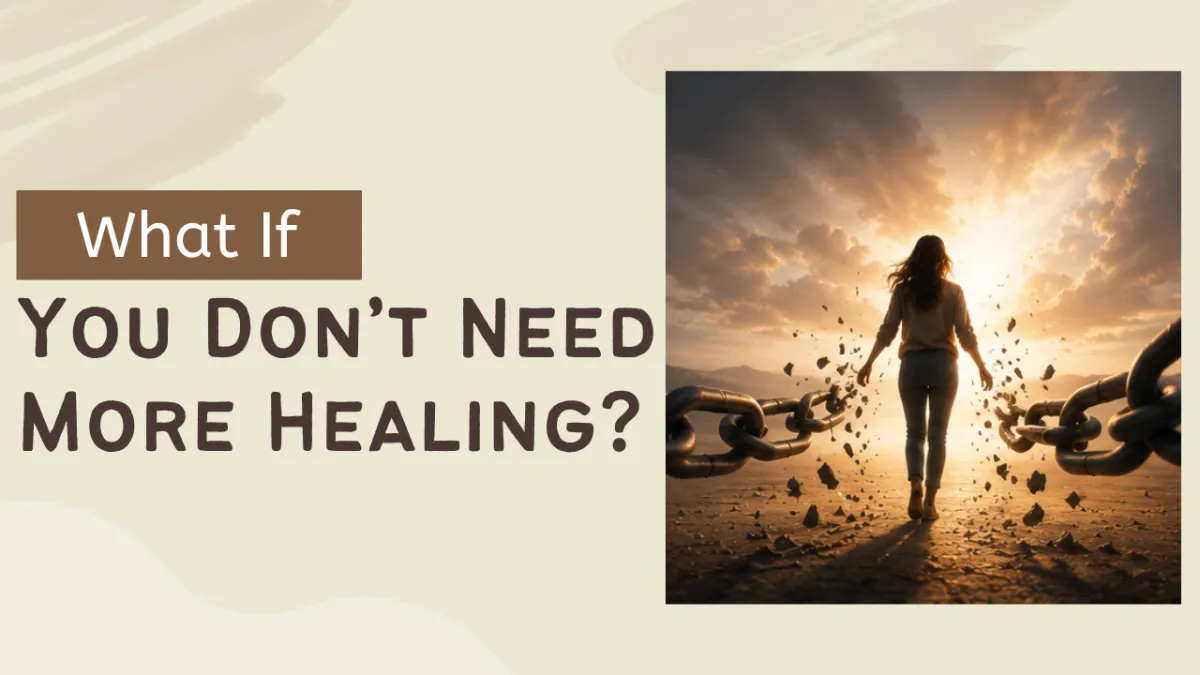
Why Your Life Feels Heavy — Even After Years of Personal Growth. Kathrin Niesel & Samia Bano
Why Your Life Feels Heavy — Even After Years of Personal Growth. Kathrin Niesel & Samia Bano
You’ve done the inner work. You’ve tried #healing, #spirituality, #mindsetwork, #personaldevelopment, and every tool you can find — so why does life still feel complicated and heavy?
Kathrin Niesel, #Transformational #Mentor, shares a powerful perspective on why constantly trying to fix yourself may actually keep you stuck.
The pursuit of becoming a “better” or “perfect” version of yourself can quietly become another form of self-rejection.
Learn why #SelfAcceptance and #UnconditionalLove may be the missing pieces in your #HealingJourney.
Connect with Kathrin now at:
https://www.facebook.com/hallo.kathrin.niesel
https://www.instagram.com/kathrinniesel/
Check out her website in German at:
https://kathrinniesel.carrd.co/
To Book your Free HAPPINESS 101 EXPLORATION CALL with Samia, click: https://calendar.app.google/fT19wX8hhiqgSEwx8
#SpiritualHealing #SelfDiscovery #InnerHealing #PersonalGrowth #SpiritualGrowth #LettingGo #Acceptance #InnerPeace #SelfLove #EmotionalHealing #MindsetShift #AuthenticSelf #BeYourself #SpiritualAwakening #ConsciousLiving #PersonalDevelopment #FindingYourself #HealingMind #LiveAuthentically #DivineLove #SpiritualJourney #InnerWork #transformationalcoaching
Here's the audio version of this episode:
Transcript Automatically Generated
Hello, Salaam, Shalom, Namaste, Sat Sri Akal, Aloha, Holah, Ciao, Bonjour, Buna, Privet, Mabuhay, and Dzień Dobry.
Thank you so much for watching!
I hope I didn't forget any of my usual greetings, and I'm just so excited and happy today because we have one of my favorite guests returning today, and that is Kathrin Niesel, who is an amazing mentor. Kathrin, welcome back. I'm so excited, Samia.
Thank you so much for having me again. I love that we continue our journey together, and I'm just so grateful for this wonderful opportunity.
Yes. I was telling you before we jumped into the recording, and it's absolutely true that you, like the interview that we did before, it stayed with me. I couldn't remember like how long it's been, like maybe two years, two years, something like that.
But what you talked about, it just stayed with me. And in the time intervening between then and now, I've actually realized the... I was like, wow, what Kathrin was teaching and sharing at that time was so profound.
I swear I have met so few people who have had anything to say to me at that level of profoundness. So I'm just so happy to have you back.
Thank you so much for these really kind words. I very much appreciate them. I honestly really do.
Thank you so much.
I just encourage all of you guys who are listening or watching right now to go check out our archives, to hear what we talked about in our first episode. But I won't take up any more time talking about the past. Kathrin, tell us more about what's happening with you right now, because I know a lot of things have changed for you too.
Yes. Well, you know, applying, practicing what I preached back then, this really led to profound changes in my life, how I approach life, how I live my life, and while I still practice what I've shared back then on a daily, and it keeps changing my life, I think I would love to share one of the biggest changes, which I believe so many people, no matter their background, no matter where they're from, their culture or their traditions, whatever I think can relate to.
And that is basically, why does life still or feels so heavy, even when we're doing everything right, even when we're doing everything we're supposed to do, we believe we're doing, we're doing the spiritual work, the personal development work, all these things that are out there.
And we love talking and experimenting with. And, and or slash, so to say, why so many people, and I have been one of them, keep chasing a life that doesn't actually feel like home, doesn't actually feel like their own life. Because these are a few of those profound, I don't wanna say transformation, because that's not necessarily what I've experienced.
It's more of a unwrapping of who I truly am. And with that, a lot of layers have been shed. Not simply, but one of those, like because of the appreciation practice I've shared with you.
Yeah, you know, this whole question of even though I'm doing everything that I'm supposed to be doing, that like is supposed to help me out, but I'm still struggling, I'm still suffering. That has actually really been on my mind because like I'm seeing this so much in society in general. But recently, I've also been experiencing this struggle in people in my own family, like very close to me.
And it's, I mean, I think there's a lot going on, obviously, for everyone. The world right now is sort of going crazy in many, many different ways. But in the context of my family situation, there's a lot of health issues that are going on, that are the primary cause of concern.
And, you know, like the people that I'm thinking of in my family who are dealing with this struggle right now, there are people of faith, there are like, you know, people who have practiced living a good life as they understand it, as they have been taught to do it.
And yet there is a lot of stress and worry and fear. Recently, one of them said to me, I'm feeling overwhelmed, you know, by all the decisions that need to be made, and I'm feeling overwhelmed by the sense of like, how are we going to manage this?
Can we manage it? You know, like that kind of thing. And I mean, again, you know, like for people who are like people of faith and, you know, doing everything that you're supposed to be doing already and still struggling, that could be like a really, really difficult place because then you're like, I'm stuck, I'm already doing everything.
So what else in the world am I supposed to do? What's wrong? And so, in addition to every other source of stress, because of, you know, the ill health or whatever, these sort of doubts start to creep up and you're like, you begin to even doubt your own faith and start to question like, what, like, is there something missing in my own understanding of what actually even is, you know?
And so, like, the people I'm thinking of right now, they're like actually struggling with that question. And like secretly, I felt really happy to see that struggle, secretly, because, I mean, you know, given the work you and I do, we know, I mean, there is good in that struggle, right? So tell me from your perspective, like, I mean, if you want to speak more to the causes of the struggle, of course, what anything else has been.
Yeah.
Well, yeah, and I'm glad that it resonates with you because I think, you know, it's not always easy to be honest with oneself or even with others, whether this is a family member, a close family member, a close friend, being honest with them. And I'm like, you know, like on the outside, we have this like social phase in which we present ourselves, like, well, look at me, you know, like whether it's consciously or not, you know, I want to represent like the successful or like, I have everything under control and everything is working out. And then having the courage to say, actually it's not.
So I also want to say very clearly that to everyone who has the courage to phrase that, that is a very powerful step in recognizing oneself. And I think this is exactly where the key is. I personally had, like we all basically have in our hands, but we completely ignore it, overlook it, don't see it because we don't actually know that, you know, how to use it, how to put it in the lock, how to turn it and how that can actually help.
And I speak from my very own experience, you know, like first I did everything I was supposed to do in the, you know, what society or my family would expect from me when it came to my education and going to university and finding the jobs and having the career and the money and the, you know, all that. But also many, many years ago, it was around 2005 or 2006. So quite some time ago, I also started this like spiritual self-discovery, personal development, healing journey.
And still many, many years later, like 15, 16, 70 years later, it was like, why is my life not working out? Like, why is everything so heavy? Why do I feel so drained?
Why do I question every decision? Why is it so like, why does life feel so much that all I want to do is escape? Yeah.
You know, whether it was because last time we spoke, I was, I think on my Euro trip, traveling through Europe for one and a half years, which was beautiful, don't get me wrong. But it was some sort of escape, in all honesty. But you know, there are so many different ways of escapism, whether it's shopping or like, you know, addiction, any kind of addiction.
So, and then on top of that, especially when we are, or when we at some point, you know, made the conscious courageous choice, I think it is to, okay, let's look into personal development. Let's take a look into like spiritual healing or mindset work or, you know, all these fantastic options out there. Yeah, sure, we might feel improvements, but I have spoken to so many women, not so many men, to be honest, not that being a judgment on anything, just my observation or my experience, that have done all the work, that have done all the, you know, applying the tools, applying the methods, and still, like, reach a point in their life, like, I'm such a good person, I'm doing all the things, like, why is life still so complicated, so heavy, so confused, so, you know…
And on my journey, I realized at some point, and that was partially also through this process of gratitude or appreciation, is that we spend years and years trying to fix or improve ourselves. When what we often need first is the space to hear ourselves. And that's what I meant with the key we hold in our hand, and we just don't know how to use it.
We don't know how to hear ourselves.
Yes.
And from my personal experience, when we start, when we learn how to do that, and it's not going to happen overnight, I want to be really clear about that. When we start to listen to ourselves, the problems start to fade out. The fears, the shame, the guilt, whatever we believe is blocking us, whatever we believe is like the reasons for doubting us.
Like, whatever we believe might be the cause of why life feels so heavy, when we start to listen to ourselves, it starts fading out and makes room for our strength, our power, our vitality, our joy for life, our excitement for life, you know, and from my experience, that's exactly what most attempts are lacking. They are always trying to fix, to heal, to remove, to, you know, I've myself studied so many different methodologies of healing and whatnot, but it's never about acknowledging, accepting, allowing to see what is. And for me, on my journey, that was the secret door I have been chasing, looking for everywhere.
Yes.
Okay. You made me think of two questions. One sort of clarifying.
So one is related to the language in terms of like, what do you mean when you use the word healing? Because, you know, we say words, and we can mean very different things. So like, for example, and I'm thinking about my family members again, are currently struggling with some of the issues.
So the word healing comes up a lot, right? And what I was finding, though, is that it was being used in a very restricted sense. It was like healing.
And the focus was on healing the body, because apparently, sickness is in the body. So it would seem, and so it's like, okay, well, what, how do we treat it? How do we treat the sickness?
And so going, this one person, and I'm thinking of particularly, okay, research, research, every avenue for how this kind of disease can be healed. What are the different treatment options?
And they have actually done their best actually to go that route. And even come up to a point where they found some treatment options that at least in an American context are so advanced. I say that in quotes, right?
That there's only like a few thousand patients in America who are currently even receiving that treatment. But it's, you know, because it's like on the cutting edge of what's available over here and so forth.
In Western medicine, we are talking about Western medicine.
Yes, in the Western medicine. And so this person even started receiving that very advanced treatment. And it helped a little bit in terms of helping them feel better.
But it's still not no cure. They're still struggling with the disease in the physical sense, but also mentally, emotionally, spiritually, the struggle is continuing. Right.
And so this person clearly felt themselves hit this huge wall in terms of, you know, they're doing everything they're supposed to do to help with the healing. Even going for the most advanced treatment that, you know, could be found in the context of, you know, like working with the doctors and stuff over here in America, the supposed to be richest country in the world and so forth, and hit this wall. And so, well, the struggle again, you know, like doing everything, but still struggling.
And so it's like, what does it even mean? Like when, if healing is something we desire, what does that even mean to be healed, to feel healed? And then, so that was my first question that popped up in my mind to ask you.
And then the follow up to that, related to that, is like towards the end of your remarks, you indicated that maybe that is not even the right goal for us to be chasing anyway. So, then tell me more about what is, because healing sounds like such an amazing and appropriate proper goal to have. I mean, it's like, you know, why wouldn't we be wanting to heal or chasing after healing?
Well, thank you so much for this question. I surely did not anticipate or expect that this, that our conversation would take that route. And I want to be, excuse me, I want to be really clear.
I'm talking from my beliefs, from my experience. Not everybody might agree with me or have a different perspective, and that's completely fine. Because I think that is already a very healing state of mind, accepting what is, whether this is a different opinion or, you know, having some sort of disease.
So from my personal perspective, from my understanding, from what I believe in and from what I've experienced on a personal level, healing always and only starts and ends in the mind, not in the human brain, in the mind. And when the mind is healed, the body heals itself. That's what I believe.
That's what I've experienced.
From a personal experience, I had one condition from beginning of life, since birth, and since last July, this condition is gone. Not because I specifically focused on, but because I appreciated myself and my truth. So, when I talk about healing, I'm always and only talk about healing the mind.
That's what I mean. Although the forms that we want to heal are expressed in a thousand different ways. And this could be with physical illnesses, which is, I guess, a very prominent one.
But it can also look into mental, you know, situations where we experience all sorts of mental situations. And also emotionally, you know. So, and this is…
And all three of the physical, the emotional, the spiritual, the mental aspects, they all come down to... When they are distracted, when they are out of alignment, so to say, life feels heavy. Life feels complicated.
Life feels stuck. Life feels overwhelming. And so...
And again, coming back to what I've said earlier, I've personally discovered, chasing healing, you know. Like, whether it's like... I mean, you have been on social media long enough to know.
One quarter, it's like, heal your fear of abandonment, heal your fear of, like, heal your mother wound, heal your father wound, heal your fear of visibility, you know. I mean, there are all these different fears out there. And I've chased all of them.
I've tried to heal all of them. Like, you've tell me, did you do that? And I probably will say yes.
And all of that, I found peace with, by first, recognizing, acknowledging, becoming aware of myself, of my inner landscape, and how these stories we tell ourselves actually manifest the body we live in and the life we experience. So when you ask me, what do I understand, or what do I mean by healing, I mean healing the mind. And over my little speech here, I forgot your second question.
Could you please repeat it?
Yeah, yeah. So assuming I understood you correctly, I thought I heard you say towards the end of your remarks.
That even going after trying to heal ourselves can in itself be a not very wise goal. That there might be an even wiser goal for us to strive for other than healing. And so if that is the case, if I understood you correctly on that, then please speak to me about what is the wiser thing for us to do rather than chase after healing.
Yeah. If I may answer this question with a little story.
Yes, please.
So years ago when I heard about manifestation for the very first time, I eventually also came across the concept of letting go. Being a person that was mainly in their head and trying to control everything and anything, the concept of letting go was an absolute enigma for me. I was like, what?
What?
What?
What?
I've searched the internet. Like, you know, I'm a Sagittarius and I don't know, I can be very like goal-oriented. I made it my life mission to understand what does it even mean to let go.
And the answer I found was to accept what is.
And when I work with my clients, and they have done all the somatic tools and healings and hypnotics and I don't know, all of all the things.
And with all those tools, they've tried to heal whatever they thought they needed to heal. It was always about what is is not good enough. What is is bad.
What is is not ideal. What is sucks. What if, you know, you know it yourself.
Like how we talk about ourselves, our situations, about circumstances. That's why we try to heal. That's why we try to improve.
That's like what the premise of personal development is based on. That what is is not good enough. That's one of the big beliefs out there.
That's a, I'm not enough, you know, is one of the big beliefs out there.
Yeah.
And we use all these tools, and there are even more and more tools coming up, you know, like that are all trying to eliminate, release, whatever the term is, you know, depending on what kind of healer you speak to, or medicine man or whatever, it's always about getting rid of it, because it’s not acceptable.
Yes.
Well, the secret to letting go is to accept what is. And what I've experienced, not only within myself, but also with my clients is, the moment I allowed them and gave them the space, opened up the space to really notice themselves. Notice the stories and how they manifest in their bodies, and to simply accept what is, to acknowledge and accept what is.
All of them, me included, first response is like...
And this kind of piece, you offer yourself, the moment you acknowledge and accept yourself, offers you a whole new perspective.
So, letting go, and this is why it's such a challenge, is accepting what is. And the logical, trained, indoctrinated mind will have the biggest challenge with accepting what is. What do you mean I am supposed to accept that I'm broke?
What do you mean I have to accept that I have this or that disease or illness? What do you mean I am supposed to accept that I apparently have a receiving block?
Yeah, it's like people are terrified. Like, sorry, I keep coming back to this example of the family situation.
Please, apparently, this is something that wants to be talked about. We accept what is.
Uh, yeah, so, you know, so for example, um, so, um, again, to tell a little story about this, um, I won't get into the details of everything that was happening or that we were talking about. But at some point this person said, so, what am I supposed to do? And like, because they hit that wall and cannot see a path forward and stuff.
And I said, let go. I said those two words. Let go.
I had only to say these two words and there was this huge explosion.
How could you?
I mean, there was, and I mean, like for me, it was so clear that the moment I said let go, even just hearing let go for this person was so scary, so terrifying, because I think people immediately, they hear let go, they immediately think giving up. You know, they immediately think giving up, which means defeat, which means I have to suffer, and there's nothing that can be done to ease my suffering. And so you're basically like, should I just end my life then?
Well, you know, it's that sort of like, where this version certainly went. But even like so many people that I've spoken with and worked with around issues of acceptance and letting go, even though, I mean, this stronger reaction is not so common, but people have this intense fear, nonetheless, of, you know, the idea of letting go because of what they think letting go and acceptance will lead to, which is defeat, failure, permanent suffering. Like you're just giving up and you're saying, accept suffering, accept pain, or maybe even just give up, you know, like on your life.
Because like, you know, to try and heal, to try and find happiness, peace. I mean, that's the point of what they have been doing. You know, I mean, like no one's chasing healing for healing's sake.
They're chasing healing so that they can finally actually have peace and happiness in their lives or whatever else it is that they want. That, you know, the brokenness that they're experiencing or the disease they're experiencing is preventing them from having. And so it's like to say to that, to people then, let go, accept, is just so terrifying.
So I know you will have some, something to say about, like, yeah, they, how do you then understand acceptance? Because I know you are not telling people to just, I mean, certainly give up hope of ever feeling happy or healthy or anything like that. I mean, it's the opposite.
You've been saying, no, you can get to a place of health and happiness and peace, and you're helping people to do that. I know you're not telling people to like give up in any negative sense. So what are you talking about?
I'm talking about allowing yourself a completely different acceptance, perspective on what acceptance actually means. So let me share what I've experienced. And thank you so much for this conversation, not in my wireless streams.
Did I anticipate that this is going this way? So thank you so much for being so open with that.
You know, there are so many songs and quotes and poems and what not, and wise words about love is all there is. Love heals everything. Love, you know, is the answer to all your problems.
And we find this in religion, we find this in spirituality. But what most of us don't really understand, and there's, I think, not really a lot of, there are no words really to explain love, because love needs to be experienced. And I'm not talking about the romantic love, because that's not what love really is.
It's an aspect, an interpretation of it, but it's not really what love is, or the love for chocolate cake, or mousse au chocolat in my specific case.
But when we talk about the love that holds all the power of the universe, the sensation we equate with the divine, with all of what there is, you know. We also always combine it, or at least in my understanding world, and you can correct me if you see this differently, that love is unconditional, that God loves you unconditionally, you know, that the divine spirit is unconditional love. So, when you accept what is, what are you truly practicing?
You're practicing unconditional love. Acceptance is practicing embodying unconditional love. And because love also is, you know, so unknown to us, and also often associated with pain, I mean, there are endless love songs about how painful love apparently is, based on the limited understanding we have of love, and romance books and movies and whatnot.
There's also a lot of fear we have around love, a lot of shame maybe around love, a lot of really weird experiences we have around love. Obvious belief we have around what we define as love. So when I tell someone to accept what is, and they have such a strong reaction as you just explained, or maybe even a milder one, but still really quite a difficult experience to like, what do you mean I'm supposed to accept what is?
The emotions that come up that are typically in the range and the frequency of fear, guilt, shame, and what not else represent the fear, the shame, the guilt we have towards love. And through the acceptance of what is, we allow ourselves to not only recognize all these like feelings, fears, shame, guilt, whatever, but they finally can start leaving. Because emotions, emotions, energy, emotions, they just want to be recognized.
They just want to be seen. Once you see and recognize them, they start to fade out. And when they fade out, the space that is being opened is automatically.
You don't even have to worry about that. It's filled with who you truly are, which is love. And then on that journey, my clients suddenly realize, oh my God, love really is the answer to all my problems.
It's not the romantic love or the love for chocolate and mousse au chocolat, but it's acknowledging, accepting what is, and through that, experiencing divine love.
So that was a big answer.
Yeah, yeah. Well, this is why I love you. I am with you.
I'm absolutely with you. And I feel like I keep needing to dig and ask you to dig deeper and to tell me more about what different words mean, because like you were saying, especially like when it comes to the word love, like English is a language that can sometimes feel so restrictive because you have one word, and it's given a thousand different meanings.
And sometimes you get really confused because of all the different ways that one little word is being used. And so like we try to then clarify by, you know, going, attaching a little bit more description to anything. Okay, what we're talking about is unconditional love.
But I think for most people, that is also such a foreign experience. Like, I don't think most people have actually probably ever experienced truly unconditional love. Not that they know of.
And so, again, people just don't even really understand what that even means. Tell me a little bit more about what even is unconditional love? How can we, like, if I'm experiencing unconditional love, how do I even recognize it?
I don't know if that's the right question, but... I love that.
No, I think it's a perfect question, actually. And I want to start my answer with, I've been single most of my life. I've never married.
I don't have any kids. You know, I didn't have a lot of romantic, lovey-dovey experiences in my life. So for the listeners or the viewers of your podcast, from a social stand for a stand point, I don't, I'm not an expert when it comes to love, how it's usually interpreted in society.
I mean, I do love my mousse au chocolat, but that's also not the kind of love I'm talking about when I refer to unconditional love. What I've learned, what I've experienced, and what I practice, and how you can, and how I recognize, and I show my clients to recognize unconditional love. And you know, it's quite interesting, because before I went on this journey of acknowledgement, acceptance, appreciation, allowing and awareness, I wouldn't have known that I didn't know love.
I had a dog for 17 and a half years, and I thought I knew what love is, because of that experience.
But love is, I'm sorry.
But love doesn't stop, or isn't limited to romance, or your favorite food, or your favorite lip gloss, or your favorite activity. Love is acknowledging yourself and how you enjoy to express yourself. So let me give you an example.
I am a very spiritual and emotional, spiritual person, I'm a very sensitive person, and I'm a very emotional, aware person. But I'm also a highly logical person. So for me, that always was a little bit weird, my love for logic.
So I didn't really pursue it. I never really like flirted with it. I expressed it maybe here and then by doing a Sudoku, you know, or like, but I never really entertained it, even though that is a big part of how I like to express myself.
Through this process, I've been walking or I walk, I have not only allowed myself to express my joy I feel when I use my specific kind of logic and bring structure into chaos. Like that's one thing I just like, that gives me that. You know, I'm so good at this, it comes so easy for me, whether this is like in philosophical text that make no sense, and I’m like, yeah, that’s how you do it.
That's how you embody it. You know, like it's really or with Sudoku, you know, and the more tricky it gets, the more excited I get because the more I get to explore this aspect of me, I used to ignore or, you know, didn't want to play with. But this is expressing love, you know, for like the aspects of my being.
Or let me give you an another example. Because I've been on this spiritual journey, I've been a yogi for 20 years, you know, I've been to India, spent times, weeks in ashrams, meditating, all that, you know. I somehow, why so ever, for years didn't allow myself to get my nails done.
Although I just love to have pretty nails. But the endless discussions I had with myself, how vanish it would be to get my nails done as a yogi, that's just not like, what? And at some point, I was like, you know what?
I acknowledge and accept that I love to have pretty nails. Not because someone else might think of me, oh, look at her and her nice nails, but simply because I enjoy it. That is expressing unconditional love.
Also, you know, accepting and acknowledging, I've been not allowing myself to have pretty nails. Like through the acceptance, through loving that aspect of me, it's like, okay, I accept you, you know, also expressing unconditional love. And these are just two small experiences, but believe me, these two examples cause a lot of brain fog, cause a lot of discussions, cause a lot of doubt, cause a lot of worry internally.
And which, you know, if you know anything about frequencies, if you're in that kind of frequency of very adult, you will, it's very easy to add even more on top of it, on top of it, on top of it throughout your life and both you're overwhelmed, you know. So recognizing unconditional love is when you start to acknowledge what it is that brings you joy, accept it and follow it, you know. And as someone who used to live a very isolated life, a life in freeze mode for many, for like nearly two decades, you know, acknowledging what I enjoy and simply doing it is a miracle for me.
It's mind-blowing for me. And that is the power of love. That is the power of unconditionally accepting what is, you know, and then expressing it without questioning or doubting.
And that's how you recognize living unconditional love. There's more to it, but that's just one.
Yeah, you know, what you made me think of is.
A teaching that really sort of helped me around this idea of unconditional love. Because one of the challenges, I think, many of us can face, especially those of us who are striving to better our lives, who are striving to... Like, for me, I was on definitely a mission to achieve peace in my life.
Because I was, you know, highly traumatized, this intense sense of suffering in my life. And I was, you know, to the point where I was like, either I end this suffering or I end my life. I can't, you know, live at this anymore.
And so I was on a mission to, you know, eliminate my suffering. And so that actually led me to this journey also of what I would now describe as trying to become the perfect being. Because I was like, OK, if I can fix this about myself and solve that problem that exists in myself.
And there's like this whole load of, you know, problems and issues to be fixed and changed in me. So if I could do all of that and thereby become this perfect being, then I would finally be at peace. I would be happy.
Exactly what I said in the beginning, you know, we tried to fix ourselves.
Yes. And so it's like, OK, it's not about being a perfect being. No, it's like if you want happiness, if you want peace, we do have to come at it.
We do have to practice and experience and condition love. And for that, you have to just absolutely reject this very notion of a perfect being, the need for a perfect being, or that you certainly most certainly have to just completely be like, well, I'm never going to become a perfect being. And that's actually a good thing.
That's a really good thing. Forget about becoming a perfect being. Not only is it never going to happen, but the fact that it's never going to happen is amazing.
I have to say I disagree.
Tell me why.
So, and.
You know, first of all, I would love to challenge the concept of what's perfect. Who defines perfect? What does that even mean?
The perfect be. Like, and if you will ask a thousand people, you probably might get a thousand different answers. You know, so perfect is a human concept that has no, as we like to, in Germany, we like to norm everything, you know, and so it's not normed.
So perfection, you know, it's be at least how we interpret us as from the human perspective is an illusion. It's just like smokes and mirrors. It's nothing like.
And then the second part of my answer, and now we touch a little bit up on the spiritual tea. And that was allowing myself to open up to this perspective. Gave me so much peace.
So, from an spiritual perspective, we came, we chose the human experience to experience, and these are the really important words, to experience individuality. That's why we are here. We want to experience individuality.
So, the way you want to express yourself, the way you hopefully allow yourself to express yourself, again, this is where the unconditional love comes in, because when you unconditionally love yourself, you allow yourself to express the way you want to express yourself, most likely very different from the ways I enjoy expressing myself. I just shared with you, I love to do a good Sudoku. The more complicated it is, the more joy and excitement I feel.
Maybe when you think of a Sudoku, you fall asleep because like, oh my God, this is the most boring shit ever. So, and this is why allowing yourself to contemplate about this, like we came here to experience individuality, also means you're perfect exactly the way you are, the same way me, my neighbor, my best friend, my father, the person that yelled to me yesterday because of whatever reason, they are all perfect in their unique way, you know. And next day of unconditional love, the same way I acknowledge, accept and express myself, the way I want to experience this individuality, you know, by loving and accepting my brother or my sister for how they want to express and experience their individuality is the next day of unconditional love.
Yeah, yeah. OK, OK. I'm totally waiting on that.
So I don't hear a disagreement between what I was thinking and what you're saying.
OK, perfect.
OK, OK. So my... So, yeah.
Go ahead, go ahead.
No, no. I just want to say like we are all perfect in our individual way and reaching. And when you say like, you know, I want to be the perfect being.
But for me, what that means is acknowledging, accepting yourself for what is, whether this is you love to, you know, play Sudoku or volleyball or gardening or knitting or writing or painting, doesn't matter what it is, as long as you enjoy it, do it and like enjoy it in full force. And then like you are your perfect being.
Yes.
And far it's not me to tell you what's perfect or not perfect for you. It's like, what is it that you enjoy doing? What is it that thrills you?
Yes. The reason we are on the same page is because the perfect being that I was chasing was not being me as I am. It was an idea of perfection as I took on.
And I love that so much.
You know, like having studied, studied the people that I wanted to emulate. So I was like, okay, they were like this.
So I want them like that.
You see? So that was the kind of perfection I was trying to chase. So we are on the same page.
That kind of perfection doesn't work.
And I love that, you know, you just said that because that basically brings us back to this, like, incoming question, this opening question, why do so many people keep chasing a life that doesn't actually feel like their own? Because they try to be like someone else. And someone else's version of expressing their individuality isn't their own.
You know, and that's exactly the reason why life feels so heavy. Life feels so overwhelming, so complicated, because we constantly try to chase and be someone we don't even want to be. You know?
Even if you want to be, it's not a very wise wanting, you know? Like, I wanted to be like someone else. I really did, because I didn't like who I was.
So I wanted to be like someone else that I thought I would love to be like. But it turns out, hey, actually being me is the best.
Yeah. And again, that comes, we come back like as we think we know what we want. Yeah.
But that's only because we haven't accepted who we are.
Yeah.
You know, and that's why, you know, so many people wonder, like especially, you know, you have probably come across so many women in the online space who, you know, they think they know what they want in regards to their online business, and they do this because they love it. They do it because they want to serve, you know. But somehow, it's not working.
And it's because we have all these, like, I call them ego desires, layered on top of it, whether this is in regards to our body, of how we were supposed to look, to dress, or what we are supposed to earn, or what we are supposed to, you know, represent to the outside world, has nothing to do with what our truth wants to express and experience. And when we come in touch with that through the process of acknowledgement and acceptance, we then suddenly realize, wait a second, being me is super easy. Decisions, no problem anymore.
Overwhelmed, poof, gone. You know, overthinking, not me anymore. Because like what a joy it is to be myself.
And suddenly all this abundance we've been trying to search and hunt down, shows up in our lives. In forms we would have never been able to anticipate. So that is why the power of acceptance, acknowledgement and applying, practising, living unconditional love is truly so powerful and healing again.
Yeah. So a question following up to what we were talking about before. You said from a spiritual perspective, as you understand that, we have chosen this life or come into this life to experience individuality, is that what you said?
Can you tell me a little bit more about that? It's like, what's the point and purpose from a spiritual perspective of our having made that choice? Like, why do we need to experience individuality?
Why do we want to? Because we wanted to.
So in our first conversation we did, we had, we talked about my core belief, which is oneness.
So in my belief system, our truth is one with God. We're not separate from God. We are one with God.
One. And what is God? God is love.
Love is a frequency. Love is an experience. So we were one with love.
We were one with joy, happiness, all the jazz. We are running and searching for here as earthlings, so to say. But at some point we were like, you know what?
It's all nice and fun and games, but I want to be in, I want to experience individuality. Poof, the human experience was created. Because we want to experience how it is when we are separate from all there is, to experience individuality.
And that is why it is such an important and healing path to express your individuality in a loving, joyful way. Because that ironically opens you up to the love you said no to. But everyone on this planet, all we want is return home to love.
That's all what we do. You know, we might be chasing money, we might be chasing health, we might be chasing the perfect body, the perfect car, the perfect bag, the perfect whatever. All we ever chase is love.
And by expressing our individuality joyfully, gleefully, blissfully, peacefully, in peace, accepting how we want to express ourselves, we open up to this love with every little tiny action. You know, it's so funny. I love baking cakes.
I love baking cakes. Baking cakes is a big part of German culture. I grew up having cake available every day.
That's just like part of our culture. But for the longest time, I wouldn't bake myself cakes because I hated or I believed I hated cleaning up afterwards. So I never baked myself cakes.
I'm opening myself up to, you know, like unconditionally loving myself, allowing myself to experience my joy. I suddenly realized I don't even care about the cleaning up. It's just part of the process.
I keep making cake all the time. My neighbors are like, another cake, Kathrin, and they're like, ah, what can I do? I love baking cakes.
You know, I love having a clean apartment. You know, I love structure and order and being everything we need. I hated cleaning up, so I thought at least.
Fully and completely owning what I love and enjoy suddenly makes the cleaning effortless. You know? And so, this is why it's so important to acknowledge and accept what is, because of this process, you are then able, you allow, you start to allow yourself to discover your individuality.
All these different tweaks and, you know, side branches of your personality, of like, oh my god, never in my life would I have thought that I enjoy cleaning? I mean, am I turning into my mother? What's happening?
No, it's just a part of the expression I chose to experience. And suddenly all the mindless chatter, the overwhelm, the confusion, the doubts, the worry, the fear, they all twinkle out because you accept that you chose to experience individuality and you're like, yes, let's do this and let's have fun while doing it. That's all.
That's the big secret. That's the big secret of the universe.
Okay. Okay. Okay.
So, oh my gosh. He wanted to ask you more questions and I'm looking at the time and I know I've kept you way longer than I promised to give you. Shucks.
You can ask me more questions. That's no problem. I'm happy, but I guess you might have to cut it up in two episodes or something like this.
I don't know.
Because we've been nearly talking now for more than an hour, but it's always so fun.
I know. I know. OK, so I'm trying to wrap up for right now and then bring you back or ask you one more question.
Maybe just to... OK, so because what you were just saying, I want to make sure I understood you correctly. So I'll just clarify things for myself.
Make sure I understood you correctly, and then we can wrap up. OK, so I might even need you to read it.
So we're here, we chose to be in this life because we wanted to experience individuality. Uh, and the, our, our source, like where we're from, there's an, there's a oneness, you said. OK, so we're here to experience individuality, the source is oneness.
And then, I mean, in my mind, I can see the connection, between the love and oneness and our needing, wanting to experience individuality. But I want to make sure I'm not just projecting based on my understanding of things that you haven't actually shared with us. So actually, you know what?
Here's the question, I guess. Just so I don't speak from my assumptions. And you may have already said this, but because I started thinking from my perspective, I think I may have missed your verbalization of this.
So can you clarify again, just the connection between...
So we come from oneness, but we're here to experience individuality, love. But love is what we are looking for.
So allowing ourselves to experience our individuality, that is an experience of love. Okay, so what's the connection between love and oneness? Like that is our source, our source is oneness.
No, no, our source is love. We are one with love.
We are one. Oh, okay, okay, see, see, this is like language can get us. Okay, so our, so, oh no, sorry.
Okay, so. Our source is love.
Say that again.
Say that again. Our source is, our source is love.
And our truth is that we are one with love. This is why we feel so good when we are happy, when we are at peace, when we experience joy. This is why we like love that so much, because that comes closest to our truth, which is love.
Yeah, yeah. And the love is unconditional. So therefore, it's like when we put conditions on ourselves to our own self-acceptance and so forth, it violates that truth of love that is actually an unconditioned.
Okay, okay, okay. Yeah, okay, so you're verbalizing. See, I knew there was an...
I was... I knew I was, like, projecting in my head, but I got you now. I got you now.
Okay, okay, so now that I've clarified that for me, I feel like I could wrap up. Do you feel like we could wrap up? Do you have any wrapping up thoughts you would like to share?
I enjoyed this conversation immensely. Please do not hesitate to invite me again if you ever feel the intuitive hit.
Yeah, thank you so much for being such a beautiful, active listener. To not just like fill time, but to really speak with each other, to really like to really hear each other. I really enjoyed that.
And, yeah, thank you so much for holding this space for, for, you know, like, what I believe in, what I have to offer and all these tidbits. Thank you so much.
Oh, no, thank you, Kathrin. You know, to be honest, like, I didn't know this was there, our conversation was going to go, because we had talked about talking about a particular topic, and I'm not sure if we quite got there, although I think we were in the fall.
I would say in the grants, can we kind of answer it? Because the reason why life feels so heavy is because we counteract of our natural essence, you know, and through this process of acceptance, we come, we open ourselves up to it again. So we kind of stayed on track, but with a little bit of, you know, extra sauce is on the side.
Yes, yes. Okay, but now I'm thinking of more questions to ask you for the next time. I'm going to bring you back because, you know, like to approach the same question, but in a somewhat different way, because these different perspectives, you know, that really create the greater clarity for us and allow us to see the bigger picture of what we're dealing with, you know.
So thank you again, Kathrin. I so appreciate that. You're so welcome.
And I'm going to resist saying anything more other than to remind all of you who are listening, watching to please make sure you check the show notes because we will be dropping Kathrin's links in there so you can connect with her and continue to learn with her and get the help and support you need whenever you’re ready for it. And until we connect next time, I wish you lots and lots of peace and joy.

Want to check out even more amazing episodes?
All of our episodes are archived on our vlog page :)





OUR PEACE OF MIND GUARANTEE
Because we’re committed to doing onto others what we would have them do onto us, all our programs come with a Peace of Mind Guarantee.
We know you’re going to love our programs. We’re so confident about the quality of our programs we’ll give you full access risk-free for 30 days. If you decide the course isn’t right for you, then you may request a full refund up to 30 days after your purchase.
Copyright © 2018 Academy Of Thriving