
Blog: Make Change Fun And Easy
How To Become Free To Lead. Will Steel & Samia Bano
How To Become Free To Lead. Will Steel & Samia Bano
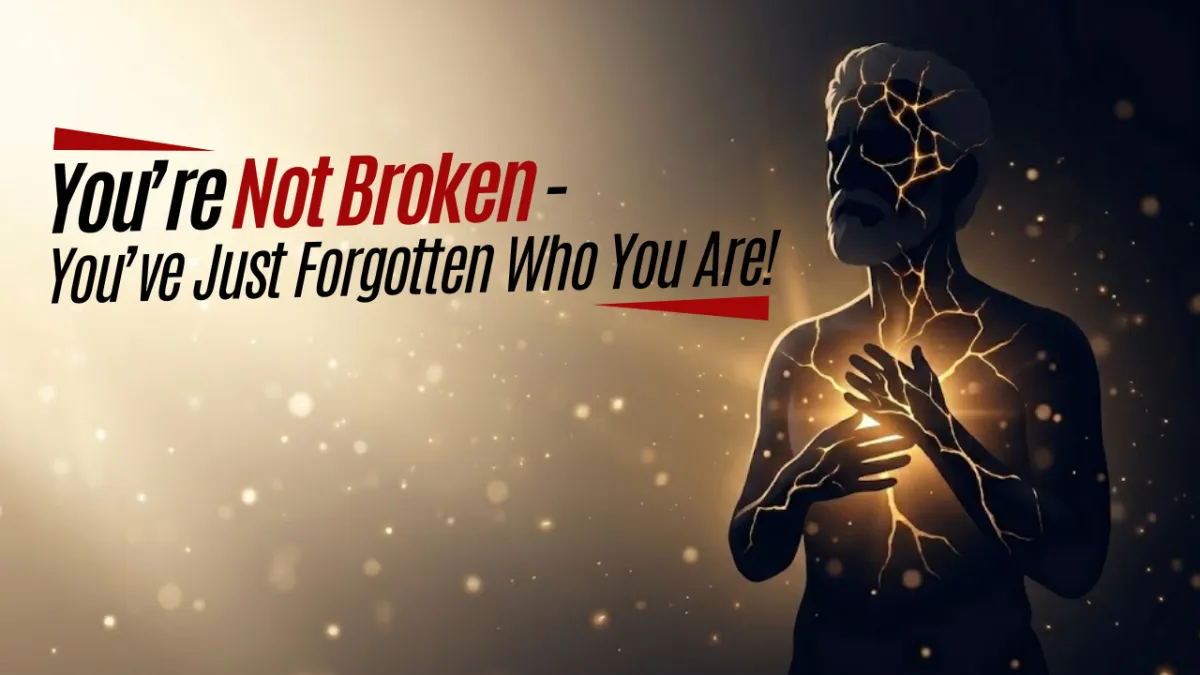
Think you need better systems, better marketing, or more productivity to achieve #businesssuccess?
According to Will Steel, an #executivecoach, #entrepreneurcoach, #businesscoach, the real limitation is often hidden within ourselves.
This powerful episode dives deep into how #trauma, #fear, and #identity patterns impact #leadership, #delegation, #growth, and success — and how to finally #break through.
Will Steel explains the Islamic and universal concept of #Fitra — the pure, authentic essence within every human being — and how reconnecting to it can radically transform leadership, relationships, and purpose, helping you become “free to lead.”
Will doesn’t just challenge the idea that playing prescribed roles leaves us unfulfilled; he questions whether most of us even know what #authenticity is. As a former RAF pilot who earned the Leadership Trophy and later guided leadership programs for over 60,000 people in 26 countries, Will’s background is as broad as it is deep. He’s spent over 21 years helping leaders see how our self-stories and secret approval-chasing keep us stuck, and his book "Free to Lead" became an #internationalbestseller for how it shakes up assumptions about #personalgrowth.
Will's coaching methods have quietly influenced thousands of founders, CEOs, creatives, and more. He brings warm, practical stories and a global perspective, yet stays direct about what genuinely unlocks impact, confidence, and honesty.
Learn more and connect with Will now at: http://willsteel.com/
To Book your Free HAPPINESS 101 EXPLORATION CALL with Samia, click: https://my.timetrade.com/book/JX9XJ
#AuthenticLeadership #TraumaHealing #HealingJourney #InnerHealing #TransformationalLeadership #SelfDiscovery #MindsetShift #EntrepreneurMindset #ConsciousLeadership #EmotionalHealing #FearHealing #AuthenticSelf #BusinessGrowth #SelfAwareness #LeadershipDevelopment #HealingTrauma #InnerPeace #SpiritualGrowth #HumanPotential #MindsetTransformation #PodcastInterview #liveyourbestlife
Here's the audio version of this episode:
Transcript Automatically Generated
Hello, Salaam, Shalom, Namaste, Sat Sri Akal, Aloha, Holah, Ciao, Bonjour, Buna, Privet, Mabuhay, and Dzień Dobry…
It's really, really good to be with you again, and I know you'll be so happy of joining us because we have a very cool guest with us, and that is Will Steel. And I'm gonna invite Will in just a moment to tell us more about who he is and what he does.
But before that, welcome, Will.
Thank you, thank you, thank you. It's great to be here on the Making a Change Fun and Easy show.
Yes, we're so happy to have you with us, and please tell us more about who you are and what you do.
Okay, well, my name is Will Steel, and I am, I would want to say an executive coach, but really I coach entrepreneurs, business owners, to really grow and scale their businesses. I can coach people in any aspect of being human. I led programs for a company called Landmark for 21 years.
I worked for them, and I led the main program called the Landmark Forum for 15 years, to over 90,000 people all around the world. And now I have my own coaching business, but I also lead programs in the Middle East, leadership programs, and do that in Egypt, Cairo, Egypt, do it in Dubai. We've been in Riyadh in Saudi Arabia and Casablanca in Morocco.
So led these programs to hundreds of people out there based in Fitra. So you may or may not know Fitra is a word that doesn't translate very well into English. And people have an understanding of it or a notion of it.
But when you really get into Fitra, like my business partner in the Middle East, he's writing a whole book on it. It's a really thick book. So it's a world.
It's not just, you know, in Islam, talk about Fitra and the Fitra that Allah breathed into Adam.
You know, like it's life. But for me, it's, yes, it is that. But it's also, you know, universal intelligence.
You put a seed in soil, it just knows to grow into a perfect plant. You can put it in a different environment, it'll grow and it'll grow in perfect harmony with that environment. That's all Fitra.
Defining True Essence
So I used to talk about being authentic and getting to being authentic. But then Fitra is a better word for me. It just really captures like being your true essence, your true self in whatever environment you find yourself, not changing to the environment.
Responding to the environment, but from who you truly are, from your true self. So you're not trying to double guess how you're supposed to do this, or you've heard other people are like this, or I'm supposed to be like that. You take all that away and get yourself back to Fitra.
So the initial program is called Fitra Leadership, but it was a big jump for people. So we created a smaller program, a slightly shorter program called Awaken Fitra. And I think it's very, very fortunate that you and I are talking because you talk about making a change.
And I have a little kind of, I have a little contest with that, right? Because when people talk about making a change, I'm going to change, I'm going to change, I'm going to be different. You don't really change.
Why? Because it's the same old you that's now doing things differently. You might be doing things differently, but it's the same old you doing it.
Whereas if we get you back to fitra, you're not this you that you've become in life. You've become a certain identity. You know, I'm good at this, I'm not good at that, I'm strong at that, I'm keen with this, I'm smart at that, I'm not so good at that, I don't like this, I do like that.
And you've become a collection of ways of being and acting, of behaviors. So you could say you're constrained inside of that, inside of these notions of what you know as what you call you. But my book called Free To Lead is based in the Fitra method, which is really, you're not that, you're not that, you're not that, you're not that.
So the whole first part of the book is getting you back to Fitra. And once you're in Fitra, from there, from your true self, your true essence, your true, like you. Not anything else, not what you're supposed to be, not what you've become, not your reactions, not your survival, not your sabotaging of self, not your, you know, stories you've become, I'm this, I'm that, none of that.
From your true Fitra, creating authentically who you are as a leader. And that comes from creating what you're up to. What am I up to in the world?
What's the difference I wanna make? What's my vision? And then if you create that vision from your authentic self, it all aligns.
And then who you're being in the world and how you're acting in the world is consistent with what you've created from your true Fitra.
Uh-huh.
Online Versus In-Person
Uh-huh. You'll have to tell me more.
Yes. It's a long conversation. You know, you come and do the program.
It's like four days.
That is very cool.
By the way, which you can do, I will invite you to come and do it. Because of the travel right now, we're also making it online. So it's a hybrid.
It's in person and it's on Zoom. And I've been doing it that way because people were complaining that to travel and get a hotel and the flights and all the costs, it's like tripling the price of the course. So we trialed it.
See, can we do this online? And it works. It is working.
In fact, more people now are doing it online than in person. But I still like to have a room full of people because it's a human thing. You know, we're interacting with real people.
Indeed. Indeed. You know, I will say, I've had some of the most amazing learning experiences.
Actually, two of the most impactful teachers that I've learned with, I've never met them in person. I did entire trainings with them. The very first person I'm thinking of in this context is actually Dr. Amy Koje.
I call her my happiness expert because this is back in 2012. I actually went through her training program to become a happiness coach myself. And it was life altering for me, both at a personal level and professionally.
And I did her entire program on like it wasn't even like we were online, but most of the time back in 2012, you know, we didn't have Zoom. There were some video streaming services that had begun that we could use to connect via video, but they were not always even very… like it took a lot of power and energy and the video wasn't always very stable, this and that. So a lot of times we were just on the phone.
And I still had a really amazing experience, I learned so much, changed my life, and she wasn't even in a different country, she was just in Northern California, I'm in Southern California. So it just was great to have that flexibility to nonetheless be able to connect with her virtually. And now I do so many different workshops, not only for my clients, but also continuing my own learning with other teachers online, like really great.
Yeah, yeah. It's very, very easy, isn't it? Online, you just sign up for a program and you can just do the program.
But the programs I used to lead were all in person and there was no online. And there's something about the whole group of people being together. And the being of human being gets present.
The moments when there's just that space, it's just that you're really present in the moment and all connected.
True.
And I have not seen it, not seen it that powerful online, even though I've led loads of programs, been in loads of programs. There's just something to be said for being in person with other human beings. You know, the pandemic had a lot to, you know, a lot of, it had a big impact on people, you know?
Yeah.
It's true.
I don't think we've fully come out of it yet, you know?
Yes, there's definitely all kinds of different ways in which we're still feeling the impact. I guess we can say it goes back to our fitra that, you know, we are social beings. And when we are around other people, it has an impact on us, on our energy.
There's just, you know, our emotions, our energies, definitely like we, it interacts with that of others. And so when you are, especially in the presence of groups of people, I mean, there are things that we experience, that we feel that we will do, that we would never do if we were on our own, or even if we were just one or two people, because that that energy of the group just has its own life and impact that it creates.
Yeah. I mean, I love, I love, you know, music, but being at a concert and experience them playing is not the same as listening to on record, you know, or CD or MP3 or whatever we're in right now, right? Yeah.
It's just not the same. You don't feel it the same. There's an energy, you know?
Mm-hmm.
Mm-hmm. Yes. Oh, gosh.
So now that's making me want to ask you questions about how being a person, walking in person connects to issues of leadership and teamwork. But maybe I'll come back to that. And first, dig deeper with you into the idea of fitra.
Tell me a little bit more because by the time we publish this episode and by the time people are hearing this episode, it'll have been maybe a month or two after Ramadan, which is the Muslim fasting, but I'm still very much like Ramadan is finished, but I'm still, you know, in that energy in many ways because I spent the whole month fasting and so forth. And one of the… missions, I would say, of Ramadan is actually for us to get to know ourselves better because in Islam, there is this idea that when you know yourself better, then we can know our Lord God Creator better. And so, the idea of becoming more in tune with our fitra, even realizing, recognizing who we are in that context, I mean, that is a very, very important subject and matter of concern. So, tell me a little bit more, especially for people in our audience who are not familiar with the idea of fitra.
What are… I guess I'll ask a basic question.
When we think about fitra is like from human, do humans share a common fitra? Or is it like, when you talk about being your authentic self in terms of your fitra, is each person, is a different person, is it different for each person? Or are there characteristics that we all share in, you know, in our fitra?
Yeah, well, I'm not in someone else's experience. I'm not inside them, so I can't say for sure. What I can say is that in the program that I lead, when we, there's a moment, there's a moment when you experience fitra, and everyone's experience, it's there.
It's just, we're present, we're in the moment, and there's nothing else going on, and we're not in here, we're actually, actually present, present with each other, present in the room. There's a presence when everyone's present, and the voice has gone quiet, and you're just present, and people are not present. I mean, I can't totally write a whole book, The Power Of Now, but you can read the whole book and not get present.
You may get a moment, there may be a moment, you're looking at a sunset and it's like, oh, and then your kid wants something, oh, you're out, you're not in it anymore, you know, there's a moment, but there was this little moment, but these little moments are so small and so fleeting. What is it to be able to keep being in the present moment? And if you try to hang on to it, it's not it.
If you try to remember it and redo the same stuff, it's not it. It's only by keep stripping away everything that's not it, that you can be in the presence of it.
Yeah.
Being present basically, when you're present, you're present to what? What's here?
Yeah. Yeah.
That's a very interesting answer that you've given. I was thinking about it. The reason I asked the question that I did is because a lot of times when Muslims talk about fitra and getting in touch with our fitra, there are certain qualities that we talk about, that we all share as human beings, that's part of the human fitra.
Yes. For example, the idea, again, different Muslims, there's lots of diversity in thought. But one way of thinking about it or understanding, it is that, who we are as creation of God, what that means is that in part, we are like in part reflecting the qualities of our Creator.
Now, we live them out, and we reflect them. I mean, the fact that we are reflecting them, we are not it. But the fact that we are, you know, and we have our constraints and so forth.
So there's different, like, for example, you take a quality, like compassion. We have compassion because, you know, we, God has compassion, but God exercises and is compassion at a level that we can never, we can never be, we are like, just able to reflect a tiny, tiny fraction of that, of that quality. But nonetheless, we have, we have it.
And so, you know, there is one of the other qualities when we think about who we are in our fitra, that I really have been feeling very drawn to discovering within myself is being fearless. You know, the, like the essence of God, like when we connect, when we are present, there’s no fear in God.
Yeah.
And when we connect with the essence of ourselves, there's joy, there's love, there's goodness, there isn't, there isn't fear there either. But we as human beings can get so gripped by different fears that, you know, we experience, um, that our brain, um, our emotions, our mind creates. And, um, and they feel so real that it can really disconnect us from who we really are and what we would do or choose to do as who we really are.
Fitra Personal Trauma
Um, and so it, the, especially the fear emotion, you know, um, I've been very interested in sort of understanding more and what to do about it.
Yeah, okay.
If you have any thoughts on that.
Well, you mentioned quite a few different things, right?
Yeah.
Do you know, when you're in Fitra, it's like the ocean, you know, you're a drop of water, but you're also the ocean. You're not separate from the ocean, you are the ocean. I mean, you look at the ocean, it's made up of billions.
I'm looking at the ocean right now, by the way, out my window here is the ocean. And it's trillions and trillions of drops of water, right? But a drop of water is the ocean, it's part of the ocean, it's the ocean.
So if we're all like drops of water and there's Allah, God, there is an experience of, wherever the theory is, there is an experience of this connection that's available. Yeah, and for me, that's fitra. I mean, I might be talking out a tune with the theologists and et cetera.
But for me, the way I've captured that term is in all aspects of, of, of just being not an identity, being connected to source, you know, the source of life, the, the, the, the, the, the creator, the, and people talk about it in many different ways, okay. But fundamentally, it's, you know, life, you know, the, the essence of life. And you have an essence, you didn't come in with, well, there's argument for, you've got imprints in your DNA and stuff like that.
But when you arrive, you're just here, you know, babies are just here. Then at some point around about, usually about one, one or two years old, you get language. And now you start talking to yourself about what's happening.
And you start making decisions and you start interpreting. And all interpretation is not the thing itself, it's all interpretation. So you start making decisions about you, others, life, you know, like the world and these decisions unbeknownst to you start to shape and become you.
Yeah.
You know, when I was about two or three years old, my dad told this story of how I came along. He said, you know, we couldn't afford a third baby. Then mom got pregnant and we had two boys already.
So we were looking forward to little girl and you popped out. You should have been a little girl. And everyone thought it was hilarious except me.
This three-year-old version of me was devastated in that moment. They didn't want me in the first place. And they really wanted a girl.
So I'm like doubly in this moment not wanted. And I just have this thought, I'm the best. And my whole life was about proving I'm the best.
That was my life. And I was the best at many, many things that I did. And it never fixed that feeling inside of this, like the void inside of not really being okay.
Until I did the kind of work I'm doing now, which was distinguishing between there's what happened and then there's the interpretation and the meaning and the decisions I made from that. I made all that up. That I didn't even say we didn't want you.
He didn't say that, my dad. I got my audio book and I share that anecdote in my audio book and I'm listening to my dad listening to it. He was downstairs.
I was upstairs in the house and he goes, I never said that. I never said that.
He's 86. He was pretty irate. I went down and said, look, look, look, it doesn't matter what you said.
That's what I remember and that's what I did with what I remember you saying or my interpretation of what you said, whatever you said. You know, so, but what that does, it allows you to strip back, get back to like this question. Well, who am I then?
So not this having to be the best person. Then who am I? Is there something wrong with me?
God, there's nothing wrong with me. I didn't even think that there was something wrong with me. But I realized I had believed it, whether I realized it or not, whether I articulated it or not.
Because life was having to be, if someone who has to be the best, why? Why do you have to be the best? You've got to prove what?
You're proving something. I'm having to prove something, make up for something, and everybody's got a version of that. That's why these really rich people are not actually that fulfilled and satisfied.
They might say they are on social media, but I know because I've led programs to them. I've led programs to some very wealthy people. But once you strip away and get back to what's really underneath, you're not happy because they're living in these decisions like I was.
And you can change as much as you like, but if that's the belief in the background, it's not fundamentally going to change anything.
Right. No, that's exactly the kind of thing I was referring to, for example, with fear, taking such a hold of us. Because I've definitely, you know, had this experience where I suffered a trauma as a child.
And that generated a lot of fear in me, because especially as a child, I had no idea how to cope with what I went through. And I didn't know how to help myself. I was too scared to ask for help.
You know, because I was having a lot of trust issues. And so that fear, it began to drive my life in terms of like pretty much every decision that I made of what I did, didn't do. It was led by the fear that I had and what I thought I needed to do to keep myself safe.
You know, and so it's like, and when you're being so driven by these kinds of beliefs, or in my case, my emotion, thoughts of who am I really? I mean, doesn't even come up.
So it's not until you can calm, like you were saying, you have to be really present. So not until you can calm the, in my case, the emotion of fear down. I could not even be present.
Well, I mean, if you're willing to go there, right? That you're not, it's not what happened to you. When you talk about trauma, it's not what happened to you that shaped all that fears.
No, that's not what has you live in fear. You see, I don't know if you're willing to say it, right? Because it could be something very upsetting, but can you say what happened?
Child sexual abuse.
Okay. So that was somebody doing something to you, yes? You don't have to say what it is, we can all imagine.
But when that happened, there you are, if you can get yourself back in that moment or the moment's just after whatever, what are you thinking to yourself? What are you making it mean that that’s happening? What did you conclude?
What did you decide? What did it mean?
Yeah. I mean, a lot of it.
I mean, what I actually thought in the moment.
Yeah, you got to get back in the moment. Don't don't don't conceptualize. Just get yourself back in the moment.
There I am. What does that mean?
Well, I mean, again, I cannot be sure that what I would say now about what I say. What I say with it's more like I can connect with the feelings because I remember.
Yes. What were the feelings?
The meaning that I gave it, I can tell you the meaning that I gave it, right? Because I lived with that meaning for many, many, many, many, many years. But whether that was an accurate reflection of what I was actually thinking in the moment, I couldn't swear to that.
But the meaning, the emotions were very confused because on the one hand, there was a lot of fear and just confusion about what was even going on. There was shock, but there was also shame and guilt because I thought this was my fault. I thought I had done something to attract this person to myself, to have them behave this way.
I felt really guilty because I felt I didn't do enough to stop this person from doing what they were doing. So, I was very confused. There was, but there was always a part of me that, for reasons I couldn't even articulate, or I couldn't have told you why it was wrong, but there was just a part of me that knew there was something very wrong.
But what was going on, but I couldn't...
So, hold on, so the context is, something's wrong.
Yes.
And let me see if you can see, what did you decide about you? So, what did it mean about you?
Yes, that I had, that there was something wrong, so I was not doing enough to stop it. I had done something wrong in the first place to make it happen.
Yes.
It also meant that I was not safe anywhere or with anyone. Right. Because, you know, I couldn't trust, I couldn't trust my own judgment to know who really loved me and who would or would not hurt me, because I had trusted this person and it turned out to be someone that hurt me.
So, there was a lot of different meanings.
Well, there's two fundamental ones. There's two fundamental ones I can hear. Right.
It's my fault and I can't trust myself.
Yes. Or other people.
They get, well, that's the other question. What do you make it mean about others? You can't trust them.
It's my fault. Oh, and I'm not safe, right? It's not safe.
Yes. That's a huge one too.
But “it's not safe” could be life, you know, could be what I mean about the world. It's not safe. It's not a safe world.
Yeah. Yeah, it's not.
That's now the context in which you grew up.
Yeah.
And it colors, shapes, and influences everything.
Yes, absolutely.
But watch, but watch. Let's just go back there. There's what happened, right?
Somebody touched you and did things, yes? Which is very different to, I did something wrong, I'm not safe.
You know, and I can't trust myself, and I can't trust others. That's not what happened. What happens, what happened.
Yeah.
Actually, but what you made that mean, look at the impact. See, when you look back, that happened and I couldn't trust, it's all the same.
Yeah.
When you kind of separate the two out, which it's amazing that you're doing this, right? That you're just doing this, and we've only just met, right? But when you can separate the two out, there is what happened.
No one's saying that's okay. No one's saying that should have happened or shouldn't have happened, but it's different to, I'm not safe. I can't trust myself.
I can't trust anyone.
Yes. No, you're absolutely right. There is a difference because that's been part of the healing process, right?
And what going through the healing process has enabled is to be able to separate what happened from the understanding of what happened. And even though it feels very much like, oh, this because of that. And in some ways, it was this because of that.
But nonetheless, when we are able to dig deeper or take a bigger picture perspective, however, is that you want to think about it, you can begin to see how my understanding is different from what happened. You could have different understandings of what happened. Like, I have a different understanding now of what happened.
That's why I'm able to talk about it now. With you and openly, without, you know, Yeah, you've got some detachment.
You've got some detachment from it, right? The event and all the meaning you've added. Yeah.
How old were you when that happened?
Younger than eight. Younger than eight. I don't remember my exact age.
Well, let's say you were seven, right? Do you know any seven-year-old little girls?
Do you know any seven-year-old little girls? Like an actual question.
Yeah.
All right.
Yeah.
So think of one of those, just their first name so you don't give them away, right?
Yeah.
Who would that be?
I won't. I'll just make up a complete name.
Okay. But think of the actual person, the actual girl, right? So call her something, right?
Good. And she's, imagine, you found out this happened to her and she now believes she's wrong, it's her fault, she's not safe, and she can't trust her own judgment anymore or anybody. What would you tell that little seven-year-old?
What would you say to her? Because she's now devastated, she's about to spend the rest of her life in fear and not trusting herself or others.
Yeah. Well, so depending, because you go through stages of...
It's all too complicated, all too complicated, all too complicated. You've got a little girl, there she is.
You have to start with, first of all, there's nothing wrong with the way that you're feeling, because you, you know, there, there is, there is, you're doing the best that you can. Like, given what you have experienced, given what you have gone through, what you're thinking, what you're feeling, there's nothing wrong with it. That is a very natural response to what you have experienced.
That has to be the first message. And, you know what? You can get better.
Things will get better.
And-
Samia, Samia, Samia, you're very analytical, right? So, you've got a seven year old girl there in tears, devastated. I know the first thing I do would be pick her up, give her a big hug and say, there's nothing wrong with you, darling.
You're completely okay. I'm so sorry that happened to you. You're completely loved.
Everyone loves you.
Yes, but when you are that little girl, you may be traumatized by someone picking you up and hugging you. Because that's the impact of sexual trauma, is that even to be touched, like I had that experience, I couldn't bear to be touched even when my mom came to me to kiss me. It was traumatizing because again, the mindset that you enter into, the most, I won't speak for all survivors, everyone has their individual experience.
But a lot of survivors will have this experience where they become touch averse, even by people that love them or are supposed to love them. Like I became touch averse. Even there was a part of me that knew my mom loved me, but I couldn't bear the touch.
Because after somebody else that I loved had sexually abused me, I couldn't feel safe being touched by anyone for a long time. So, you know, I hear what you're saying about the impulse to just grab that child and give them a big tight hug. And in the reality of the impact of sexual trauma is just that sometimes that will be the very wrong thing to do, which will make things worse for that sexually traumatized child.
And so, like for me, the first thing I would say or do to her would be to tell her there's nothing wrong with how she's feeling. Because whatever she's feeling, you know, it's not something that she's made up. It's not something, I mean, it, those are the emotions and the thoughts and the feelings that her brain has produced.
And it's done, the brain in that moment, did its best to, with what it knew. Like the brain, you know, especially when you're so young, it does the best it can to make sense of things, you know?
Yeah.
And so, at that point in time, you don't even necessarily have the capacity to, to, you know, I mean, even as an adult, we are always doing the best we can with what we know and what we have. So, it just really does depend on where you are at with the healing journey of a trauma, like sexual abuse, in terms of what message you can receive. But this to be, you have to be told again and again and again, there's nothing wrong with how you're feeling and it's not your fault.
That's the most important second thing. If you know what the child has, especially if you know what the child has gone through, even if you don't, children have a tendency to blame themselves. You know, and so to be told again and again and again, it's not your fault, whatever happened, it's not your fault, you're a good kid, you didn't do anything wrong.
That becomes really, really, really important. And I mean, it helps to calm you down enough. Or in my case, it helped.
Once I started hearing the message of it's not your fault, it wasn't your fault, it couldn't have been your fault, it doesn't matter what you did or didn't do, you were a child, it was not your fault, it couldn't even be your fault. So that was like for me, the first message that started to get through to me.
Great, great. Yeah. Good, good, really great.
Because that is the sort of thing people get left with when they grow up to adults and they don't realize, they don't know why, but they can't let people in or can't trust people or they're scared. Or you know, and there's really functioning human beings who are doing well in the world. But when it comes to intimacy and things like that, you know, for some reason, well, the reasons we discussed, they're slightly cut off.
So if you get back to the moment and you can then separate out there's what happened and there's everything I made all that mean, then it's not a change what you're doing. You're kind of resetting everything, you know? Getting back to, well, five minutes before that happened, who was I?
I was just, you know, happy, loving person. All right, great. Well, maybe that's who you really are.
Yes. Yes, I agree with you.
Definitely, definitely there's a separation between what we experience and the meaning we give it. You can give it many different meanings.
Coming back to the idea of fitra.
Right.
So when we are able to get... That's part of the beauty of the idea of fitra, right? Like you said, who was I before I experienced the trauma?
Exactly.
That's who I really am.
Yes.
By digging even deeper into who I really am than even the moment before the trauma, because even in the moments before the trauma, I had already collected layers of beliefs of who I was supposed to be, that I really wasn't.
Probably, yes. Yeah. Yeah.
No, for sure. For sure. Because if I had truly been in my fitra, I wouldn't have, I mean, or we wouldn't react.
I mean, the reactions that we give are a reflection of who we are, or who we have sort of believed ourself to become, or who we have or who we believe we are.
Very good. Or said another way, who you've identified with as you. Well, that's what you call you.
Exactly. Exactly. So it's like the meanings I give to things are based on, they make sense from the perspective of who I believe I am and who I believe I should be, right?
So very good. That's why it's so important to strip back all of these layers.
Yes.
And try to experience ourselves in the present moment in our Fetra.
Yeah. Well, not just for, just because, because also from there, I mean, people have illnesses later in life that are caused by the imbalance in the emotions. My business partner, Dr. Ahmed, specializes that he's based in Cairo.
And when he did, well, we had a lot of people do this work, and then they put those two things together. Once they, for the first time, realized there's nothing wrong with them. All this energy came out.
There's crying and wailing and, you know, but it's like really like, wow, you know? And all that is trapped in the body inside of the decision. So there's, you know, something happens and you see it, there's a reaction and then there's thoughts.
And then they go together and create emotional imbalance.
Yeah.
And then, and included in all of that, there's the decisions that you make. I've got to be like this, or I'm not safe, or I've got to be careful, or I've got to, I can't trust people, or, you know, in this case. Which then shapes your behavior and then you don't realize it, but you then go into life acting a certain way, because you've got these interpretations, which then, unbeknownst to you, cause people to react to you a certain way, which reinforces what you've decided, because it's consistent with that.
So then that adds more evidence, and the whole thing gets more and more strengthened.
Yes.
Which as you act even more like that, which has you produce more results, and you're trapped. You're trapped in a box. And you go from life inside this prison cell, that limit, you're limited to being all inside these decisions.
Yeah.
So, that's why, you know, all the first part of the book is different chapters of different parts, and this part and that part, until it's all gone.
Yes.
And then there's no restriction, there's no constraint, there's no limitation, there's infinite possibilities of who you can be and how you can be in life, which is fitra. That's now you're back in fitra. Now you can create who to be based on what you're up to, what inspires you, what you really want to accomplish in the world.
Yes. Yes. So the other theme or question that I had taught to talk to you about was that of leadership.
Leadership Self-Discovery
And so to briefly come to the idea of leadership, what based on what we've been talking about so far, what I've been learning with you, it's very, it seems very clear to me that if I'm going to think of myself as a leader, if I do think of myself as a leader and how I'm going to be a more effective leader and so forth, none of that can really even, like I need to work on me first, get in touch with my fitra first, and only then can I be a more effective leader and so forth.
Right. Well, if you're already in a leadership position, you can't now just stop and then go and do all this work on yourself for two years or something and then come back. You can't press pause on life.
Life's happening.
Yeah.
So what can you do? You can get a coach like me. I will coach you and as you move along, you'll start to see the big blocks and you take them out, and you take them out, and you take them out, and you produce them more and more.
If you're not able to take the actions you need to take to grow your business, for example, then something's preventing that. Oh, we've got to find out what that is. Get it out of your way.
Now you produce the results. Great. Then the next thing shows up with, let's say your team is a certain way and you've got a lack of ability to make a difference with the team.
Let's look at that, get that out of the way. Oh, now you're handling that. It's like a business owner is a perfect example for me to work with, because we have a vehicle that will bring up the stuff that’s still trapping you.
If you're out to, let's say, double your business, which is like a strap line that I had, I double your business in 12 months, and I do do that. I'm not going to do that with Microsoft, I'm not going to do that with Apple. Obviously, that's a different league, right?
But if you're a million dollar business, we can get you to two or three or five million in a year.
But that said, if you're in playing a game like that, and you're serious about it, and you're committed, you're going to be trying this. It doesn't work. Okay, you think it's the thing.
No, no, no. It's you who's doing it. Most people can get to a million dollars pretty much on their own a year in a business.
And you're doing most of the job. So you're working long hours, and you're working really hard. You say, okay, do you want to double your business?
They go, I haven't got enough hours in the day. Yeah, it's because you're not delegating. So one of the main spaces you've got to go through to become, someone who's just making it into a million dollars a year to five million, you’ve got to give it all away.
You've got to learn to delegate. And that's one of the, it's like one of the biggest things I have to do with people is walk through, work with them, stand side by side as we take each task and we break it down so that you can actually give it to someone else.
Yeah.
And they own it. They're at the source of it. They understand why they're doing what they're doing and how it fits in the big picture.
And now they've got it. You don't have to do it. You can actually go on vacation and the business works without you there.
Yes. You know, this is, I'm so glad you brought this up because delegation or having a hard time delegating and that being a hurdle to our ability to grow our businesses, to grow our teams, to have effective teams. This is such a huge issue that we face as leaders or want to be leaders.
I've faced this challenge myself and I know for me a lot of it, but under what I realized what it came down to was power and control issues. I had this severe need to feel in control.
Of course.
And it really wouldn't allow me to delegate and let go of what I needed to let go of, because I wanted to make sure everything was being done in just the way that I wanted, and you know, this and that. And I, so this is, and so again, in order, so again, a lot of times people think, oh, I'm using the wrong strategies, I need a different software, or I need a different marketing plan, or this or that to improve my performance, to grow my business, but no, actually, it's more likely that there's something going on with you that you need to figure out, and, and you know, get back to your, if you just take a, if you just take a look, right?
So one of the things you said there was like, you know, you have to, you know, you have to control it, make sure they do it right. Now, wouldn't that be really difficult for somebody who doesn't trust people?
Yeah.
It'd be almost impossible.
Yes.
So you can say, oh, you need to give it away, you need to trust people. Yeah, okay. But you can't do it because you haven’t gotten back to the thing that’s there before it.
So that's why you have to go all the way back to that moment in time when you and I did that.
Yeah.
Because then now you can actually see how much that's impacting life in different ways that you don't see originally. Yeah. Now we're talking about this and we can't delegate.
Oh, what's that? Oh, we can't trust people. I don't trust people or I can't rely on people or people let you, well, hello.
That's that thing again.
Oh, wow.
It's showing up even there. Yeah. And wait till we get into relationships.
We haven't even talked about relationships yet.
Exactly. Exactly. Exactly.
And like you said, we all have a version of this. You know, we have all had something that you gave you our example. I gave mine, but the point is that, you know, these things, like you were saying, have huge impact on so many areas of our life and we don't even realize it.
We don't even realize where it's coming from. So I really, really appreciate your approach.
Yes. Very good. Well, you know, that's why it took me 14 months to write the book, right?
Because I've led programs to people. You give me three and a half days with you, I can transform your life. But someone's going to read a book, I'm going to write a book.
It's like, how can I get that? I know if I work with a person, I can't rely on them reading a book and getting it. I mean, I've read lots and lots and lots of books.
And if you can remember one bit from the book, that was a good book. I don't want that. I want to write a book that actually transforms people.
Actually, like, wow. You can read it every couple of years and transform every time. That's the book I want to write.
So it took me to write it, rewrite it. I put exercises in most of the chapters so you can do an exercise. Oh, wow.
And then you see it. Because if you just read it, you've got information. That's why I have an issue with all these courses.
And I've been on these courses to see what they do, you know, where they take lots of notes, take lots of notes, take lots of notes. Well, if I have to take lots of notes, I didn't get it. I need to get it, not have notes.
I mean, if I play tennis and I've got all these notes about playing tennis, they ain't going to help me when I'm on the court.
Yes. I mean, you know, there's a certain value to taking notes. It's a way of engaging.
Experiential Learning Value
And I get your, take your point. And I agree with you that really, it's not until you do that you really get it. It's not until you really experience that you get it.
And like, thinking back to some of the most impactful trainings that I've been through or learning experiences that I've been through, they have been experiential. Like I remember, this was back when I was a student in UCLA. I was taking a class in leadership development.
And we went through this exercise where there was a problem. It was like a simulated maze that was created. And we were supposed, we were blindfolded, literally blindfolded.
And we were supposed to find our way out of the maze blindfolded. And different people obviously use different strategies for how they try to get themselves out of the maze, and therefore solve the problem that we are in. And like, and so, but turns out, well, I can tell you that it was actually a trick.
A whole thing was a trick to help us understand ourselves better in terms of our patterns when it comes to asking for help. Because there was actually no exit to the maze. It was, it was closed off.
And the only way you could actually get out was give up, trying to figure out how you could do it yourself and ask for help. And like for me, with all my trust issues, my control issues, I just kept struggling, kept struggling trying to figure it out on my own. I was like, you know, I tried all different kinds of strategies.
And I just couldn't do it. And until I went through that experience, and you know, the other thing was that because we were in a class, we were doing it in a group, I could hear like every time someone made it out, they'd be like, oh, we're out. Yay, class, congratulations.
I could hear other people doing it, but I couldn't, but I was like, so there's a way. I'll figure it out. But the trick was always, and I didn't put two and two together, it took me, I think I was one of the last people to finally give up and be like, okay, cannot figure this out, help.
But that experience has stayed with me, and it taught me something really, really important about myself, that I would never have learned otherwise, and I may not have believed if someone had told me that, I had a problem with asking for help.
Yeah, there you go. Yes, all from the same thing, because you don't trust people, it's not safe, and blah, blah, blah, blah. You got to figure it all out yourself, so you spend your whole life trying to figure it all out yourself.
Yeah, but the experience-
You live in your head.
The value of experiential learning is something that I really got that day also, other than the lesson of asking for help. So, oh my gosh, Will, I'm looking at the clock, and I know you'll have to be going, and so we need to wrap up, but do you have any last thoughts you would like to share?
No, it's been great talking with you, and thank you for being brave enough to go back there. These things, I have a trust in the process. You might wake up in the middle of the night going, oh, you know what, no, it's that, and that's okay, that's totally okay.
So people want answers right away, but the way our brain and memory and all of that works, they surface. That's why I don't take people on to fix their problem. No, we take them for at least a year, because in a year, you're gonna get lots of transformation.
You're not gonna be the same person at the end of it. You're gonna be more you than you've ever been. We're not changing you into something else, we're unchanging you, getting back into being the real you.
Yes.
So it's transformational, but the results of that are your business grows exponentially. You are the limit on the growth of your business without realizing it.
Yes, I'm with you on that. And I will resist asking you any more questions, although I have lots more. And for my last reminder, I will just remind our audience please make sure you check the show notes because we will be dropping Will's links and contact info in there so you can get in touch with him and continue to learn with him.
And until we connect next time, I just wish you lots and lots of peace and joy.

Want to check out even more amazing episodes?
All of our episodes are archived on our vlog page :)





OUR PEACE OF MIND GUARANTEE
Because we’re committed to doing onto others what we would have them do onto us, all our programs come with a Peace of Mind Guarantee.
We know you’re going to love our programs. We’re so confident about the quality of our programs we’ll give you full access risk-free for 30 days. If you decide the course isn’t right for you, then you may request a full refund up to 30 days after your purchase.
Copyright © 2018 Academy Of Thriving