
Blog: Make Change Fun And Easy
Stop Fixing People! The Leadership Secret For Peak Performance. Alfredo Borodowski & Samia Bano
Stop Fixing People! The Leadership Secret For Peak Performance. Alfredo Borodowski & Samia Bano
What if the problem isn’t you—but the way you’ve been taught to “fix” yourself?
Listen to this powerful episode with Alfredo Borodowski, consultant and #author of the book "The Human Upgrade: The New Resilient Leadership for Peak Performance in the AI Revolution".
In a world where AI can do almost anything, what makes YOU valuable? Alfredo shares why your humanity—your strengths, creativity, and resilience—is your greatest competitive advantage.
Alfredo breaks down the science of #positivepsychology and reveals how shifting from fixing weaknesses to nurturing #strengths can completely #transformyourlife, career, and happiness.
Alfredo dives into the concept of “strength blindness” and shows how unlocking your top 5 #characterstrengths can 10x your growth, confidence, and success.
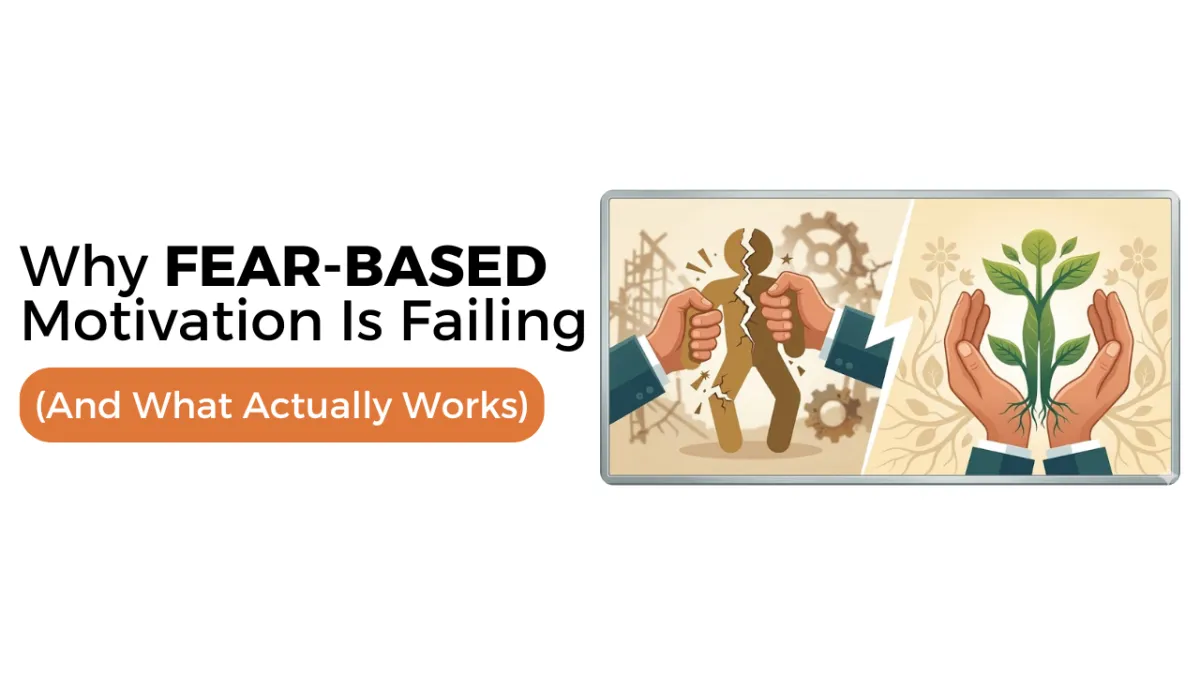
Note: Control, pressure, and criticism might get short-term results—but they destroy long-term growth. This episode explores how shifting to #StrengthsBased motivation leads to #betterperformance and deeper fulfillment... with fun and ease.
Learn more and connect with Alfredo at: positiveab.com
PLUS: Text the word “positive” at 33777 to receive a free guide from Alfredo that will help you discover your character strengths and how to use them!
To Book your Free HAPPINESS 101 EXPLORATION CALL with Samia, click: https://my.timetrade.com/book/JX9XJ
#strengthsbasedleadership #peakperformance #liveyourbestlife #SelfGrowth #PersonalDevelopment #MindsetShift #HumanPotential #SuccessMindset #EmotionalIntelligence #GrowthMindset #Resilience #SelfAwareness #HappinessScience #MotivationDaily #LeadershipDevelopment #WorkplaceWellbeing #AIandHumanity #FutureOfWork #ConfidenceBuilding #LifePurpose #MentalWellness #HighPerformance #EntrepreneurMindset #SelfImprovement #mindsetmatters
Here's the audio version of this episode:
Transcript Generated Automatically
SAMIA: It's really, really good to be with you all again.
And I know you'll be very, very pleased that you have joined us today because we have a very wonderful guest with us. And it's Alfredo. And I practice saying your last name, Alfredo, and it just, I'm blacked out.
But it doesn't matter because in just a moment, I'd be to ask you to tell us more about who you are and what you do. But in the meantime, I want to welcome you. I'm so happy to have joined us.
Welcome, welcome, welcome.
ALFREDO: Thank you, Samia. I will not practice all the hellos. You know, actually, I resonate, many of them resonated with me because I live in America.
I am from Argentina and I am Jewish. There are at least three of those where, like, I felt the world to me and, you know, made me feel very welcomed. The last name, yes, you say, is a challenge for everybody is Borodowski.
Okay, Borodowski, I live my life spelling it, you know, on the phone, then don't worry. But it's a pleasure to be here.
SAMIA: Oh, I'm so happy to have you. And Alfredo, yes, please do tell us more about who you are and what you do.
ALFREDO: Well, you know, I am a consultant. My expertise is on positive psychology, which is the science of what works, the science of flourishing. Traditional psychology for a hundred years focused on what is wrong.
SAMIA: Right.
ALFREDO: From depression, you know, neurosis, which is all great. You know, I am bipolar. You know, I have bipolar, no, I am.
I have bipolar. Then I've been the beneficiary of medication and therapy. But for a hundred years, we didn't study what is right with people.
Happiness and flourishing and resilience, motivation, optimism. We had no papers, no studies, no experiments. And in 1998, Marty Seligman, who was the president of the Association of American Psychologists, he challenged the field and said, hey, what's going on?
Let's study what is right. And exploded a big revolution on psychology. And we have papers and experiments on the best practices of how to have a flourishing life.
SAMIA: Yes. I love that. I have a huge partiality for positive psychology, actually.
Okay, great. So I'm so glad to have you on because you're so right. I can't believe that it took. I mean, actually, you know, we should give some credit to the fact that psychology itself is a relatively new field, even compared to some of the other sciences.
So it's always, I guess, it's thought maybe that surprising that it took until the late 1990s for someone to come up with positive psychology or at least establish it more as a few official subfields within psychology. But it is shocking that there were like, you know, when I was in college and just taking intro to psychology classes, our professors would tell us that, oh, you know, there's this problem, that problem with the DSM and its approach and the efficacy oftentimes of the treatments prescribed is like 30 percent, which is like, you might as well throw a coin and just take a complete chance at any kind of treatment. It's like shocking how many issues and challenges there were with the dominant approach that was clinical psychology, and people were just keep going with it, keep going with it.
ALFREDO: Yeah. I work with companies and with individuals on a coaching basis. But it all makes sense. We are programmed first to see the negative.
SAMIA: Yeah.
ALFREDO: As a defense mechanism. In fact, I am finishing, you know, I finished a book four months ago and I finished another one actually yesterday on optimism and in Spanish, this one. I work a lot in South America and we have a system in the brain called the reticular system. The reticular activating system, which is a series of neurons, is not an organ. They go all through the brain, all the way to the spine. And the function of the system is to tell us which information we should take or not.
We are exposed to 11 million sensations, a second. Yes. You know, it takes a second to understand.
11 million of those 11 million pieces of information that we get every second, we can only absorb 40 to 50.
SAMIA: Yeah.
ALFREDO: Imagine the selection we have. The reticular system is in charge of making the selection. And it's a primitive system.
It came to be in the cave times to make sure that you were not eaten by a lion or a bear, because to be at a defensive stand was actually survival. Then people who do not develop the reticular system are going to have fewer opportunities in life than those who do not. Because people who develop it, it's like a filter.
People who develop it will filter useful information to find opportunities.
SAMIA: Yes.
ALFREDO: It's trainable, by the way. People who do not train their internal filter, they are going to basically look out for danger and they're going to be less creative. But that's why psychology began with the negative, like most endeavors.
And then it takes an effort and it takes an intention to move to the positive.
SAMIA: Right. Yes, I mean, since, I mean, survival is extremely important. And so I hear you, it makes sense that our bread would prioritize danger and things that could harm.
And for us to have this perspective more generally, like you say, OK, well, what's my problem? Let me figure out what my problem is. And then I can figure out the solution.
And I mean, in general, I suppose that does make sense. And at the same time, while we are talking about how to be happy, how to make change more fun and easy, that's not enough.
ALFREDO: Well, the you know, there is a methodology to change your filter towards the positive. And what we know today from positive psychology is that you need to know what is called your 24 character strengths. There are 24 character strengths which are found on every culture throughout time.
SAMIA: Yes.
ALFREDO: These are 24 everywhere. And we also know that 70% of Americans are not aware of their own character strengths. Then people, there is an epidemic of strength blindness.
And if you know your top five of the 24, you have a chance of flourish nine times more, and you apply them 18 times more. Then not only that we work on the negative.
SAMIA: Yeah.
ALFREDO: We are working seven out of ten people. They're working nine to 18 times below the potential for not using the strengths that they already have.
SAMIA: Yeah. Can you give us some examples of character struts and how one could use one of them?
ALFREDO: I'll show you my top five, you know, because I, you know, I've done, you know, I am very aware of them. Then my top five are creativity, curiosity, love of learning, perseverance, and courage. Then once I know them, I knew them and I discovered them, then I was able to align my strength with my objectives.
SAMIA: Right.
ALFREDO: I'm becoming significantly more productive. That's why I mentioned to do the right books.
SAMIA: Yeah.
ALFREDO: And because I know myself, I know that creativity, love of learning, and curiosity are central to me, then I was able to develop writing of books as an expression of what's already strong in me and fulfill my objectives in life. Then once you know your strengths, everything changes. Samia, you really like people, they soar, and they tell me, wow, now I feel legitimate and I feel authentic and motivated.
And again, just by applying what they already have, but with intention and consciousness.
Yes, you know, the strengths, the five character strengths, you gave some examples of the ones that you have. The first time that I learned about the concept as a whole, the thing that really struck me is that, I mean, these are character strengths. So, everyone has them.
There's no single human being that doesn't have character strengths.
SAMIA: Right.
ALFREDO: But so often, we devalue. We don't think of them as strengths, or we don't think of them as something that can help us do better in our lives and just be more happy and so forth. I mean, like, let's take a strength like curiosity.
There are so many people, especially kids, when you think about it, that are extremely curious. But a lot of times, they're not thinking that is a strength that they have. Because especially for, unfortunately, a lot of kids, a quality, a character strength like curiosity can...
I mean, people can tell them, oh, you're asking too many questions, or like different things that they do to try and quell their curiosity. It annoys the adults around them because they're being too active, and you know, things like that. And so we can actually be discouraged from utilizing and expressing our character strength.
What I see working with corporations, which is my main work, is that in some way, as adults, we still working as if we were children. But one thing I want to do is, look, we are talking about the strengths, the top five strengths, are so easy to find. And I want to tell the people listening how to do it.
SAMIA: Yeah.
ALFREDO: Because they may be feeling, okay, that these are great. What are mine? Then if you take, while listening, you take your phone and text me the word positive at the number 33777.
That's all you need to do. Okay. Text positive to 33777.
I will send you the 24 strengths and a couple of questions of how to find your top five. Because I don't want anybody to go through life without maximizing the potential they already have. And for me, it's a mission, a personal mission, a life mission, a quest, that every day of the week, I help somebody find their top strengths.
You know, that's my purpose, what gives purpose to me. Then I have made it easy. It's a text away.
SAMIA: Yeah.
ALFREDO: Literally a text away.
SAMIA: I love that. I love that. So tell me a little bit more about the challenge that you see in the corporate environment when it comes to helping people use their character strengths more.
ALFREDO: Well, I am working now specifically on the introduction of new technologies to the workplace. What we are facing, we are seeing that as we incorporate AI technologies, there is an increase, a tremendous increase on uncertainty, anxiety and depression in the workplace. We need to understand that technology shifts culture, and culture is the main engine of how people work, their motivation, their purpose.
And this technology is very different from the ones before, because these other technologies in the past, they were about how to make the world faster and do things more precise and better. This technology is different. This technology is more about replacing who we are, because AI can write a song, and AI can write a poem.
Really, it's a technology that infringes in what is to be human. Then there is this deep, deep, deep concern of what is my value, and do I have a place anymore in the world? Then the question that AI is opening are questions philosophically, spiritually, and on the management side, completely different from the one before.
Then I just finished the book, it's called The Human Upgrade, The New Leadership for the AI Era, going to be published by Maxwell, John Maxwell, publishing for those who know about leadership, they know who John Maxwell is, the number one personal leadership in the world, then it's going to be published by them. What I do in the book, I apply the principles of positive psychology to the introduction of AI at companies, and how to be able to enjoy all the great things that AI is bringing without losing the human dimension and power. That's why it's called the human upgrade, because if we upgrade technology, we must upgrade all that is human in the company.
Otherwise, companies are going to suffer tremendously, and the companies who understand that humanity is going to become the added value of the future are going to be the ones who are going to really make it.
SAMIA: Yes. You have to tell me more about this. So, yeah, tell me more about maybe just the different things that you cover in the book.
I mean, you have given us a brilliant overview about what are some of the more like different chapters and different problems and solutions that you address.
ALFREDO: Yeah, one thing I do, by the way, there is clearly a chapter on how to use strengths. And I go there into a very detailed way of what the strengths are, how to apply it into your corporation. And as you apply strengths and know how to use them, then depression and anxiety and uncertainty, they begin diminishing substantially because people feel strong.
Then how do you have people who feel strong when the market is telling them, you may be now second to technology? How do you maintain that sense of pride and motivation with the people you're working with? And then I have a very detailed chapter.
Every chapter, by the way, has an explanation of what the problem is. And a lot of case studies are going to actual cases of companies, how they solve the problem. And then at the end, also, I have a QR that sends you to a page with exercises you can use to do it at your company by yourself.
Okay, then it's a page dedicated to managers, leaders, with workshops that they can themselves apply with to learn the chapter. Very practical, I want people to change the world.
SAMIA: Yes.
ALFREDO: Then there is a chapter I find interesting on five myths that are in companies very ingrained that are really eating them from the inside out. I'll give you one, for example, that fixing is better than nourishing.
Okay, and we have this culture of fixing, fixing, fixing, and leaders are brought usually to places to fix a situation.
SAMIA: Yeah.
ALFREDO: Then they focus on the negative.
SAMIA: Right.
ALFREDO: Because otherwise, if they don't fix something, they don't have value or reason to be.
SAMIA: Yeah.
ALFREDO: And it comes to a point in which they need problems to find value in themselves. And what we know today from positive psychology and studies is that if you nourish people, instead of fixing in what you think is weak, your results are much higher, but tremendously more higher.
SAMIA: Yeah.
ALFREDO: Then I go through five minutes like that, and then I had chapters. Look, I think I had chapters on leadership. The leadership for today is different from the leadership that, okay, I had chapters, sorry, I had chapters on teams.
Okay, what the team for today, how a team should work today. I had a chapter on purpose. Okay, how to regain purpose today when, you know, technology is completely different.
Then, you know, those are the kind of chapter, you know, in some ways, standard issues that leaders and companies and teams as all the time, the best team, the best leader, the best purpose. Okay, but now a completely different view of how they need to be reshaped and understand on the AI era and what to apply, the real mechanisms that we know that today are going to position a company ahead of others. You know, there's a chapter in what is called, by the way, the psychological capital is a new concept.
SAMIA: Ah, tell me more. Very new. We know today from studies that there are four strengths that are decisive for a company well-being, and they are self-efficacy, meaning that you think, you believe that you can do something, hope, optimism, and resilience.
ALFREDO: Okay. Yeah. Okay.
If you cultivate those four specifically, you're going to have a strong company. And in the book, I go one by one what they mean, because hope, optimism, you know, they're very precise in what they mean in this theory and dynamics, I go in again to case studies and the science behind it, and then the application. But, you know, it is a shame.
Positive capital is one of the concepts. It's like five years old. That has revolutionized the way we understand how companies work.
And Samia working out there, I go to leaders and give workshops. Nobody have heard about it.
SAMIA: Yeah.
ALFREDO: It's big. It's big in experiments, in labs. It's big in conferences, in the journals, but has not yet percolated into the field.
And that's something I feel very strong about. Psychological capital, central. Yes.
SAMIA: Tell me more. And maybe you could share one of the case studies as an example of what it is and how it's applied or...
ALFREDO: Yes, you know, I may have in the book over 50 case studies. Okay, I'll give you one that's kept in my mind. SodaStream.
SAMIA: Okay.
ALFREDO: SodaStream came almost out of the blue and created one of the strongest companies selling people how to bring fees into water. Okay. I mean, that's what they did.
You know, they buy a machine, you put water in the container, you put it in the machine and you have basically carbonated water.
SAMIA: Right.
ALFREDO: And with that idea, they became one of the strongest companies. They dominate that area, then they began putting flavor into it. You know, like, okay.
What did they do? How did they do it? People think that it was about marketing and about strategy, and that's true.
But the secret was that very early on, they hired a team of positive psychology experts.
And they asked them to design the best way for managers to review workers. And they designed a review of workers based on strength and character and positivity instead of fixing. And they have a protocol that was very clear that every management review, and they don't call it a review anymore because that's a negative word, but every encounter a manager had with somebody working there, they always began by telling, tell me which strength you used last week that helped you succeed.
Okay. Then always they began, even when they have a worker that wasn't doing a great job, they always become with the positive. Because at the end of the day, what you want to do is for the person to do better, not to punish the person.
Right.
And Samia, by changing the process or how they review people, that was the cornerstone of changing the culture of SodaStream to become what SodaStream is today. That's just one of the 50 cases I bring. And I bring the details, by the way, when I bring a case, you know, the question they ask, I bring samples of the questions, I bring statistics, I bring really, you know, and the scientific data and studies behind it.
Yeah.
Well, thank you first of all for sharing that example. You just made me think about, I've been learning this lesson in a somewhat different context in the last few years, about the importance of focusing on helping people do better rather than punishment. And it's like, again, it's just there's so much in the dominant culture that just teaches us and misleads us actually into believing and thinking that punishment, criticism is the way to actually help someone do better and so forth.
I mean, I lean, I explore that in the book in detail, the mechanisms and ways out of it. It's central to the book.
Yeah. Can you tell me a little bit more because this is such a core issue. I think, and it might be one of the biggest mindset shifts people need to make, is to shift away from fear-based motivations to more positive motivations.
Because it's like, at one hand, fear is such a huge driver of our behavior. So, logically, someone might think, oh, so I should use fear to control people.
No, no, no, for sure. It's about control. But look, it does not matter why you bring me to a company.
Some companies bring me for motivation, for crisis, for the one better results, you know, a variety of reasons. I always begin the same way. I begin always with a workshop on strengths.
And everybody get the strengths and the team get a profile of the strengths. And when that happens, Samia, it's almost like magic. People move automatically from a modality of blame and fixing to a modality, how can we use our strengths?
And people sometimes complain with reason that consulting takes forever and the consultant prolongs things. And well, I tell you, here you have a workshop of two hours that is going to be making a big difference. You know, then I give you a protocol about how to sustain what you did in the workshop, okay, with very specific things to do every week with the team to maintain what you learn.
But really, it takes two hours for a big shift. And you will have a different culture if you begin, you know, with a step.
Yeah, yeah, you know, I was realizing that a lot of times in the dominant culture, the reason, you know, because the reason a lot of times people will use criticism or fear, I mean, there is an agenda to like control people in the sense that the people who are in charge think they know better. And so they want things done in a certain way. They want things done their way.
And so if you are on an agenda to make sure everyone does exactly what you want, exactly as you want, then in some ways, it might be a good idea to try and control everybody. And well, you have to look.
Hierarchies, hierarchies need to sustain themselves. And the way to sustain themselves is I need to fix something. By the way, there are times when you need fixing.
I mean, if your pipe is bursting in your basement, you better call a plumber to fix it, okay? Then there is a time for fixing.
Yeah.
But it cannot be... There is not the same thing fixing as home improvement.
Yes.
Okay? And fixing usually brings the situation to the way it was before it broke. Okay, nourishing moves the situation to a better place it was.
Yes.
Then the companies who are on a fixing mentality at the time will not prosper, and the ones who are nourishing will prosper. It's as easy as that, and we know how. We know how today.
The difference is that before 1998, when we didn't know positive psychology, we didn't have the mechanics, the mechanisms and the tools and the science. Today, it's the science, okay? I go to companies and I use science.
I use instruments where I map things. You know, when you go to a doctor, you want a good blood work. You need a good X-ray to diagnose and move ahead effectively.
Well, we have the X-rays today for companies. We have the blood tests today for companies. And I use them.
Then that put me a year ahead of the equation because when I begin working, we have a good diagnosis, okay? Then I am kind of an instrument-based consultant. I believe in them and I apply them.
Then in the last 20 years, a big shift has taken place. It has not yet made it into the field, okay? Then there is a good way to go.
People ask me, are you an optimist? Are you not an optimist? I am, because we have not yet applied what we know.
Yes. Yes. I hear you on that.
Yes. Tell me more about the optimism, because I think we all need more optimism, especially these days.
But I tell you, optimism in a little time we have. You know, optimism is how you expect things to happen in the future, regardless of how they happen now.
Yeah.
Okay. Then, optimism in essence is how do we explain to yourself what happens to you. And the way you explain it to yourself is going to determine what is going to happen in the future.
I'll give an example. Martin Seligman, I mentioned before, he started baseball teams. And he was able to determine which teams were going to win the next season according to how the managers and players explain when they lost the game.
Those who explain the game, they lost like, we are not good players, that's what we lost. They didn't make it well the next season. Those who explain the loss with this, with, well, that night we were tired because we traveled all night long.
They won next season. What's the difference? Once explain the loss at something in them and permanent.
A fault in themselves.
Right.
They are explain the loss like, well, we didn't play well. There were external circumstances which did not define who we are. Okay, we need to travel less next time or travel during the day and we are good.
Then those who make a loss permanent and within them, they were not optimistic. They were pessimistic. Then what they help is companies and leaders.
How do you tell the story to yourself? The way do you tell the story to yourself and you write e-mails and you write memos and you give speeches, is going to determine optimism. If when you do something wrong or you have a failure, if you use word like never, always, you are going to be a pessimist.
If you say sometimes, this time, in some occasions, then you are going to work within optimism because you do not make the failure permanent and within yourself. It's all in the language when it comes to optimism.
Right.
I do hope you don't have too much more time, but I do want to dig a little bit deeper into this with you, because I could just, I just know it. A lot of our listeners will be listening to what you're saying about optimism. And I think one of the questions that, you know, because again, in the dominant culture, they're rich, this is not how it functions.
Like a lot, like when you come across people who are optimistic, a lot of times the criticism that they're given is that, you know, they're out of touch with reality.
Right, right, right.
So, is there like a, what's it, like maybe, what's the, what's the basis of optimism, like a healthy basis of optimism, so that you can maintain a high level of optimism and still be firmly grounded?
Then, then, then, you know, interesting in, in the, in the field, we call, we call it flexible optimism. Okay, and flexible optimism is the optimism has to be grounded in reality, absolutely. Okay, and, and I like a philosopher called Martin Buber.
He's a German philosopher. You know, for those who do philosophy, we know Martin Buber, one of the great philosophers of dialogue. Okay.
And he, he called optimism realistic imagination. Then you have, then optimism works on the tension, on that tension between what is real and what we can imagine.
Right.
Okay. I am, I am not going to become, I can be optimistic, but I know that at this time in my life, I'm not going to become a captain, captain of a nuclear submarine. Okay.
Then, then, then, you know, you know, you know, American Idol, you know, you know, you know, there are families who tell somebody who, you know, sell your truck, go to California and become, you know, a singer and the family, basically, fulfill your dreams and go ahead, and then they begin singing, and we, all of us, have to do like this. Because it's the worst singing you have heard in your life.
Okay?
Okay. Then, yes, you know, there is, we won, we are the country's dreams, the American dream, et cetera. But, but we, we need flexible optimism, an optimism that is grounded in reality, like you said, that is not false and delusional.
Okay? Then, then, but that's basically, you know, you have to work, I work with companies, I work with leaders, to see when they become delusional.
Right.
Okay. You know, that's part of the equation. That's part, you know, you know, that brings me to a point of what is hope and hope is acting with alternatives.
Then, then, then, then, then, then a good person is a person who doesn't see only, who has an objective, but actually what has multiple objectives and multiple ways.
Yes.
Okay. When you have multiple objectives and multiple ways, you're usually grounded.
Yeah.
Because you don't fall apart when things don't happen, or you don't push things when they cannot happen. You have alternatives and pathways to get somewhere.
Right.
Then more options for maturity.
Right. Oh, gosh. That's such a really good point.
And I've attempted to dig deeper into it with you, and I know we have to get going. Oh, gosh. So maybe we will wrap up more over here for today.
But do you have any last thoughts you would love to share with us?
ALFREDO: I want people to read the book, and then let me tell them the website where it's going to take another... It's going to come, I think around May. But if you want to... You know, they're going to be an advance, always an advance copy at very reduced price, and I want you to know about it. Then my website is Positive. So we're talking about positivity, Positive AB, for Alfredo Borodowski, positiveab.com.
And there you will find information about when the book is going to come out, and people to text positive at 33777 and get their strengths. You know, again, I think that people ask me, how will you tell everything you believe in one sentence? And I will go from fixing to nourishing.
That's the key. We have to move from fixing to nourishing.
SAMIA: Yes. Oh, I love that. I love that.
Thank you so much. And no worries at all, Alfredo, because for sure we will drop your links and contact information that you shared in the show notes. So for my last reminder, I just want to encourage all of our listeners to please make sure you check the show notes, because yes, that's the best way to connect with Alfredo and continue to learn with him, because there is definitely so much more to learn.
And I'm sorry we are running out of time for right now, but maybe we can bring you back and just keep talking with you too.
Yes, I would love to come back. You know, you ask great questions and you have a way, you know, sweetness in the way you ask, which brings out of the person the best.
ALFREDO: Oh, thank you. Thank you so much. Really appreciate that.
SAMIA: Yeah, no more delays until we connect next time. I wish you lots and lots of peace and joy.

Want to check out even more amazing episodes?
All of our episodes are archived on our vlog page :)





OUR PEACE OF MIND GUARANTEE
Because we’re committed to doing onto others what we would have them do onto us, all our programs come with a Peace of Mind Guarantee.
We know you’re going to love our programs. We’re so confident about the quality of our programs we’ll give you full access risk-free for 30 days. If you decide the course isn’t right for you, then you may request a full refund up to 30 days after your purchase.
Copyright © 2018 Academy Of Thriving