
Blog: Make Change Fun And Easy
The “Almost-Automated Income” Strategy with Amazon FBA. Neil Twa
The “Almost-Automated Income” Strategy with Amazon FBA. Neil Twa & Samia Bano
Want to stop #tradingtime for dollars? Interested in #ecommerce?
Listen now to this interview with Neil Twa, CEO / Co-Founder of Voltage Holdings, a company specializing in launching, consulting, selling, and acquiring brands with a focus on the e-commerce channels such as #AmazonFBA and multi-channel.
Neil reveals the key to building a #lucrative lifestyle-driven #amazonbusiness, offering invaluable insights and strategies to pave the way for a #profitableventure, the #funandeasy way!
You'll learn:
-- Why Specialization (Not Diversification) Builds Million-Dollar Brands
-- How to Pick Winning Products with Zero Emotion
-- How to Build Brands the Warren Buffett Way
-- The Real Reason #Entrepreneurs #BurnOut
-- How to Build Multiple Streams of Income Without Spreading Yourself Thin
-- And so much more!
Connect with Neil now at: voltagedm.com/
To Book your Free HAPPINESS 101 EXPLORATION CALL with Samia, click: https://my.timetrade.com/book/JX9XJ
#EcommerceTips #OnlineBusinessGrowth #BusinessClarity #EntrepreneurMindset #ScalingStrategies #DigitalEntrepreneur #ProductResearch #DataDrivenDecisions #BusinessSystems #AutomatedIncome #BusinessOperations #EntrepreneurLife #BrandBuilding #FocusAndSimplicity #MarketplaceSelling #BusinessSuccessMindset #EcommerceCoaching #BuildAndScale
Here's the audio version of this episode:
Full Video Transcript
SAMIA: Hello, Salaam, Shalom, Namaste, Sat Sri Akal, Aloha, Holah, Ciao, Bonjour, Buna, Privet, Mabuhay, and Dzień Dobry! It's so good to be with you again. And I know you'll be so happy you've joined us today because we have a very cool guest with us and it's Neil Twa, who is the CEO and co-founder of Voltage Holdings. Welcome, Neil...
NEIL: Hello. Good morning, good afternoon, good evening. Depending upon when you're listening to this.
SAMIA: Excellent point, excellent point. We actually do have a very global audience.
NEIL: Excellent.
SAMIA: Yes. And Neil, I'm so happy to have you with us. And please, please tell us more about who you are and what you do.
NEIL: Well, first and foremost, I am a father, husband. I have four wonderful daughters. I get to manage, love on, care for, guide, all those other things. My wife and I have been married for about 18 years or so. My daughters all happened in the first five years after our marriage. So with a young family moving very quickly, they're now in their teen years. My oldest is 17. We have a homestead out here in the mountains. We love to hang around. We homeschool our daughters. We kind of, we do lifestyle as a design. It took us kind of 18 years to get to the place where we've kind of put our family in a rhythm together of doing life every day around each other, which has been amazing to balance, you know, the things we do in business and the opportunities we have and the travel we do and the things we do here to manage and go, which is a blessing. And the business that has allowed that to occur for me was the physical products and e commerce world, building private label brands, starting on Amazon FBA and then moving them into other channels like Shopify and TikTok and retail and that kind of thing, and building those businesses up so that they are salable assets to the exes. So we kind of build with the beginning and the end in mind. And that's something we've been doing for the better part of 12 years now in our business and we do it ourselves. We have 12 brands that we manage in house. We've done tens of millions a year in sales and had a huge opportunity, a blessing to do that and taught others, hundreds if not thousands of people over that time frame to do the same thing successfully in their businesses, which has been a blessing to watch as well. And just fell in love with the idea of brand building about 12 years ago and kind of never left. It's a lot of fun to build brands and to use the physical product world to do it. And we do help aspiring entrepreneurs who want to learn how to do it and mentor and coach with us. But we also, as people who do it ourselves, we have operations in which we grow and we build and scale and we acquire companies. And so I have operators that help us do that that are trained up out of my group. And those who come to a certain point of success in three to five years have an opportunity to be acquired by us. So as they build up the company with us, as they get going, as they spend those, you know, roughly 10,000 hours of time learning the business and growing and becoming a CEO operator, the opportunity to exit that company comes from us as a first place they can go to look at growing that business and then taking it out to more channels and more market, more sales and maybe having them come along for the ride. So it's been a fun business model. I've enjoyed it a lot. I'll stop now because I'm unpacking a lot here and I don't know where you want to go with all that, but that's kind of a little summary, I guess, of where I'm at and what I'm doing.
SAMIA: Oh, thank you so much for sharing that summary. That was a lot for us to unpack. But hey, that's the fun of it. Right?
NEIL: Pick on anything you want to. Whichever direction you want to go, we'll take it.
SAMIA: Yes. Well, I'm sure we'll end up picking up on a number of the points that you have mentioned.
NEIL: Yeah.
SAMIA: But I want to start with some of the basics because with our audience on this show, you know, a lot of us are change makers. We're coaches and trainers and healers. So many of our audience members may be kind of more novice when it comes to traditional businesses and e commerce and so forth, but I think it's something that we would be interested in. I know it's something that I have looked into as a side hustle for myself in addition to my coaching and training work. Because when we think about how do we make change fun and easy, one of the big challenges that I've experienced myself in the world of coaching and training and healing, and I've seen a lot of my fellow coaches and trainers and healers struggle with also though, is that for a lot of us, we are not actually able to, especially in the initial years, create a full time income doing coaching training work. Especially in the early years when I got started in this work, it was 2012 and now coaching, training is much more popular, much more common. But especially in the earlier years when the industry was still new, it was harder to, you know, sort of like there were a few people who are doing really, really well in the industry, but most people were, you know, doing it as a side hustle as best. And so you some other sources of income and you needed to figure out how you could. And the other thing that got me really interested in things like e commerce and exploring them is because even if and when I transitioned to, for example, doing this work full time, for me, I didn't want to just always be dependent on this one source of income. And I learned something about the value of having multiple sources of income. And you know, that's us being a smart financial strategy in any case. And then if you have multiple sources of income, it's good that at least like one of them you're actively working on. That's amazing. But you also want ones that you don't have to work so much in terms of trading time for dollars.
NEIL: Yeah, that's right. That's right. And it's a balance between figuring out how to, how to get there through.
SAMIA: Yeah.
NEIL: The idea that you will do it full time, but you might start it on the side. I'm a proponent of starting that. I'm just not a proponent of the mindset of which people want to dip their toe into a side hustle or a hobby and then the minute it gets hot, they step out like, oh, well, I'm out. And that's not a full commitment to it.
SAMIA: Yeah, I know, but that's not what I'm referring to. I'm referring to more like sources of income that can be more automated so that they can be more passive in some ways or that can be more easy to, because they're automated, for you to leverage your time. You know what I mean? It's like what for example, with coaching, I have, I'm the coach, so I have to put in 100% of the time.
NEIL: Right.
SAMIA: As many clients as I am coaching and there is no really getting around that.
NEIL: There actually is. Let me tell you something. One of the ways I did it, and this is a bit of a road to hoe, but once you do it you will realize it makes it much easier. And one of the ways we do that is we will do it in a cohort format instead of a one on one format. We will have a one to ten kind of format. We will train them all each week over the specific time frame and kind of move them through the process together. Another way that I did that, and this took a little bit of time, is I opened up a mastermind of people who I believed and invited were higher level in business and thinking and time and energy and money, even if they were working at W2 or other things. And I invited them to come work with me one on one for twelve months with myself and my partner to start off with. And as I trained those individuals up over the years, what we have built up is a group of overall about three hundred people. Since then, not a ton, but enough that it has raised up. Out of that group, my top CEO operators and that top five to ten percent of them we have now invited to come work with us under profit sharing in the businesses that we are building for ourselves, for our clients or we are acquiring, and then they get to get a percentage of that and they help run it. Now they are experienced, we know who they are, we invited the cream of the crop. And so now we have those individuals helping to run the businesses. So that has taken away more of our time from it. Systems and automation kicking in behind with our processes and technology have made it more automated using certain kinds of systems, warehouses and other stuff. And then those individuals do not need me to micromanage them. They are not employees. Yes, they are operators. They know what they need to do, they know their SOPs, they know the business. When a new business or product is coming to market, they know what to do. They do not need me to micromanage. And we have every two week status calls where we get on as partners and we go over the fiduciary and management and roles and responsibilities and things that are occurring and decisions that need to be made in that process. But it is not me micromanaging the rest of the time. They are doing the work and knowing what needs to be done. And that has taken a while. And it has taken a lot of love and dedication and fortitude and blood, sweat and tears pouring into those folks to give them the opportunity to build their business and then see who rose up to become part of ours. And that has been one of the ways that I and my partner have been able to reduce our time but still grow our business without being in the minutiae of everything.
SAMIA: Right, right. And you make a great point. There are definitely ways that we can grow the business. But I am speaking as someone who has the heart of a coach and trainer. So I really do not want to grow my business as far as the coaching training work.
NEIL: Right. Well neither did I. That was not the point of it. Everybody is like well you are a coach or a trainer so now you are scaling and you are taking advantage of people and you are a big scam. It is like well no, I actually invited people. I do not have a sales team. I am not trying to scale this to a million dollars a month in coaching business. Some people are and that is fine. Not how I wanted to do it even.
SAMIA: Even it's like, you know, part of what happens is we have to be really clear about what our real passion is and what we really want is.
NEIL: What we really want is the outcome that is right.
SAMIA: Exactly. And like for me, like the actual coaching, the actual training, the actual one on one time that I spend with people, that is part of the passion that I have, you know, with the coaching training work.
NEIL: Absolutely. Understand.
SAMIA: Yeah. And I do, I do some group work, I do some, I have put in place certain structures to help scale certain aspects of the business. But you know, there is a limit to how far we can go with that.
NEIL: Yeah. There's a balance of how far you want to go. Yeah. And you end up, if you're smart, you'll end up putting some barriers in front of you that slow down and requalify and build a higher aptitude or higher intent for the people that are coming. So one of the ways I've done that is put in a couple of qualifying steps before they ever get to us to apply, including taking what's called a disc analysis. You ever heard of that? The DISC analysis.
SAMIA: Tell me more.
NEIL: It's not a Myers Briggs or a mood kind of thing like well an IMFG kind of thing or whatever it is. Four quadrants, a D, I, S and C quadrant. They're overall there for dominant influence. Stay stable and conscientious. There are subcategories under each one of those that kind of align with individual personality types. And as you find higher DNI individuals, they will typically be coaches, trainers, YouTubers, influencers, people who aren't necessarily like very strong in the details and operational components. But they're great at the marketing and the business of the selling the company. They're great as the influencer on stage and they talk well and they drive lots of interest. Maybe they have a larger social following. And maybe they're just a really well known podcaster. Those kinds of people. The operators tend to be a moderately high D in like 50 to 60%, which makes them a great second, but doesn't make them strong enough to be the first. And they typically have a high I, S or C. So they have I, not just being influenced, but other variables of control and influence over situations themselves or change. It's very stable and conscientious in the kind of work and life they do. So in an operational component, they typically have a history of business or even a long-term work ethic and history of work ethic that leads them to an operational understanding, a control the details. And for our business, those typically are the best operators. So if I have someone who comes and wants to be invited and I see and we have a conversation first, they text, we chat, we find out where they are and where they're coming from. It isn't just about the money component of the team. It's also about the time, energy and attention they're willing to dedicate to it, their perseverance, their tenacity, how their disc profile aligns. See, I'm not in the fun and change aspect of my business. I'm not in it to change other people.
SAMIA: Yeah.
NEIL: I'm in it to give them a roadway that they're already on a path and we just happen to intersect, right? When the mentee is ready, the mentor will appear. And with that, people come in and they're like, this is what I've been looking for, right. And I'll talk to hundreds of people before that one person shows up. Sometimes more than hundreds of people. Sometimes I'll go months. And I don't find that right person that I'm willing to get on a call with and invite them to do what we're doing. I'm looking for that person who fits that aspect. They're on that way. They've maybe tried the side hustle or hobby thing and realized I have to do this full time. I have to treat it like a business, I have to be dedicated to it. I have to dedicate the right time, energy, attention and money to building that company. And then when they hear what we're talking about, it's kind of like a light bulb goes off. They're a little bit of a unicorn, if you will. And that works to kind of qualify out only the people I want to work with in our business. So that the coaching component is just an aspect of me filtering through who becomes the best operators.
SAMIA: Right.
NEIL: And we're the best operators. And I can see how the business is going to run, which is a mutually beneficial thing. If I'm going to put my money into that company and product and brand, or I'm bringing a partner in and I want to know this person, operator, who's going to partner too, is the one that fits the success metric required to make that go at its best effort, right.
SAMIA: Yes. I've actually experienced that model. I've worked with a number of mentors and actually even a company, a training company. I mean, they train trainers and use a similar model to what you're describing. You know, the lowest levels, they do trainings of masses of people, but they have a process you can go through. Like if you like their company, you can sort of go up the ranks and get to a point where you actually become a trainer with them. And it… So there's definitely models and it's just a matter of making sure that me as an individual, I know what I really want to spend my time on, because sometimes…
NEIL: That's right.
SAMIA: People get really lost. I've had this happen where, you know, you get busy building the business and you lose yourself in it.
NEIL: Correct. That can happen. Right? You lose sight of the fun.
SAMIA: Exactly.
NEIL: Yeah, yeah. No, it happens to everybody. And I think that, you know, the best entrepreneurs I know and have helped me understand this is to not resist the change when it comes.
SAMIA: Yeah.
NEIL: And it always comes. Change is a cyclical thing. It happens in waves. It's time and it's a market. It's conditions, it's people, it's time of year. Money is like a river. It literally flows and moves. Sometimes it changes directions and goes different ways. That doesn't mean it doesn't exist. It just means it's moved, it's changed, it's gone a different direction. And that's our opportunity to take that change and embrace it positively. And instead of saying, I have to do this, we say, I get to do this.
SAMIA: Yeah.
NEIL: Very big difference in saying we get. I tell my children continuously, you don't have to do anything, you get to do it. Just understand there are consequences to those decisions.
SAMIA: That's right.
NEIL: Yep. There are consequences. You might meet mom and dad head on if you decide that you get to do it, but you decide you don't want to. There are consequences to all those actions. That's how life works. But you get to do these things. You don't have to. And at that way, we change the mindset, right. We change the mindset about time. You talked about trading time for money. I used to do that at a corporate job, right. It's one of the reasons why I left in 2007. Cause I was tired of trading my time for somebody else's dime. Right. And as I went along in the first five years of business, and I think a lot of us do this really when we first get started, until someone helps us snap out of it or just by conditioning or change, we snap out of it. And that is we end up working a business that's still trading time for money. Right. We just put on a different cloak. We put it in a different house, we put it in a different category. It feels a little different. But the longer it goes, the more we realize that we're still working the business. And to some degree, it's working us. And this is the challenge to get past. Because that is usually a barrier of change that is only broken by risk. Risk to reward ratio changes. And whether or not you're willing to accept it or whether or not you're going to entrench yourself or be unwilling to change or adapt to that point where you should pivot, it is typically because something new has to be risked. And for that risk, elevation will occur. And if you're willing to take that next risk of elevation, you can see the reward. It's just that point of feeling that fear and not doing it. There's a moment where you'll pass that time and lose that momentum. If you can go through that change and hit that momentum, then you will see hopefully yourself pivoting and changing that opportunity into something even better. Even if it's a different risk.
SAMIA: Yeah, right. That's a really, really interesting perspective and a bit of wisdom. Thanks so much for sharing that.
NEIL: Yeah, well, the truth is, you only get through those levels by execution. So at the base aspect of anything, like, I started flipping products for profit as an arbitration thing, and I was working a business myself inside of what I was doing, but I started doing it as a side way to start some new revenue out of this business. And when I quickly realized it wasn't, I was splitting time, I was splitting attention, I was splitting money, and that just couldn't happen. And if I really wanted that to be something successful, I had to focus all energy, attention and money and time on it. And for a lot of people, that doesn't make sense because it's sort of like the idea of going all in. How do you know it's going to be successful? What do you know about the guarantees? How is it going to work? What happens if it fails? Well, okay, that's all part of the risk. And those who are willing to accept or try that may find certain successes and pick failures. I have been big at risk in life and went bankrupt once. Okay? I can tell you that's not the worst thing that can happen, right? You know, you can run out of money and you can figure it out. Okay? Those of you fearing that possibility while taking no risk and only wanting guarantee and reward as the preferred method of doing anything and executing anything are never going to have any success. Those who are willing to risk exec ution look stupid, fail at it, and then pivot and move and fail forward and do it again and keep going until they figure it out are the ones that are ultimately going to be successful. Because they kept going, and kept stepping, and kept going, and kept stepping, and pivoting, and moving until things started to make sense. They started to figure it out, the market was responding, things they were selling were closing more and, you know, it was working better. I'm a big proponent and have been in the business of doing the business first, proving to myself I can do it, making it successful before ever taking anybody else into a mentor or discipleship of the business model. And so we did many years of business ourselves, building these brands and stuff before we ever helped anybody else. And I think that is one of the misaligned expectations that the market has of us. But then not a lot of people can substantiate that, right. And you know, you see that in a lot of coaches and trainers. And we have to be careful with that, right. Because there's integrity in business, there's integrity in ethics, in the marketing of our business. And I would prefer to say I have tried it, I failed or I won, or here's how my results worked. You know, this isn't guaranteed, but I can show you to do the things that I didn't do and the things I'm doing better now. These are the things you should do and really guide them. Because I'm doing it and can show them that I'm doing it today, daily, weekly, monthly, right? And I can show them how our brands are working, what kind of products, and here's our system and our processes and take them under my wing and give them a better opportunity of success because my business model is placated on it, right. If they have a win, then of course they are building a business of success that becomes a target acquisition opportunity. That's how I win, right. And I take ownership of the business at the acquisition, not up front. It's for their charge to get that business off the ground and to do the work and execute even imperfectly. So they get the experience. Because without the experience, positive or negative, they're not going to get the wisdom. Yeah, and everybody wants the wisdom, right? Like a 19 year old life coach with check marks on it, right? Everybody wants the wisdom, nobody wants the experience.
SAMIA: Yeah, I hear you on that. I hear you on that. Oh, gosh. Okay, you know what? I had this intention of having you explain to us some of the basics of the, what you talk about in your book with them. Almost automated income in FBA. So tell me more about the… What can you define FBA is?
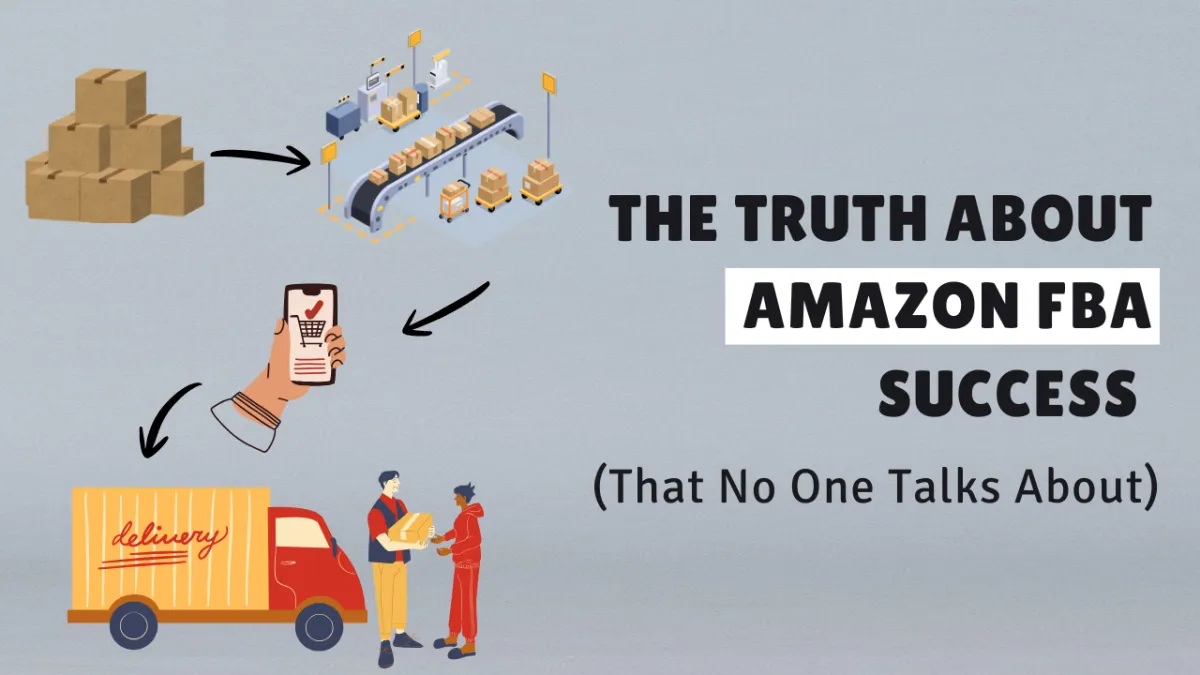
NEIL: So in terms of automation... Let's start with that for a second and part of your question. The system I've found a long time ago through a friend, Amazon FBA is basically a logistics and warehousing company that has trucks, trains, planes and automobiles, right? You may know it, we know it as Amazon showing up to our door with products, right.
SAMIA: Okay.
NEIL: That's a logistics company that when Amazon decided that it didn't want to do its own book fulfillment and it also wanted to expand its marketplace opportunity beyond books, they went and bought a logistics company, right. They did freight and shipping and everything and they rebranded it as Fulfilled by Amazon. And so they've grown that along with their .com to deliver the product. So, you know, since they made that acquisition somewhere around 2008 and that allowed them to move all the other products we get from Amazon besides books. And that system has trucks, planes, trains, automobiles, warehousing and automations and systems. It's now got robotics and AI and it's got all of that stuff sort of really taking billions of dollars of infrastructure, right. So as we leverage that to move products not just to Amazon, but as it is a warehousing and shipping and logistics company, it also moves any other product that you do an order fulfillment on. So I could have a Shopify store where products are being delivered through Amazon. I can put in a TikTok store and have the products be delivered by Amazon. So I can open multiple channels of sales beyond just Amazon to create more what we call holistic or an omnichannel e-commerce company. But I can use the automation systems, management, et cetera of Amazon to make that happen. That means I don't have to pack and ship products. I'm not eBay flipping things. I actually have a 12-year-old over here who's doing that with a little eBay business where she's flipping products, has been selling things she finds at garage sales and has been learning the arbitrage business on eBay. And she's 12 years old. You guys can figure this out too, right? And so she's buying low, selling high, and we're talking about that. And she's got a little eBay account and she's doing really well. But the end result is that, you know, flipping products for profit is trading time for money.
SAMIA: Yeah.
NEIL: Okay. Because you're doing the work, you're finding the stuff. Once you sell one product, you got to find another one. So I didn't want to do that, right. I didn't want to do that. I knew it couldn't scale in that way. I knew there would be troubles with the whole thing. So Amazon's automation system, literally of fulfilling the product and helping to select their customer to buy your product and then delivering it and dealing with the customer service, returns and all that stuff, was an easy way to automate that whole process for me without having to ship it myself, right?
SAMIA: Yeah, yeah.
NEIL: So what I focused on was, okay, how do I market it, brand it, pick the right products and really get people to buy those products. And that has since changed a lot. But it really just started out on the flipping products for profit side. But I realized very quickly the difference in a side hustle, hobby business of flipping products and trading time for money is very different than a brand-based automation that grows on its own organically every year because more and more people are telling other people and the systems are understanding that your brand has a life cycle. Your brand has this big picture deal. And to understand that over time I've come to realize that the products are simply just the vehicles. And the vehicle can change in time because all products have a life cycle, right. Even the branded ones. But I can order tens of thousands of the branded ones once it starts to sell. So once it starts to sell, it becomes more automated. That makes sense. And I don't have to keep finding more products to flip one on one. I find a product within the brand that matches the existing avatar and I launch that product and guess what? It takes off really fast. So in simple terms, the more products I put in my brand, the faster the products go, the more money I make. Now we have an iterative process of constantly feeding products into the brand because the brand will live forever. But the products have a life cycle.
SAMIA: Yes.
NEIL: Right. So we don't marry our products, we marry the brand. And you can understand that in the simplistic of the market. Like if you're an Apple person, right. If you have versus an Android, you might be brand driven there, right. And you may not be able to list every kind of Apple device, phone, whatever there is, but you're into the brand, right.
SAMIA: Yeah.
NEIL: You may have never owned a Lamborghini or Ferrari, but you know the brand. You probably can't name most of their cars, their products.
SAMIA: Right.
NEIL: But you understand the brand.
SAMIA: Yeah, yeah, yeah.
NEIL: Yeah. So that's why we moved into brands. By 2015, we had our first seven-figure brand. Once we broke through that barrier, so much about the economics of the business grew without the minutiae of us trying to force it every day.
SAMIA: Yes.
NEIL: That system starts to take on its own life and as you continue to work it every day and it starts to grow and grow and grow, it's our job to stay in the mechanics of watching the AI systems that manage so much of it. Now for us, literally in the last three to five years, most of our systems, from the research to the analytics, to the finding of the right products and negotiations, to the management of inventory, to the just-in-time management of all the different stages of which inventory is moving, to managing the pay-per-click and marketing campaigns, to the images and graphics and copy, that's all done by AI now. Right. So even those systems are allowing one operator to manage a six, seven-figure, multi-seven-figure company four times over. Because what they're doing is they're like air traffic controllers sitting in front of dashboards of blinky lights, moving physical products with containers and everything across the dashboards. Yeah, yeah. So they're like air traffic controllers for brands.
SAMIA: Yeah.
NEIL: So it makes it really more automated that way because there's so many systems that can be put in place. Now the heavy lifting with what we do is a little different because we are in the physical products, literal physical products, which to me is great because it combines the digital component which I had more history and experience before I sold products on. And it combines an actual physical asset in a box that shows up.
SAMIA: Yes.
NEIL: And so I own the beginning and the end, I own the whole brand. And it made more sense to me, if that makes any, any sense to you, to control every aspect. Because before I controlled one side or the other, I didn't control the whole thing. And when I became a brand owner who owned the brand, the marketing and the product back end, you know, having this manufacturer created its hours, I became a business owner and I stopped being an entrepreneur.
SAMIA: Yes, I see what you're saying. So, okay, okay. So I mean, obviously for you this has been a multiple, multiple year journey. You've sort of built your way up for somebody who is like, okay, you know what? I am ready to sort of give this whole more almost automated.
NEIL: Yeah, how do I get started? Yeah, sure. Well, we call those aspiring entrepreneurs, right?
SAMIA: Yeah.
NEIL: But I can take myself and my partner who's been with me, Reid, since 2012. He is, in his profile, more of the ISC. I'm more of the DIS side. So we balance each other like one brain, right. And together, between marketing and business and branding and operations and controls, we've been able to build these brands over and over again. Not everybody has that. So our business builders group has kind of become the other half of the brain for a lot of people, right. Kind of fills in that connection. We mentor, we can take, excuse me, our combined 50 years of business and concatenate it down into 12 months of one-on-one, daily, weekly, monthly coaching to go through every step. There's basically five of them in the process of following our playbook to build a brand to seven figures. And we have repeatedly done that with folks who have the right aptitude and time, attention and the right money and capital to deploy in year one to a business like this and been able to get them to significant successes by years three, four and five. And by significant, I mean brands that are running 25 to $300,000 a day in sales. And so when you see the opportunity of this giant economy that's right below you and near you, you just don't necessarily understand it to the degree of its capacity because it's so big, it's so vast, it's hard to understand the numbers. Even I have trouble at times comprehending the numbers because I don't quite understand what it means yet to move 6,000 units a day, which is something Amazon does in a second. Excuse me, 6,000 units a minute. And that's an enormous metric. Right, and what does that mean for opportunity? It means there's a huge amount of opportunity for you to be someone who can move products and sell products, at least 25 units a day. And when you focus on the net profit, which is what we actually get to keep. Not the gross margin, not the margin, not the overall retail price point, but what I actually keep after every unit sells, that's really all that matters, right. Everyone talks revenue, and that's vanity, but what you actually keep is most important. So for those listening, we won't sell products under $50 in price point. Our retail price point minimum is $50 to $500 in retail price point. It must have more than $12 in net profit per unit, right. Typically, we're going to see 25 to $150 in profit per unit. That's what we get to keep after we buy the product, after we market the product, pay for operators, pay for inventory, pay for the infrastructure. We get to keep that mark. And so what that means is that our overall brand target is net profit 20% on each of these brands. Okay, 20%. So if you do a million a year in sales, you keep 200,000 in net profit, minimum. We can do higher than that. We've done up to 400,000 on some brands based on their affinity and price points. So the goal here is to teach people how to launch their first five products. We call it a green light process. And that playbook is to get your first five products in the market. We test those products. We don't marry them. We test 100 units of this product in our brand, and we say, hey, market, did you like this product? And the market, of course, responds with sales or no sales, right. And then we have to adjust and find out why the market didn't want that product from us or how we get the market to understand the product better until we get those sales, and then we repeat that process. We only dedicate money in marketing to the products that start to rise to the top. We follow the law of averages. We sell five products in the market and test 100 units, buy five products, we're going to find one or two of those products start to take off selling, and we simply follow the data. Okay? Starts with good data upfront. So we do 80% of the data through our software and green light process to find exactly the customer need and intent. There's no guessing. And the products appear in the system because Amazon has basically $700 billion in sales. And we have a lot of data and analytics. Amazon gives us data and analytics that tells us exactly what products are moving at what volume and what keywords and what kind of products. And once we know what our profit needs to be, then we only select the products that match that highest net profit. And then we test them and we deploy more capital and money to the ones that start to sell. So instead of 100 units, once it starts to sell, we'll order 1,000 units, because we know it's selling, we put more inventory into it, right.
SAMIA: Yeah.
NEIL: And then we just repeat that process. Okay. And I'm product agnostic. We sell all kinds of products. In fact, I'll tell you what we don't sell, if that makes sense. We don't sell supplements. We used to sell that a long time ago. Supplements are very difficult to sell. They can be profitable, but they're very difficult. A lot of regulations, a lot of three-letter agencies, a lot of oversight. Very, very challenging, right. Very, very competitive. And not everybody in that business space is very ethical. Let's call that out, okay? Electronics are tough because they break; their manufacturing has to be constantly renewed. Electronics are very challenging, right. Clothing, shoes, that kind of stuff. A lot of returns, a lot of. I don't know if it fits or I want to try the size doesn't work. So you also have a brand component of the web and social side that has to really be driven in to see the differentiator. And so those are really three product types we don't sell. Now, on the other side of that, there are millions of product opportunities to sell that don't match that. And there are all kinds of products, and there's a myth that there's no good products, that there are none available, that all the good ones are taken and saturated. That's actually not true. True at all. There are millions, if not tens of millions, of product opportunities to innovate, right? We don't need to invent; we don't need to be Elon Musk, right? You're not looking to create Tesla, you're not looking to get patented. You are looking for a market and customer demand that already exists. And you're looking for an opportunity to say, is there a place for me to come in and maybe be a number two to the number one and have an opportunity to say, hey, you like that one? What about this one? Right? And here's my benefits, here's my features. It's very similar, but different. I innovated a few things you might like better on my version than their version, right. And we put that in the market and then we let the market tell us. We're not smart enough to tell the market what it wants. But we've been very, very good at reading the data, and the data today for these kinds of engines, those are all AI-driven below the surface. Amazon, Facebook, social media, Instagram, all of it, right? It's all AI-driven. I think we all understand that now. It's always looking for an audience, right. It's always looking to feed content of some kind. And in Amazon or the physical product world, it's looking to feed content that leads to a sale of a physical product. So if we give it what it wants and we get out of the way, then it will find the right audience for us. Does that make sense? It's like posting 10 Instagram social media reels and finding out, well, two of them went really fast and got tens of thousands, hundreds of thousands, millions of views, but the other seven or eight didn't do so well. Well, what are you going to do? Right. You're going to take the two that did really well and make 10 more of those. We do the same thing in physical products.
SAMIA: Yeah. So just a, clairi... a couple of clarifying things, and I'm imagining it's part of the stages of how you grow the business.
NEIL: Correct.
SAMIA: Initially, you are actually identifying products that are already out there in the market. You are also then going to sell. So like, for example, if I just make something up. So if there is, I don't know, oh my God, you just mentioned three categories that you don't sell. And now think about it. So it's three categories.
NEIL: Okay, so let's say a kitchen device of some kind.
SAMIA: A kitchen device.
NEIL: Kitchen device that's already selling in the marketplace. I'm not going to go sell their kitchen device, just to be clear. I'm going to look at their kitchen device and I'm going to say, hey, this is what they're doing. Well, here's where I see that maybe there's a gap in the market, and I'm going to go have a kitchen device manufactured for me. I'm going to put 100 of those in the market to compete with them directly. Now, should that 100 units sell well and prove that I can sell the product, people want it from me, and I can project forward that it's going to become profitable and it's going to have a lot of opportunity, then I'll take and put a thousand of those. Say, Mr. Manufacturer, please create a thousand of those and ship them to my account. And they will do that without me ever touching the product. And then that goes into sell against the competitor. It's my product, my brand created for me, my trademark, my business, my intellectual property, competing with an innovative version of that product that's already in the market.
SAMIA: So the, so, okay, now I understand.
NEIL: Sure.
SAMIA: Sort of like, it's sort of like, you know, when you go into a big brand store like, let's say Costco.
NEIL: Sure.
SAMIA: I go to Costco a lot.
NEIL: A lot of good things to source.
SAMIA: Yes. And so basically what you see, one thing you can see happening at Costco, for example, is there will be, so for example, immediately the top-of-mind example that comes to me is the Harmless Coconut Water. It's a brand of coconut water that Costco started selling some years ago. And I loved it. It became my favorite brand of coconut water. I went to Costco all the time to buy.
NEIL: To buy it just to get that coconut water.
SAMIA: And then I think it was like maybe two or three years ago, Costco started right next to it. So for a long time, all I really saw Costco emphasizing in terms of selling coconut water was Harmless Coconut.
NEIL: That one particular brand I was doing really well enough to sell in Costco, right.
SAMIA: And then at some point, I think it was two, three years ago, right next to the Harmless Coconut Water, you started seeing a Kirkland brand coconut water.
NEIL: Right. Another brand.
SAMIA: And not just any other brand. It's a Costco brand.
NEIL: It's Kirkland.
SAMIA: Yeah, it's Kirkland. And it's coconut water. And actually, if you taste that coconut water, the Kirkland brand coconut water, it's just as good.
NEIL: Yeah. Costco kind of maybe took that data and knows that that brand was doing well and then built their own brand off. That's a bit of a danger in the world. People fear that on Amazon. But what actually happens on Amazon is it's people that are competing in the marketplaces that are making those brand competition. But Amazon, in the last two years, has actually got out of their brands. When the, when the tariff thing went down, they stopped sourcing their brands and stopped selling most of their brands in the marketplace. So there isn't a, that's a concern if you're in Costco, that they could knock you off, and they do on Amazon.
SAMIA: Yeah, but you're not. So in this case, what you're describing is sort of like a little bit of that strategy in the sense that, yeah, you go find a product that's already selling really well and then you create a variation.
NEIL: Create second brand to compete with it, like a Coke or a Pepsi, like an Apple or, yeah, there's plenty of examples of this continued innovation occurring in the marketplace. And actually the outlier is invention. People think that you can make millions of dollars only on the outliers, and that's not actually true. You can make millions of dollars selling competitive products that have an existing demand in the marketplace. And you simply step into that demand and say, hey, what about this option? Right? And hey, you got that one. Well, you like this one? You got this Pepsi. Why not this Coke? You got this Nike. How about a Reebok?
SAMIA: Yeah.
NEIL: So, you know, Burger King, McDonald's, it just goes on and on and on, right. And that's an opportunity. That means that there is not a, there is an unlimited opportunity to sell products in that way. There's no scarcity in that marketplace of opportunities. Products are like the second oldest industry in profession, if you will, in the world, moving products. E-commerce is just a digital way to get that product from one location to another versus a retail store, which is a physical product, right. It just opened a new medium of transport and created an opportunity for millions of people across the United States to get my products even though I don't have a retail store located in Missouri.
SAMIA: Yes.
NEIL: Yeah. So it opens up this huge opportunity to reach millions of people with your products.
SAMIA: Yeah.
NEIL: And that's where the scale and growth of this model really becomes, for most people, something that seems like pie in the sky but is an actual process by which you can reach millions of people to buy your product. Amazon alone has 200 million buyers. Their whole mantra is to get the people to buy something in 30 seconds or less. People spend an average of $1,500 a year on Amazon.com right. It's a machine. It's 49% of all U.S. marketplace sales online. So it's a huge juggernaut of sales. It's a great place to take aspiring entrepreneurs into a new product, a new brand, and teach them how to reach the market, get the market to understand their products and brands, pick the right products to fill their brands out with, and then build a going concern, a machine that can grow as they continue to launch additional products into that brand until they have 10 or 20 products that are just focused on a specific area serving a specific audience. Then the AI systems are like, hey, anybody who wants that product, we got it from this system right here, because these people deliver it, right. So we'll end up with brands that have 5, 10, 15 SKUs that are just hyper-targeted in that one seller account to that person and that's it.
SAMIA: Okay. I mean, a little bit over there with some of the language you were using, but I think I get the overall concept.
NEIL: Yeah. We basically have a person we've targeted, and there are millions of those persons. And then we're selling products that only those people want to get continuously into the millions. So we don't vary across a bunch of different products in a single brand. A single brand has maybe 10 to 15 products that only serve that one kind of person.
SAMIA: Yes, yes, yes, yes. So like an example of a brand, like there's some common theme that drives every product within that.
NEIL: Right. Because you may want the, let's say kitchen gadget we were talking about earlier. You might want the kitchen gadget with these utensils, but then you might want the different gadget that has this color, but you might want the larger version of that gadget. You want like the mid-size, the variation of that gadget. There are other people who are like, well, I don't want the 4-quart version of that, I want the 12-quart. Well, we also sell the 8-quart because people might want the 8-quart. You see where I'm going with this? And then we'll have the black, purple, and yellow version, the most in-demand colors that that market wants will have those variations. And then we'll have bundles of those variations, and we'll have variations of those variations for all the other people that might want that kind of product with a different combination.
SAMIA: Yes, yes.
NEIL: Yeah. And so we just go wide across that until we have a brand that is just focused in that area. And then we go to another product, another brand, we do the same thing, and then we just repeat that process over and over again.
SAMIA: Interesting. I get that. I get that.
NEIL: It's a lot of fun.
SAMIA: Yeah. I mean, I guess it's up to the individual. Also, in terms of like, one of the ways I imagine that you would build brands that you can personally get really excited about is to choose products that really resonate with you.
NEIL: That's one way to go about it. But what if the way to go about it was to find a market and audience that wanted to buy it from you and your love and passion was the business and their love and passion was the product. Then we'd be agnostic to what we sell. I'll sell fuzzy bunny slippers to grandma if it's profitable. She loves them and will tell all of the people in a nursing home how much she loves them.
SAMIA: You don't feel like you need to sort of have a better understanding of the product?
NEIL: I do not fall in love with my products. No. There is actually a data segment process by which you can identify the data of which products are most in demand, by which customer is there, and then through AI intelligence and research, we can determine exactly who that person is, where their age is, where they're mostly located, and then provide them with a product from that brand that they're willing to buy and buy in volume. My love is of the business to serve the people who are passionate about the products. It's not for my job to be passionate about the product.
SAMIA: Yes, you had mentioned that, and I sort of forgot about it. And so now I'm actually thinking, okay, about another side of being passionate about the business side of things in order to build... So I'm actually now thinking about what I was learning about investing in companies.
NEIL: Right.
SAMIA: Very different kind of business. But this was like a train of thought that really influenced my thinking in terms of choosing the companies I invest in the stock market. And this was like a strategy that I was learning about that's advocated or taught by Warren Buffett. He's like, okay, if you're going to invest in a company, you better know the company, and not just know the company. You need to know about the industry, and you need to know about the products that it sells. Like you have an understanding. Because if you don't understand the industry, you don't understand the company, you don't understand the product, then you can't see where it may be going. If it's heading into trouble, if it's about to all go down the drain, how do you know when the right time to get in, get out, etc. And there was something very sensible about that. But I guess part of what you're saying is that now so much of that is just being all that data and analysis being done for you in an automated context when you're selecting your products, you're just depending on that.
NEIL: Well, I'm building the business that builds the brand. So I'm on the other side of the Warren Buffett spectrum because I am controlling the growth of the business, the brand, and the outcome so that I'm investing in what is known in the business and what is known in the product.
SAMIA: What is known in the brand, like the products we know, like a product may be really popular right now, but before you know it, it's out of style, out of fashion.
NEIL: That is always a risk, which is where we would pivot in changing the product. That's why we don't marry the products, we marry the brand because products will evolve. Products will change. Products will adapt. That's their life cycle. That's their purpose in the business. If I'm going to invest in a business on my side of the house, I am investing in an e-commerce business with a brand and a product that is growing, that has opportunity, where I see we can impact it through marketing, fiscal and fiduciary responsibility, supply chain and logistics, and of course growth through marketing and other channel activities. And then we'll look to acquire that company so we can move that farther into the market. So that is, your same words, investing in what you know, right?
SAMIA: Yes.
NEIL: Because we know that business, we invest, and we actually have one of those acquisitions going on right now.
SAMIA: Yeah, yeah, yeah.
NEIL: End of August. And it is a company that we know is taking market share. We know how to run it, we know how to operate, we know how to grow it. So when we invest our time and money, similar to Warren Buffett, we're going into the business because we know how to grow it.
SAMIA: Right. So there is that element of making sure you know something about what you're...
NEIL: 100 percent. Yeah. And the best way to know that is experience. And the way to get experience is to build and to learn and to swing a hammer and figure out what it feels like to hit your thumb until you figure out how to do it right. And then invest in what you know more of. And that creates multiple streams of revenue. So I, you know, I don't know, I've got more than 10 streams of revenue in my holdings company because every different vertical, every different brand, every, you know, the software, the consulting, everything is another vertical of revenue across something that we know.
SAMIA: Right. Yeah. So I, yes... So I'm so glad we got to this point in our conversation because I think that is the real talk, you know, in terms of like a lot of times people don't... I think people underestimate the value of the research and really getting to know these fundamental aspects of the business that you are wanting to get into. You know...
NEIL: Yes and trying and learning through experience is the best way if you choose to get in, change, or choose a vertical and stick with it. Entrepreneurs are typically folks, and I've been one, who are searching for that one thing they want to stay focused on. Be careful how long you do that. Serial entrepreneurs, while it sounds really sexy, they aren't usually the most successful. If you go down and look at the most successful entrepreneurs, you will find that they typically did what, in the book Good to Great by Jim Collins, did is they hedgehogged into a vertical and then they just stay in that vertical.
SAMIA: Yes. You know, this is something even Warren Buffett talks about in the context of investing. He's like, in your vertical, the common myth about successful investing is that you diversify.
NEIL: Right. You can diversify in a lot of ways. Yeah...
SAMIA: No, there are certain ways in which successful investors are diversified, but it's not in the ways that most people think. They're actually specialists. They'll find an industry, a kind of business, and they will diversify within that context, but they're really specialists.
NEIL: Well, I would say that the common phrase that maybe resonates here, as we are probably getting close to the hour here and have to come to a stop because it's been great and I just realized we're getting kind of over our time here, and that's my fault for talking too much. But in the final thing, kind of is to say that success is boring. At the end of the day, if you find success, the opportunity is to stay in your vertical and find new ways to entertain or to have fun in the business you're doing. Because if you keep going and you get enough of it done, it is sometimes boring. So for us, who have to keep creating and doing, for me, where I found my niche that really helps is I'm building more brands in the same niche. New products, new opportunities, new avenues, new challenges to solve. And just staying in that vertical and solving those challenges keeps it from being boring. Because once that company's up and running and the operator is doing what they're doing, they don't need our micromanagement. They don't need the details. It's in growth mode. Unless there's some problem to solve, it doesn't change dramatically. And so we're off to create a new brand. We're off to go to a new vertical. We're off to go find a new product, right. And to challenge that market. And that's what's fun about what we do.
SAMIA: Nice. I love that. I love that. And that is a wonderful point for us to wrap up for today.
NEIL: Fantastic.
SAMIA: Thank you again, Neil, for taking the time to be with us. And my last reminder is to our audience, please make sure you check the show notes, because if you're interested in learning more of what we have been talking about today, we will be dropping Neil's links in the show notes so you can connect with them, get the help and support you need whenever you're ready for it. And until we connect next time, I wish you lots and lots of peace and joy... :)

Want to check out even more amazing episodes?
All of our episodes are archived on our vlog page :)





OUR PEACE OF MIND GUARANTEE
Because we’re committed to doing onto others what we would have them do onto us, all our programs come with a Peace of Mind Guarantee.
We know you’re going to love our programs. We’re so confident about the quality of our programs we’ll give you full access risk-free for 30 days. If you decide the course isn’t right for you, then you may request a full refund up to 30 days after your purchase.
Copyright © 2018 Academy Of Thriving