
Blog: Make Change Fun And Easy
Highway to Your Happy Place! With "The Less Stress Doc" Gary Sprouse & Samia Bano
Highway to Your Happy Place!
With "The Less Stress Doc" Gary Sprouse
And Samia Bano
Why are so many people #stressedout?
What if the biggest threat to your health isn’t your diet, age, or genetics—but your stress?
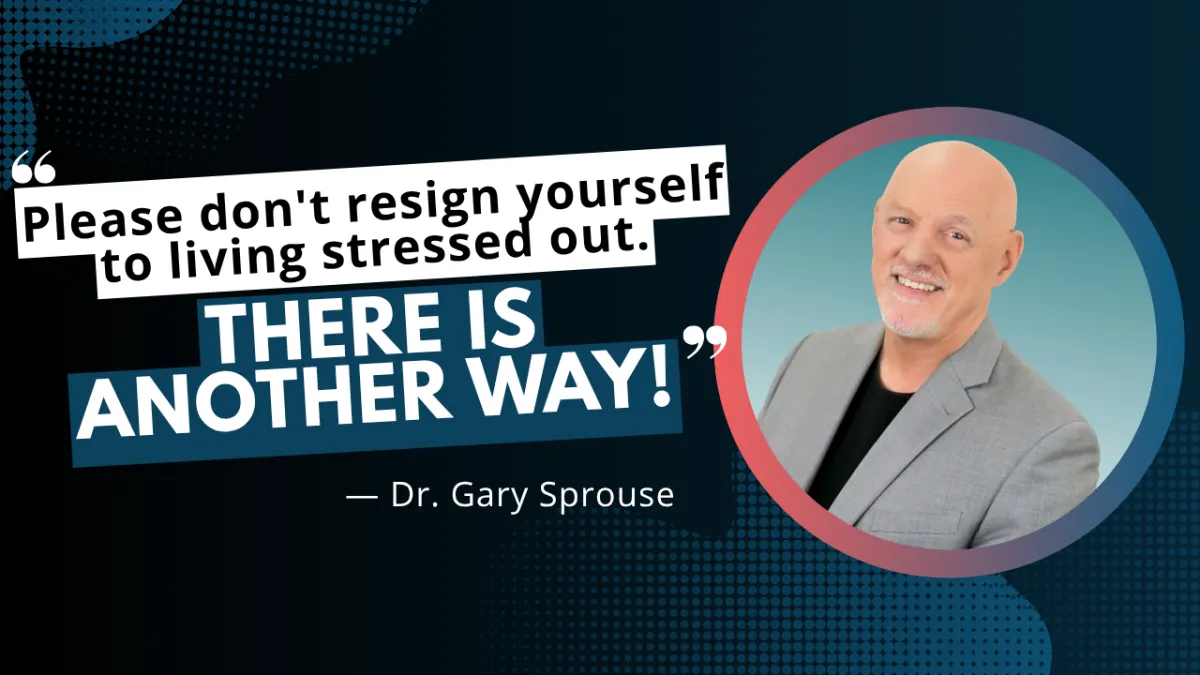
Dr. Gary Sprouse, "The Less Stress Doc", says, “Please don't resign yourself to living stressed out. There is another way!”
Dr. Sprouse reveals how #chronicstress impacts every system in the body and shares #practicaltools to help you #reclaimyourhealth, #happiness, and #peaceofmind.
In this uplifting conversation, Dr. Gary explains why your "happy place" is already within reach and how understanding your mind can dramatically #reducestress and improve your life.
Dr. Sprouse has a unique perspective on stress that no one else is talking about. He has uncovered a groundbreaking new way to define where the majority of human stress originates. This new insight and the tools he developed to deal with stress are changing lives.
Dr. Gary Sprouse is a retired primary care physician who practiced in Maryland for 38 years. He graduated from George Washington University Medical School in the top 10% of his class and is a member of Mensa. His goal is to have everyone living in their Happy Place.
Dr. Sprouse also collaborated on a book with Jack Canfield. The new book, Mindset Matters, is a best-seller on Amazon and Barnes & Noble.
Learn more and connect with Dr. Sprouse at: www.thelessstressdoc.com
To Book your Free HAPPINESS 101 EXPLORATION CALL with Samia, click: https://my.timetrade.com/book/JX9XJ
#StressManagement #MentalHealth #MentalWellness #EmotionalWellbeing #ChronicStress #StressRelief #MindsetMatters #PositiveMindset #SelfEsteem #ConfidenceBuilding #EmotionalResilience #PersonalGrowth #SelfDevelopment #HappinessHabits #HappinessJourney #MentalHealthAwareness #MindBodyConnection #InnerPeace #AnxietySupport #Resilience #Wellbeing #HealthyMindset #LifeTransformation #DrGarySprouse #liveyourbestlife
Here's the audio version of this episode:
Transcript Automatically Generated
Hello, Salaam, Shalom, Namaste, Sat Sri Akal, Aloha, Holah, Ciao, Bonjour, Buna, Privet, Mabuhay, and Dzień Dobry…
It's really, really good to be with you. And I know you'll be extra happy you're joining us today, because we have a very happiness-promoting guest with us, and that's Dr. Gary Sprouse. Welcome, Dr. Gary.
Well, thank you so much for having me on here. I am looking forward to this. And my goal for today is that we help at least one person find their happy place and have less stress.
Indeed, indeed. And on that note, Dr. Gary, please tell us more about who you are and what you do.
All right. So I'm Dr. Gary Sprouse, aka The Less Stress Doc. And I was a primary care physician for 38 years, and I got to retire a couple of years ago.
And during that time, I saw a bunch of patients had high blood pressure and diabetes and couldn't sleep and were overweight. And during that time, I realized that their stresses were playing an important role in their health. And I would see this most dramatically because I'd been in long enough that I would see somebody who's on blood pressure medicine, and then they retire, and then all of a sudden they wouldn't need blood pressure medicine.
I'm like, wait, something's gone on here. And so I learned early on that if I sent somebody to a psychologist, it was pretty unlikely that they would go for whatever reason. So I decided I need to learn how to do this myself.
And so I started doing some exploration of how our brain works. And it led me to some interesting insights that have led me to writing this book, Highway To Your Happy Place, A Roadmap To Less Stress, which is what I want to share with you and your listeners today.
Holistic Healthcare Need
I love it. I love it. I love it.
You know, gosh, this has been one of my biggest beats with the medical system, as I've experienced it myself, is that even I would say it's better now. But when I needed the most medical attention, this was like maybe in the early 2000s, late 1990s, there was like almost no emphasis on mental health. And clearly, like in hindsight, to me now, it's very clear that so many of the physical challenges that I was facing were very directly related to my mental health, which was not in a good place at all.
And no one seemed to care about my mental health at all. Like it didn't even get talked about. And I'll just give you like one example, like even when I was prescribed medicine, which absolutely was essential for me at hypothyroidism, and I wouldn't take my medicine.
And I went for months without taking my medicine. And when I went to the doctor, they took the blood tests and they're like, oh my God, your TSH levels are off the charts. I mean, they're so high.
He was like in a panic and he was like, I must immediately do this and immediately do that. But no one said, why aren't you taking your medicine? And like, why are you not motivated to take your medicine?
And all of that. And I was like, you know, so it was like touch and go. I very easily could have just died because I refused to take my medicine.
And no one bothered to find out why.
Did they find out why or did you find out why?
Well, I knew why. I was in severe depression, trauma because I'd been sexually abused as a child. Okay.
But no one ever even like thought to look into my mental health and how that was impacting so many different aspects of my physical health, including even my motivation to get treatment, you know?
So what I saw, I used to think I was an average doctor, but now I've learned that I'm not, right? So I've realized that I'm a holistic doctor. So just kind of what you were saying, one of my friends, her daughter is 18 years old.
She came to me and said that her daughter was having all kinds of problems. And so she had lost 30 pounds, she wasn't eating, she wasn't sleeping right, she didn't want to go to school, like all this different stuff, right? And so as a holistic doctor, they had decided, oh, this is all in her head, which is what a lot of doctors do.
If they can't find a test that tells them what's wrong, then they decide it's in the person's head. But what I said to her was like, look, we have to figure out, we have to do all these tests to make sure it's not physiological. But clearly, there's some stress related things involved here.
And as we explored that later, it turned out that three years before, she had been abducted off the street. Now she got away safely, nothing bad happened to her. But that traumatic event was still playing on her minding and causing her stress or baseline stresses to be super high.
So it didn't take much to get her over the top where she's feeling overwhelmed. And so what we did was we treated her both physically and psychologically. So we gave her some medicine for an ulcer, because I think she had developed an ulcer.
But we also did hypnosis with some neuro-linguistic programming to help her through that traumatic event. And so that combination then really helped her a lot. Now, here's the problem for the regular doctor.
It took me more than 15 minutes. I'm retired, so I have as much time as I want. So that's the problem that doctors get into is that they're trying to do these things fast and you can't.
Like this takes time and you just can't do it fast. And so that becomes the dilemma. And when I was in practice, it was my own boss, so I could decide how long I wanted to take or not take.
But the doctors now are employees. And so if they're not seeing enough patients, they're getting fired. And it's like, yeah, so our system is not set up to help people like what you're talking about.
So like you and the client that I was dealing with today. And it's like that is a flaw in our system for sure.
Happy Place Framework
Yes. Well, so grateful to have doctors like you around. And so it seems like, especially with the work that you're now doing with the book and so forth, you're focusing even more on helping people find their happy place.
Tell me more about that.
It was great. I would talk to patients. I'm like, hey, I'm writing this book about how to have less stress.
Then I would look at them and say, so if you had less stress, where would you be? They're like, I don't know. Never thought about that.
I only wanted less stress. They would say to me, I know where I don't want to be, but I don't know where I do want to be. I'm like, oh, we need to fix that problem.
And so what I realized was I started investigating and I called it a happy place, right? And I quickly realized that everybody's happy place is a little different. So I like to joke that one of my happy places has gone to the beach where you're hanging out and the sun and the sand and the boardwalk fries, right?
My wife thinks the beach is a big kitty litter box. And so we had this very different idea of what a happy place is. But here's what I realized, that everybody's happy place has the same rooms.
They just decorate them differently. So what I feel grateful for is different than when someone else from what I get pleasure out is different than when someone else might. But the rooms are all the same.
And so then you go, okay, so what are the rooms? So the first room that I talk about is gratitude. And I think you brought up this point where you were near death because of your thyroid.
And I went back through my own life and there was at least three times where I should have died. Like I had appendicitis and a hundred years ago, I would have just died because we wouldn't have had antibiotics and the surgery wouldn't have been good. I would have died.
And then like 20 years ago, I had pneumonia and it took half my lung, it whited out half my lung. Again, without antibiotics, I probably would have been dead. And then literally two months ago, I had diverticulitis and I had a little bit of pain, went to the doctor, we did this test, he gave me some antibiotics and within two days I was better.
Without antibiotics or without CAT scans, without a doctor, I would have been dead within a couple of weeks. It's like in my own life, I have to be grateful every day I wake up going, you know what, I get 10 points because I'm still alive because at least three times if not more, this would have been a different outcome.
Yeah.
So I talk about this 50 point wake up where you wake up and you get 10 points because you're still alive. And then you get 10 points because you got food. Then you got 10 points because you got water.
Then you get 10 points because you're in safe shelter. And the last 10 points is because you have indoor plumbing. Like, yeah, good stuff, right?
So literally just by opening my eyes, I get 50 points. Well, even if something bad happens during the day and it makes 10 minus 10, I'm still at plus 40. Life is great when you're at plus 40, right?
So then the next rooms are things like feeling pleasure and love. And one of the things that I've seen is that patients and clients think of pleasure in these big things like a baby. Like I just literally last week, my stepson and his wife had a baby.
So it's like, yeah, good stuff, right?
Yeah.
She was nine pounds, two ounces.
What?
I guess a guy, I'm like, I understand how that's big. Yeah. Okay.
Anyway. But what I found was that we were set up to find these little pleasures. So if we wait for the big pleasures, like that might be a year from now or five years from now, or when I retire or whatever.
Like, no, every day there's a thousand little pleasures. So I tell people, think of life as a puzzle, a thousand piece jigsaw puzzle. And every time you get a piece together, you get this little jolt of pleasure, like, ooh, ooh, ooh.
999 little pleasures. And then when you get the puzzle together at the end, now you got one big giant pleasure. But you've enjoyed the process, because you've had all these little pleasures and get there.
So that's a great way to look at your life. And then there's a thing called purpose. And purpose, not purpose, I call it fulfillment, right?
So there's a lot of rich people out there that feel crappy. And there's a lot of poor people who feel just fine. And so what I talk about is fulfillment is really one of those critical pieces.
And it's made up of three components. The first one is curiosity. Because as organisms, we're a very curious organism, because we had to figure out where our food and our safety was.
So we had to really know what our environment was like. And we had to learn about it. And then the second is giving, because we're a communal organism.
Like we don't have the best claws and our vision isn't that great, and we're not that strong. But when you put us all together, we're like, what? And so that idea of working within a group is really pleasurable.
And in the group, you're willing to give to others within your group, because you want everybody in that group to survive. And then the last piece is that purpose that I was talking about. And so, like for me, my purpose as a doctor has always been help people get healthy and happy, right?
But then when I switched to being an author, guess what? Same purpose. So when I get up in the morning, I'm excited.
I get to be on your podcast and help some people out, give them that. My purpose, my wife, on the other hand, was doing the billing in my office and she hated it. She's like, every day she's like, I hate this.
And I would say, honey, we could hire somebody to do that. So you could be free to do something else. And then she would look at me very seriously.
Why? I'm not doing a good job. I'm like, right?
So anyway, when I retired, she got to retire and I figured, oh, she's going to be so happy now. She doesn't have to do this crap that she didn't ate. The first day she woke up in bed, she's like, she looked at me like, what am I supposed to do now?
And I'm like, oh, this is the lady doesn't have a purpose anymore. And so it took her a year really to figure it out. So now she does honey bees and she does gardening and she volunteers and she's part of a church group.
And so now you can see her life has some purpose and she can start. She has some feeling back. And it's like now her fulfillment is much better.
And then I talk about cash and cash is this acronym. It's not physical cash because what I see is money does not buy us happiness and that is for sure. It helps but it doesn't buy us happiness.
So cash stands for a couple of things. So feeling control, feeling in control, and feeling connected are important things for people. And I was just writing this the other day, that people give up their control all the time.
So control comes from our choices. So when we talk about freedom, really what we're saying is we have choice. So if we talk about religion's freedom, we say, oh, you could be a Muslim, or you could be a Christian, or you could be an Hindu, or you could be a Buddhist, right?
But you have choices. But when people give up their choice, and here's what they say, I have to do that. I must do that.
I should do that. Well, what they're then saying is I don't have a choice. Well, then you don’t feel in control.
Because when someone says you have to, well, then you don't have any control anymore. So stop giving up your control. So think of life as a series of choices, choices that you make every day, right?
Like, I want to stay married. Yeah, that's a choice, right? And then the second half that we give up controls our emotions.
And so when you hear someone say, he made me angry, or he made me this, or he made me that, then you're giving up the control of your emotions to somebody else. Like, stop doing that. You don't keep control of yourself, and you will feel much better.
And so connected is, again, we're in that group thing, and we want to be connected. So shunning is probably one of the worst punishments that a person can have. You're like, you don't get to be a part of this group.
We're not, yeah. And so, yeah, I was talking to a client of mine, and her husband would be mad at their daughter, who's 18. And he would not talk to her for like a month.
And I'm like, what? Like that's, no, that's insane. Like, you're shunning her for some little perceived problem?
Like, no, that's ridiculous. But back it up, like, because we want to feel connected. And then there's accepted and appreciated.
So we all like to be accepted for who we are. We don't want to have to change for everybody. We want to be accepted for who we are.
And appreciated, what I've learned is that appreciation was the original currency. Before we had money, we had appreciation. So we'd say, hey, I really like that you gave me that extra fish the other day.
Here's some extra berries. And we would appreciate each other, right? And it's so powerful.
Like I read this book on 1501 ways to motivate your employees. And the last one was money. But all the ones before that had much to do with appreciation.
And it's cheap. It's free. Like it doesn't cost or anything.
But you have to be genuine. You have to say, you know, I really appreciate what you did. And the more detail you give it and the closer to whenever it was that you want to appreciate, the more beneficial it is.
And so I've been coming up with this thing called Tribute Day. So we have birthdays, right? Where we celebrate a birthday.
But I want Tribute Day. And Tribute Day is where someone sits in the middle of the group and you're in your chair and people walk around you and they're touching your shoulder and like, oh, you're the this, you're really good at that. Or I remember when you did this for me, right?
And like everybody walks around you and gives you tribute. Wow, that's a powerful thing, right? And yeah, that's a good stuff.
And then the last ones are like feeling spiritual and feeling safe. And I think that safe, and I think you were talking about this in one of your podcasts. To me, safety is the thing that drives the majority of human behavior, our desire to be safe.
We might say we're out there to make money, but really we're making money so we can feel safe. And safe is the key. But what I learned was if I said to you, what is safe?
You're like, like I did that. Somebody came to me and said, I've never felt safe in my life. And I'm like, how could you possibly say that?
I realized, well, I don't even know what safe meant. What does that mean? I mean, we know what it feels like, but I don't even know what, so I had to sit back and go, wait, safety is not a feeling, it's the absence of a feeling.
So you're not angry, you're not hurt, you're not in pain, you're not suffering, you're not in fear. When you don't have those things going on, that's when you feel safe. And the reason she didn't feel safe was because humans are amazing.
And our environment isn't just what we can see around us now. So my dog, like, if she's laying on the floor hanging out and she smells another dog, she's like, er, er, er, right? If she hears it, sees it, smells it.
But as soon as that goes out of her senses, she's back to laying on the rug. But for me, because I have news, so the whole Earth is my environment, the whole universe is my environment, because aliens are always trying to come down and get us. But here's the key, and this is the one that makes it the most difficult, is the future is a part of our environment.
So now I have to keep my future safe, which is impossible, because you don't know what the future is going to bring. So you can, so that's why this lady never felt safe, because she had included a future into her environment, and you could never say, well, this isn't going to ever happen, or that might, and it's like, yeah, we, this whole war that we're dealing with now, it's like, all of a sudden, it's like, the whole world's tipped over top because of this war. And you're like, wait, who predicted that happening?
So, you can never really feel 100% safe. So, what I've learned is, you have to figure out how to feel safe when it's 90% or 85% or 95%. And when you can do that, now you can get away from all that fear and anger and all the pain and suffering, because you go, oh yeah, now I feel safe.
So, that's good. And then the spiritual, and I know one of the, I was just listening to one of your last podcasts, and they were talking about spirituality. As a scientist, it was a little tricky for me, right?
Because it's not provable stuff, and you're like, wait, wait, I'm looking for proof, like tell me God exists, right? But here's what I came to the conclusion, that in our brain, there's four parts to our brain. There's a thinking part, there's an emotional part, there's a daredevil part, and then there's this part of our brain that feels connected with the universe.
And I think that spirituality is that part of our brain being brought out, and it gets brought out under the guise of religion, but it also gets brought out under hypnosis, it also gets brought out under meditation or prayer, or there's some drugs that will do it, like psilocybin will do it. And I think it magnifies that part. Near-death experiences do that.
I was just reading this article that said this guy had a near-death experience. And that's exactly, he goes, dude, I felt small, but I was connected with everything in the universe. Yes, that's that part of our brain that comes out.
And when you get to that part, it's like, it is so overwhelmingly positive that people go, why would I ever be depressed again? Why would I ever do drugs again? Why would I, like, no, because that, I know that piece exists now and it's amazing and I want to be there forever.
And then the last two rooms are humor. And humor is one of these techniques that we use to diminish some of the bad things in our life. So that line where you go, well, I had to laugh or I'd be crying is true.
And we use humor a lot and so like, I will tell a story from somewhere in my past that at the time was not funny at all. But now I tell it with humor and people are, oh, that was so funny, right? Because yeah, the humor is an incredible skill.
We're literally the only organism that has it. And then last one is hope. And I tell the story that there was a guy who wrote a book about the Holocaust.
And he got through the Holocaust with the hope that someday he was gonna get out and write a book and help people. His friend had hope that the allies were gonna come and free them on March 1st. And so when March 1st came and the allies didn't, he lost his hope.
And he was dead three days later. And I was just listening to a webinar on suicide. And to me, what I've seen is people go, my life sucks, which a lot of people say that, right?
But here's where suicide gets involved. They go, and it's never gonna get better, which means they've lost their hope. And then if they add in there, and I'm just a burden to people, I'm like, okay, right?
But losing your hope leads to, if my life sucks, and it's never gonna get better, well, why am I here? Let me just get out of here. Like, that's dumb.
Like, just let me go, right? But so what you have to do then is change their perception and go, you know, wait, does your life really suck? And then you're like, yeah, I did this with a patient, a client.
The psychiatrist that come out of her room, she was 16 years old, had tried to commit suicide, wasn't successful. Psychiatrist was coming out of room as I was coming in. And he was like, she's a lost cause, you're wasting your time.
Okay, great. Thanks psychiatrist, right? So I went in there and it turned out that she thought her life suck because her mom would take her money and her dad was a jerk and her boyfriend was a pain in the butt and she couldn't get a GED.
And so we started looking at like, well, so basically you've been working for free for two years. That's amazing. What?
Nobody does that, right? And just take your money back. You have the choice to take your money back.
And your dad's a pain, but living in his house is kind of nice. And she was, oh yeah, I used to live on the street. And she goes, yeah, my boyfriend's a pain.
I'm like, I get it. But you guys have sex. And she was like, well, yeah.
I said, do you like it? She was, oh yeah. And I'm like, well, there you go.
So he's a pain, but like you have something good out of this, right? It's not all bad. And then when we realized that her GED, she could get just by paying attention.
Like you could see her in her face. She's like, oh, well, my life doesn't suck. So yeah, maybe it's worthless.
And I could do things to make it better. So yeah, so that's what I found with hope that is critical to humans that we have hope and think things are going to get better. It's why I do what I do.
I'm like, I'm sure you do the same thing. It's like my goal is to make the world a better place before I die. And even after I die, that's a nice thing.
It's like that's why writing books and being on podcasts, because those things hang around for a long time, even when I'm not here. And my goal is if I can get people to see where their happy place is and what it is, then it's in their pocket. So I was doing a seminar the other day and I was saying, so tell me where your happy places are in the beach.
And I was like, oh, that's great. I go, well, how often do you go to the beach? And she goes, I don't know, a couple of weeks a year.
I'm like, wait, so that means you're not in your happy place 50 weeks out of the year. That's not good. So this happy place, when you take all these rooms, it's in your pocket.
You can pull it out whenever you want. You could be miserable. You could be yelling at your kids and pull out your happy place and go, wow, I'm really grateful that I have kids and I hope they're going to get better, right?
So it's there all the time, which is so freaking nice, right?
Yes, absolutely. Thank you for sharing that perspective and I love the framework that you have created and it's the acronym CASH is so cool too. Yes, you know, I will say that this is one of the biggest gaps in our understanding about happiness is that we are constantly chasing it outside of us and we think, oh, we have to get a better job or get more money or get into a better relationship or get into a relationship or whatever else it is that you think you're missing.
And then you think, okay, when I get that, then I can be happy. But the reality is that the happiness comes from within.
Well, what I talk about is people ask me, is there such a thing as good stress or bad stress? And I go, no, there's just stress. What makes it good or bad is our perceptions.
And as you just said, we have control of our, we can manage our perceptions. So we can take something that seems bad. So I give the story of a guy who's a farmer and his 18-year-old son breaks his leg and he's like, this is horrible, who's going to help me with the farm?
Blah, blah, blah. And the next day, a recruiter comes from the army and says, hey, we're bringing your son into the army. And he goes, well, he got a broken leg.
He goes, oh, all right, well, then we can't take him. Well, so that good, bad stress just became a good stress, right? And so it's really what you make of it.
I give a personal story. Like when I was a doctor, I was taking care of patients who had chronic pain. And when I first started, there wasn't even a pain specialty.
So I was taking care of these patients myself, we were being told we're under treating them. But then this pendulum swings and now we're being told, oh, by giving these people opioids that were causing this epidemic of overdose, which was not true, but that's what they said. So now all of a sudden I'm getting in trouble for the same things that I was doing where I was getting patted on the back.
And so I had my choice, is this a bad stress or a good stress? And really what I ended up doing was saying, you know what? The board has powers to do some really bad things to me.
So I got to figure out what I'm going to do here. And so what I did was I found, and this never came to fruition, but I found other sources of money to make money, other sources of identity because if they took my license away, what was I going to do? So I learned how to be a real estate agent.
I became an author, right? Then I was like, well, what am I going to do for money if these things don't pan out? They, oh, so my wife and I made the commitment at that time.
We're going to work as hard as we can to build up enough reserves that if the board does something stupid, that I will be prepared. And so, fortunately, it never happened. So by the time I got to my age, I was like, my wife's looking at me like, honey, we have enough money now saved up, and you have this book that you want to write out.
So why don't we just retire? And you're like, you know what? You're right.
And so that's when we made that shift. But when I look back, the things that I did because of what the board was doing to me, made me a better doctor. Like it made me go read and make sure I was doing things the right way and made sure I had enough money and made decisions that I would have never made.
Like I would go to a nursing, I was like an hour and a half away. I would have never made that decision before the board stuff. But that worked out really well because then it did this and it led to that.
So it's like, so in the end, it was actually good stress. I mean, I made it good, right? And that's the key.
So I used my perceptions and said, oh, that could have been seen as a horrible time in my life. But what I see is no, it made me do these things that may have made me better.
Stress Management Tools
Yes. And it's interesting, like when you find your happy place, you know, you're in tune with the various gash thing.
Yeah, I like it.
Even in the moment of going through the bad things, you know, the level of stress can be impacted and like lowered or even disappear.
Absolutely.
I have been having this experience more and more where first of all, there's fewer things that stress me out in the first place. And when something stresses me out, I feel less stressed than I would have even say five or ten years ago. And then even with that lower level of stress, I'm able to choose to do away with it entirely most of the time once I become aware of the fact that I've allowed myself to get stressed.
Yeah, no, God, that's what I'm looking at. Where you're now in control of the situation, you've figured out your choices, you've taken control of your emotional responses and your perceptions and your... Yeah, people will feel better when they do that, right?
Because way too many people feel like they're the victim, and then they don't have any choices and they've given all their power away. And you're like, no, take it back. You have this power, right?
So it's good. So here's one of the things that I did learn, though. So when I define stress, here's how I define stress.
It's the effort that we have to take to adapt our changing body with our changing environment, which is a very broad definition, right?
Yeah.
So that means that until you die, you're always going to have stress because your body is always changing and your environment is always changing. So there's always an effort to adapt to those things, right? So, right.
So, so you have to, this is what I say to people, stop wasting your time and your energy on trying to eliminate stress. That's not even possible if you stay alive. So what is possible is to manage your stresses efficiently.
That's the key. But to do that, you have to know where your stresses are coming from. So what I found was there's three main places where our stresses come from.
And I'll give this little side. I just did a talk for the American Institute of Stress. And the guy who found it out, his name is Hans Selye.
Now, he was born in the 1920s and did his work in the 1930s and 40s. He was the first guy that said, that talked about stress. So we didn't have the term before that.
So I don't know what somebody in the 1800s said when they were freaking out, because they didn't have the word going, I'm really stressed out. I don't know what they said because they didn't have it, right? So now we can go, I'm really stressed out.
Just a little side there. So the three places where we find our stress is one, environment, right? So weather and things like that.
But here's what I've seen, is our technology has reduced that significantly. We have air conditioning, we have heating, we have cars, we have cell phones, right? So our environmental stresses have gotten down a lot.
Second is our body. And so we have illnesses and we have diseases and we have aging, right? So our bodies constantly change on a daily basis.
But again, with science and medicine, like, I would have been dead three times, you would have been dead without your thyroid medicine, right? So it's like, science is amazing. Like we can look inside somebody's body and not actually have to cut them open to see what's in there.
Incredible stuff. Still there, but much less than it used to be. But the third one, and this is the biggest source of stress, is our mind.
Here's what I say. Like as a doctor, I'm used to writing prescriptions and say, here's a medicine for your thyroid. It has these benefits, and it might have a few side effects, but we'll minimize the side effects and maximize the benefits.
But with our mind, we have these incredible skills. So we can envision a future, we can make choices. But then that leads to, oh, then I have to worry about what's going to happen.
Oh, then I have to regret the choice I made. And so what I say then is, we have these amazing skills, but it come with side effects. And so the key is, how do we keep the skills and lose the side effects?
So I've heard a psychologist say, we'll just live for today. And you're right, that gets rid of worry. You don't worry anymore if you just live for today.
My one year old grandson doesn't have the ability to envision the future yet, hasn't come. So he lives for today and he's really happy. But he's very vulnerable because people have to take care of him because he can envision the future.
So what I want to say is, keep the skill of envisioning future and let's lose the side effect of worrying about it. And what I give people are these two tools to do that. So the first is Realistic Optimism.
And what that says is then, instead of looking into the, so worry, the definition is using your skill of envisioning future, focusing on all the bad things that can happen, and then having a theory action right now. So now you're having theory actions if something hasn't happened yet, and there's nothing to make that stop. So Realistic Optimism says, instead of focusing on all the bad things, I'm going to focus on the good things.
So instead of me focusing on my books, nobody's ever going to get on, nobody's ever going to read it, I focus on, this book's going to be great, it's going to help people, which then gave me the effort, made me worth the effort to put in to make it done. But I had to be realistic. So what I've learned about authorship is that vast majority of authors do not earn a living from their writing books.
So I had to continue to be a doctor while I was writing this book because I needed income to pay for my bills and whatever else. But now that I'm retired, now I can focus my energy on being an author. So the realism part is critical because if you live your life with the rose-colored glasses that's just as damaging as being worried about everything.
But to do that, to be realistic then, and what that means then is plan but without fear. So how do you do that? So I came up with a second tool called the Worry Organizer.
I tell people to write it down because when you write it down, you have to organize your thinking and it's done. You don't have to do it once. You don't have to wake up at two in the morning going, oh my god, what was I worried about?
So it comes down to, I had an 18-year-old and she's like, she had gotten sick and was home for a couple of weeks, and she was afraid to go back to school. So I was like, what are you worried about? She goes, well, I want to go back to school and get sick.
You're like, so why are you worried about that? She's like, well, because there's been a bug running around our school, and I'm worried if I get it, that I'll be compromised and I'll get worse. I go, okay.
Then the third column is, well, how likely is it to happen and how bad would it be? I said, so how likely do you think it is you're going to get sick? And she said, I don't know, maybe like 50%.
I go, yeah, which also means 50% likely you won't get sick, right? And then even if you got sick, how bad would it be? She's like, well, probably not that bad.
I'm pretty healthy otherwise, and I take an antibiotic and I take other things. So yeah, maybe 10% I'd get really sick. And then the next column is, well, what can I do to make it not happen?
So she's like, wow, yeah, I could take vitamin C, I could wear a mask, I could do this, I could drink. And then the last column, which is I think the most important, that's where the planning is. So if you got sick, what would you do?
And she's like, oh yeah, well, I would take off a couple of days, I'd go see the doctor, I'd take an antibiotic, I'd take vitamin C, blah, blah, blah, blah. So when she filled it all out, because what she really wanted was to not to go to school for another week. And I go, well, based on our worry organizer, what do you think?
And she's like, well, nothing's going to change in the next week, so I'm just going to go to school now. And I'm like, yes, right? So then, but then she wasn't afraid, so she got up the next day, went to school and was fine, right?
Because now she had a whole map of what to do. And she could show it to her mom or to her dad or show it to me as a doctor and say, hey, is there something that I, other things that I can do here? And you're like, oh yeah, you could, blah, blah, blah, right?
So that worry organizer allows you to plan, so that means you get to keep your future, but without all that fear, dragging you down and running your body into the ground.
Yeah. And it sort of connects with so many of the aspects of the cash we were talking about earlier. You know, like for example, like for me, control was always a huge issue.
And so part of like what I did to feel more in control was plan things. And like this is why I became also very like into learning all the rules and I became a huge rule follower because for me, that was a way to feel more in control. Like if I knew the rules of how things were supposed to be done and I knew the rules and I could follow the rules, then I felt more in control.
Now, I mean, we can take these things too far and become too rigid with them and so forth. But the point was that I needed to feel in control. I had to figure out a way to feel in control.
And so one of the strategies that I found was planning.
Yes, absolutely, no, this is what makes humans so great because we can plan. Like we can go, hey, there's a hurricane coming. Okay, we're going to batten down the hatches and cover up the windows and sit in our basements.
And right, so we can plan so that we can mitigate the damages that happen, right? So that is our incredible strength. But so many people focus on all the bad things that can happen and then have this fear.
So I liken it to a car, like my car will go 120 miles an hour for a while. But if I keep driving at 120 miles an hour, it starts falling apart. Well, our body is the same way.
If you run your body on fear, 100, you know, 24, 7, it's going to start falling apart. And that's exactly what we see. And so there's a whole book and my favorite title, it's like, Why Zebras Don't Get Ulcers.
And he has 300 pages on what happens to your body when you, when you have too much stress. And it's a lot, right? Like it literally affects every system in your body.
And so having less stress is definitely will make you feel better emotionally, but it will also make you feel better physically. And that's why I've been on this crusade of helping people have their less stress. But once they understand where it's coming from then, so like in the book, what I talk about is, so worry, then there's guilt.
So guilt is I broke a rule. So, right, so, but some people beat themselves up forever. And you're like, no, stop, right?
And so when you understand what guilt is supposed to do, then you can feel less of it. Regret, I made a bad choice. Well, when you made that choice, the situation was different.
So you can't beat yourself up because the situation changed. Your decision was a good one. The situation changed.
So now you just have to go make a different decision. And then there's boredom, which my friend said, I didn't realize boredom was so bad. I'm like, yeah, it's really bad.
I remember being a 16-year-old kid riding around a mall hoping something would happen. And we were like getting all kinds of trouble just to make something happen. That's how bad it is.
And then the one that I see a lot is low self-esteem. Low self-esteem causes a lot of problems because when people don't think good of themselves, then they interact with their environment in a very different fashion. And so, I started evaluating self-esteem and where it came from.
And it really came down to those three questions that self-esteem answers. The first one is, am I a good person? Which starts, you actually start making that decision when you're one.
And you figure out that you're not your parents. Like you figure out you're different. And all from one to five, you're taking all that information to decide whether you have good self-esteem or less self-esteem.
But you don't even remember. So now that I'm 69, I don't remember what I did when I was two years old, who knows, right? But it's like, so we have this, the basis for our self-esteem is established before we even know what's going on, right?
So it becomes difficult. But, you know, am I a good person? Second question is, am I doing things the right way?
So when I saw patients that came in that were smokers, you could see that their self-esteem had taken hit. Like, I would say, do you think you should be smoking? Like, no, I don't think I should be smoking.
I should be stopping this, but I can't, blah, blah, blah, right? But when they would stop, then you saw their self-esteem went up because now they're doing things the right way. And then the third question is, what will I do with a future task?
How will I do, like if someone said, hey, you have to learn how to ski, how would I do with that? Confidence is another word to use, or self-efficacy is another word to use. But when you put all those three together, you're like, oh, okay, so people should have good self-esteem.
So why don't they? Here's what I realized. So I had this thing I called the achievement calculator.
So the psychologists don't want us to have our achievements involve our self-esteem. And that's a nice thought, but it's not reality. So when something goes well, I'm like, woohoo, aren't I good, right?
And when something goes bad, I'm like, whoa, that wasn't good, right? So our achievements matter to our self-esteem. The problem is not that achievements are part of our self-esteem, is that we don't keep track accurately.
So we give ourselves minus 20 for things that go bad, and zero to one when things went okay. And well, you can't keep up that ratio, right? It's like, so what I say to people is, and we don't even count things.
So my 50-point wake up is a part of that deal, right? So when I wake up and I'm getting 10 points just for waking up, what? Right?
So I got 50 points just from opening my eyes. Well, if you get 50 points every day just by waking up, what? How bad can your day be, right?
So we just don't keep an accurate score. Same thing with other traits. So at a patient who thought she was a bad mom, I'm like, why would you think that?
So she'd given herself, she didn't just give herself minus 10, she gave herself minus 50 and put it a neon light. I'm like, well, what makes you think you're a bad mom? Well, I drank too much alcohol.
I'm like, all right, well, I get that. But did you feed them? She's like, well, yeah, of course.
And you can be a houseless saying, yeah, of course. Did you get them to scold you? Did they turn out okay?
Well, yeah, they turned out okay. I'm like, all right, well, you could have been a better mom, but you were still a good mom, so give yourself 10 points, right? So what we see is that people start adjusting the information.
So here's what I see. It's like, if you think you're a bad person, like your self-esteem is low, and someone comes along and says, you know what? You're the smartest person in this room.
You're really great, right? And here's what they do. They adjust the information, what I call the 4Ds.
And the 4Ds are things like you dismiss and you deny and you diminish, and you're... So what you then go is like, I don't know why that person said it because it doesn't fit. Inside me, I know I'm not a good person.
So when someone says I'm a good person, like, well, it doesn't fit. Like, you just, like, you know what? Let's just talk about the weather because that doesn't make...
Or what is it that you're really trying to get from me? Like, you know, no, we're not going to go out on a date, right? Whatever.
So they come up with reasons why that information is bad, so that they can keep holding on to like, yeah, my self-esteem is bad. Then if somebody comes along and says, you're bad, like, I don't like hearing that, but that's true. So now that person with low self-esteem can't get better because they're only hearing the bad stuff and they're ignoring or modifying the good stuff.
So there's no way to get better. So you have to like break through and go, okay, like, let's use my good trade calculator, my achievement calculator so we can see, oh, look, you have positive things going on. You're like a lot of positive things.
But it's a little disorienting because if you've been thinking you're a bad person for a long time and you now figure out that you are a good person, you're like, whoa, what else might have been wrong around? That's like one of these core beliefs of yourself. So if you start trying to change that, that becomes disorienting.
So it's a struggle and you have to do it gradually. But it's so rewarding when you can shift from a low self-esteem to high self-esteem.
Guilt Shame Self-Esteem Explained
Yes. You know, you made me think, Dr. Gary, about this whole idea of like shame and learning how to deal with shame, guilt and shame. But I think shame is even more difficult for us maybe to deal with than guilt.
But in any case, without getting into hair splitting about the difference between guilt and shame.
Oh, there is a difference. I'll explain it in a second.
But the fact that they're so challenging for so many people to deal with, I see that causing so many issues because like, and I found this like to be especially a big problem in America. And I say this as someone who has lived in three other countries. There's something about American culture that people are like, you know, like, for example, when we look at American history, there is a force like with the history of any people.
There is a lot that as America, as a country, as a nation, we have done that is not good at all. That's actually very bad. I mean, we have literally genocided a range of people.
We have done all kinds of other really bad things. I mean, we had slavery and so forth. And what I find is one of the problems, like in the last 26 years since I have been living in America, you know, like when I came to America, this is where I learned about race of them.
Because race is a social construct. And I know this as a matter of fact, because before I came to America, I didn't know what race was. Like when I started hearing about race here in America, I was like, what are people talking about?
Really interesting.
You know? And so in any case, I had to first of all understand, learn, what people even meant by race and racism. But then I got involved with, like the way I was learning about it was in college.
And thankfully I was in a college and in an educational setting, where people were invested in actually teaching us about racism and what has been done in terms of anti-racism work and the civil rights movement and this and that. And so for me, simultaneously as I was learning about racism and the history of racism in America, I was also learning about all the amazing things people have done here in America to make things better in that context. And also learning about what else we can do to make things even better.
And so like for me, with that, it was like, of course, let's keep working and making things better when it comes to racism. But again and again, what I find is that people who are involved in anti-racism work, we keep hitting this wall of people don't even want to face the fact that we have racism in our society. They don't want to face the fact that we have historically had racism in our society where they will take something like the fact that we had slavery and they will try to do all kinds of mental treks.
And instead of just facing the fact that it's because of white supremacy, because of racism, they're like, no, it wasn't so bad. Slavery, the slaves are happy. You know, just this kind of refusal to even want to face things of this nature.
And for me, one of the thoughts that I keep having is that, you know, I think it's because Americans as a culture have not learned how to deal with shame and guilt very well.
Societal Progress Hope
OK, that's a complicated question. Then I'm going to break it down into two things. So first off, racism and biases are an innate thing that humans have.
Humans innately are in a tribal thing where we go, here's us, and we're going to do everything we can to keep us alive. And here's them, and they're the enemy. And we can do anything we want to them because they're tearing to take our resources, blah, blah, blah.
So when you take that mentality and stick it into our brain, and then you put them into modern culture, what you get is, whatever you decide as an us is good, and whatever you decide as a them is bad. And so what you see then is, okay, well, your skin color is different than mine, and so you're going to be a them and we're not going to like you. Or you can say, hey, you're a doctor, whether you're white or black, you're a doctor.
But if you're a lawyer, oh, we're going to hate you because you're a lawyer, right? So what you see is that us versus them mentality is braked into our brain. And so the only way to get rid of racism is to override that basic tenet of us versus them.
When you start saying everybody's an us, well, now then you get rid of racism because everybody's an us, right? And so that's the trick is how do you get everybody to be an us? And what I see, unfortunately, there are groups out there that are purposely making themselves of them, which then permanently puts them into them category.
And so then you're going to end up in a racism battle all the time, right? The second thing is that we're very hierarchical. So we're looking for top dogs and people that are underneath.
And so when you put hierarchy and you combine it with racism, well, now you're going to get what we have, white supremacists and slaves and blah, blah, blah. But it's not just white and black because it's like, I was reading this book about the 1600s and these guys were from England, but they were from Ireland. And so if they were from Ireland, they were trashy people and they were getting, they weren't called slaves.
They were called indentured servants. But guess what they were? They were slaves.
The difference was, they thought in a certain given amount of time, I can buy my freedom. But there's a whole bunch of black slaves that were able to get their freedom too. So but the key was that I'm coming over here on my choice because I think if I put in this amount of work, then I will get to be free.
Then the third thing is that humans were set up to live in bands of 50. So I only had to know 50 people and I knew them intimately. Maybe I knew the other 50 in that group and that group and that's it, right?
But now we're in places where there's millions. So I have to decide right away whether you're safe or not. So the only way I can do that is by putting you in a group.
So in a way and not a mental group, it has to be a physical group. So you're a woman, that puts you in a certain group. You're a Muslim, that puts you in a certain group.
You're Middle Eastern, that puts you in a certain group. You're young, that puts you in a certain group. So I only get the characteristics that I can see in like a second and then I got to put you in a group.
So the problem with that is when I meet you and I put you in that group, then I have to go, wait, she doesn't fit, right? She's not this, she's not that, she's not this, right? So then I have to individualize it, where people get into trouble is they go, oh, he's just a dumb black person from Alabama, and then they don't pay attention to the person himself.
That's where the trouble comes in. But that takes energy and effort and a lot of people are going, I don't want to take that effort. I'd rather just think of him as a dumb black person and not worry about it.
So, then the other half where you're saying is the guilt and shame. So, shame is what I call a primary emotion. It's emotion we share with other animals, like my dog will feel shame if she poops on the floor when she shouldn't have.
So, we feel shame, but humans have taken it to a new level because we have all these mind skills. So, we've actually wrote down, here's some rules. When you break the rules, guilt is the tool that society uses to get people to do what we want them to do, right?
So, you're supposed to, like if somebody goes to murder somebody and they go to court and they go, oh my God, I'm so sorry. I couldn't believe I did that. I was so guilty.
And you're like, okay. They get it. They get that they broke a rule and they weren't supposed to do that.
All right, we'll give them a second chance. Somebody comes in and goes, yeah, I killed the person. What do I care?
Like we go, oh, we don't like that. You're not feeling guilt. You broke a rule and you're not even feeling guilty.
Oh, we don't like. We're going to put you in jail forever. Right.
So guilt is that technique that we use to get people to do what we want them to do. So the problem comes is because we change the rules. So one minute the rule is you can't smoke a marijuana.
Then the next minute the rule is you can't smoke marijuana. And you're like, well, wait, what? So it gets us all confused.
And second is people beat themselves up with guilt. So I've seen patients that drink alcohol and did some crappy things when they were drunk. And then they're beating themselves up forever.
And I'm like, stop. Did you stop drinking? They're like, well, yeah, I stopped 10 years ago.
I'm like, OK, so guilt did what it was supposed to do. It changed your behavior. Like, you can't undo what you did, like what you said with slavery.
We can't undo that we had slaves. But what we can do is change the future, not have slaves anymore. So if you do that, then guilt did what it was supposed to do.
So then you don't have to feel so much guilt, right? Back it down a little bit. And I think that would answer, that answers kind of your question, because it's like, I do see there is a lot of people who hang on to that guilt and say, oh, we did all these crappy things in the past.
Like, well, yeah, but now we're not doing that anymore. We've got to visit Germany, and when they had Hitler's Regime for the next 50 years after the war was over, they denied that it happened. Like, my wife went there as a student, and the kids in Germany did not know there was a Berlin Wall.
But then, when the Berlin Wall came down, then they decided, they shifted gears, and they're like, well, instead of keeping this silent, we're going to let everybody know, don't ever do that again. And that's, so then it became like, oh, yeah, this is what we did in 1930s and 40s, but we're never doing that again. And the way we're not going to do that again is by telling everybody what we did.
So we will then make sure that nobody ever does that again.
Yeah, actually, Germany was exactly one of the examples that I was thinking about in terms of comparing the way that a lot of Americans seem to approach dealing with our history and how the Germans have done. And you make a really good point that Germany didn't always face their history either. But the fact that they were able to create this cultural shift and change their approach to dealing with how they face their past says, hey, we can do it too.
So there's hope for us.
There's always going to be a group of people. In any group of people, there's a certain part of the group that wants to pull back, and a certain part of one group, someone forward, right? And so be more inclusive, be more accepting, be more international, be more group oriented.
But there's always a group of people that are pulling back on, no, we want it the way it was. We don't want to change. We like the way this was, and then and not, you know, I want to keep my power, blah, blah, blah, blah.
And so there's always this push and pull. And what you see in our country, because we change the leaders every four years, depending on who the leader is, then you get, you know, somebody might be pulling back, somebody might be pushed forward. I'd read this article on China, right?
So for 300 years, China was ruled by people that said, no, we're just going to stay in our country. They got rid of all the trade partners, they just stay within their country. And they did poorly.
And when they finally came out of their shell, they're like, whoa, they were way behind. But then they had, but then they were able to catch up, right? So it's like, so what you're always going to see is there's this pull back and push forward.
And so there's always going to be, it's not a straight line. And so, yeah, but I think what you see in our country right now is the leader that we have right now is the majority of people do not like him, right? Because he's changing, he's becoming what you call a white supremacist, right?
And we're like, no, we don't want that. But right now we're stuck with that guy because that's, you know, that's the way our system was set up. Do I think it's going to continue after he leaves?
No, because I think we're going to go, hey, we don't like that. We, the majority of us want to move forward and be more inclusive and be more accepting and be more international. And it's like, so that's, that's how democracy works.
So sometimes it works, you know, there's good things that happen. Sometimes there's not as good things, but that's, that's the process.
Embrace Your Happy Place
Yes, you know, there's so much more I want to dig into it. And I'm looking at the time. So we will end on the happy thought of maintaining our hope and making sure we don't give up our control.
We'll keep, we'll take back control also of whatever it is that may be bothering us and get back to our happy place.
Here's what I tell people, don't resign yourself to being stressed out. Your happy place is in your pocket and you can get rid of the stresses just by knowing how to manage them. So don't resign yourself to going, I'm stuck, it's going to be this horrible.
No, there's plenty of people out there that can help you. But you have to do something. It's not going to get better by itself.
Yes. Oh my gosh, Dr. Gary. Seriously, I have to force myself to stop talking with you.
But thank you so much for coming today and sharing your wisdom with us. And I want to encourage all of you listening to please make sure you check the show notes because we will be dropping Dr. Gary's links in there so you can connect with him and continue to learn with him, from him. And until we connect next time, I just wish you lots and lots of peace and joy.

Want to check out even more amazing episodes?
All of our episodes are archived on our vlog page :)





OUR PEACE OF MIND GUARANTEE
Because we’re committed to doing onto others what we would have them do onto us, all our programs come with a Peace of Mind Guarantee.
We know you’re going to love our programs. We’re so confident about the quality of our programs we’ll give you full access risk-free for 30 days. If you decide the course isn’t right for you, then you may request a full refund up to 30 days after your purchase.
Copyright © 2018 Academy Of Thriving