
Blog: Make Change Fun And Easy
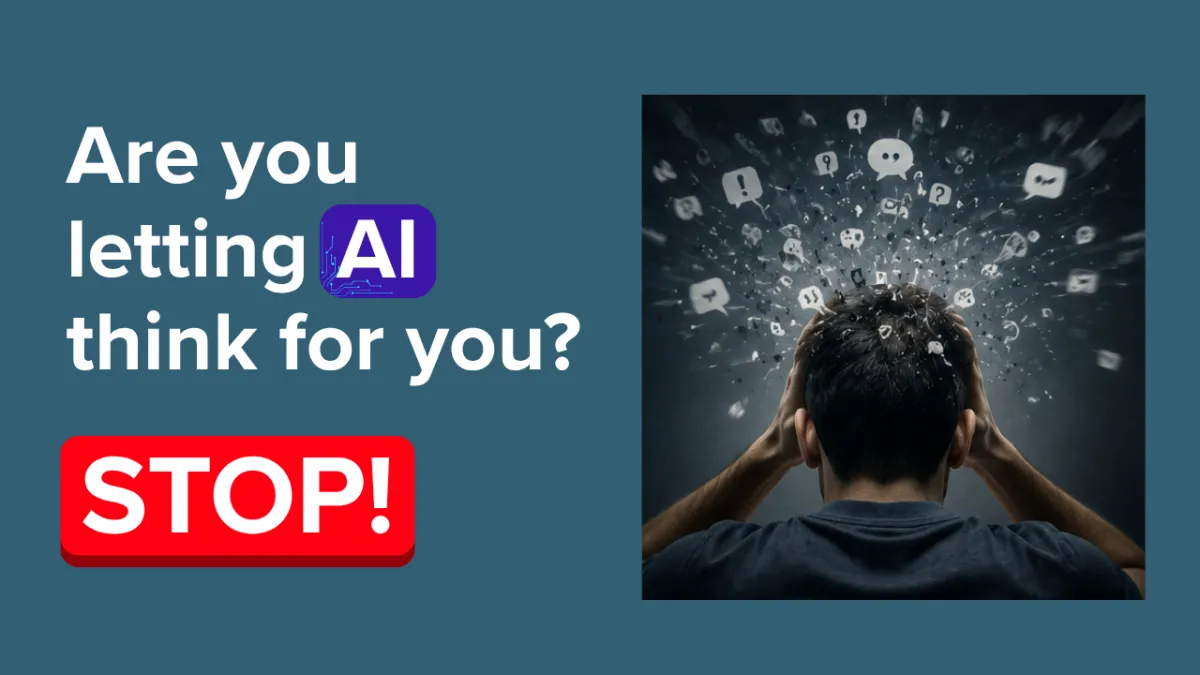
How creators can use AI for clarity, productivity, and empowerment. Albert Bramante & Samia Bano
How creators can use AI for clarity, productivity, and empowerment. Albert Bramante & Samia Bano
How can #creatives use #AI to #becomemore productive without letting AI take over the #creativeprocess?
Dr. Albert Bramante, Ph.D. #TalentAgent, #Psychology Professor, #Author of "Rise Above the Script", shares #practicaltips and strategies for using #ChatGPT, Claude, #GoogleGemini, and Perplexity as tools for brainstorming, research, writing, and #productivity—while keeping your own voice, stories, experience, and creativity at the centre.
Plus, we explore the growing concerns around AI dependence, #AIrelationships, synthetic intimacy, social media, loneliness, and our changing communication skills.
This powerful conversation asks us to consider where AI belongs in our lives—and where #healthyboundaries need to remain.
About Albert Bramante, Ph.D.:
For over 20 years, Albert has helped performers, educators, and creators #breakthroughfear and self-doubt—whether that’s #impostersyndrome, self-sabotage, or believing they’re not “enough”—using a unique combination of #psychology, #hypnosis, #NLP, and practical tech skills.
As a professor, talent agent, and certified hypnotist, Albert's mission aligns with making change fun, actionable, and, yes, easy for creatives. He also teaches coaches and creators how to harness AI tools like ChatGPT and Claude to simplify content creation and cut down overwhelm.
Learn more and connect with Dr. Albert now at:
https://linktr.ee/albertbramante
To Book your Free HAPPINESS 101 EXPLORATION CALL with Samia, click: https://my.timetrade.com/book/JX9XJ
#ArtificialIntelligence #AIForCreatives #AIProductivity #AIClarity #AIAndCreativity #HumanConnection #HumanTouch #CreativeMindset #PerformanceMindset #ContentCreation #AIWriting #PromptEngineering #ClaudeAI #PerplexityAI #AIAndMentalHealth #DigitalWellbeing #AIEthics #AIAndTheFuture #CreativeEmpowerment #SelfTrust #AuthenticContent #PersonalBranding #Creators
Here's the audio version of this episode:
Transcript Automatically Generated
Hello, Salaam, Shalom, Namaste, Sat Sri Akal, Aloha, Holah, Ciao, Bonjour, Buna, Privet, Mabuhay, and Dzień Dobry. You know, I'm so happy, to be doing today's episode because we have a very cool returning guest with us, and that is Albert Bramante. Did I say— get your last name right?
Yes, you did. Yes, you did.
Sometimes I get the emphasis, like, mixed up in my mind. But yay, welcome back, Albert! I'm so happy you're back with us.
Excellent. Well, thank you so much again for having me.
Yes. And Albert, before we go any further, can you please tell us more about who you are and what you do?
Sure. So, you know, for those of you who are new, welcome. My name is Dr. Albert Bramante. I'm a talent agent in the United States, in the New York area, and I've also worked in the area of performance mindset. So I help, work, with a lot of creatives, a lot of actors, and those that are like pursuing, you know, any type of performative work. That could be a coach, it could be a speaker, that could be, you know, even a podcast host, you know, someone that always has to perform, or in a sense perform a role.
Yeah, I love it, I love it. That is such an important role that you play in the lives of people like us, because I count myself as, you know, like, I'm one of your people.
Oh gosh. And actually, in our last episode, we focused a lot on performance mindset. You shared with us like so many excellent tips and practical tools and advice and insights on how to improve our performance mindset. You know, we talked about, and talked about that in the context of things like dealing with self-sabotage and low self-esteem and building up our conscientiousness and so forth. And there's just so much more for us to dig into that I'm so excited for. And actually, one of the things that you had mentioned that you have been guiding your people with regards to, and I thought this would be like a really awesome thing for us to talk about today, is step-by-step ways creators can use AI for clarity, productivity, and empowerment. Tell me more about like what's going on with AI in your work. What are some of the challenges that you're seeing?
Well, our world was disrupted in, I would say, December 2022 when ChatGPT was formed. Now, the idea of artificial intelligence has been around for decades, even prior to ChatGPT. If any of you own a Siri or an Alexa, that's, you know, that's exactly what ChatGPT runs on, the AI, artificial intelligence. If you've watched Netflix, if you're a Netflix watcher, you'll often notice when you finish watching a series or a movie, it'll say, based on these selections, here's your recommendations. Well, that's AI. And even the algorithms on social media are operated through AI. And so it's been around in our lives for many, many years. You know, if you drive a car, GPS.
Yeah.
That's artificial intelligence. So you know, this is nothing really new, but it's something that became, you know, exploded in the past, like, 3, you know, 3 years or so. And you have multiple corporations putting in billions of dollars. Almost every nation in the world is involved in this, you know, artificial intelligence community. Now, when I had first, you know, proposed this a while back, I was using mainly ChatGPT, you know, which is still common. But one tool that I really found… started to find useful too, actually, is Claude and Gemini. You know, now ChatGPT is run by OpenAI, Claude is run by Anthropic, and Gemini is Google's, you know, AI space. There's all, I know… Yeah… X has their Grok, and then there's also Perplexity, which I'll get into, which is also another good… Perplexity is another good one too. But, the way I do, the way I've always looked at AI, is it should never replace you. It should only amplify you.
Yeah.
So, you know, or at least assist you, not take over.
You know, it shouldn't take over your life. It shouldn't take over. Anything that you do still should have you in it. And so, and you know, there's when you type an instruction into, you know, any type of AI use, it's called prompting.
Yeah.
Now it's really important when I work with people is… and this is something I had to learn too… If you give it a weak prompt or a mediocre prompt, you're going to get what we call AI slop, which is… We're seeing, you know, if any of you are on social media, you see this every day, you know, now flooding the feeds, which is like, okay, this is— I can tell this is AI-generated because it's so formulaic and almost soulless, you know, boring.
Yeah. But if you, you know, like, let's say for example, I wanted to put in a post on LinkedIn and I said, you know, write me a post on performance mindset. Well, it's going to give me a very generic, clean, good sounding, professionally sounding, but there'll be no substance to it. It'll just be like, okay, this is, you know, robotic. Like, this is boring.
Yeah. Yeah.
However, if I give it context, the important thing is like, you have to… One of the things that I often work on, that I do myself greatly, you have to train the models. Train the models, whether again, whether you're going to use ChatGPT, Claude, or Gemini, or a combination. It's important to train the models, you know, on your voice.
And on your, you know, your brand, you know. So you would have to go in and say who you are, you know. So I wouldn't say write a performance mindset article, I would put, you know, I'm, I'm a talent agent with 22 years of experience. I work with, you know, early to mid-career actors in this, you know, demographic, you know, which is like 25 to 45, and that are struggling with, you know, overcoming self-doubt and imposter syndrome. And I might even say, you know, give me a, you know, step by, you know, you know, 3, you know, 3 things that they can do today. I'm very specific. Now I'm gonna get a better output if I…. than if I did that rather than I just said, you know, write me an article about performance mindset.
Yeah. Just like if you are gonna write an article about happiness, you would say, you know, you wouldn't say just write me an article about happiness, 'cause then you're gonna get you know, some overused slogans that sound very corporate and very, you know, easily forgotten because it's boring.
Yeah. But if you say, okay, you know, I'm, you know, you could say, you know, I host Making Change Fun and Easy podcast. This is what we serve. I'm thinking about doing a topic in this issue, you know, on this topic. Here's and you might even feed it a couple scripts of your previous episodes. And then you would say, okay, you know, give me some ideas for future topics or future guests. Here are the guests I've had in the past. So the more context that you can give AI, the better of a response you're going to get. And that's why there's that famous saying, you know, you hear this a lot with AI trainings, is garbage in, garbage out.
Yeah. If you give it garbage in, you're getting garbage out. Yeah.
And even when you get the… some really good stuff… you know, because you will find, at least, you know, I found most people I talk to, the more context you give, the more mind-blowing it's going to seem like, wow, this is great. However, I would always say resist the temptation of just stopping there. And that's where a lot of people mistake, oh, this is great, I'm gonna cut paste now into, into social media. And then you post and it's like, well, I'm not getting any engagement. Well, yeah, because it's AI, you know, it's not you. So what I often say when I work with creatives or anybody is, A, you gotta, you should come up with a skeleton of an idea.
What do you want to create? If you're creating an article, if you're creating, you know, social media posts, if you're creating a website or a flyer or whatever it is you're trying to create, or a podcast episode. You should already have a skeleton of what you want, and that should come from your own brain.
Yeah. And then you would plug that into the AI, and it would help you fix things up. And then you still should come back and say, okay, well, I like this, I like that, and then put your own spin on it. Add your own stories, add your own experience. The one thing that AI doesn't know is your stories. It doesn't have your personality.
Yeah. And that's where a lot of, you know, and that's where a lot of AI falls flat because AI in itself is not necessarily creative. You are, humans are, we are, but we need to inject that into the text that it gives us. So, and no matter how, you know, you could, get the best prompts, you could have the best, you know, instructions, and even have the best AI model, it's still not going to replace the human touch and never will. And yes, there's models. And the thing about it, which I think is interesting, is, AI is developing at a very fast rate.
Yeah. There's new tools that are coming out that, you know, daily. There's new techniques that are coming out daily. These models are being improved daily… that who knows, in, you know, even 2 months from now, there… we could be having a whole different conversation.
Yeah. Yeah. That is such a… you know, the rate… I was listening to a podcast where they were talking about, you know, some challenges related with AI or that AI is creating society at large. And one of the things they were talking about is that the rate at which the AI systems are improving is basically exponential. And they have picked up so much speed. It's like nothing we have seen in human history before, and the so the the the the power that they have, like the the the the scope of what they can do, the different kinds of problems that they can solve, is just getting exponentially better and better and better and better. in terms of like, you know, however it is that those metrics are being measured. And it's like creating serious, like, questions for people in terms of like, what is our value as humans then, and as workers in various fields when, you know, here is this machine that's able to do everything faster and in many ways, you know, like better and this and that. And so I'm so glad that, you know, you spoke right off the bat about the value that we have.
Absolutely. And that's one thing we can't… We'll never forget. Like, I'm not really concerned. And, you know, this could be, I could be mistaken. But I'm not entirely concerned about AI taking everyone's jobs away. However, what I will say is that, especially if you're going into the career force, that you really need to have skills in AI, you know, if you want to be, you know, successful, have a successful job.
Yeah. That's the truth. I mean, it's just like, you know, and it's here to stay. I mean, I remember This is going to age me a bit, but I remember when the internet came out, you know, when or was discovered in the '90s, and everyone was worried about the internet, like, you know, that it's going to, you know, end the world, and that's crazy. And we came out fine. Yeah, had problems, but it definitely and I feel the same way it's gonna happen with AI, and we're gonna be fine. However, it's important to remember to be connected and The one thing that I will say, and this is one of the things that does concern me, is, the idea that we're turning to early society, or the young, you know, generation like Gen Z and, and under, are turning to chatbots as therapy or companionships.
Yeah. Like, I'm seeing the rise of these AI you know, girlfriends or AI partners. And it's like, that is something concerning because it's not real. It's not a real person. And while these chatbots are getting really good at simulating and I remain that a key word… It's simulating communication. Yeah, that's all it is.
Yeah, yeah. And it's so easy for us to lose perspective on that. I mean, there's so much like evidence now that even adults, like grown, perfectly healthy, happy adults, you know you start engaging with these bots in that kind of context where you're like oh you know building a relationship with them and so forth, and you lose perspective. You lose perspective, and it's like even more challenging for our young people. people to maintain perspective and maintain their sanity and just mental health.
Absolutely. And because the one thing about the way that at least the default models, when I say default, unless you prompt it, these large language models, which is what ChatGPT and Claude falls under, or Gemini are highly agreeable. And they will kind of tell you everything, you know, and it's what you want to hear. And that may not necessarily be true. And that's what there's what we call hallucinations in the world of AI, which is, you know, it sounds confident, but it's, you know, it's faulty information.
Yeah. And this is why, again, you need to verify the outputs. But at the same time, reach out. If you're feeling lonely, reach out to a human being, not a bot.
Yeah. Yeah. You know, it makes me think about, like, sometimes it just feels easier to go to the bot because I remember in the days when I was, you know, traumatized and I had a lot of social challenges going on. I mean, I had like serious fear of actually opening up to a human being because it was one of the impacts of the trauma that I was dealing with that I had a lot of trust issues. And I, you know, I was just afraid to trust other people. And I was like, you know, if I, especially in terms of like letting somebody see my weaknesses or my vulnerabilities, because I was just so afraid that people are going to take advantage of that to hurt me, you know. And so I mean, I remember like in those days, it was much easier for me to not have to face a human. So like, thankfully in those days, there were no AI bots. I don't know what would have happened to me if I had gone down that hole, if I had the capacity, because they were there. So like what I had started doing was like writing. And so now I was like, I was of course journaling, but I was also writing a lot of emails. Mostly, thankfully, again for me, you know, like it was to like people that I actually knew. But there were like one or two close calls where I connected with some people I didn't know in real life on like these online message boards kind of thing. And, but then, you know, like for me, my fear was always so great that like when I started to feel like, oh, I'm like really connecting with this person and now they're starting to ask me questions that are like going below the surface of, you know, like just general interactions, I would actually cut things off because I was so afraid. So I guess in that way, my fear sort of protected me, but I could totally see the appeal. Like with an AI bot, I wouldn't have to feel that fear, you know? So then I would just, I could totally imagine myself totally going into like building out that relationship with the AI bot. And I mean, where might that lead me in terms of negative consequences for my mental health, for my real life relationships, for my ability to actually learn what I needed to learn to have more healthy, happy real life relationships?
Yeah, no, and that's a good point. I mean, and, you know, loneliness, especially when you're going through something, it's hard to maintain connections because, you know, not everyone's going to understand that. And then also, it's, you know, it's hard to sometimes open up to people, you know, to open up and talking to people, you know, especially when you're, you know, at a most vulnerable moment. or most vulnerable thought. And, you know, yes, online, which the word was similar, similar chat rooms, that was back, you know, in the late '90s, those were very popular. And but what was happening was even like when people would meet in real life, because, you know, like whether they dated, like maybe they had a chat room, you know, back and forth, companion each other, pen pal, and then met in person. A lot of times what was happening was there was a mismatch of, you know, a person's online persona and, you know, who they were.
Yeah. And that's why, like, a lot of times I've seen, you know, I've heard this so many times where people would meet online, you know, after they meet in person and not click.
Yeah. Because we're putting our best foot forward. We can be anybody who we want. you know, behind the keyboard. Right.
And so, and that's also, you know, somewhat what we call synthetic intimacy because it's not real. I can, I can be in a chat room pretending I'm, you know, you know, someone from, you know, England or someone from this, and I'm not. That's not who I am. So, and the same thing goes with like AI. It becomes easy. So the one thing that happens, and this is what I think fundamentally what happens, why we go down that rabbit hole, is when we find someone or something, in this case something that understands us completely, or at least gives us the illusion that they understand us completely we're gonna open up, you know, like crazy. That's why, like, even, you know, before, like, technology out of the side, why do people get involved in relationships sometimes that are very toxic? Because they need to feel understood, and the person, the toxic person may give them the illusion of being understood.
Yeah. And, you know, all of this stuff is dangerous because, again, it's not real. And, you know, who knows if we, you know, if these AI, any of these AI companies can go out of business.
Yeah. And it could be shut down at any time.
Yeah. What are you gonna do? You know, when this happens, and it's the same thing with like people who are constantly online or doing everything online. What happens if there's a power grid failure and we're, you know, going to be locked out of the internet for a month or longer? How are you going to handle it? Now, I remember a time when that was reality. We didn't have to worry about that because that was, you know, the internet was a luxury. Yeah. Now it becomes part of it. So, and so I kind of feel like with social media and as well as this AI dependence, overly dependence, is going to cause us to be more isolated. Yeah. From each other.
Yeah. Yeah. You know, I was thinking about like, you know, just the… Again, this was like something I was listening to on another show and they were like talking about, and I had not even thought about this until I heard them say this, but they were like, you know, already because of social media and the young people who have grown up with social media, their communication patterns have changed. How they communicate has changed. What they are able to communicate has changed. Because like, depending on how the, like, the medium you're communicating through, it puts certain constraints on what you're able to say, how you're able to say it, when you're able to say it, right? And so If you get so used to just communicating through one medium, like literally that constrains your, your abilities. So like when you get placed in a different situation, now you don't have that phone with you, you don't have that social media platform through which you can interact, and now you're in front of a person like real life moment, it's like you literally may not have the skills or the know-how of how to deal with them. Like one example of that, the context in which they were talking about is dealing with conflict.
Because, you know, like when you're online, people deal with conflict in a very different way. Like, a lot of people will say things that they would never say to another person in real life. So people can be a lot more angry, they can be a lot more direct and hurtful in their language. But also, you know, there is this apparently, like, in terms of, like, online culture, there is this tendency to be like, like if you see like a problematic post, one of the things you're going to do is report it. You know, like, so like let's say on a Facebook group, somebody sees a problematic post. So then you're going to report it to the whoever the admin of the group is, maybe to Facebook itself. And you may not actually engage with the person who made the post to be like, hey, you know, why do I have a problem with it? And, you know, like try to talk through the problem. It's more… It becomes the whole process of how you deal with something that you have a problem with becomes a lot less personal. And like it's going through these layers of technology mediating stuff for you. So now when you are in a real life situation where, you know, you're in conflict with a person and those tools are not there, those methods of making reports, you know, and etc., like you just don't have those options. And like people literally don't know how to talk through and work through conflict in real life.
Yeah, well, and that's the whole thing too, because it's, it's easy, you know, one of the skills that we're, I think, becoming more and more difficult is the fear of addressing conflict or, or confrontation, you know. And I don't mean that confrontation be aggressive, but even as healthy confrontation, it's because it's easy to fall, hide behind a keyboard and the screen, you know, or the screen name. I mean, because that was what it was back in the chat room days. He had a screen name, which could be absolutely anything, who, you know, you are. And so it's much easier to be braver than to actually do things. And that's why, you know, even with a lot of young, you know, the younger populations, you'll see some of them that are really so expressive online, but yet when you talk to them in person, they're very socially awkward, somewhat, you know, timid or even socially inept. Because they don't have those skills to communicate one-on-one. Yeah.
And, you know, it becomes a crutch. And, you know, our cell phones, for instance, are one of the most addictive devices that we've ever had. And I would even argue that that's more addictive than drugs, you know, is their cell phone and technology in general, because it's like we're focused on this, you know, this little device right here is like everything. Our lives are on it. And, you know, you see people when they don't— when they can't find their phone, they're 100% distressed and losing their mind because their life is on it. When in reality, I remember phones were just, you know, where you just call people on if you need to get a hold of somebody.
So, like, thinking about how all these issues connect to like performance. I mean, too much dependency on AI. Like, as somebody who has to be sort of you know, like now I've even started in the last year, year and a half, I've been hearing also a lot about AI avatars, or maybe there's like a different word that is being used, but I think avatars is one of them.
I believe that's the… So like, it's like, oh no, you don't even need to get on video yourself. Now you can just create an avatar. And it's like this character, AI-generated character, and that represents you. So it speaks for you, it acts for you. And, you know, when these things like first came out, it was pretty obvious that they were like fake characters, they were not real people. But now they're like making these hyper-realistic avatars. So it's like you, they look so real, they sound so real that, you know, like it could very easily fool people into thinking that it is a real person, right? And so like, again, like with this, I'm thinking like maybe that could become like another way in which people could get over… I mean, I'm sure there's some scenarios and circumstances in which having that kind of avatar do stuff for you online would be good and helpful. But I can also see a lot of people using that as a crutch and as an alternative, even when it might not be ideal, when it might not be to the… In their best interest, but just because it feel safer not to put your own self out there. Absolutely. And, you know, I probably, out of all the AI uses, I probably shy the most away from that, the cloning, simply because I've always felt. And because I've tried it myself, and I'm like, okay, yeah, this somewhat looks like me and somewhat sounds like me, but anyone who knows me knows that that wouldn't be me. You know, like, that, that wouldn't be me. Now, again, to a new audience, maybe they wouldn't know. But what I'm concerned about for because I work as I represent actors, and the one thing I'm worried about with that, with synthetic performers like that, is someone doing it, you know, doing your face and image And doing something that's totally like against your values, that's illegal or immoral. And, you know, it's almost going to be hard to then prove and say that wasn't me. You know, so that will… that worries me. And also, you know, because I have to protect an actor's bottom line payment. Yeah. So it's going to be very cheaper to create an AI clone. I don't have to pay the actor anymore. Yeah. And that's where it's going to have to get really tricky. In New York, for instance, where I'm based, the Screen Actors Guild now is fining any production company that uses an AI avatar, if it's based on a real person, $1,000 per usage, which I think, okay, that's a first step. But I, the issue that I'm concerned about is once that genie is released, we're not gonna be able to put a lid back on it. Yeah. And it's gonna get outta control with deepfakes and, and, and that's where it worries me. So I'm more about when I say you use it as a brainstorming partner, not again as a replacement. Yeah. Like, you know, now we're starting to see like AIs can do tasks for people they call like agents or agentic AI. I'm not, my personal opinion, I'm not comfortable with that. Like, I wouldn't mind like an AI drafting social media posts. I don't want AI posting to my social medias without me knowing because I don't, you know, I want to curate every piece of content I'm putting out there to make sure that it's, you know, who I am and it's really reflective of my brand, not something that, you know, is gonna sit and not sound like me and spam people.
Yeah. On that. Yeah, because it's like, even if AI can do something doesn't mean that it's good for us to let it do it or for us to just sort of blindly just go, oh, just just keep giving up things that we do that we love to AI because…
Yeah. Like, I keep coming back to thinking about, like, what's the point and purpose of our lives? You know, what gives our lives meaning? And there's so much work that we do, especially those of us who are creative, in the creative field, who are, you know, like, doing this kind of work where, like, I know for me as a coach, as a podcaster, like, there's a purpose. Like, I'm trying to help people, but also help myself in so many ways. Like, when I help people, when I connect with people, it also helps me in so many ways, right? And so the more things that my come in between that, or even if it allows me to be more, you know, quote unquote productive, it's not like, for me, it's not worth it because it's not in alignment with my sense of life purpose and meaning and what gives me and my life value, you know. And so it's sort of like, yeah, that's something to keep, keep in mind. Absolutely. And, and that's gonna come with, you know, really doing things that you genuinely love. And that's where, like, if you want to truly give value, the content that you put out there has to come from your heart, not Now again, you can certainly use, and I will definitely have no problem, you know, saying with confidence that AI can really help you in a great deal with research, with automation of some of the repetitive stuff, and more even just to, you know, help you write better scripts, like whether it's videos, whether it's courses, whether it's books. But at the same time, it's not going to replace you.
Yeah. And that's where that balance comes in. So it's like, how can, you know, when I work again with creatives, it's, well, how do you maintain your voice? So you, you have your own stories, you have your own memories, you have your own experiences. That will never be, that will never change, and that should never change. So, you know, I can have it write, you know, write something for me, or what I tend to do is, you know, if I'm sending out, you know, a document, I may write it out initially the way I want to say it. And then I may feed into the AI and say, okay, make this better. Yeah. Yeah.
And keep my voice, keep the message, the meaning of the message intact. But if maybe there's a better way to say this. Yeah.
And that I felt has been immensely, you know, like game changer. So, and one tip that I'll always… That I kind of leave to your, to the listeners here is anytime you do a prompt in, what you should do at the end of every prompt, you know, add this sentence, ask me any questions you have. Because the one thing again is when you put a prompt in, AI is going to just, because it's a people pleasing thing. Yeah. Wants to please you. It's going to put out content. But if you say, ask me any questions, well, now it's going to ask you, you know, some, a series of questions that about what you're looking for. When you answer those, you're going to get a better piece of output. Something that's like, again, somewhat usable. Again, one thing I really recommend not to do. is to cut and paste anything and use as is, because that's not, again, it's not you.
Yeah, yeah, yeah. You know, it makes me think also about like, this is like, again, this other show that I was listening to with regards to AI stuff. They were talking about the difference between how China is using AI versus the US. And they were saying, in China, actually the AI is being used more like a tool. So it's sort of like being integrated into different processes and systems where it's being used for very specific tasks that, you know, it's like, how do we make this more efficient? Or, well, here's something that is very mundane and boring for a human to do, so let's make AI do that part, you know. So they're using it as a tool to fill in specific tasks and create specific outputs. They're not, whereas in America, there is this like, I mean, there are some tools and so forth that are being created, but sort of, it's sort of also there's this larger attempt to sort of have AI be like a general force where it can do anything and everything. And like so it's like not just helping you with this one little task or that particular thing, but it's, it also wants to be your friend and your therapist. Yeah.
You know, all of that. So it's like, there's… Where's the containment? Where are the boundaries in terms of what place AI has in your life? And in America, it's like the people are sort of not really, you know, the American approach is not encouraging people to put strong boundaries around what AI should do in our lives and what role it should have in our lives, not just what it could potentially do. Yeah, no, and that's a good point that you just made, and where boundaries have to come in. And this is very strong. I mean, that's very important to do. And this is why, again, it should be used as a thinking partner, and that's it should not be used as a therapist. It should not be used as a companion at all. Yeah. And it doesn't have to be. It's like if we allow that to become like a common thing in our culture, it's because we have made that choice to let it happen. It doesn't have to be that way. Right, exactly. It does not have to be that way. And this is why we really need human connection and human you know, companionship that'll never go away. Yeah. Yeah. And I mean, especially like also coming back to ideas of performance mindset that you specialize in helping people with, if you're talking about something like imposter syndrome and overcoming self-sabotage, you know, like we did last time, if you are overly dependent on AI, I mean, come on, you're like literally signing up to create these problems for yourself.
Absolutely. And, you know, because then you're gonna start losing like your concept of who you are. Yeah. And your confidence in your own value and your own worth and your own sense of like, what am I good at? You know? Yeah. So, wow. Thank you so much for all of those amazing insights and that, that frame of, you know, using AI as, as this in these various ways where it's like a tool, it doesn't replace us. I just love that so much. Do you have anything else to share on this? Like, particularly in the context of step-by-step ways that creators can use AI? Well, again, remember, the important thing is to give it context. So, you know, when you're prompting, always say what you want it to do. Yeah. And be explicit because that's another mistake a lot of people make when they and they get generic information. What exactly are you looking for? And give it context. If you wanted to write, you know, if you're looking to write you a sales letter, so write me a sales letter and you can emulate people that are things. Another thing you could do is let's say you like a piece of writing or a piece or a sales letter, give the AI a couple copies of already successful sales letters. And then what you say is, okay, here's a product I'm selling. Here's a service coaching program service. Write like this in this style promoting my service. The one thing that AI is exceptional at is emulating and copying styles. So if I want it again, if I'm writing, like, let's say I'm launching a coaching program, so I may look at some of the successful people in my industry that are coaching. I take their, I look at their websites and look at their offers. And I copy their offers into ChatGPT or Claude or Gemini and say, okay, this is a product I'm offering. This is a service I'm offering. Yeah. Please take the framework that they're using and write my sales letter in that, you know, tone and format. So it's important that when you're, you know, when, when you're going step by step here, take your time. Even if it takes you a couple of hours to get the results you want. Take your time with it. Don't rush in it because it's tempting to say, okay, I typed it, I got something back, I'm done. Yeah, no. Take your time with it and don't be afraid to go back and forth. You know, I have like, sometimes I'll be like, that's not what I'm looking for. This area needs to work, or, and, you know, this area is too generic. Please, you know, give me a couple other alternatives to that. So feel free to workshop what you have. But the important thing is, like, when you're coming with something creative, you want to already have something in place. Yeah. You know, a skeleton or a concept, because that's the only way AI is going to help. I mean, otherwise it's going to just guess what it's going to give. It's like predictive text to some degree. Yeah. It may not give you great content. It's going to give you mediocre, you know, average. Yeah, very average content. And in today's world, we need much, much better and stronger than just okay. So the important thing is what the first step is to have a context. And also the one thing I, you know, I'll say this too, when you're training the models, especially in the beginning, take a couple of pieces of things that you wrote on your own. Without the assistance of AI. Yeah.
And then ask the AI to analyze your writing style. Yeah. What, you know, what's the strengths? What's the weakness? You know, where do you see, you know, how would you describe this writing? Yeah. Then in your mod, when you sign up for these models, you can often put what I call custom instructions. You take it what it gives you as far as describing your writing. And now you're telling the AI to respond every way, in that manner. So now you're getting a much different response than you, you know, than I would have gotten, because it's not… it's only being trained on your information, as you know, or the AI has been trained in my information. So, you know, we could put like, you and I could at the same moment put the same prompt into ChatGPT, or ask it to do the same thing, and you had a completely different Response. Yeah.
And that's the beauty of it. Like, I feel like that's a good thing. Yeah.
You know, that's not, but again, the important thing, and then, and the next step, which is very important, is when you get the output or get whatever you're going to create, is to not be tempted to go with the first thing that it gives you. Work with it, workshop it, put your own words, put your own voice into it.
Yeah, yeah. So you still need to know what you want. You still need to have knowledge yourself too, because if you don't know yourself what good content actually looks like, feels like, sounds like, how will you judge the output that the AI gives you? So you still need to know, like, to keep learning yourself. And so then you have clear criteria and, and knowledge through which to judge what AI is giving you. And okay, so the other question that I just remembered cause I can't remember if you, I think we were talking about this before we started recording, but you had mentioned there were like different, obviously there are different AI platforms that one could use. ChatGPT was sort of like, you know, the original one that got famous.
Yeah. But then there's Claude and Gemini and so forth. Do you have, and you were mentioning that, you know, you had some developed some preferences Yeah, it really depends. I mean, you know, they all kind of do the same thing. And like, you know, obviously, if you keep the human in the loop, you know, principle, everything's gonna go— gonna be fine. But some, I felt like sometimes Claude is great at writing. ChatGPT is good for like brainstorming and you know, answering, you know, simple questions. Gemini is pretty good too. That's by Google. That's Google's AI. And then one that, for those of you that are in the research side, Perplexity is another good one. Now, you're not going to really be going into full conversation with Perplexity, but that would be more like one of the things that I often find with some of the AI-generated content is it's not entirely true. Yes.
You know, it may give me a factor or percentage, but that may not be very true. So what you could then do is use Perplexity, which is only trained on research, and say, you know, put in whatever ChatGPT gave you, a statistic or, you know, a framework, whatever it gave you, and say, you know, how accurate is it? And if it's not accurate, can you point me to where you know, it is where I can find some accurate information. That's where perplexity comes in. So, you know, and always verify. One of the things that I found really shocking, and again, I'm a pro-AI person, but one thing that I found very shocking and almost disturbing was where I'm from in New York, there were a couple of lawyers that were put recently under fire. Because when they were writing their briefs, they used, obviously they used ChatGPT for brainstorming. Again, that's fine. I mean, some people might frown on that. I don't think there's a problem with that. However, I always verify. If it tells you a case law, I don't think it takes much, you know, that much effort to go up in your law library and say, is this a real case? Because what was happening was that wasn't a real case. Yeah.
And these lawyers are now in trouble, and some have been recommended for disbarment. So, yeah, you always want to be careful. Like, you know, even if it gives me a percentage, I'm like, I need to verify that. Yeah.
Or if it gives me a quote of something like, I, you know, as you know, Socrates once said… I want to verify, you know, is this a record of Socrates actually saying it? Because if it's not, I'm not going to put it in there. Yeah. Or anybody's even living. I'm like, I want to make sure they actually said that because there's, it's going to be, you know, and I mean, especially when you start going a larger following, people might find that out. And that's the one thing you don't want to be doing is putting misleading claims up there.
Yeah, exactly. And the thing that can get actually tricky about verification is that, I mean, there's like so much content and a lot of it may actually be accurate, but then here is this inaccuracy in there and Like, again, if I don't know enough myself, I can't even catch that inaccuracy, you know?
So that's why your suggestion for how to use Perplexity to like further check the accuracy of the data, that I thought was a really, really helpful tip. And I hope we can, but at least you know after hearing what you have to say, I hope all of us will just be more vigilant and be like more on the lookout for possible inaccuracies and so forth, and just put in. Time and effort to like check, double-check, verify. Triple-check. Yeah, you need to verify. And yes, it's an extra step, it's a little bit extra work, and but it's going to be so much better in the long run because, yeah, I wish these lawyers did that, you know, otherwise, and that would have saved them maybe even their careers, you know, had they verified. And if you can't verify it, don't use it. Like, okay, you know this, or if it gives you a number, you could say approximately this number rather than… because if you come out and say something and, you know, because even if I'm putting out a piece of content and it gives me like, oh, well, so-and-so said this, I'm going to verify that they said it online. Yeah. Before I do it, because I'm, you know, found out sometimes they didn't say that. They may have talked about that theme or something around that. But they never said that quote, and you don't want to quote somebody who never said that, right?
Yeah, and I mean, I'm thinking in the context of, for example, like my work, I haven't actually used ChatGPT or AI in this kind of way to produce content for me, but I can now. I'm like, could it be like making up facts about, you know, research in terms of what actually allows people to be happy and so forth? I mean, even if it's not making up stuff, like it could be pulling from less reliable research studies or, you know, like because there's so much also, there are like all these like let's say it goes and pulls some sensational headline about some kind of mental health-related claim, but turns out that headline is based on very faulty reasoning or not an accurate representation of the original research, which happens all the time. And so now here's AI telling me in a very confident way that according to research, this has been found about how you can be happy, or, you know, this is what's better or worse for your mental health, but it could be very inaccurate, actually. So again, I would have to know enough to be like, hey, that doesn't sound right. Or, you know, there's something fishy about that. Let me double, triple check that. Yeah, absolutely. Because again, your credibility is… Anyone's credibility and integrity is on the line here. So it, and it's not that difficult to do. You know, it may take a bit longer, but it's not that difficult to do. And this is why, again, you really have to go through, you know, some people will use AI to help them write stuff. Some people use it just as a proofreader or a brainstorm technique. The important thing is you want to be fully involved 100% throughout the process. Yeah. Yeah. Oh my gosh. Thanks again so much, Albert. I have more questions to ask you, but I think I better resist asking you anymore because I've taken up a lot of your time, actually more time than I had asked you for. Well, I know I really appreciate. It's been an honor to be here, and I do appreciate you bringing me back on.
Oh, thank you, Albert. Any last words, thoughts?
I would just say, you know, this is a very interesting time we're in, and we kind of mentioned that before we recording. This is a very interesting time. The important thing is to hang in there and to stay committed to who you are and stay grounded no matter what happens. And because at the end of the day, you know, you have yourself and you know the people around you, and you that goes to just learning to trust yourself the entire time.
Yeah, thank you again, Albert. And my last reminder is just please make sure you check the show notes because we will be dropping Albert's links in there so you can connect with him, continue to learn with him, get the help and support that you need whenever you're ready for it. And until we connect next time, I wish you lots and lots of peace and joy.

Want to check out even more amazing episodes?
All of our episodes are archived on our vlog page :)





OUR PEACE OF MIND GUARANTEE
Because we’re committed to doing onto others what we would have them do onto us, all our programs come with a Peace of Mind Guarantee.
We know you’re going to love our programs. We’re so confident about the quality of our programs we’ll give you full access risk-free for 30 days. If you decide the course isn’t right for you, then you may request a full refund up to 30 days after your purchase.
Copyright © 2018 Academy Of Thriving