
Blog: Make Change Fun And Easy
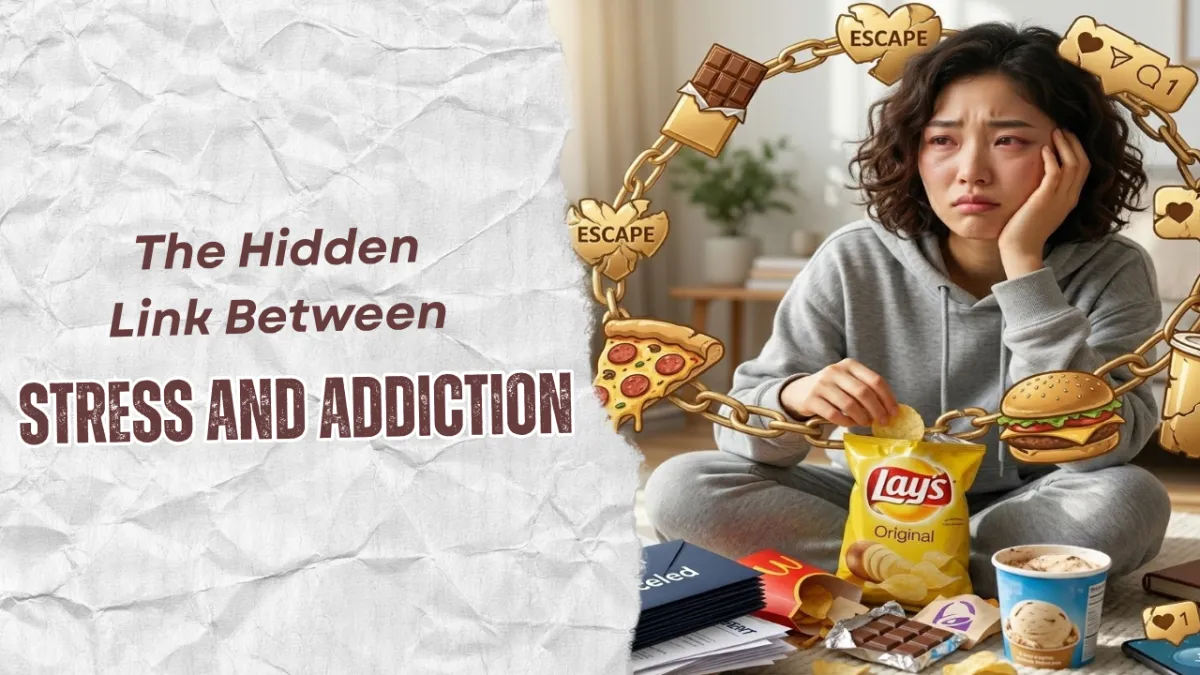
How to Break Free from Unhealthy Coping Mechanisms. With Dr. Gary Sprouse & Samia Bano
How to Break Free
from Unhealthy Coping Mechanisms.
With Dr. Gary Sprouse & Samia Bano
What if #addiction isn’t a disease—but a #stressreduction strategy that’s gone wrong?
Dr. Gary Sprouse, "The Less Stress Doc" shares a powerful new perspective that could transform how we understand #AddictionRecovery and #healing.
Listen to this episode now to learn about his groundbreaking "Stress Reducer Loop" model that explains why the very things we use to #feelbetter can sometimes become the source of even more stress. And even better, learn practical strategies to recognize destructive coping patterns, #reducestress at the source, and create #healthierhabits that actually support your wellbeing.
ABOUT DR. GARY SPROUSE:
Dr. Gary Sprouse is an expert on happiness, mindset and stress reduction. Dr. Gary says, “Please don't resign yourself to living stressed out. There is another way!” He is extremely passionate about bringing happiness into people’s lives through humor, compassion and understanding. He is committed to helping people improve their mental health and has a unique perspective on stress that no one else is talking about. He has uncovered a groundbreaking new way to define where the majority of human stress originates. This new insight and the tools he developed to deal with stress are changing lives. Dr. Sprouse helps people have less stress, feel happier and be more productive through innovative tools to reduce stress, worry, guilt and regret.
Also known as The Less Stress Doc, Dr. Sprouse has had his own 55-gallon drum of stress for decades, dealing with a malpractice suit, the medical board, hospital administrators, insurance providers and more. He talks about it in his award-winning book, Highway to Your Happy Place: A Roadmap to Less Stress and developed tools and strategies to effectively reduce or eliminate it. These tools worked for him and he is pleased to share them with the world.
Dr. Gary Sprouse is a retired primary care physician who practiced in Maryland for 38 years. He graduated from George Washington University Medical School in the top 10% of his class and is a member of Mensa. His goal is to have everyone living in their Happy Place.
Dr. Sprouse also collaborated on a book with Jack Canfield. The new book, Mindset Matters, is a best-seller on Amazon and Barnes & Noble.
Learn more and connect with Dr. Sprouse at: www.thelessstressdoc.com
To Book your Free HAPPINESS 101 EXPLORATION CALL with Samia, click: https://my.timetrade.com/book/JX9XJ
#addictionawareness #StressManagement #MentalHealthAwareness #EmotionalHealing #SelfImprovement #PersonalGrowth #SelfCompassion #TraumaHealing #MindsetShift #MentalWellness #RecoveryJourney #StressRelief #HealthyHabits #BehaviorChange #EmotionalWellbeing #HealingJourney #InnerHealing #SelfAwareness #Resilience #OvercomingAddiction #Psychology #PositiveChange #WellnessJourney #PersonalDevelopment #addictionrecoverypath #liveyourbestlife
Here's the audio version of this episode:
Transcript Automatically Generated
Hello, Salaam, Shalom, Namaste, Sat Sri Akal, Aloha, Holah, Ciao, Bonjour, Buna, Privet, Mabuhay, and Dzień Dobry…
It's really, really good to be with you again.
And I know you'll be so extra happy that you've joined us today because we have one of our very cool returning guests, and that's Dr. Gary Sprouse. And I'm so happy to have you back with us, Dr. Gary. Welcome back.
Wow.
Well, thank you for having me back. This is awesome. Like, super excited about today.
Yes. And the really cool thing is that the very first interview we had was very recently that we had that conversation. And it still freshens my mind.
And I have lots of questions that I had to follow up on with you. And I'm just really excited to jump back in.
So today, what I wanted to talk to you about, one of the offshoots of this work that I'm doing that actually is transitioning to the main umbrella that I'm working under is that when you look at people and they have their stresses, then they have to do something to reduce their stress. So there's lots of things people ask me, what do you do to reduce your stress? And I go, well, I exercise, I read books, I watch TV, I meditate, I do karaoke, I play basketball, right?
So there's all these things that I do that I reduce my stress. But here's what I found. When people pick a stress reducer and the stress reducer starts causing stress, now you're in a loop.
And so what I want to do is start changing that word addiction, which has so many negative connotations to it, to calling it a stress reducer loop, which then the treatment becomes very different. The actual treatments are not that different, but the focus of the treatment is totally different. And it changes our whole mindset about what addiction is when you call it a stress reducer loop.
So I'm super excited to talk to you. Because when I do a lecture on this, I just did one the other day. Said it was like 30 people in a room.
And I said, how many people have addictions touched your life in some way, either you personally or someone in your family? Literally, everybody raised their hand. So this is a big problem.
And we have to do something about it to get it under better control.
Yes. And you know, the thing is, actually, before I get into it, one of the things that I wanted to say in regards to addiction and stress reduction is just remind people about who you are and what you do. And what we talked about last time.
Doesn't everybody already know who I am? Come on.
Yeah. So just really, really quick. You are the author, among other things, you're the author of the book Finding Your Happy Place.
Well, it's called Highway to Your Happy Place, A Roadmap to Less Stress.
Yes. Thank you for that. I was just remembering it as finding your happy place, because that's what we talked about last time, finding your happy place.
So, Dr. Gary, I want to encourage everyone that didn't listen to the first episode, just go back in our archive. You won't have to go back very far. It was just the last episode that we did.
So listen to that one. We talked about finding your happy place, dealing with stressors. And Dr. Gary, you had amazing, not just insight on the subject, but I loved the very cool perspective that you gave and the different framework that you gave, just like you're doing right now with addiction.
So back to the addiction idea. You know, one of the things that I find really interesting in my own experience life, my own life with addiction is, I've never had any of the, you know, what people generally think about when they think about addiction as a bad thing. Like I've never done drugs or alcohol or, you know, those kinds of things.
However, I realized I've nonetheless had, have had addiction and sometimes I can still struggle. So things like my food related habit, having an addiction to sugar, for example. Yeah, or, you know, in terms of other habits, you know, when you were talking about addiction as a way that we relieve stress, I actually immediately thought of when I was younger, a teenager, even through my early 20s, mid 20s, I was like one of those people you might describe as a bookworm.
Okay.
I always had my nose in a book. And that was actually my way of trying to deal with my stress. Because I didn't know how to handle my emotions, like even a little bit of emotional upheaval for me was too much.
And so the way I dealt with it was I tried to avoid having to feel much emotions, at least anything in real life. I was okay, like if I'm reading. Like especially, you know, as a young person, I wasn't reading books of philosophy or things like that.
I was reading like young adults and all most of the time. So I was okay to feel in terms of the characters of the story and this and that, as long as it wasn't real, as long as it wasn't my life, I was okay. And it did actually, the reason I now think of it as one of the first experiences of addiction in my life is because it was compulsive.
Like I couldn't just put down the book and and I mean, I can't tell you how many fights I had with my mom, especially because she was always right to pull me away, get me involved, but just spending time for the family, just sit down to dinner and eat with the family, to go out, you know, and do things, normal things that kids do. I was like, no, no, no, this face of a dog.
So what you're bringing up is the exact point that I make with my Stress Reducer Loop Model, is we tend to think of addiction for alcohol and heroin and cocaine and cigarette smoking. But in the Stress Reducer Loop Model, anything that people picked to be a Stress Reducer can turn into a Stress Reducer Loop. So one of my ladies who used to work for me, she had a bleaching loop.
You're like, what is that? So when she got upset, she would bleach her house, like the whole house. You're like, okay, why is that a problem?
Well, it turned out that because she was bleaching it so much that the countertops were starting to deteriorate, and her daughter had a bad asthma. So every time she bleached the house, her daughter couldn't breathe. So we're like, you have to stop bleaching the house.
She's like, I can't. When I'm under stress, this is what I have to do. And so it became a loop, right?
The stress reducer was causing stress. And what happens is in the stress reducer loop models, the stigma kind of goes away because you can say, well, I picked heroin and you picked books, and this lady put, you know, bleaching and it's like, for me, it's chocolate donuts, right? So it's like, I'm tired, I'm stressed out, and my car just drives into convenience store, and I got a chocolate donut in my mouth.
I'm like, wait, I'm trying to lose weight. How did I get a freaking donut in my mouth? I don't even know how it got there, right?
It just is there. And it's like, so we can now understand why a person who drinks or a person who does heroin or a person who does cocaine, we can be empathetic with them because we can go, like I say to people, like, what happens if I told you never drink coffee again in your whole life and if you do, I'm going to put you in jail? You know how many people would be in jail because they drank coffee like a lot, right?
So when you start putting in those terms, then people go, oh, okay, now I get it.
Yes, exactly. This, yes, it's so common. So, I mean, we talk a lot in our last episode about stressors and some healthy ways to deal with stress and so forth.
But in the context of addiction, can you give us some insight into, like, why do we get so addicted to whatever our choice of stress release is?
Addiction: Treatment Gone Wrong
Yeah. Well, this is the essence of this issue, right? So right now, like I'm a doctor and I've been trained in how to take care of diseases.
And addiction has, in the medical model, is a disease. So when you talk to people in AA, if you talk to people in smart recovery, or if you talk to people in celebrate recovery, and definitely doctors and addiction treatment centers, they all like, oh, it's a disease, it's a disease, it's a disease. And you're like, it's not a disease.
It doesn't make sense to call it a disease. So what happens is stress is the problem. And then we find a treatment to help with our stress.
So the addiction is really a treatment. And the problem is the treatment has gone wrong. It's gotten us into trouble.
It's caused side effects. Whether they're physical side effects, or social side effects, or financial side effects, it's causing side effects. And so then the answer is not, oh, it's a disease that we have to cure because there's no disease, there's a treatment gone wrong.
So we have to find a way to get rid of what caused the problem, stress, and find different treatments that don't have the same side effects. And that's it. So that is straightforward.
And someone asked me, is that like you're trying to make it easy? No, I'm not trying to make it easy. What I'm saying is I'm making it easier because when you know what it is you're trying to do, it's a whole lot easier to accomplish.
And what I find in the medical community, we're very comfortable with the idea of disease. So it fits for us because that's what we're trained. Here's a bunch of symptoms, we put people in some bucket, and then we treat the people in the bucket with certain treatments.
And then we go, oh, look, they did better. So we go, oh, that must be the problem. And you're like, well, so we're very comfortable with that idea.
But in this situation, it's not working. Like we have really smart people that are trying to help people with addictions. And there's a lot of money that goes into this.
Literally tens of thousands of dollars for a month of therapy to get people off their addiction. And then the people who want to get off are very motivated. And with all that going for you, we're getting a 20 percent success rate.
Yeah, something's wrong with this picture, right? So I had a book by Thomas Kuhn a long time ago. It's called The Structure of Scientific Revolution.
Here's what he said. Science, in general, goes little baby steps, step by step by step by step by step. But sometimes as you're doing these little steps, it's not answering the question and things are getting worse, not better.
And so he said every once in a while you have to have a revolution. So Einstein, when he came along, was a revolution. Darwin, when he came along, was a revolution.
Copernicus, when he came along, was a revolution. And so I think it's time for the addiction world to have a revolution. And the revolution is, let's not call it disease anymore, let's call it a treatment, and let's get rid of that word addiction because it's such a negative label.
And let's call it stress-reducer loops because that tells you what the problem is. The problem is you're doing something that's working but it's causing problems. And so now the answer is let's find a way to have less stress, find different ways to deal with it.
And one of the key points to this whole thing is that diseases abnormalizes the person. You have a disease, you're abnormal. There's something wrong with you.
Your brain damage, you're genetically defective, you're weak-willed, you got a personality disorder, you're stupid. Something is wrong with you and we just have to find a way to fix it. And the problem is it's abnormalizing the person.
Normalizing Stress Loops
And the whole process of stress-reducer loop is normal. And when I say to somebody who has a heroin addiction that you're normal, they go, what? What do you mean I'm normal?
Like I've been doing this for 10 years, nobody's ever said I'm normal. I'm telling you it's normal. So here's why it's normal.
One, people, everybody has stress, right? That's what we talked about at the last session. Like as long as you're alive, you have stress.
Two, we all find ways to reduce our stress. And the more stress you have, the more often you have to do your stress-reducer and the more powerful your stress-reducer has to be. So if you have a little bit of stress, now maybe one beer gets you feeling better and you don't need anymore.
But if you have a horrible amount of stress, well now beer is not enough. Now you need something else. You need, oh, maybe cocaine will do it.
Oh, maybe, oh, wait, maybe marijuana. No, maybe heroin. Oh, heroin is good stuff.
Or maybe I need fentanyl, right? So you just need more and more stuff. Because what you said is you were trying to withdraw into your books.
And it's like, that worked for you. But if it didn't, you'd be out there trying to find something that was even stronger. And so what you see then is the amount, so this is all normal.
Like the more stress you have, the stronger the stress reducer has to be and the more you have to use it. Then here's the next normal part. Like your body, your brain, when you do something repeatedly and it's successful, it makes it into a anatomical track.
So I call it the, it's a neurological habit track, right? So now there's a, so when you brush your teeth in the morning, if I said, how do you brush your teeth? You're like, I don't know, like I just do, right?
Cause it's automatic. This is what our brain does. It doesn't like thinking takes too much energy.
So we want to make things automatic. So when I brush my teeth, I literally do it the same way each time. But if I, if you asked me to scribe it, I would have to do this to figure it out, right?
Yeah.
So somebody said, you can't brush with your right hand. You have to use your left hand. I'm like, wait, what?
That would be weird and awkward. Cause that's not automatic. Now I gotta do a lot of thinking.
So this whole process is stress, found a stress reducer that worked. My brain made it into an automatic track. That's normal.
And then I go, you know what? This treatment I'm using is causing problems. I need to stop.
But here's the problem. So now I got this track and there's nothing to make that track go away. I don't have a magic wand that can go in there and zap out that track.
So you're stuck with that track forever. So the only thing I can do is two things. One is make a new track that doesn't have the same side effects.
And two, and here's the key, is I have to inhibit the old track.
Yeah.
Okay. So inhibiting is way different than choice. Choice is, hey, I don't want vanilla ice cream or chocolate ice cream.
That's choice. Inhibition is, I got this track and I don't want to use it. So I'm going to say, no, don't use that.
And we all can do it. Like there is no other animal that has the ability to inhibit. Only humans have this ability by choice, right?
We're doing it on purpose, right?
Yes.
But we're not that good at it. So if I'm at a gala and there is a bunch of chocolate donuts there, like I might go, dude, they look really good, but I'm going to walk past them. And then I walk past it again.
Then I walk past it again. And if I walk past it by the 11th time, my inhibition goes away and I'm eating the chocolate donut, right? And so what you see then is people can inhibit, but we're not that great at it.
And so now you end up with you either you can get off or you just never get off. But if you get off, then you lapse. And you're like, oh, so then you beat yourself up.
But again, all of this is normal. And we know that but we have to keep making it abnormal for whatever reason. And so then what happens is people don't want to come.
They don't want to hear they're abnormal. Why would I want to hear them abnormal? I got this lifelong disease that I can never get rid of and the best I can do is struggle every day of my life.
Who wants to hear that? That's not any fun, right? And every time I put on my resume, yeah, I used to drink alcohol.
That doesn't get me the job, right? So these are bad things. So people avoid coming to the doctor.
So our 20% success rate, and I'm trying to say it so people get it, that 20% success rate is the 20% of people who actually come to treatment.
Yeah.
But the people who come to treatment are only 20% of people who have the problem. So if I took 100 people with a stress reducer loop, only 20 of them are actually going to come. And of those 20, like only four are actually going to get better.
And you're like, wait, what? These are ridiculous numbers, right? So we have to do something different.
So in my motto, people are willing to come to me because what I said to them is, you're normal. And all we got to do is change your treatment and get rid of the stress and then you'll be fine. And you're like, wait, what?
Yeah.
And so they were, they wanted to come back because who doesn't want to have less stress, right?
Yes. I'm so with you on this whole, let's address the root cause of the stress thing because, you know, like for me, my reading addiction, I still love to read, but the addiction part of it, you set your machine.
You gotta call the stress reducer loop. Call the stress reducer loop.
It has broken, the loop is broken. The loop is broken and it broke by itself when the root cause of my stresses went away when I learned other ways to manage my stress. And it happened over time.
It didn't happen in a day, it took a few years, but for me, it started in college really. When I got to college, I found so many interesting things to do that I literally was like, I don't have time to read. And I realized, oh, I don't mind not reading so much because I'm doing all these other really interesting things.
And it just kind of happened really naturally. And it was like, first, I got to college and there was just lots of studying to do. So I was still reading a lot.
But it was different kind of reading. And actually, that's when I realized that there was a difference between my stress-reducer loop reading and just reading, reading, like what I had to do for college work. Because I would start reading some textbooks for my class, some of my classes, and it would make me fall asleep.
Yeah.
I would get sleepy and I fall asleep. Whereas I never had that experience. It was not uncommon for me to stay awake the whole night reading when I was doing it as part of my stress-reducer loop activity.
And then I would be sleep-deprived during the day. But I functioned on very little sleep because I was reading, reading, reading. And I was like, I'm still functioning, whatever.
But it was like, really, the first time I had that experience of falling asleep while reading a textbook for my coursework, I was like, what just happened here? Like, you know, and I thought it was just, like I didn't. But then it kept happening, you know, over and over in like different classes.
I was like, oh, I don't think I love to read. Just anything and everything, all the time, for all purposes. There's just something specific about, you know, like reading in a particular context and for a particular purpose that just kept me so hooked.
Yeah.
Wow.
So, I mean, see, what I would say for you is like you were reading to withdrawal and withdrawal in whatever form is a very common way for people to reduce their stress. So, I've had patients that they're like one, I remember his dad died and it threw him for a loop. That had been his main anchor in the world.
And so, when he died, he literally didn't know what to do. And so, he was an accountant. So, he had money and he was married and he had some kids.
He literally was getting ready to lose his house because he didn't open the mail. So, he had like a room full of mail that was left unopened. And like his bills were in there and like the notices that were going to foreclose on you, all the stuff was in there because he just withdrew and said, I'm just not going to look at the mail and not worry.
And you're like, so withdrawal works because while you're withdrawing, you don't realize you're getting ready to get kicked out of your house. But the side effect is bad because not only are you getting kicked out, but your wife and your kids are getting kicked out too. So withdrawal, we all withdraw a little bit, right?
We all have weekends off or we go on vacation or retire. So we withdraw intermittently. But when you withdraw all the time, then it starts causing problems.
And from what you're telling me, it was starting to cause issues. Your mom was yelling at you and you were sleep deprived. So you were trying to go to school and you were half asleep.
So it's like it was causing issues. But then you found a different way to handle it. And you already got rid of some of the stresses that were leading to causing it.
You didn't want to withdraw. And so those are the answers. That's exactly...
I'm going to write down your case. You are my perfect example of what I'm talking about. That is exactly what I'm talking about.
Yeah, and you know, this is also something that you mentioned earlier that I realized that occur happened in my case is...
I think part of my problem why I got stuck in the stress reducer loop is that I was too much focused on myself, you know, and trying to... I mean, I was obviously trying to help myself, but I was too focused on the problem and not focused enough on what was right, what was... what I did have.
I mean, we talked more about this in our last episode, but that was such a huge aspect of the issue because... and that's what really flipped for me in college is that I found so many other things that had nothing to do with me that just engaged my attention, that allowed me to not be so self-obsessed with everything that was wrong that I was trying to run away from or avoid or withdraw from. And so it was when I became more interested in other problems, other issues, other…
And we were constantly learning about things that are wrong in society, in the world, and the different classes I was taking, right? And it was just so stimulating and engaging for me to not just learn about what these other problems were, but to have spaces where people were trying to do something about it. I think that was, and to be invited into those spaces, like, come, let's try to do something about it.
Or even like being spent for purposes of homework, to do something about, you know, to learn something. Like I, our teachers, I mean, and this was something that I don't know if this is a common experience in the American college going students life. But for me, it was revolutionary.
It's not something that I'd ever experienced and as a student when I was in India, as a student in Pakistan, as a student in the Middle East. And I've been to, you know, school, like all pre-college in those systems. But over there, there was, there was, it was like all about theory, the theoretical learning, memorization.
And that if you were able to memorize and reproduce on test papers what you learned, that's what made you a great student. But when I came to America and I started going to college over here, it was like, no, you have to apply. You have to, first of all, think for yourself and think about what you think about this issue.
So don't just regurgitate what you're reading, but you have to present your own opinion. But then you also have to have application of these ideas in different ways. And that is what really was so new for me, and it forced me to come out of myself in some ways, and just broke through that stress reducer loop.
Trauma Memory Reframing
Well, so here's what I see. It's like when people get into their loops, the ones that I've had the most difficulty with are people who've had these traumatic histories, like bad things have happened to them in the past. They were abused sexually, or their parents beat them or ignored them, or with something, they were getting bullied, or there was a lot of things that were going on that have created this.
So maybe their skills are, I can handle a hundred stress, but their past is 80. So now they only got 20 left, and then I saw a little thing, and he throws them over the top, because 80 is already taken up by what happened in the past. One of the things that I learned is a guy who writes about, what's called the body keeps score.
What he said is, and this is important, that our memories are stored in two different ways. So the first way is the more common way, which is there's a beginning, there's a middle, and there's a timeframe to it. So I got on Samia's podcast, and we talked for an hour, and it was great.
And then at the end, we signed off, and we went back and did this again the next day, right? So that's how we distort most of our memories. But when there's a traumatic memory, that doesn't get stored that way, because in trauma, there's a giant fear response, and our thinking part of our brain, which does all that, beginning, middle, end, story, timeline, it gets shut off.
So now the memory gets stuck into our brain in these snippets of sensory information, some sight or some smell or some taste, and it's like, or some touch. And it's like, what that does then, is when you hear that, it triggers off the emotions that were attached to that. And so now you're sitting there watching TV, and you see somebody get beat up, and all of a sudden you're freaking out.
And the person next to you is like, what the heck is the matter with you? And you're like, I don't know, I don't know, I'm just freaking out. And you don't even know why it's happening, because it was only this little snippet that happened so fast, you didn't even recognize that your brain just set it off.
And now you're having this giant panic attack, and the person next to you is freaking out, going, what's the matter? And then you get embarrassed, like, oh my God, I'm freaking out, and I don't even know why. So then you go, I'm just gonna stay, I'm gonna stay away from people, because I don't want that to happen again, because that was embarrassing.
So then they get to some point where they've withdrawn, because they don't want to have a panic attack in front of other people, and they're not even sure why they're having a panic attack. But it's usually, usually some kind of traumatic event that happened in the past. One of the clients that I was working with, when he was six years old, his parents got divorced in two weeks, and they had to move to a smaller house, much smaller house.
But then a couple of weeks later, his cousins who had just been at his house playing, their house burned down, and they died inside the fire. And this is a six year old. And I'm like, I don't think, I mean, his mom took him to counseling and all that kind of stuff, but I don't think it ever got out of his head.
And I think whatever was going on in that six year old brain is stuck there. And so now he's like a 36 year old guy, and he's having all kinds of problems because he's still trying to deal with what happened when he was six. So what I've learned is one of the ways to help people with their stress reducer loop is to say, let's take that memory and make it into the more normal kind of memory, whether it's the beginning, middle and end.
Because when they do studies of these traumatic memories, if you say to somebody, remember that time when you got beat up? It's like it happened yesterday. It happened right now.
Their body is reacting as if it just happened. So if you can then shift that, and that's where hypnosis and normal linguistic programming can come in. And they go, I'm going to reframe this.
So I had a patient that had gotten beat up. She was 40 years old. And she was having panic attacks for the next 20 years.
So she tried alcohol and Xanax and counseling and religion, and none of it was working. And so we did the normal linguistic programming and hypnosis. Literally two hours later, she was better.
And you're like, what? That doesn't even make sense. But what we made better was, she went from her memories where I was a victim, I was in pain, I didn't have any control of the situation.
This was bad, right? Fear, giant fear that wouldn't go away, right? When we shifted it, it turned out that when she had gotten beat up, she actually kind of passed out.
And when she woke up, the guy was beating up somebody else. And so she had a choice. She could just lay there and pretend like she was dead, or she could get up and help the other guy.
So she made the choice to get up and help the other person, right?
She called the police, blah, blah, blah.
Everybody came out. So I was like, so at the end of that session, I said, say, you're a hero.
And she's like, what?
And I'm like, you risked your life to help somebody else. That's what heroes do, right? And you could see the shift, right?
So she went from victim pain under control to, hey, I'm a hero. Yeah, that's a whole different emotion. So now every time that gets stimulated, what gets, what she feels is, hey, I was a hero.
And it's like, so then weirdly, not weirdly, actually kind of predictably, two weeks later, she called me and said, we have to do another session. And I'm like, wow, what's going on? So she had some memories that had resurfaced.
And it turned out the reason when she got beat up at 40 was so significant to her was because when she was eight, excuse me, when she was eight, her dad had gotten drunk and was, he took a knife and started cutting her mother. So there's blood everywhere. And so this was again, one of these traumatic memories that all she remembers was blood and her mom's screaming and you know, not nobody coming to help her, blah, blah.
So we did this neuro-linguistic program again. And so during that time, she was able to recall some other details. And so it turned out that the neighbor did come.
And she was actually helping her four-year-old brother cause he was like, he was right there and she was eight. So she's now protecting him from seeing all this. A neighbor did come and take them out of the situation and help them clean up and get her to the hospital.
And again, it changed all the emotions cause she had felt isolated and nobody cared about her. She was freaking out having to clean up. And when she had these different memories, it reframed it's like, oh wait, my neighborhood did care.
And I was helping my brother. I'm eight years old and this is the worst thing that I've ever seen. And here I am trying to help somebody else.
So it's like, so when you reframe those memories and put them back into the normal kind of memory where there's a beginning, middle and end, and there's a timeframe to it, well then the trauma and the stress that comes from that goes, so instead of it being an 80, now it's a 10. Maybe it's a positive because now you're a hero. And so now, why do I need that?
I don't need the treatment anymore. I don't need my Xanax or my alcohol or I don't need that because now this is a good thing, right? So that's what I see.
So when you start treating somebody who has an alcohol problem or when I start treating them, first thing I say is, so tell me where your stresses are coming from because we need to figure out what we can do for them. And when you start looking at it that way, then it changes your whole approach.
Yeah. Interestingly, you know, you said something about like this idea of like sometimes like people don't even like when you were giving the example of you're watching TV and you see something and you freak out and you don’t even realize why you freaked out.
And then, so it's like when and right now, you were just saying like asking people, okay, where are your stress is coming from? So it's interesting, like sometimes we don't actually realize, like we think, oh, my stress is coming from because of, oh, I have this really tough boss at work. He stresses me out or whatever, you know, your other explanation is, but you, a lot of times, especially for people who have unhealed trauma, they don't know where their stress, they don't know the real reason for their stresses.
Like they have not consciously identified them. And so sometimes that can be part of the challenge as well, that, you know, it's, they're trying to help themselves deal with the stresses that they have identified, or the sources, what they think are the sources of their stresses. But actually, that's maybe just a very surface level thing that they have managed to identify and they have not gotten to the actual root cause.
And that's why what they've tried to do to help themselves doesn't really work, because it's not really addressed the root cause.
I'll give you an example. So the difference between a phobia and a panic attack is I know it's setting it off when it's a phobia. So if I, I can just avoid being in an elevator, going to high places, or, so I can, I can adjust my environment to not have to be put in those situations, but with a panic attack, I don't know what's setting it off.
So I had a client that would come to panic attacks and I was like, so what's going on? Tell me the story. She goes, well, I go to the grocery store right before it closes because I don't want anybody in the store.
And so I go there, I run around, do my shopping, then I get out. And if there's too many people in the store, I just turn around and come back another night. I'm like, what the heck is going on?
She goes, I don't know. When I get there, I start freaking out and I gotta rush in, get my stuff done and get out. I was like, all right, let's do this.
Let's slow this down. So tell me, so now you're driving into the growth to the parking lot and what's gone through your head? And as she slowed it down, here's what she came out with.
She goes, oh, wait, I know I had an accident and it damaged part of my brain. So I don't think as well as I used to. And that's upsetting to me and it makes me feel less of a person.
And she goes, and then here's she's gone. I realize that if I go to the grocery store, people might know who I am and recognize that I'm not as smart as I used to be. And that's going to be humiliating to me.
And so now when I get to this parking lot, I don't want to go inside because I don't want to be humiliated. And I'm like, oh, so now it went from being a panic attack to now we know what's causing the problem. Now we can go, okay, let's figure out how to not make you feel humiliated.
Because you had a brain damage, it wasn't your fault, right? Something happened to your brain. Maybe you're not as good as you used to be, but you're still better than most people out there.
So why done? You're not going to, nobody's going to look at you and go, oh, you're really stupid, right? They're not going to do that.
So as we figured out what the real problem was, then we could address it. And then she was able to go to the grocery store, right?
And the fact that, like, the fact that she didn't want to be humiliated, I mean, that's so normal too. I mean, no one wants to be humiliated.
We all have a fear of being humiliated, exactly.
Yeah. I mean, it's a horrible thing to be humiliated. I mean, it's literally torture or a form of torture.
I mean, I mean, like literally, I mean, I was listening to some testimonies of torture survivors. And I mean, this was like a key thing that kept coming up and up again and again. That the, like whatever the physical aspects of the torture were, you know, like a lot of, in some ways it was…
Well, the psychological problem is probably worse.
Yes, it's a psychological part of it. That was the really, it's like, you know, like if someone beats you up, the physical body will heal itself. There may be some scars left, maybe there will be no scar left.
But the psychological trauma that you experience, and this was something that they were like talking about, the things that these torture survivors went through, a lot of it, there was nothing, like there was no physical harm that was done to them. But they were made to do things, or see things that were meant to be humiliating. And they were done specifically because we want to humiliate you.
Yeah, right, the other thing they do is they take away your hope.
Yeah.
If you don't think you're ever gonna get out, then you're like, well then I should just kill myself and get it over with. And you see with torture patients, with people that are being tortured, how often did I go, just kill me? And they're like, no, I'm not gonna kill you because I'm here to torture you.
Killing you would be too easy. And you're like, all right. But, you know, people, I say this, that there's worse things in life than dying.
Like, you can be torture or you can have some horrible medical illness that's worse than dying. And so, yeah, no, but that's those are the techniques that people use for torture. The psychological ones tend to work way better than the physical ones.
Loop Categories
So the other thing that I found was then when I start looking at stress reducer loops, there's actually sort of three categories that I put it into. So there's chemicals and that could be caffeine or it could be chocolate or it could be alcohol, it could be heroin or fentanyl or cocaine or whatever, right? So there's these and that's the ones that we tend to think of, right?
But then there's just behavioral ones. So behavioral like what you said is like I'm reading a book or my friend that was doing the bleaching, like one of my patients who had heroin addiction, I was explaining stress reducer loops to him and he's like, because my sister has a loop and I'm like, what's her loop? He goes, it’s a shopping loop.
I'm like, wait, what? He goes, when she's upset, she goes shopping. But now her closet is full, her credit cards are maxed out, her husband is yelling at her, which then makes her upset.
And what does she do? She goes shopping. And so you're like, yes, that's exactly what I'm talking about.
So there's behavioral loops. And then the third category is what I call coping skill loops. So that one is a little bit harder to define.
So there's a term that gets used called, what's the word they use? Uh, hang on a second. I'm blanking on it.
I'll think about it a second. Anyway, oh, I know, codependent is the word they use, right? So we use this word codependent.
And you're like, what does that mean? So I read this seminary book on this that she came out with 20 years ago. And I'm reading this book on, well, we're all codependent.
Like, we all depend on each other. Like, like, I can't figure out how to make a computer. So I'm dependent on some other guy making a computer.
And then I'm dependent on some salesman to get it to me. And I'm dependent on some truck driver to bring it to the store. And I'm dependent on somebody who makes a credit card, right?
We're all codependent. So why are you making this pathological? That's what we are.
But, and here's what I found. So instead of calling it codependent, which makes zero sense to me, what I call it is a self-sacrificing loop. So your coping skill of dealing with your stress is to be self-sacrificing.
And what I found is that we like people who self-sacrifice. We give them a lot of self-esteem points. So we like people who are first responders.
We like doctors. We like policemen and military people when they're doing their job. And we go, yeah, thank you for doing that.
We like the guy who's running into the fire to put it out, as opposed to the people running away, right? So you get a lot of self-esteem points for being self-sacrificing. So people who are having low self-esteem will go, okay, here's an easy way.
I'll just be self-sacrificing and then I'll get a lot of self-esteem points because I don't want to be selfish, right? So what happens then is they're giving themselves for others. They're volunteering.
They're doing like, that's okay. I really wanted to see that, but it's all right. You want to see this, so we'll see that, right?
But they get to some point where people start asking more and more and more. And now they're getting to the point where I don't want to say yes to that, but they're still saying yes. And you're like, well, I really want to say no, but you can't because then the person says, well, you're just being selfish.
And that, that is that torture to that person because they're like, oh, no, you're going to take away my self-sacrificing points. No, no, no, no, no, no, fine. We'll do whatever you want.
Right? So now they're way over here doing way more than they wanted to. And now they're starting to get bitter and angry.
And then the only way they can get out of the relationship is to just cut it off. They don't know how to adjust it. So they just cut it off and they start all over.
And then they train that person that they're going to do the same thing and it's going to keep saying yes. And it's like, so now they've, down they go, well, I don't understand what happens. Why do I keep getting in this situation?
And the reason is because they keep saying yes, even when they want to say no, because they can't say no. And even if they do say no, then they feel guilty about it. And then the second half of that problem is that it actually gives them control of the situation.
So I give an example. So my ex-wife was bitching to my owner about, sorry, she was complaining about the wash, right? Like she had to do the wash, blah, blah, blah.
Like, honey, here's what I'm going to do to you. You will never have to do the wash again in your whole life as long as we're together. I will do the wash for the rest of our lives.
You know how long that lasted? Three days. Because I didn't do the wash the way she did the wash, and so she took it back.
But now I say, all right, you took it back. You had the opportunity to never do this again in your life, but you took it back because you wanted that control. And here's what they say.
Well, I'm the only one that does it the way I want it to get done, so I just have to do it myself. But then what happens is then they end up taking on everybody's job because they don't trust everybody to do the way they want it done. So now they end up over whelming themselves because they got so much stuff on their plate that they can't possibly do at all.
And so those two things become the biggest issues for these self-sacrificer loops. And so when you see it as that, then you go, oh, okay, so what's the answer? So the answer is give them self-esteem some other way.
Two is to say, hey, you can say no and not be selfish. And they're like, wait, what? So I use myself as an example.
When my kids are like, I don't know, like eight and 10. So I play basketball every Thursday night. And they came to me one night because they wanted me to do something else.
Like, no, it's basketball night. And I'm like, oh, if we died, you wouldn't even come to our funeral if it was basketball night. And I'm like, well, that's being a little dramatic.
But you are correct that I am being selfish for those two hours. The rest of the six days and 24, 22 hours, I'm working my butt off to help you guys have a house and go to school, blah, blah, blah. But those two hours, those for me, right?
And so when you start being able to say no and not feel guilty about it, then you start getting out of the loop. Because then you realize that everything you do is a choice, not you have to. And you realize, hey, I have good self-esteem and I can be a little bit selfish.
It's OK. And so and then when you figure that out and then when you also realize, hey, some of why I'm doing this is control. And can I be willing to let other people do things even if they do it 90% or 95% of what I do?
That's the way out.
Yeah. Yeah. You know what you made me think about is also like the cultural.
I mean, you talked about how society or culture loves people who self-sacrifice. And so it made me think about all the women who are given that message.
Absolutely.
And, you know, get into these.
So, for example, my mom is a prime example of a self-sacrificer. And the thing is, though, that what she does, the way she behaves is totally normalized in our culture. And the problem that, you know, like, I see is not so much that we teach people that it's a good thing to be giving, to not be self obsessed, to care more about other people and not.
But the problem I find that I identify that really bothered me is that on the one hand, we give this message to women and we tell them, sacrifice yourself for your family, for your children, for your husband, for your in-laws. So everything runs great for them. You know, like the classic case, even like just now, my mom will be, you know, she has arthritis that spread all over her body.
So she's living with a lot of pain pretty much all the time. But in the last few years, my dad used to have excellent health. But he got diagnosed with Parkinson's and his, you know, he's been needing a lot more care.
And so, of course, my mom being my mom, you know, has stepped up to help my dad as much as she can, which is great. But there are all of these times when she can't, like, she literally cannot do something anymore. And so then she has to call on someone else like me to help.
And then in that state where she has clearly overstretched herself and she needs help herself, it's not uncommon for her to still be thinking about my dad instead and she would be like, OK, so your dad needs this help. And by the way, I also need this help. But go help your dad first.
And only if you have time after that and you have energy after that and you still feel like, you know, you can help me then come to me. Otherwise, just help your dad. And that's enough.
And so that's her mindset. But the thing that really bothers me is when other people who have these self-sacrificing folks in their lives, when other people begin to take them for granted. So, you know, like, thank god my dad's not like this.
But if my dad was to develop an expectation that, oh, that's just how it is. Like, my needs get to be met first. And if my wife's needs don't get met, well, he doesn't even realize that they're not getting met, or doesn't care, or expects that, you know, like, expects that she works herself to the bone to help him out.
I think that is what is really upsetting to me, because it's like, it's like, first we teach people, oh, be self-sacrificing, be self-sacrificing. And then we take for granted what they're doing for us. And we just-
Yep, that's where the loop is. So your mom isn't probably in a self-sacrificing loop, because she feels appreciated. So she's not angry and bitter.
That's just what she was taught to do. This is what you do when you're a mom and a wife. This is what you do.
So she's not angry. I don't know your mom, but I would guess that she's not angry and bitter. The angry and bitter comes in, just as you say, when you don't get depreciation.
So what I see are like my ex-wife had this problem with her ex-husband. Like they were in counseling and she said, it came up that she makes coffee for every morning. So every morning she would get up and make him coffee.
And so it came in their counseling session that he's like, well, that's her job. Why shouldn't she be making me coffee? And just what you just said, and she's like, and guess what?
My ex-wife never made him coffee ever again. She's like, no, I was doing you a nicety, and you were taking it for granted. So guess what?
Now you're not going to get that ever and ever again, right? So yeah, so just because you're self-sacrificing doesn't make you in a loop. Like we all, we like people who are self-sacrificed for a reason.
What we don't like is when we get taken for granted, then we start getting angry and bitter. And so, or we start saying yes, when we really want to say no, that's when we start getting into trouble. Yeah, that's when the loop starts.
Because then when you can't stop saying, so like if your mom said, you know what, honey, you're not appreciating, like my ex-wife said, you're not appreciating me making your coffee. I'm just not going to do it again. Now, so she wasn't in a loop because she was able to go, no, we're not going to do it.
And she didn't feel guilty because that's what has, most people will feel guilty in that situation. So one of my friends, her daughter wanted to go to see a friend down the street. And she said, hey, mom, can you give me a ride?
Can you drive me down to my friend? It was like a block away. And she's like, no, go walk down there.
She's like, no, you're so selfish, blah, blah, blah. So then she goes, all right, fine, I'll drive you down there. See, that's when you start getting into trouble.
She didn't want to drive her down there. The daughter was being, you know, asking for things she shouldn't have been asking for and getting it because all she had to do was say, oh, you're selfish. And then she's like, fine, I'll do it.
But now there's a lot of bitterness that's building up.
Yeah, but see, it's not even, so like, for example, for like the reason I.
So I think one of the things that I've been noticing for people like my mom, who are culturally trained into these behaviors, it's like, my mom's not bitter, but she also can't say no, even when she needs to say no. So like she's super tired, but she will still get up and do what she thinks is her duty to do and stuff.
She thinks that's the way it's supposed to be, which is fine, right?
Yeah, nobody will-
Here's the problem you're gonna get into, is if you start saying to her, mom, you shouldn't be doing that, and she starts questioning her identity, then we're gonna get into trouble, right? So I don't know the answer with your mom, I can see what you're saying.
No, no, see, no, it's sort of like, it's sort of like, you know, so this is where it sort of becomes like an issue, right? It's like, so because she thinks it's, because she thinks it's her responsibility, she, and she loves serving, and she really does what she's doing out of a sense of love, as well as responsibility. She definitely, like, I don't experience any bitterness in her, but the challenge is that the reason I would like to see a change in her behavior is because I can see as clear as day that she's doing too much, and it's harming her own health, right?
It's making things worse, and she's not allowing her body to get the rest it needs, to get the healing that it needs, and the thing that's stuck in her mind is, no, I have to do this. This is my responsibility. And she actually goes so far as to be bringing God and religion into the whole thing, because then she's like, if I don't fulfill my responsibility, then I'm doing something wrong, and I'm, you know, God, I will be punished.
And, you know, and I'm like, no, what kind of a God?
So be careful, because what you're, what you're toying with is her identity. People like their identity, and it's hard to change your identity. So that's her identity, and changing that is going to be difficult.
Like I just saw a patient the other day. I'd seen her, she was, I'd say she was 60 years old at the time. And she's taking care of her brother and sister who both have these neurodegenerative diseases and they took a lot of care, right?
And I go, why are you doing this? Because she had a bad neck and she needed surgery on her arm and blah, blah. You can't do this physically.
And she knows, I promised my mom that I would take care of them at home, and I'm going to do that. And I'm like, but you're literally killing yourself. Yeah, I could not convince her to change, right?
So I just saw her literally yesterday and she looked horrible. She gained 50 pounds. She could barely move.
Her tooth was swollen. And it's like, how you doing? Well, it turns out one of her siblings had died from a cancer.
So she's still taking care of the other sibling. And it's like, she's not going to give it up. But she doesn't feel bitter or guilty or abused.
She feels like she's holding up her end of the bargain. She promised somebody that she would do this and she's doing that. And you're like, okay.
I didn't want to say, just break your promise to your mom, right? Who's dead, right? Like that wouldn't work or you can't do that, right?
So, I mean, somewhere along the line, same thing happens with my stepdad who has Parkinson's. It's like he falls all the time. And I'm like, you should be living in a one-story house that's low maintenance or living in an assisted living or something.
And he's like, yeah, no, I'm going to keep doing this till I die. So, what you have to do is kind of sit back and wait. And this is the unfortunate part.
You have to wait for something bad to happen. Somewhere along the line, he's going to fall down, break his hip. And then he's going to get up in the hospital and then up in a nursing home.
And then it's like, then everybody will go, okay, we need to reassess and figure out some different way to do this. But until that happens, they're going to just keep struggling to hang out what they're doing. And your mom's going to keep struggling to hang out what she's doing, because that's what she thinks her, that's her identity.
That's who she is.
Yes. And I agree that this is definitely an identity issue. So, because again, like for so many women, it's not just a thing of my mom, like this is how you're culturally trained to think that this is what a mom does, this is what a wife does, you know, and that's why they take it.
So, like, she's like...
It's not even cultural, this is human. Like, so guys are trained to go out and hunt and go out and get a job and provide for their family and protect their family and things like that. These are cultural things, but they're based on human nature things, if that makes sense.
Right, right. I get that. And the thing, the reason I say it's a cultural thing is because in different cultures, you're given different training, you're given different identities that you take on.
But, and so, so I mean, so there's that. And when sort of like, you know, with the stress reducer loops, we were talking about, so it becomes like a self-esteem issue, right? Like, so for my mom, when your sense of identity is feeling compromised because you can no longer behave in the way that that identity requires, it hits you in terms of your self-esteem.
And so, it's like, if you can realize, oh, it's that we need to find a different way for you to feel good about yourself and have that sense of self-esteem. You can't do the same things anymore. So how do you...
Identity, Aging, and Acceptance
Well, it's a gradual process. And here's what I see, because I took care of a lot of older patients, right? I'm getting older, right?
And what you see is, as people get older, they start losing their physical abilities. But that also means they start losing their independence. And those two things, losing your abilities and losing your independence, those are bad things to lose.
And what you see is they go hand in hand. So I'm looking at my dad, my stepdad, he used to be a mechanic and he used to fix all his cars and he had a trailer and he had a camper and blah, blah, blah. Well, now he can't do any of those things.
So he's lost the ability to do those things. So he's grieving that loss. But then at the same time, he can't drive himself.
So now he can't drive.
What?
So now his independence is based on somebody else coming to pick him up, to take him to the grocery store or go to the doctor or whatever. And he's like, yes, it's a double whammy. It's not very difficult to deal with.
So when people talk about the golden years, you're like, yeah, I don't think so. Because it's like, what you see is you start losing it. And that's really, you're right.
That independence and your health are part of your self-esteem. And when you can't do things that you used to be able to do, you have to be able. So here's what you, when you see professional athletes, it's so hard for them.
Like all they've been doing their whole life is playing that sport. Maybe it's basketball. We'll just use basketball as an example.
So now they've been playing basketball and they're 30, 30. That's when I got started. They're just ending, right?
By 30, they're old. They're getting kicked out of the league. If they're 32, somebody who's 40 still playing basketball, that's like mind blowing.
Okay. So they're being told you can't do this anymore. And they're like, this is all I've ever done in my whole life.
What am I supposed to do with myself? Right. And so they have this because they realize, you know, you're right.
I can't keep up with the 20 year olds anymore. Unless they are willing to accept, okay, I was here, but now I'm here. Like they go into depressions because they're like, holy crap, like this is not good.
What am I? I got another 50 years to go. What am I supposed to do with myself?
Right. So your mom's at that place, but she's older now. So it's a little more acceptable because she's already older and she's like, you're supposed to be a little more unhealthy as you get older and a little more dependent and a little, right, and have some loss.
So it's a little more normal at that time. But it's the same process.
Yeah. Yeah.
So they struggle. They want to keep doing the things they used to do because that's what they used to do, right? That's who they are.
And when you take that away from them, they're like, now, sometimes they're willing to give it up. So my in-laws, my wife's parents had lived in their house for 50 years, maybe more, it may have been 55 years. Same house, 55 years, but they decided, we don't want to keep up the house anymore.
They decided we don't want to keep up the house anymore. And so they moved to this eternal care unit where they live in a condo. And then if things deteriorate, they get moved to an assisted living.
If they deteriorate more, they get moved to nursing. So their care will be taken care of for the rest of their life, right? But they made that decision voluntarily.
I was shocked because I was like, wait, they're going to go from living in a house to living in a two-bedroom apartment? And like, nope, they did it and they were, they couldn't wait to get in there. They had to wait a year to get in.
The apartment opened up and now they're there. I mean, they complain about it, but they're really happy and they feel safe, I think is really what it comes down to. So, but they made that decision voluntarily.
They gave up some of their freedom.
Yeah.
Because they wanted that safety. And you're like, all right, that makes sense.
Yes. That is such a good point as we cannot force other people to change. People do need to choose to change.
Well, that's the easy way to do it. Sometimes they get forced on their own.
Yes.
They literally can't do it anymore.
Yes.
So they're forced to have to do something different. You can force them, but it's not easy, right?
Yes. I mean, even in the context of circumstances forcing you, you're still making a choice, though.
It's like you're making a choice of, do you accept the situation gracefully and happily, or do you continue to not be in acceptance of it, and so then you get better and depressed and so on and so forth. So we still have a choice to make, and happily, in the example that you just gave, a choice is made happily, relatively speaking.
For acceptance, it's an important word to use. I accept that I can't play basketball as well as I did 20 years ago, 40 years ago, right? So what I've said is, well, I used to be able to play this well, and now I play this well.
That's where I am now, so how can I get better from where I am? Can I learn how to shoot foul shots better? Can I learn how to dribble?
Whatever. But I'm not bemoaning the fact that I couldn't, you know, play with NBA players anymore, whatever, right? So it's like, so to me, there's no loss.
This is just where I am, and how can I get better from where I am, as opposed to, oh, here's where I was, and here's where I am, and I lost. So when you can do that, then that's what I call acceptance, and then you can move on from there. But I'm going to have to go soon, so.
Yes, I know, I was just like, oh gosh, I lost track of time. But we'll just have to bring you back so we can keep talking. Do you have any last words as we wrap up?
Way Out: Loop Breakers
Yeah. So if you know somebody who has a stress-reducer loop, or you have a stress-reducer loop, the way out of this, there's a way out, right? And all you have to do is realize, hey, I have a lot of stresses from the past, from the present, from the future.
And if I can find a way to get rid of some of those stresses, and I can find a different treatment and practice that new treatment until that becomes automatic, then that's gonna be your way out, right? And so, if you just think of yourself as normal, these are all normal processes. And so, when you think of yourself as normal, and I'm just stressed out, and I just gotta find a different treatment, that will make you feel better about yourself, and that you're not a broken person, you're not a diseased person, you are a normal person, and you're just struggling, and I can be here to help you.
I'm getting ready to start up an organization called Loop Breakers. You came up with the term, right? So it's going to be called Loop Breakers, and we're going to help people in their various forms of stress-reducer loops, help them get out of it, right?
Oh, that will be really, really wonderful. I mean, and thank you so much for all the work that you're already doing. And for everyone, I want to encourage you to please check the show notes, so you can connect with Dr. Gary and stay in touch with him, continue to learn with him.
And until we connect next time, I just wish you lots and lots of peace and joy.

Want to check out even more amazing episodes?
All of our episodes are archived on our vlog page :)





OUR PEACE OF MIND GUARANTEE
Because we’re committed to doing onto others what we would have them do onto us, all our programs come with a Peace of Mind Guarantee.
We know you’re going to love our programs. We’re so confident about the quality of our programs we’ll give you full access risk-free for 30 days. If you decide the course isn’t right for you, then you may request a full refund up to 30 days after your purchase.
Copyright © 2018 Academy Of Thriving