
Blog: Make Change Fun And Easy
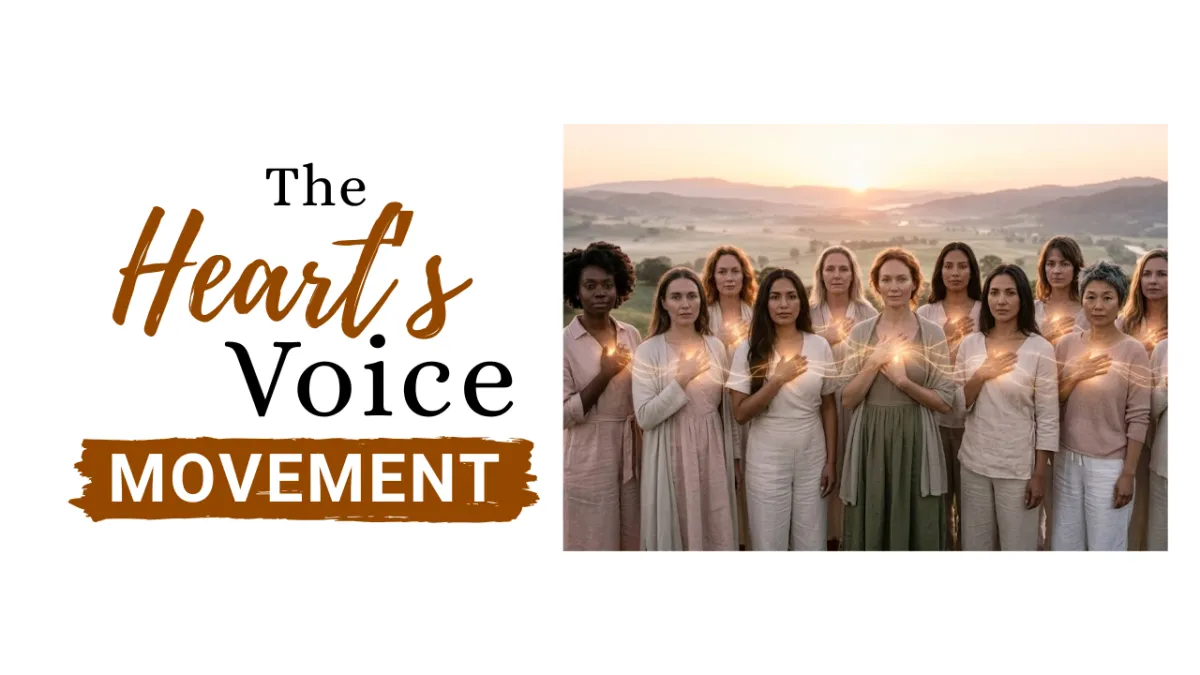
Listen to Your Heart: The Path From Division to Love. Gail Dixon & Samia Bano
Listen to Your Heart: The Path From Division to Love.
Gail Dixon & Samia Bano
"...Words can hurt or words can heal. Now more than ever, it's important that we use the #powerofwords to create and connect, rather than to divide and destroy...".
-- Gail Dixon, #Leader, #Speaker, #BestSellingAuthor, & #Founder of Heart’s Voice Movement.
In this deeply meaningful conversation, Gail Dixon, founder of the Hearts Voice Movement, explores how to reconnect with your #innertruth, use language as a sacred tool, and move through life from #love rather than fear, anger, lack, or division.
We talk about the power of #SelfTalk, #emotionalwounds, #difficultconversations, silence, boundaries, and what it really means to communicate #fromtheheart. Gail also shares why she believes there are “no others, only us” — and how living from this perspective can move us toward a more #compassionate, #connected, and #winwin world.
If you’ve ever struggled with negative self-talk, painful words from others, #difficultrelationships, or knowing how to respond when someone comes at you with anger, this conversation offers a powerful invitation to pause, listen inward, and return to what your #heart knows to be true.
Learn more and connect with Gail now at:
https://heartsvoicemovement.com
LinkedIn: https://www.linkedin.com/in/gaildixonmessaging/
FB Group: https://www.facebook.com/groups/heartsvoicemovement
YouTube: https://www.youtube.com/@gaildixon6843
Plus, you can join Gail's FREE online "Gathering of Hearts" on the First Friday of each month at 12 pm EST by registering at:
https://heartsvoicemovement.com/monthly
To Book your Free HAPPINESS 101 EXPLORATION CALL with Samia, click: https://my.timetrade.com/book/JX9XJ
#HeartVoice #HeartLedLiving #InnerVoice #ListenToYourHeart #PositiveSelfTalk #selftalkmatters #EmotionalHealing #HealingJourney #HeartLedCommunication #ConsciousCommunication #SpiritualAwakening #SpiritualGrowth #DivineGuidance #SelfAwareness #EmotionalIntelligence #HealthyBoundaries #LoveOverFear #InnerHealing #PersonalGrowth #MindfulCommunication #AuthenticLiving #ConsciousLiving #FindingYourPurpose #SpiritualJourney #GailDixon #wordsofwisdom
Here's the audio version of this episode:
Transcript Automatically Generated
Hello, Salaam, Shalom, Namaste, Sat Sri Akal, Aloha, Holah, Ciao, Bonjour, Buna, Privet, Mabuhay, and Dzień Dobry.
I'm so happy to be with you all, and I know you'll be so, so happy and glad that you have joined us today because we have a very special guest with us. And that is Gail Dixon, who's a leader, speaker, bestselling author, and founder of Heart Voice Movement. And I'm so excited to have you joining us, Gail. Welcome.
Thanks so much for having me. I'm glad to be here.
Gail, please tell us more about who you are and what you do.
Okay, well, I am a person who has always been in the world a communicator. In whatever situation I am in, I am the person who is listening deeply and trying my best to communicate clearly. And I had a professional career as an educator, a communicator, a writer, doing all those things. And about 7 or 8 years ago, I went to a women's retreat, and we had an exercise in that retreat. And it was to name your identity, kind of name who you were. And so we started at the top of the paper with, I am, and then there were all these blanks to fill in the blank. And so I went through the blanks. You know, I'm a, I'm a writer, I'm a speaker, I'm a coach, I'm a this, I'm a that. And at the bottom line, I wrote, I am the heart's voice. And it was like, whoa, where did that come from? And as I began to explore it, what I realized was that my skill with language and listening was also my charge from source, from whatever divine guidance came, to treat speaking and listening and the capacity for language as the sacred gift to humanity and to make sure that we used that sacred gift in the best service of us all. And so that's what my life has been about. And that's why I've created the Heart's Voice Movement, because I think so often we don't— the voices that we hear and the voices that come to bear and influence us in our lives are not voices that come from the heart. They're not voices that come from the, the best and the most benevolent source/spirit. They're voices of division and destruction and greed and lack and fear and anger and frustration rather than voices of love and connection and nurture and respect and gratitude. And that if I could engage people and motivate people to find what, what I call the heart's voice, that one little spark of divine truth placed in them at their creation, that they're meant to bring into the world.. I think all of us have just a little bit of starshine, a little piece of the divine whole that we carry in ourselves and in our spirits, and that it's our job to live into that and bring that one divine truth into being. And just as some people say, you know, it's my mission to make sure people honor the sacredness of their bodies, or honor the way— the sacredness of being in relationship, or to make sure that people have adequate food and clean water and whatever that is... Well, for me, it's my job to make sure we don't squander the sacred gift of language and listening. And that we don't let anybody come through life without recognizing that very special, very sweet, very divine message in them and living into it. And I think that that happens… We start with how we talk to ourselves, and then it ripples out to how we talk out in the world. And each of us is like a pebble in a pond, and we put our pebble into the pond of the great universe, and our, our ripples go outward. And then sooner or later, if we put those pebbles in with good and kind and loving intention, they're going to grow into a wave and an ocean of love and kindness. And isn't that the ocean that we all want to be basking in, that we all want to be swimming in? And, you know, I just realized that because of the gifts and talents I was given, this was my job. I'm, I'm here to stand up for the heart's voice and to stand up for getting people to find and use their heart's voices to their best advantage in the world.
Thank you so much for sharing that perspective, Gail. You know, you made me think of so much, and the first thought that popped into my mind actually is the teaching of the Quran… actually the… in telling the story of creating humans… Actually, there's a lot of similarity with the biblical story of creation, in that, you know, the— this— but there are certain details and variations in the Quranic version. And one of the really beautiful aspects of… that, that's like highlighted in the Quranic version of the story is this gift, this sacred gift that God gives us around language.
Yeah.
And, you know, like, because it's like… And you know, in fact, the Quran itself is said to be the greatest miracle because, you know, like when we connect with the divine through our hearts, like you know, like for people who… Like, the saints and all who have achieved enlightenment, who have achieved spiritual consciousness… And one of the most common things they will say is that actually that experience is one that is without words. Because language, by its very nature, you know, it's sort of like a process of dividing and relating. You know, you're putting boundaries around concepts and ideas to give them form, and then you speak them, and then you, you know, do things with those concepts and ideas. But the Divine is experienced— when we experience the Divine, there's just such a profound unity in that experience that it's beyond language. But then we have these kinds of divine, you know, scriptures and revelation, and it's like, whoa, like, it's actually so— it's like, I don't know what God did, but he somehow took something of what God is and communicated to us through language. And that in itself is an amazing miracle and an amazing gift for us.
It, is. And it does feel like a bit of a contradiction to say there's an experience beyond language, because in some ways language is the way we know how to convey, describe and share our experience. So it's like, well, if something's beyond language, how can I give it to you in language? And I think that's, that's the difference between us and the divine. The divine can communicate beyond the limitations of language. We mere mortals are reliant on language, and that's why it's so important that we use language in as pure and authentic and clean and spirit-filled a way as we can, because we, we don't have the capacity to just bypass language and make ourselves understood.
Yeah, I mean, there is, you know, that aspect of nonverbal communication that we have with each other, and yet as humans, we can experience a lot of limitations if that is the only mode... I mean, if we are— if we exclude language from our ways of communicating with each other, it really, like, for us, there's… It feels very limiting. There's so much we wanna express that becomes difficult to express without language.
Yeah. Yeah. But, you know, it's, it's, it's the tool we have. Yeah. So we're bound to, you know, to me, we're spiritually bound to use it well.
Yes. I agree with you. You know, I… It's like the other thing that popped up into my mind as you were speaking is this poem. And I mean, I can see the— I can see like what it's trying to teach us, and I can see the wisdom in that teaching to the extent that there is wisdom in that teaching. But also at the same time, I've always had a— Like, I'll hear it and then immediately a caveat or, like a sense of like, but it's not the whole truth, like idea immediately comes to me because— let me first share this thing... so, you know, something along the lines of, stones and sticks can hurt me but… no, I can't remember the exact word, but the, the spirit of it, the saying, is that, you know, like words… like if someone's just saying something bad to me, saying something mean to me, then that doesn't hurt me. That doesn't hurt me the same way that stones and sticks can hurt me. And so I, I think with that teaching, it's like trying to empower us… To, to be like, you know, having this attitude of when people say something to me that hurts me, I can choose to let it go. I can choose to, take it in a way that is positive and empowering. And, you know, just kind of like, I don't have to actually internalize the abuse or the— intended hurt, like I can choose a different response, unlike stones and sticks, like if someone beats me like physically, then, you know, it has a certain impact on my body that I may not be able to prevent from occurring. And so I take that lesson. And at the same time, it always jarred… like, it always, like, made me think, but, like, words can hurt us so much. Maybe not show up as scars on our physical body, but they can, like, literally scar our soul. I mean, like, I felt that. I have felt that. I have felt literally scarred in my very soul by mental, emotional, verbal abuse, you know?
Yes.
So…
yes, and, and I think that again, that, that is when you come back and say, what does my heart know to be true? Those negative things that were said to me or about me…
yeah…
…what was the conversation that occurred between my heart and God, and what does my heart know? And that's then the frame that I put on the situation. That's the voice that I echo rather than the things that were thrown at me, said to me, put forth about me.
Yeah.
And it's, it's why self-talk is so important and is the starting place. Because, you know, so many of us have so many conversations and tapes running in our heads that are not the most positive about ourselves. They're not the kindest, the gentlest… I mean, you know, you can just think like you drop something and you say, oh, I'm such a klutz, you know. Well, the universe hears that. Your heart hears you say that, and it's not the truth. But when you speak things, you have the potential and the power to speak them into existence. And so it's so important. And this doesn't mean that you let yourself off the hook and you tell yourself you're wonderful all the time, even when you're falling a little short of the mark. I mean, you have honest conversation with yourself. But fundamentally, what you don't destroy is the core piece that says, as the Psalm says in the Bible, I am fearfully and wonderfully made. You know, I'm the child of the divine, and I'm fearfully and wonderfully made, and that I deserve to have space and place.
in the world. I deserve to be loved and appreciated and valued and cared for and nurtured. I deserve to be safe. I deserve to belong, have a place to belong.
And so we have to tell ourselves that inside so consistently and so thoroughly that when the slings and arrows and words come from outside, they can't let the air out of that balloon. They, they cannot puncture that truth enough to make that negative opinion so. And it's hard. It is especially hard when people we care about, or people we admire, or people who have power over us say those things. And so, we have to hold on to that truth inside us, that truth, the truth that sits between us and God.
Yeah, yeah, I, I must say, like, ever since I was blessed to find my teacher, who— my first teacher who helped me connect with my heart and begin to learn to listen to my heart… It's been like such a saving, saving grace. I don't know. Like I can't be thankful enough. I can't be in gratitude enough because it's like the… no matter what is bothering me, no matter how deep the hurt, the trauma I could have been struggling with, you know, like struggling to find some positive, struggling to find some light in, in that darkness… Like, you know, like that struggle only exists in my mind. Like, the moment I am able to remind myself to drop into my heart, connect with my heart, and allow my heart to speak and be like, hey heart, what's going on here? You know, it's so easy for the heart to be like, oh, here's the light, here's the positive side that you were missing, here's what we can be grateful for in this moment. You know, it's like, it's so easy for the heart to show us that, that, you know, that love that we— and the blessings and the… just even the solutions and, and just most of all the love that we are already, you know, sort of enveloped in.
Yeah, yeah.
Yeah. Tell me a little bit more about the aspect of communicating with others, especially in a context where, like, okay, I've learned to connect with my heart, and I'm not perfect at it, but I'm doing my best to speak from my heart, to listen from my heart. If I am interacting with someone who has not as yet, learned to do that, and they're coming at me really strong… there's a lot of like negative language, negative, not, not being able to listen from their heart when I speak…
Mm-hmm.
What do we do? Like, what happens? Like, well, you know, that—
I mean, certainly it has to do with the circumstances we are in and whether, whether that comes with a threat to our physical safety or whether it is just, you know, conversationally problematic. But part of what we do… For me, the thing I do is just pause and get quiet. I don't, I don't immediately respond when something gets said. And I find that if someone is just venting or saying negative things… At some point, when they do not get a response and they do not— nothing is coming back at them and they have nothing to fight against, in the silence, then I am able to speak something that offers a route to connection… Whether that's, you know, I hear how important that is to you. Could you think about this? Or even, you know, I've heard you, and do we need to carry this conversation any further right now? You know, that— But I think, you know, so often what happens when conversations escalate is we feel like we have to meet energy and intensity with energy and intensity. And what that does is just turn up the volume.
You know, because if I— if, if you're shouting at 80 decibels, and I think I have to shout at 100 decibels to outshout you, then the next time you come back at me, you think you have to shout at 120 decibels with, you know, 140 negative things in what you say.
So if I say, okay, I'm turning the temperature down, maybe all the way down to zero, and just— just sit here and and look... I think… I also think that most people, you know, and and I can't generalize to everybody because there may be some people who walk through the world with the desire and the intention to be hurtful to others… But most people, even when they are behaving badly, are walking through the world with an intention to protect themselves and to keep themselves safe. And, and that blustery attacking language is what they've learned works to keep themselves feeling safe inside. So when I behave in a non-threatening way, as in with silence, or if, you know, sometimes I come back with a question... Somebody shouts something and I say, tell me more about that. Or that, that sounds like, you know, if somebody is shouting and they're angry and they're criticizing, to say… That, that sounds like, that sounds like an old wound to me, or that sounds like fear to me. I do not mean you any harm. Can we dial down the temperature here?
But I think, and, and I think then we have, you have to assess and keep yourself safe. And, you know, in any conversation where you feel like you need to give up your integrity to stay in the conversation, it's time to get out of the conversation.
Mm-hmm.
You know, if you have to say something, be something, do something that's not in alignment with your sense of your best and most divine purpose, then it's time to say, I'm sorry, I can't listen to this anymore. I don't have anything to say that can be productive in this situation. I think we just have to stop for now.
Yeah, yeah, yeah. It's interesting, also, like, you— like, I, I agree with you so much that sometimes the most effective thing we can do is to be silent and/or, if needed, even walk away. And it made me think about some of— some experiences that I've had with folks where, I mean, not all silence is equal… So—
Yes.
I actually, in my younger days used to be a master at staying silent in the sense that I actually was a terrible communicator. I couldn't actually a lot of times verbalize what I even wanted to verbalize… and my… the best I could do in those days was just to stay silent. But like, it wasn't a peaceful silence, you know? Like, internally I'd be fuming or angry or very distressed or very sad or whatever the intense emotion was, but I couldn't verbalize it. And, so I just stayed silent. And what I found in— at that time was that for many people, like, that silence was like so strong that they would like just, they would walk away. They would be like, there's no use talking to her. They would walk away. But there were people who seemed to get even more upset by my silence because they, they felt the, the… like they didn't… I mean, and they were correct in that perception that my silence wasn't— like me giving up or me giving in. It was its own kind of resistance and its own kind of way of fighting, as it were, you know. And so they actually got more riled up, because they were like, how dare you ignore me? Or how— like, you, you— how dare you disrespect me by not answering me? You know, like that kind of a thing. And so I, you know, like still remember those interactions. And I remember like it was, it was a hard lesson to learn that not all silence is equal. Not all silence is peaceful. It's not… not all silence promotes peace.
Right, right. Not all silence is benign. You know, sometimes people are silent when they're planning the next attack.
There's that too.
…you know, but, I think, again, you know, the most important thing that is the, the touchstone to remember is if you can do your best, if we can do our best to frame and respond to a reality that is in alignment between us and our higher power, divine source, maker, God, Allah, whatever we, whatever name we give that thing beyond ourselves, if we remain in our best sense and our best judgment, in integrity with that alignment, and behave in that alignment, that is the best we can do.
Yeah.
And we understand, you know, we are not human machines. The universe isn't mechanized. Sometimes we can do everything right. We can follow all the checklists for good communication. We can follow all the checklists for behaving in integrity and whatever, and a situation can still blow up. We can lose a job or lose a relationship or, you know, forfeit a fight or whatever. That can happen. And, you know, maybe karma will get that person in their next life, and maybe not. You just don't know. But I'm not— I'm not seeing the balance righted in the moment. But it's not a formula. It's— it's not a guarantee. All we can do is bring our best influence. out of our best and purest self to the world that we're living in and the world that we choose to influence.
Mm-hmm.
And to stay in the best alignment and the best integrity we can stay in, in our understanding, and to… for me, most importantly, to understand that we are not in a fight. We're not in a competition. We are not in a situation where between us and every circumstance is for us and every person outside of us, it's an either-or, win-lose proposition. My belief is that we can grow ourselves to a win-win world, and we're learning that. And we're flawed as human beings, and sometimes in some circumstances and some relationships, we are blessed with the flow of constant win-win situations. When that baby smiles up at you and you smile down at that baby, it is a win-win world, right? That love is flowing. When folks work together on something important to benefit humanity… when that well is dug in a, in a village that previously didn't have clean water in Africa, and those people have been digging that well, and… those folks are in a win-win world. And that feeling, you know, that's what we're growing toward. And that's what, to me, that's what living by heart… Living in and through the heart's voice moves us closer and closer to creating that world. And I may never see it in my lifetime, or if there are next lifetimes for me, the next several… I, I don't know… but I have to live as though I'm making the right contribution to that win-win world. I'm making the right contribution by living in alignment with what I understand to be, you know, in— if we take it in terms of the Judeo-Christian heritage, the, you know, the first and, and most divine commandment, or the first, first order, the first direction, which is love. Love one another. And so if I do my best to live in love and to encourage and support others to do the same, to be an example of living in love and embodying that, I'm doing what I'm here on earth to to do.
Yeah.
And the more I can show that to others and engage others in doing that, the more likely it is that that will come about. And, and, you know, the truth is that there are moments when it's hard to remember that, and when somebody is being hateful and divisive and ugly and terrible, it's hard to remember that. And sometimes, you know, sometimes you have to go into that question of, you know, here's this person, and I really want to think bad things about this person, and I really want to say what an awful person this is. And you say to yourself, if I were coming to that person with pure love, what would my question or my response would be? My response would probably be, what wound are you rehashing through that ugliness? What placed that pain in you that you have to put it out into the world? Where can I divert you into relieving that pain in a way that doesn't hurt others, but not I have to hurt you back?
Yeah. Can I ask you what your heart says love is because, you know, like language, like you were, you've been sharing, is such a— I mean, language, I mean, we use words and we're not always clear on what those words mean. And I may say love and you may say love, but we may actually mean very different things. And I, you know, like one of the things that I find so ironic is when people, people are like hurting other people in the name of love, you know, it's— And there's so many contexts in which that can be seen. One of the contexts that comes to my mind immediately is, you know, like that whole in-group, out-group dynamic. It's like when I think of somebody as a part of my in-group, someone's part of my family, my friends, my community, I am ready to die to protect them and help them and take care of them. And at the same time, the way that can lead me to like hurt other people that I do not include in my in-group, that I do not include in my definition of my family, my community, my friends… And to the extent that, you know, I mean, we are literally seeing ethnic cleansing and genocides, you know, where for the sake of my people, my community, I'm like ready to like literally and like kill and destroy another people, even dehumanize them and not even see them as people, you know. And it's being done in the name of love, like love for my community, my people, my family.
Yeah. Yeah. I do not know, and I apologize for not being able to quote a source to you, but a story that, that I heard once was that a child was asking, you know, people were talking about gathering their tribe and who was in the tribe and, you know, the rules for the tribe and the care for the tribe and all of that. And he was asking the elder, but what about the others? And, the elder's response was, there are no others, only us. And, that to me is, that is the ideal. And, I know that I realize it imperfectly, and I make no pretense to say that I am going to engage the world, change the culture, and suddenly everybody is going to speak in the heart's voice. But I'm going to do my best to influence the world so that more people live from this place and operate from this perspective and support others in doing the same… and see others. And when I— you know, it's— you know for yourself, it's true, and it's a flaw in my behavior. I tolerate things, behaviors, in people that are closer to me that I would judge in people who are strangers. If I take the perspective that there are no others, everyone deserves my loving tolerance, my tender correction, my all of that... So it's, it's that. It's… I want to live in a world where— and I believe that we're growing back to that. I believe that, that, that there was one in the beginning. There was one and we were all it. And then, you know, whether you call it the Big Bang or whether you call it the creation or whatever, as we scattered to starseed over many universes and galaxies and whatever, that we all carried little particles and droplets of that. And we're growing back, and we're growing back. And the— for the attraction is the love. The attraction is that one force. And when I remind myself, when I have the impulse to be angry or frustrated or judgmental, or separate or exclusionary, you know, barring the door and saying, you cannot come in because this is only for these kinds of people... When I have that impulse, I go back to that story and that saying and say, there are no others. And so, then if someone treats me as an other, that's from their perspective. But my perspective is that open, affirming, inclusive, there are no others. We're one. We're one in the great divine unity, which is love.
I'm with you on that. I am so with you on that. And actually, the question that is coming to me to ask you next is just to help clarify again... I think for a lot of people who are not familiar with their own hearts and communicating through our hearts and so forth, there… it sounds like there's an implication in what you've been saying… So I just wanted to ask you to talk about it a little bit more explicitly. The vision that you lay out of like us being able to reach a world where win-win, where there are no others, where it’s all us... And then for you, that's coming from you following your heart's voice. So are you implying, saying, that if all of us were to follow our heart's voice, that we would sort of all be guided towards that same vision and reality?
So in other words…
I am, you know, I'm saying that that is my belief and my hope and my understanding. I'm not saying that, saying it from a perspective of, and I'm standing here and telling people that this is how they have to live. For me, it's an invitation. It's an invitation to understanding that, that there is this power… And for me, that power, we utilize that... That's probably a better word… We utilize the power, that power through, through language and listening.
Yeah.
…Through, through speaking to, to ourselves and each other and about each other kindly. And through listening deeply with great love… so we utilize that divine power. And that I, because I do have a skill with that divine power of language and with that power of listening, I'm, I'm positioned in a way to be an example of that and live that into the world and live that into being and invite other people to that understanding. And so that's, that's what I want to do… is, is invite people in to the world of the heart's voice.
Yeah. No, no. I get that. I get that. It's an invitation. What I was asking is a somewhat different question. So let me rephrase it. It's like, is it possible that… okay… We help everyone to connect to their heart voice. And then someone's like, oh, you know what my heart voice is telling me to do is, or the way to go is to engage in the ethnic cleansing of this other, that my heart voice says that my people are my people and there are other people who are not my people. Could someone’s heart say such a thing to them?
Do I think there will always be resistance and naysayers and folks who are not accepting that invitation, or folks for whom their understanding of what they're called to do or be is hurtful and harmful to others? Yes. I understand that that will be there. You know, sometimes the darkness is in the world so that we can appreciate the light. And I, I'm humble enough to know that my understanding of all of this is flawed because I'm a human being. I don't quite get it all. And so I don't know. I don't have the answer to what to do with or for those folks who come with the evil in their hearts, except to say that I do understand that in my experience, many people who carry that are carrying unhealed wounds and haven't had the kind of nurture and care as they were getting wounded. And I think, you know, if, if it's unhealed wounds that make people carry that in their hearts, then the more of a world we create that is non-wounding, over time, the fewer people we have carrying those old wounds and that old negativity. And perhaps at some time— we extinguish it. I don't know.
Yeah.
But I know that, I know that to me it's worth the effort.
Yeah. You know, the reason I asked this question is because I'm reminded of so many discussions and debates that I started having with people way back in college, actually, when I was taking classes in philosophy. And it's— and this is a debate that's not contained to classes in philosophy and among philosophers. It's like just a very real, aspect of how people perceive reality that then influences how they act in, in their lives. And this, and the question— and it's the question of, is there such a thing as truth even? Because there are people who, who, who say it's— truth is subjective, everything's subjective, there is no such thing as the truth that is like objectively true for everyone. There are people who will say, you know, there is no such thing as good and evil. It's a perspective that people take on. And, you know, like there are assumptions that you make about the world, about life, and based on those, you make your judgments about what is good and what is bad, what is true, what is not true. But if you were to change those assumptions and so forth, then you would reach very different conclusions. And who is to say that your assumptions are more correct or more accurate or even correct at all compared to mine? And so for, for many people, you know, they even question… When, you know, so when they, when they have that, that kind of questioning of if there is even such a thing as truth, as objectivity, you know, things get… like— I'm also reminded of a line from Harry Potter. Right where Voldemort was, you know, like the big villain… he said, there is no good and evil, there's only power and those who are too weak to use it. You know, like that kind of an attitude. And they're like people who sincerely believe that there is no such thing as good and evil in any absolute sense. It's all relative. It's all subjective. And so, you know…
And for me, it's my assumption there is, you know, their perspective might well be true, but I'm gonna, I'm gonna operate and take a chance on mine. And, and I am not here… My job, my job in this world is to be the best example of the heart's voice and divine love as I can be in the world. My job is not to overcome, overpower, obliterate, win, negate you. My job is to be the best example of love I can be. And again, it's an invitation. You can choose to join me in this place and join me in this work and this perspective, or you can choose not to. I, you know, I'm not, I'm not here… If somebody says, well, who wins this argument? My response is, there was never an argument. There were two views, and this is the one I'm sticking with. You know, and that's, that's I think I you know… I don't know whether, whether there will come some point of nirvana or karma or soul cycle completion or whatever, whether I will know how on target my perspective was or how widely this perspective became shared. But I know that my perspective is fairly aligned with the perspectives of most of the great prophets of the world's great religions. You know, most of the great prophets of the world's great religions came with some version of the Golden Rule, some version of live in love, be in right relationship with others and, and with the divine. I know that there's alignment between me and those perspectives, whether we use different vocabulary or tell different origin stories or whatever. I see that the alignment there.
Yeah.
And I feel the alignment in my own heart and spirit. And so that's the world I'm going to move in. And I'm gonna do my best to, to let others see it so strongly in me that they want to be it in them, and hope that that carries the day.
Yeah, it makes me want to ask you… First of all, I'm so glad that you made the choice to stick with the view that you are sticking with.
Thank you.
I'm curious if you made that choice having tried the alternative… you know, or is that— or is the choice like something that just always been the thing that you have chosen? I mean, have you tried the, tried that other way of like, what if we, we, we believe what Voldemort had to say for some time? And like, there is no good and evil, there is only power so I’m going to—
Oh no, no, no, no, I've not tried that. I've not tried that perspective. I, I think some of that is, you know, what I was born with, and some of it is how I was raised, and some of it is the environments I was in and nurture, and then the study I've done and the life experience I've had. I have, I have never tried the… being the most powerful and you know, because for me, it hasn't been about power. It's been about connection.
So, I mean, just to— just again, like, I'm so glad that you are who you are and making the choices that you have made. But just to, you know, be the voice of those who are struggling… It's like, if you haven't tried the other way, then, like, how do you know? Like, like, if you— maybe if you did try the other way, you would find, oh my gosh, that's even better.
Well, I just would say that doesn't feel right and doesn't make sense for me. It's like if you, if you tried, tried the other way there, you know, look at all the things in life where we could try the other way. I could try the other way and say, I don't need food or water. And eventually I wouldn't survive. I could try the other way and say, I need no other people and I could go live at the top of a mountain, and eventually I wouldn't be able to sustain myself. I could say, I'll try the other way, and perhaps I will be the person with the second greatest power and still get obliterated by the person with the first greatest power. And I will have been miserable and not myself in the process of trying the other way. It holds no sway for me, and I have no— I have no need in me to persuade those whose perspectives are so far on the other side of mine that it doesn't feel like there's any middle ground… I… there is a model that one of my mentors taught me, and we used it in group problem solving, but it works very well, which is, you know, when you are looking at possibilities, or solutions, or options, draw 3 columns on a piece of paper. And at the header of the first column, write control. The header of the second column, write influence. And the header of the third column, write neither. And then you divide the things you are talking about. Is this something we as a group, or I as an individual, can control? Put it in the first column. Is it something that there can be influence brought to bear? Put it in the middle column. And is it something we can neither control nor influence? Put it in the third column.
When groups get stuck, and decisions aren't flowing, and disagreement is heavy, it's largely because we're concentrating in that far right column, and talking about things we can neither control nor influence. And then, then we start arguing about the mechanism that we think will let us control or influence something. But the truth is we can't. In the second column, in that influence column, we sort out and we know what are the things that we, we may be able to influence and nudge over into the control column.
But if we concentrate our energy on what we can control and what we have the power to do, what we have the power to change for the better, and take those actions, our situation will be exponentially improved. And we— there will be movement toward our desired state and our desired outcome. If we stay mired in the third column or even the middle column, and… and the thing… we don't do the things we can control, and they don't get done, we never move. We never move out of this state of inertia or frustration or problem or whatever. And I choose, I choose to live in the column of my influence, of my control, and then devote some time from the column of my influence to give other people the tools so that that way of being can be in their control. I can't control whether you speak and listen from the heart, but I can do an interview like this one and give you the perspectives and the understandings and the example that may influence you more in that direction. And when I spend my time there, I'm using the sacred gift of my life.
Aww. Oh, Gail, you, you make me want to ask you so many more questions. Do you have time for one more? Because I know I asked— One more.
We have time for one more. Sure.
Okay. So, this frame that you shared, you know, control, influence, and neither— what it made me think of is… And again, when I was younger, and I was a very troubled person in my younger days, I was obsessed with control. I needed to feel in control. And it was for the sake of fulfilling this need for control that I sought power. Like, I didn't— I don't think I ever cared for power in and of itself. But to the extent that having power helped me feel more in control, I sought power. So like, for example, in the context of a relationship, if I had more power in a relationship, like with my little sister, I could control her more effectively. And I could be in control more of me and how I wanted things for me. And so, like, it became really important to me to exercise and even in some ways try and get to have more power in my relationship, because then I felt more in control, which made me feel more safe. And so, like, I mean, and, and I see so many people struggling and striving and doing all kinds of things, even Voldemort, for that matter, he was obsessed with power, grabbing power, trying to— but it was actually so he could control things… control his own life, control death. Like, he was afraid of death. He didn't want to die. And so his way of responding to that fear, and he's like, yeah, of course I'm going to be in control. I'm going to control everything. And for that, I need powers. I'm going to grab all the power. You know what I mean? So it's like— It seems like, you know, we, it's like what you were suggesting with the 3 columns and focusing on, you know, what you can control. I mean, I liked that idea. And if I think back from how I used to be and the mindset that a lot of people have, focusing on what they can control will oftentimes also make us obsessed with power, which can, you know, make us hurt other people…
Well, I think 2 things. One is that when I speak of that, what, what I can control, I'm really talking about what I can control inside myself, not what I can force— forcefully control others to, to do, or what we can do, you know, what we can control as a group, as a collective. But… so that, that's one, that it's not control over something else. But I think what you said is very telling, which is that the bottom line, the need for control was really about fear. It was about fear of not being safe and not being okay. And so your idea was that if you had enough power to control your little sister's behavior so that she didn't do things that would expose you all to punishment or judgment or whatever, or cost you something that made you feel safe, that was important to you. So, I think it's the, you know, that we get back to that scarcity myth, that there isn't enough. However you view creation, you cannot stand on a tiny little blue ball in the cosmos and believe that ultimately, if the balance is righted, if the right influences come to bear, that there is not enough. There is enough, and you are enough. And, you know, and I'm not saying that today the person hungry on the street just merely needs to believe it and the food will be there, but I am saying ultimately that if the right forces are brought to bear and the right influences and the right ripples touch each other, that can, that can be. And I just… I won't give up my perspective because I can't see the ultimate final tied up tight with a bow result.
Because It feels better to me to move in this space and from this place than to be constantly in fear, defensiveness, lack, anger, fighting, division. I choose to be in the space of love. Because it feels better to me, and I hope it feels better to you too.
It does. It does. And I'm going to force myself not to ask you any other questions except to say if you have any last thoughts you would like to share.
No, just that, that I invite folks to join me on the first Fridays of every month for a circle where we open to just share our hearts with each other and hold each other's hearts together. It's called a Gathering of Hearts. It's at noon the first Friday of every month. And if you go to my Hearts Voice Movement website or you type heartsvoicemovement.com/monthly, you can register for that. It's free. It's just an hour, but it's a space in which you can express your heart and hear the hearts of others. And that is my starting spot, is creating that kind of space.
Oh, thank you for sharing that, Gail. And we will drop, your link in the show notes so people can get in touch with you, connect with you. And I will just clarify that when you say noon on Fridays, you are talking about the Eastern Standard Time…
Yes, I'm talking about, talking about noon Eastern Daylight Time, right…
Okay, in the Americas, because this podcast gets globally heard. So I, for whoever it works, and for whomever that particular time doesn't work, I'm sure Gail will have other options through which you can connect with her and continue to learn with her. And until we connect next time, I just wish you lots and lots of peace and joy.
Thank you, thank you so much. And I put in the chat for you all my links.
Thank you.

Want to check out even more amazing episodes?
All of our episodes are archived on our vlog page :)





OUR PEACE OF MIND GUARANTEE
Because we’re committed to doing onto others what we would have them do onto us, all our programs come with a Peace of Mind Guarantee.
We know you’re going to love our programs. We’re so confident about the quality of our programs we’ll give you full access risk-free for 30 days. If you decide the course isn’t right for you, then you may request a full refund up to 30 days after your purchase.
Copyright © 2018 Academy Of Thriving