
Blog: Make Change Fun And Easy
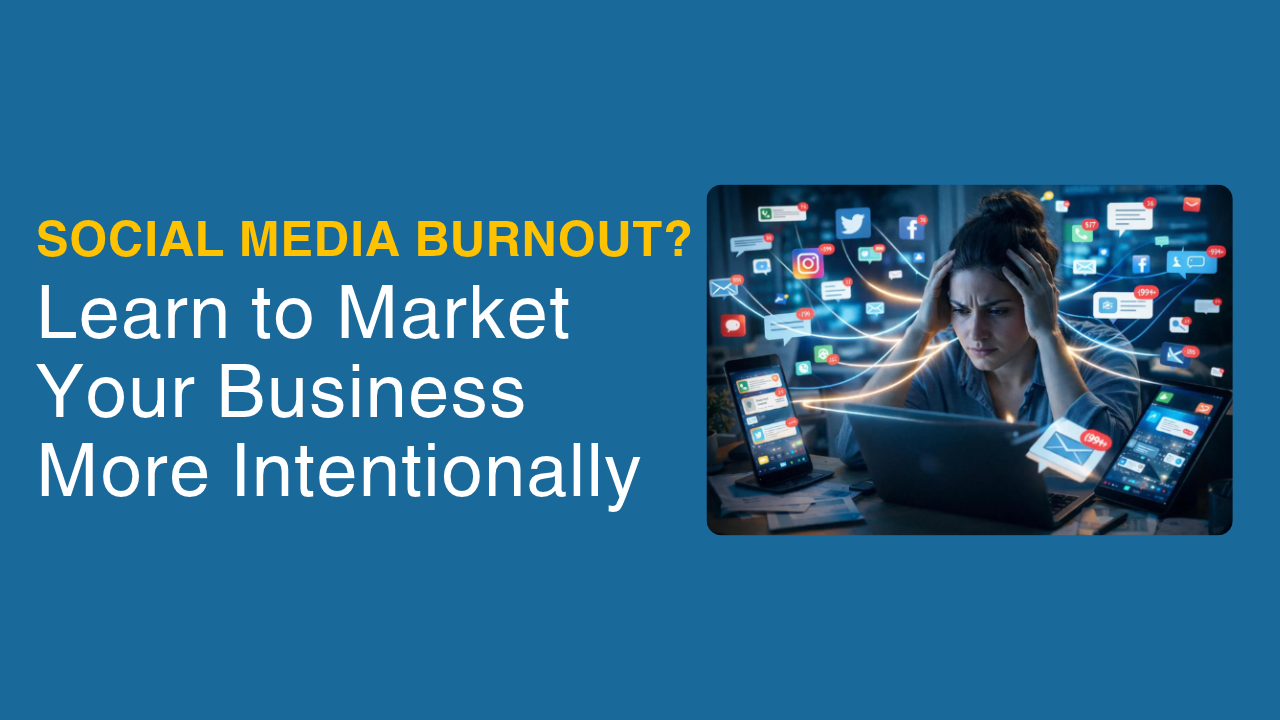
Keys To Business Growth & Marketing Beyond Social Media. Rachel Kalb & Samia Bano
Keys To Business Growth &
Marketing Beyond Social Media.
Rachel Kalb & Samia Bano
Been struggling with #socialmediamarketing? Want to learn the #funandeasy way to #growyourbusiness in today's climate?
Listen now to this interview with Rachel Kalb, Founder of Luminesce Global, to discover how #healers, #coaches, and wellness entrepreneurs can build meaningful connections, grow their audience, and #attractclients without depending entirely on #socialmedia.
Rachel reveals how you can use social media wisely as one element of a thoughtful, intentional #marketingstrategy designed to create more sustainable, long-term #businessgrowth.
Plus, Rachel shares the most effective #marketingstrategies that are working for her now, along with #marketingtips for dealing with some of the most common challenges that can lead to #SocialMediaBurnout.
Learn more and connect with Rachel at:
https://www.facebook.com/rachelkalbofficial
To Book your Free HAPPINESS 101 EXPLORATION CALL with Samia, click: https://calendar.app.google/fT19wX8hhiqgSEwx8
#LuminesGlobal #HealerBusiness #CoachingBusiness #WellnessEntrepreneur #HolisticBusiness #BusinessVisibility #AuthenticMarketing #CommunityBuilding #OnlineCommunity #RelationshipMarketing #SmallBusinessGrowth #BusinessNetworking #SocialMediaMarketing #ConsciousBusiness #PurposeDrivenBusiness #PersonalDevelopment #HealingCommunity #EmpoweringHealers #EntrepreneurMindset #AuthenticConnection #marketingforcoaches
Here's the audio version of this episode:
Transcript Automatically Generated
Hello, Salaam, Shalom, Namaste, Sat Sri Akal, Aloha, Holah, Ciao, Bonjour, Buna, Privet, Mabuhay, and Dzień Dobry. It's really, really good to be with you all again. I'm so glad and happy to be with you, and I know you'll be so glad that you've joined us today because we have a very cool guest with us, and that is Rachel Kalb, who's the founder of Luminesce Global. Welcome, Rachel…
Thank you so much. It's an honor to be here.
Rachel, please tell us more about who you are and what you do.
Thank you so much. Yeah, my name is Rachel, and I've got a global community called Luminesce Global. And the mission of Luminesce is really to shine the spotlight, and bring visibility to the healers, coaches, people who are bringing transformation and change to others.
Oh, I love it. You are definitely in the right place because that's exactly who our community is. And in fact, I would be part of your community too because besides being a podcaster, I'm also a healer and a trainer and a coach. And yeah, I'm so excited to have you with us. Can you tell us a little bit more about your background, how you got into this work?
Yeah, absolutely. Well, I was a healer myself, hands-on, for 20 years. I was a massage therapist, and I actually grew up in a home with parents who were always really supporting personal development. So I would do different seminars and workshops even as a child. And my parents were into, you know, different things growing up that some might consider a little woo-woo. We'd have crystal shows and different things like that. But I definitely grew up in that environment and really, as I got older, loved to even dive deeper. So there was a lot of different modalities and retreats and traveling the world and experiencing things that I've done throughout my life. And I went into the digital tech startup space, you know, went into like kind of the business world after being a massage therapist and being in the wellness space for a while. And started implementing actually corporate wellness programs, very progressive. So worked for a local company here in Oregon where I was able to help bring right on site to over 100 employees, you know, massage and chiropractic and fresh juice and Zumba. And if an employee needed to quit smoking, we would go on hikes and do acupuncture and go to the hot springs and really loved bringing that healing and wellness to others. And, I just found that there was a need to combine both the business world and the healing world. Around the time of the pandemic, I noticed a lot of people in the wellness space were struggling to bring their business online, and they tried to… And a lot of healers are empaths. They just want to show up and do that healing work no matter what it is, and we're struggling to figure out the Marketing and the funnels and the websites and social media, and so I saw an opportunity to really bridge that gap because I really had experience and understanding of both worlds. Being in that digital tech startup space myself for over ten years and working with programs that actually combined healing and human coaching with apps at their fingertips. So that's kind of what the background I would say a little bit that led me to where I am now. Through that process, I learned strategies too. Both really be intentional about how I was connecting with people online and created a following and learned strategies for posting in different groups and really creating traction in those spaces, not only for my own business and myself, but for the healers and coaches and people that I was trying to give more visibility to and promote. And so that's what actually led me to where I am now.
I love it, I love it. And you're like really Part of your story is like part of my story too. Oh, wow. Because I was definitely one of those people where, I mean, if I didn't have to think about money and making money and just be able to do the work, that was my dream, you know? And it's just life sometimes happens and you have to face things that you're like, no, I'd rather not. But it's… I think this is a key insight, though, that so many of us miss. You know, as healers, coaches, trainers, like you said, people who get into the work because we love the work, because we want to help people, we don't realize that if we want to do it in the context of having our own business, our own practice, That is such a different ballgame than just doing the work that we love to do. It's like the business side of it is like a whole different challenge and presents a whole different, different learning curve. And if you are not familiar or able to learn and you know, sort of learn to even love the business side of things as well, there's no way you can sustain the business. You cannot sustain the practice. Then you better go find a different platform, maybe that someone else has already created and work with them, because otherwise you, you just can't, you can't sustain the business, you know.
Yeah, yeah. A lot of people are, you know, find a challenge because they see people, other people on social media, and they say they seem very successful. And some of that's true and some of that's not true. Some of that is just people's tactics for getting, you know, more visibility. But what I found is that a lot of healers had trouble really putting that vision into the online space and really understanding the process of even creating sort of a funnel. You know, that can be a scary word for some people. Funnel and email marketing, and they're like, "Oh no!" They almost have an aversion to it because they're healers. However, there is a way to combine it all, and you know, being able to see the vision for somebody else and really look at the healing they do and the transformation and the change that they're bringing to others, and that many healers… What I love is that many healers have devoted their lives to it, and many of them have overcome some trauma or healed themselves, and that's why they're so passionate about it and do that. And so, what I found very organically was that by shining the spotlight on those people bringing in the transformation and change to others, that actually helped me grow my business. You know, that was like a byproduct of really continuing to help others and serve in that way. But one of the things I love to do is just connect the dots of the vision of who is that healer, because there's a lot out there. There's a lot of noise that people have to wade through, especially today with social media, where they don't know if that's really something that's for them, no matter what the type of healing modality is. And there's a lot of noise, and there's a lot of ads, and there's a lot of bots. So, you know, for me, Luminesce was really about, yes, let's use social media, because social media is a great way to reach people, but guide them into a more intentional space and create a space for more authentic connection so that people aren't just passing, scrolling by posts, not sure, and not actually clicking or learning more about that person.
Yeah, you know, there's just so many layers to what you're saying. There's, I don't know what question I want to ask you first because, you know, okay, maybe the one that I will ask you first is the one that I got challenged with most recently. So I was actually listening to a different podcast and a different interview and this one, you know, they were trying to raise because social media has, has been like this, this on the one hand, all this potential for good, and there is definitely good that has come out of it, but then on the other hand, it has also been a channel for a lot of harm that has happened. And it's sort of become this kind of thing where, is it even possible anymore for us to separate out the harm from the good in, insofar as we're like, okay, I want to use it. I want to be able to use it for good. And I want to use it in a way that's good and healthy for me and other people. But is it even possible to do that without getting caught up in the harm? And so that was the question that was being debated or contemplated on. In the context of this particular podcast and episode that I was listening to, and actually I was listening to it with one of my cousins who's much more active on social media than I am, and on and and she was like she said I don't think it can be done because even when I go online. You know, I hop on my social media and I have a clear sense of, okay, I want to meet this particular goal. That's a good goal. You know, and this need that I have, like, let's say I need to find some information about something and social media is how I'm going to get that information. So I go on social media because I have this good, clear intention. But then I get caught up by, you know, I like, I can't help but see my feed and then I see all this stuff on my feed and it just, I just get caught up in it. And it's really, really difficult to get yourself out of that, you know, and refocus on, hey, I came here, came on with this specific goal. You know, and I was like, you know, actually, I've had that happen to me a lot too. And so it just really challenged me with everything that we were learning in that podcast that we were listening to about the harm that people are experiencing. And, yeah, so I mean, just some perspective from you on this issue.
Yeah, yeah, absolutely. I mean, I try to spend as little time as possible on social media. However, I look at it as still a great conduit to guide people in these more intentional spaces, which is why I've kind of created a community. You have a community, right? There's these smaller communities where people can go and find what they're looking for or what resonates for them. Them or what they're interested in. And I think that's my approach to social media now. And, you know, I hope by the things that I do engage in that my feed will be more the things that I love and that are positive, but it's impossible. And I hesitate to do this, but I do compare it a little bit to AI right now because here's the thing, it's here. It's probably not going anywhere. There are great uses and there are negative uses. So we have to be so intentional with our own way of using it because it's here and it's probably here to stay. And it is an incredible tool and it can be used that way. And I look at it as if we use it more for good, and for me it's to guide people into a space where they can find that healing and find the people they need to work with to grow and evolve in their own life or to help others. My belief is that if I continue to use it that way, And guide people in that way that will hopefully inspire others to do the same and to use it that way. So I do that. I'm the same with AI. I think we can use it for good. We can use it for positivity. There's always going to be light and dark. There's always going to be, you know, both sides, right? But I think we just be really intentional. And so for me, it's like, yeah, that's a great way to reach a lot of people and find those spaces. But live there? No, we shouldn't live there. I spend very little time there because there are more people that are just doom scrolling now, and that's just not good for our brains as it is. And we can… That's a whole nother podcast to go into all of the dopamine response and the neurological things that happen when we spend too much time scrolling. And you know, yeah, like that can affect us if we see something bad that happened or something tragic or people talking about politics or negativity in the news or what's happening in the world that can bring us down. And not that we shouldn't be aware, not that we should be ignorant, but I think we do have to. create some healthy boundaries and protection around it.
Yeah, because like as business people, one of the challenges that we face, and this was something that the people on the podcast were also trying to, you know, work through in terms of the contemplation, it's like, what are the alternatives that we have currently available? to us. So like, as coaches, trainers, healers who are, you know, I mean, the work that we're doing is really important. It's literally changing people's lives for the better. And so if we are not out there, if people can't find us, I mean, I think it's a great loss, honestly. And I don't want that to happen. But it's like, do we have any realistic alternatives to social media right now, in terms of being able to have the impact, to have the reach that we are having? If you were to say, oh no, no, I'm just going to take a very black and white approach and just be like, I'm not going to be on social media, you know? And like right now, the way the systems are set up and functioning, there aren't really a lot of good options. I mean, if you are, especially like for those of us who are what I might call the relatively small fish, you know, like if you have millions of dollars for a marketing budget, maybe you have options of advertising on TV and putting up billboards and God knows, you know, like whatever other ways of promotion there may be, but those tend to cost a whole lot more. And so they require a whole different level of access to capital and ability to spend upfront, you know, and so especially for people who are still relatively small and trying to establish themselves, there aren't a lot of other realistic options, or so it can seem. I'm not an expert with marketing and building business and all of that. I don't know if you have any other alternatives, but like, for me, it was like, well, somebody show me if you have it, but I don't see it yet. So like you, I'm sort of like, just doing the best I can to use it in the best way possible, and hoping, you know, like, we can find a different, better alternative.
Yeah, well, that's actually exactly why I created what I created. I started to notice a bigger shift in social media, I'd say, maybe a year, a year and a half ago, and I don't know if it was related you know, to what's happening in the world or politics or more bots or more ads. But I did notice a shift, and even the posts that I was doing and sharing other people were less effective. Again, there's a lot more noise. And that is actually when I created… Started to create smaller, more intentional events. And I would have speakers at these virtual events, have speakers, but also create a space where people could connect with the person speaking, connect with the healer. So they're not just passing a post trying to decide if they want to click or go to their website or listen to their podcast or buy their book. They were given an opportunity to experience them live and then interact with them live and then engage with maybe their, their ebook or a meditation or an experience. And what this did and what I noticed after doing a few of these events was I was getting incredible feedback. And, you know, I did run a marketing service where I would blast people out on social media, and I had learned strategies in my own marketing agency in the body, mind, spirit space where, you know, you post in groups and you post links. And then I had assistants that would go back in and engage and, you know, really created some systems and strategies that worked for me. One, it was really hard to track the results of that. I really didn't know how well it was working for the people who I was, I was promoting. But what I did here after doing these authentic relational types of events is I was getting feedback from both the audience and the people speaking and the healers, providers, saying, wow, that was really great. I was able to actually connect with people. And then they got my offer and we talked and they booked a session. And I was really hearing that. And I actually pulled back my entire operation for a while and the way that I was using social media. And I kind of went back to the drawing board because I was like, My mission is the same. I know that I'm meant to be shining the spotlight on the healers and helping get out the word of amazing ways of living and being happy and healing and growing, and that's my mission. But the way I'm doing it needs to shift. And what I got was, yes, still use social media to guide people to these smaller intentional spaces, but also create a space where people have more authenticity. They can connect even virtually, where they actually have the opportunity to get to know that person. So they're not just a post that they're passing. They actually get to feel their energy. They get to look in their eyes. They get to ask them some questions. And I think that's the direction that we're moving in, as people are craving a little bit more connection, collaboration, community, and authenticity. And that is, that is the direction that I think we're heading in. And what is needed to really not only grow our business and grow our audience But also to go a little bit deeper in what we're doing and how we're connecting with people, because I think social media created an atmosphere that did create a little bit of super, you know, people connecting very superficially.
Yes. You know, now that you're mentioning all this, I can actually see this playing out in my experience as well. I mean, especially like, since… So, okay, if I'm thinking about it in the context of being a consumer, when COVID started and, you know, a lot of us had to move online, including me, both in terms of my practice as a business person, but also as a consumer of different things. It's been, you know, the more the being able to connect with people online. Like, there were all of these… Like, there… I've done things now online in the last few years that I wouldn't have imagined could happen in the context of online connection. And I couldn't have imagined that they would have been so impactful, you know. And I was just… I have just been so grateful that I was nonetheless… I mean, that I was first of all willing to try, I guess, because I had not so many options in that context in the early years of COVID. So first of all, I was willing to try, but then I was pleasantly surprised and so grateful for the results that we were able to achieve, that I was able to achieve in the context of, you know, like just online connection.
But it was, you know, like you said, in these more intentional kinds of spaces, that you found through stuff like social media.
Yeah, absolutely. And one of the things that I have also been pleasantly surprised and continue to be is that, you know, I'll go a little, a little woo-woo here, is that I think we can feel energy when we are even on a video chat like this. Yeah. And you can feel somebody's presence, and it may not be exactly the same as being in person, but I've all… I've continued to be surprised by how much you can see who a person is by engaging in this way, and it's very different than just a reel or a video or a social media post. We can connect, and I think we, if we choose to see and connect and have that, there's an energetic frequency that comes through.
Yeah, no, this was actually one of the things that I actually experienced because as a student, what I signed up for was to work like literally, it was towards the end of 2019, I found this organization called New Way of Living, and I had just started taking some workshops with them, and then COVID hit. So I… And so then we all had to pivot and move online. And so then we were continuing. And so New Way of Living is basically, organization that it's all about spiritual growth and, you know, like spiritual healing, spiritual growth, like that kind of stuff. And it was literally like, we were like… I was doubting. I was like, can you do this? Because there was like, so much work that we were doing in the context of energy healing or At least that we were intending to do. I was like wanting to learn Reiki healing, through them and stuff. I mean, I was already a Reiki healer. I had worked with one teacher, but there's like so many different types of Reiki out there now, and there's even other types of energy healing. And so anyway, I was trying to deepen my learning and learn something new and learn something a little different. And I mean, I knew enough that I was like, I think it could work, but I wasn't, I was still a little bit like, how well can it work? Will the experience be compromised? But it was like, nope, I didn't. I mean, it was just, I could literally feel through, like we were like, sometimes I was working with teachers in Australia. Sometimes I was working with teachers in Indonesia, sometimes in Europe. sometimes in other parts of the US, and it didn't matter where they were in the world relative to me. Like, we could like literally feel.
Yeah. Yeah. And it's amazing. I mean, there's a lot of, you know, readers or psychics or healers, different types of energy healers that are extremely effective. And so it really makes this technology quite amazing that we can actually heal and we can have such a beautiful energetic exchange and impact from that online.
Yeah, I recently interviewed on this show, an energy healer. She does space clearing. Like, if there's a space that has bad energy, she clears it out. And she said she managed to move her work to be completely online too because she couldn't physically visit people anymore in there, wherever the space was that needed clearing. So she was… Okay, let me try doing it like distance and just doing it online. And she found that she could do it too.
Yeah, well, I think depending on what you believe, there's so much that we can do in the quantum realm, and people can really tap in and create that, that change.
Wow. Okay, cool, cool, cool. So I really like what you're sharing here. And I wow, so it's very empowering. So moving in the direction of creating these more intentional, intimate spaces, and they can totally be online, and we can just use social media to help sort of funnel people to them. Okay, okay. So okay, so if so continuing to think about, okay, different ways of creating impact, creating change, bringing people together. Tell me more. How do we…
Yeah, yeah. You know, originally it was really body, mind, spirit, and that's a large umbrella that can cover a lot. But I realized in the day and age we're living that I wanted to create a space for change that didn't just cover body, mind, spirit. So I'm actually shining the spotlight on visionary women in business. It's very important to me to bring in multicultural voices, multi-generational voices. I want people… I have some of my creators in their 80s. I want men, women, people from all over the world to really represent the world that we live in. Conscious use of technology and AI, again, something I'm very passionate about, and even practical things And the idea is that by creating a smaller, more intentional space that also is a community. So when I think of a community, I think of reciprocity. I think of the people in the community are all giving something, we're sharing something, we're helping the community to both thrive and grow. And we're helping each other. You know, it's why in many cultures, families live together for generations and generations. There's a reason for that. And I think that we need to actually get back to the roots culturally and into some of those cultural roots of being in community. And we can do that online and we can do that in living our lives. So what I'm creating and what there are many other communities out there popping up is a space where people can come in, share their gifts. It's completely free. People can come in for free and they can share gifts. And when I say gifts, it's like maybe it's leading somebody on a meditation or leading a workshop or a talk. It could be breathwork, it could be a sound journey, it could be energy healing. There's so many ways to show up. And then it could also be on giving people tips about their business or using technology with, you know, forming a healthy relationship with AI, developing a conscious relationship. It could be maybe how to, how to make their money last as they grow older and go into retirement. It could be really practical things that are important for us to really talk about and think about. And so personally, I am, you know, creating the intentional space where the reciprocity is that where different healers, and I call them creators, founders, come in and they share their gifts. This is an op… And it's free for people to join the community because at first I was going to make it a subscription and I thought people are kind of tired of subscriptions. Like, there's a lot of subscriptions out there. If anything, people kind of want to figure out, well, which ones do I need and not need? And I thought, I don't want to create another subscription space. Of course I want abundance and everybody needs abundance and prosperity to survive and thrive, but I thought if we really create a container for true reciprocity. What does that look like? So by people giving their gifts, and they can share all kinds of things there, they can share if they've created ebooks or meditations, and then we create a space for some paid experiences in there as well. And it's a space where the people can come in and they get a chance to, again, like I said, meet the person, engage with them, almost like sample a little bit of their work, get to know them. And I also think of it in terms of: Many people will go to a gym or a yoga teacher or meditation or a class. One, they leave feeling really good. They like the way it makes them feel. They leave feeling better than they got there, right? Healthier, inspired, motivated, alive. But oftentimes they come back because they really liked the instructor. That person motivated him. That person inspired them. Maybe gave them the hope that they needed. There was something. There was maybe magnetism or some charisma in that person. And so they come back over and over again. And so, in thinking about kind of the way we're moving towards more community and more collaboration, I think that it's important in these spaces that not only do people get to interact, but they get to come back consistently. So, it's not like they're just seeing them do a talk at an event, which is great. Yeah. There's a place for that. But what if they could come back repeatedly, once a month, and come back and hear that person and see that person? And maybe that's how they figure out if they want to go on and do something deeper with them, like book a session or buy their course or buy their book or, you know, go on and actually, you know, purchase and consume more of their information. So, you know, my idea is by creating a space where people can come and absorb and learn from these creators over and over again, that naturally becomes a very organic, natural funnel for people to find what they're looking for. Maybe they came in because they were interested in a talk on, you know, AI or business, But then they saw, oh, there's a breathwork session, or there's a sound healing. What's that? Maybe they've never experienced it, and they want to. Oh, maybe I'll try that out. And the other thing that really excites me and inspires me is that there's a lot of people out there that aren't already in the healing world or the spiritual world or the personal development space, you know. And maybe they don't even know this exists because that's not what's coming up on their algorithm because they're only watching the news or they're only you know following certain things. So imagine. they come into this space for one thing, but then they get turned on and they get to learn about other modalities and things that might really open their eyes, their minds, their hearts, might actually create that transformation they didn't even know they needed. They might go into a meditation just out of curiosity and walk away feeling, wow, that made my day better. I'm inspired. I'm going to come back next week because I left feeling so good. So, you know, that is what I'm creating. And that is the direction I think people, again, when we go into that deeper layer of community and authenticity and the way that we interact. I think as we go more into the digital AI world and there's more of that sort of potential for dissonance, that we have to create space— spaces where we come together. And I won't go too far down the AI rabbit hole, but one of my beliefs… And I do teach a lot about AI and how to have a healthy relationship and use it for good and use it for personal development, because I think there's a great use for it there But, you know, one of the beliefs I hold about that is that if we can tap into AI to take care of some of those things that take time away, we can show up more authentically in person and actually connecting more authentically because our time and energy isn't necessarily being spread out doing things that maybe AI can come help us with.
Yeah. Yeah. Okay. Again, so much that it was a lot there. Yeah, the first thing that I thought of first, I will ask you first. So first of all, I love the idea of your community and what you were sharing about your vision and the thinking behind it. The question I want to ask is around the challenge we can face when we're trying to build a community like that. So for example, there's a couple of challenges that come to mind right away. One is like when you first start to build out, I mean, how do you get people to come in and actually actually try it out and stay, you know, because that's where a lot of people fail. It's like that they have a great idea, they try to get it going, but they don't… They're not able to get enough traction. There's not enough people who join, and so there isn't enough, you know, things don't come to life in the way that they need to come to life because there just isn't enough participation. So is there any, like, are there like things that we should keep in mind in terms of what are the pieces that we need to make sure we have in place to make sure that when we get this kind of a venture going, that we're most likely to succeed? Like, is there something we tend to usually miss that, you know, so that maybe I should just start with that question, let you answer it, and then ask the next one.
Yeah, absolutely. Well, I mean, I am in the beginning of forming this community in this way, but I have done a lot of community building and building large directories and marketing to large audiences. And I think the number one thing is it takes time and it takes patience and it doesn't happen overnight. And, you know, we see these people going viral and lots of followers, that is not the norm at all. So we have to be… Give ourselves some grace and some patience in the process. I think the second piece is consistency. So again, going back to using social media or, you know, finding the other communities… Networking is amazing. And I feel like that was one of the ways I originally grew my business is I would take several hours a day for a long time just to connect with people. And connecting with people, whether it was in networking groups online or in person or getting on a Zoom one-on-one… And of course we want to learn about each other, what we do, and how we can, you know, support each other's business but I went in with the intention of just getting to know people. So I think just going in and saying, I'm just going to learn about this person and what they do and who they are, and we're naturally, organically going to find the ways that we can either help each other, support each other, or do business with each other, or refer each other. So I think really, not bypassing taking the time to just meet with people and network people with people and pick a spot, whether it's LinkedIn or Alignable or Facebook or Instagram. You know, you don't have to be everywhere at first, and you don't have to… I think people get really overwhelmed by thinking, oh my gosh, I've got to be everywhere and I got to create all this content. You don't have to. I mean, pick one space, pick a couple groups on Facebook or LinkedIn or wherever you are, and get good at engaging there. And then do that for your community as well. You know, you really, I think being showing up and being consistent and sharing and posting and then being authentic, you're going to naturally magnetize towards you the people you want in your community by it's like you said, I think I think it's a disservice when we hold back. It's a disservice when we don't put ourselves out there. And we can't expect to just throw a post out there or throw spaghetti at the wall and think it's gonna stick. We've gotta be consistent. We've gotta show up. We've gotta put ourselves out there. And that oftentimes, this is my, my next point would be stepping outside your comfort zone. What are you afraid of? What makes you uncomfortable? But what's your goal? If your goal is to build a community with thousands of people and you're just sitting behind, you know, you're… There's only… You're never putting yourself out there, you're not really engaging, you're not really sharing your truth or your mission or your authenticity or your vision, nobody's gonna know. How are they gonna find you? So don't hold back, especially if your mission and your purpose is to help somebody. Don't hold those gifts back. And many people are afraid of being visible. You cannot be afraid of being visible. You got to show up like we are on people want to see you. They want to feel your energy. They want to know who you are. And that's how they're going to be like, oh yes, I'm drawn to that person, or I want to be part of what they're doing, or I'm really inspired by that. But if you don't put yourself out there and people don't actually get to know you, you're just some digital post or presence, or, you know, they don't… They won't know if they want to be part of it.
So I'd say those are, those are a few things to start.
Yes. And I especially appreciated what you said about Like, you have to put in the time to actually connect with people. Like, you… I think one of the things that I fell into this trap was, and again, because all I really wanted to do, thinking back to my early days, all I really wanted to do was spend my time just doing the actual healing work, you know, and the actual training and the actual coaching. And so I was like not wanting to spend hours of my day networking, or, you know, what I thought of as, just, you know, here's another thing that I now have to do, and it's taking like compromising my ability to do the work that I actually love to do. And, you know, it was like this whole negative mindset that I got into. And I was like constantly looking for shortcuts, to bypass doing this kind of networking, just spending the time, because I was like, okay, maybe I just get on social media and social media will do that work for me if I just, you know, like there's just so much. You know, advertising you see where people, gurus are like supposed to be gurus who are like, yeah, we will create all this content for you and we will post it for you first. And then voilà, magically, or, you know, your funnel will be created and you just have to give us this, you know, kind of like content. And then voilà, your funnel will be created and everything will be taken care of. And I can't tell you how much money I spent buying these different programs, whether it was, you know, the social media stuff or the funnel stuff and this and that. And it was all basically got created like, we've been, but no traffic, no people coming in, like, just are very few. And so it just Like that was a wall that I kept hitting, and it was like it. And until I finally had to be like, "Stop, Samia, stop!" It's like the definition of craziness to keep doing the same thing and expecting different results. So it's like clearly it's a waste of time and money to and to you know focus on building out all this like technology in terms of like the funnels or the, you know, whatever, until you actually have… I mean, not to say that those things are useless, but those are later, later. Like, you have to do something different first. And it took me a while to realize what you are saying, what you're sharing right now, that you cannot skip some of these foundational things like just spending the time that you have to spend, to build real connections with people. And there's like no substitute for you doing it, because I mean, ultimately, especially like if you're a coach, trainer, healer, like people are coming to you. They're not, you know, buying some generic something. They're committing to you. They're trusting you. So you… Yeah, exactly. Exactly.
Oh my gosh. Okay. So okay. So let's say we put in the time and the effort to go out there to network, to begin to build these connections and the community. So the second challenge that I see a lot of us getting stuck with is consistency of participation. So, like, you know, you build a connection with somebody and they're actually excited and they show up to try out, like, they'll sign up for your group or whatever, but then, and they come once they give you fabulous feedback in terms of having a great experience, but then they don't come back, or they come back way less. I mean, maybe they come back 2 years later or something, if you still even exist at that point. You know, it's like that… It's like, I literally had someone give me this example where they were like, somebody reached out to her and like maybe a year or two after they had initially connected. And she was like, oh, sorry, I've had to close my practice.
Because, you know, she just wasn't able to get like the speed of, so it was like even when people had good experiences coming to her, they weren't coming back or not coming back soon enough or frequently enough. So I don't know if this is actually a different… I mean, it feels like it's a somewhat different challenge than the first challenge that I've asked.
I think it's related and it really does come down to marketing. And what I mean by that is that oftentimes, you know, we'll build something, we'll create an event, we'll build a website or a funnel, but people aren't truly nurtured. And we do have to nurture people. And there's going to be people that don't come back, and they maybe they didn't get a great impression, or maybe they did, or they got distracted. You know, there's a couple, a couple things here. One, I'll say, it's hard to pull people from what they're used to. So if they're used to just going on TikTok and scrolling for hours every day, or they're used to just being in So then, you know, there's the challenge of I'm creating something new that I'm trying to bring your attention to, and you already have, you know, 50 apps on your phone and several social media platforms and your life. So people have to really pick and choose and prioritize, and oftentimes their priorities, they don't always align with what their true inherent desires may be because that's the distraction or that's the dopamine response, right? So I think that, you know, and I haven't mastered this per se, but in my experience so far, it really comes down to nurturing. And as much as we want them to come back to us, we have to come back to them. And so we need to connect with them again on a deeper, more personal level than maybe just our generic emails that are going out or our social posts. So creating and nurturing, it can still be a campaign and it can still be marketing, but I do think there has to be a layer of intention and authenticity in that nurturing. And consistency, because if you just disappear or they're suddenly searching for you know cats and dogs on their feed, they might not even see your post because especially with the way the algorithms work these days, they might have been super engaged with you and your post for a while. So you come up on their feed often. So oh, you're kind of reminder. You're reminded to them. But if it doesn't, if you're not coming up for a while, then you're not going to show up on their feed at all because that's just the way it works. So. So we have to find creative ways to be at the forefront, and I think that has to come in multiple directions. So I think yes, that can be social posts, that can be emails, that could be text messages, that could be calls. So nowadays we have to be creative and come at multiple angles. We can't, like you said, just expect the social media to do the work for us. So if somebody attended a class or a workshop, and then it's also fine tuning because you don't want to spam somebody so much that they unsubscribe and then they don't know what's happening. So you know, I really believe in consistent visibility and being present, but also not, you know, there's some creators out there that you'll get 5 emails a day and then you're like, I don't know, that just becomes more noise. How do we not be more noise? So of course, creating a great lasting impression and a connection and then finding a way to nurture and stay top of mind in an authentic way. And it is a challenge.
Yeah. You know, you made me think about, wow, I mean, staying on top of mind for people. I mean, there's so many, again, layers to that challenge, like you were pointing out. And one of the things that I was reminded of is… This was a few years back when Like, I mean, 80% of people are using Google for their email, right? I mean, I don't know if that stat is true worldwide, but I think that was the case like in America. And I might be misremembering the exact percentage of people, but it's a very high percentage of people in America. Their primary email is Gmail. Or certainly was up to a few years ago when I, when this particular thing happened. So what I'm talking about is Google introduced, did something. And so instead of just one inbox, everything coming into your one inbox, they created these different tabs that, I mean, it automatically happened for everyone, right? And so you had your primary inbox. And then you had your socials, and then you had your, what was that, like, promotional emails.
Yes. And Google automatically sorted things for you. And, I remember I was sitting at a, one of these, conferences where I was like trying to learn about business and marketing and this and that, and Our instructor on screen was like, when this one change was implemented by Google, it put into chaos all the email marketers and the strategies that they used because the vast majority of their emails would now go into the promotion. tab instead of primary email. And so people just stopped seeing their emails because they were going in the promotions tab and people just weren't checking the promotions tab. So it's like you're sending emails. They're just the content and everything was the same as before. But suddenly it's like the performance has completely dropped. And it's just because of this one change that Google implemented. And so there's sometimes things like this that happen that are out of your control. And similarly, there's like things that, you know, even on the different social media platforms, they will just make changes to the algorithm in the way that they do things. And suddenly something that was working for you great up to a certain point now just doesn't work anymore. And so it's like, here I am, this, you know, I was, you know, not a marketing expert, just trying to barely learn and keep up with running my this in one way that I figured out, and I'm now being faced with this challenge of this constantly changing, you know, environment around me. And so that becomes like another layer of challenge that we as, you know, solo entrepreneurs or small business people have to face. Especially in the context of using like social media or other online technologies that we have come to depend on to run our businesses and stuff. So what's your advice on dealing with that, Jasmine?
Yeah, again, it's really having kind of an omnipresence, right? So being, yes, being in multiple places. I don't think people have to be everywhere on social media. Media, you could again pick a couple platforms that you really like, but be consistent, be visible, use multiple ways of reaching people. So email, social media, maybe you have events, you know, because yeah, a lot more is going to spam, there's a lot less clicks. I still use social media, but I don't rely on it. I don't depend on it because the clicks are much less. I use social media, I don't rely on it, I don't depend on it. So I use multiple different channels and ways to reach people. Hoping that they will see me and I will reach the people that and there's going to be some people that are just really engaged and they're interested in you. You've got fans, right? There's people like that out there that they come back enough that it's going to naturally pop up for them, or they're, you know, they've flagged your emails. It's not going to go to spam. But it is very challenging. And that's why I think you're not relying on any one method. Have a website, have some funnels, have some lead magnets, get on podcasts. That's why I do this. Like, part of why I agreed to do a lot of these types of things and why want to be out there is because this is just another way for people to find me or see me or know who I am. And so I think finding those, there's lots of publications out there, there's lots of podcasts, you know, being willing to just again put yourself out there in multiple ways is going to increase the chances that people will find you, engage with you, and that you're visible.
Yeah, so don't put all your eggs in one basket.
Yep, put them in lots of baskets. And sometimes that means you need help, and whether help is AI or having assistant, you know, and also not, don't let it overwhelm you because what happens for a lot of people is they end up getting analysis paralysis. So they don't… They feel overwhelmed and then they don't do anything and they hold back. Yeah, well, don't do that. Start slow. Pick one group on Facebook and one group on LinkedIn and show up every other day or post 3 times a week. You know, you don't have to send out 10,000 emails a week, but, you know, do nurture your list and find a cadence and create some strategies and systems because those systems will end up really saving you from just kind of guessing. And, you know, marketing is going to be a testing ground in a lot of ways, but there are some consistency and strategies to implement that will help at least.
Yeah, and I imagine in the context of, you know, having multiple baskets, so to speak, in you place your eggs. You know, it's like, just, we can just start with one. And then once you have one established, then go to another, like that kind of thing. Because otherwise it can also get overwhelming to be trying to like manage multiple different channels and platforms at the same time and that kind of a thing.
And find what resonates for you because TikTok's not for everybody. And some people you can tell when they're almost like forcing themselves. Find a space that feels comfortable, whether it's Instagram or LinkedIn or TikTok. Like, where are you finding that you're comfortable or actually connecting with people? And nurture that space. Don't try to be everywhere.
Yeah, yeah. So it's like, be on multiple channels but not everywhere, like in random, even the multiple channels that you pick, each should be picked with intention, you know, and should be picked with not just intention, but including part of the intention would need to be that it actually feel good to you, that it be a good match for you as the kind of person you are, the kind of culture. that makes you most happy to be a part of? Because for sure, like, the different platforms and stuff, they have their own different cultures and so on and so forth. So you want to make sure you're a good fit and you can be there, like, be feel more happy in yourself.
Yeah, like, you'll know if it resonates for you or not. And, you know, making videos isn't for everybody. But put yourself out there a little. Try it out. Get outside that comfort zone like we talked about earlier. But, you know, find where you're connecting with people because there are different audiences in different places and different age groups. And depending on what you're out there sharing and the audience you're trying to attract, not every space is going to be the best space for what you offer and who you are.
That's so true. That's so true. Oh, Rachel, you're giving us so many amazing gems of wisdom. I want to keep asking you more and more questions, and I'm a little bit conscious of time. I know we need to start wrapping up. Do you have any last thoughts you would love to share?
No, I mean, this has been great. I've really enjoyed our conversation. There's so much here, you know, to unpack and different layers of wisdom. I guess if I was just gonna leave, leave people with a little nugget, it's just, you know, don't hold back. I think people are, will wait. Oh, I have to have my website done, or I have to have the perfect content, or I need a photo shoot, or hire this coach. Like just start putting yourself out there again. Pick a space, share your truth, share your vision, share your mission, what you love, what's your zone of genius. And even if you're just talking, you know, maybe you don't have anything to sell. Maybe you're not ready to put an offer out there. That's okay. Let people have the opportunity to learn who you are and get to know you. Maybe you're just sharing some of your life tips or what you love or about your travels or your family or things you love to cook. It could be anything, but really maybe just start by putting yourself out there. And what's, what's a little uncomfortable for you? You know, maybe it's that networking, maybe it's that idea of booking some one-on-ones and networking. So if you take anything from this conversation today, like, what's one thing you can do today or tomorrow after watching this that's going to help give you more visibility and step outside your comfort zone, or be more consistent, or show up and share your gifts? And really maybe think about that. And it can be steps, but do something. Take some form of action and inspired action today or tomorrow.
Yeah. Oh my gosh. Okay. I have to share one story because you just made me think of one of my fellow coaches, my friend who's also a fellow coach. And so, you know, She is a shooting survivor. Like, she was part of a mass shooting and she actually survived it. Highly traumatizing experience, as you can imagine. But coming through it, she learned a lot about how to heal, you know, deal with trauma, this and that kind of thing. And so she became really passionate about wanting to help other survivors. also heal from, from particularly like these kinds of traumas, but in general. So she wanted to get into trauma healing, trauma healing work. And so she, in order to establish her practice, she was trying to figure out how to actually make it happen, how to, you know, build her community, this and that. And like she tried different messaging, focusing on trauma healing and stuff, and nothing seemed to be quite sticking, and it felt like a lot of struggle. And then what she started doing is that she is a wonderful belly dancer.
And she has such a passion for belly dancing, and she started posting videos related to her belly dancing, just sharing. Like, I remember this one video she did where she was just in her kitchen and she was like belly dancing in her kitchen as she worked in the kitchen. She was like, she just moved her hips and closed this drawer and moved her hips and did something else. And it was just such a fun little video, just her belly dancing. dancing. But what happened is that these were the videos that started, you know, like we all, like all our friends and family, like we were sharing them with each other. And just somehow or the other, it… She started getting so many views and she started getting more and more people following her just for her belly dancing, videos. And then, I don't know, it was like, at some point, the light went on in her brain that, oh, this is how I create my community, bring people in because of the belly dancing, and then give them more.
I love that because people got to experience her and what she loved and her joy and what she was passionate about. And I think that's a beautiful example of putting yourself out there and being authentic, letting people get to know you, who you are. And through that, they're going to be naturally curious about, well, what else? What else is, you know, does this woman teach? Or what, what else does she share? I want to know more. It's creating that curiosity through her natural spark. I think that's a beautiful story. I love that.
It's just, I just love her so much. But also this is so fun also to see and just witness and be a part of, experiencing. And you totally reminded me of her when you were telling people to, hey, you know, like, share what you love.
Yeah, absolutely. That's it. 100%.
All right, so I'm gonna force myself to Wrap up also, and for my last reminder, I will just remind you all listening, watching to please make sure you check the show notes because we will be dropping Rachel's links in there so you can connect with her and continue to learn with her because there's so much more to learn and get the help and support that you need whenever you're ready for it. And until we connect next time, I wish you. Lots and lots of peace and joy.
Thank you. Thanks, everybody.

Want to check out even more amazing episodes?
All of our episodes are archived on our vlog page :)




OUR PEACE OF MIND GUARANTEE
Because we’re committed to doing onto others what we would have them do onto us, all our programs come with a Peace of Mind Guarantee.
We know you’re going to love our programs. We’re so confident about the quality of our programs we’ll give you full access risk-free for 30 days. If you decide the course isn’t right for you, then you may request a full refund up to 30 days after your purchase.
Copyright © 2018 Academy Of Thriving