
Blog: Make Change Fun And Easy
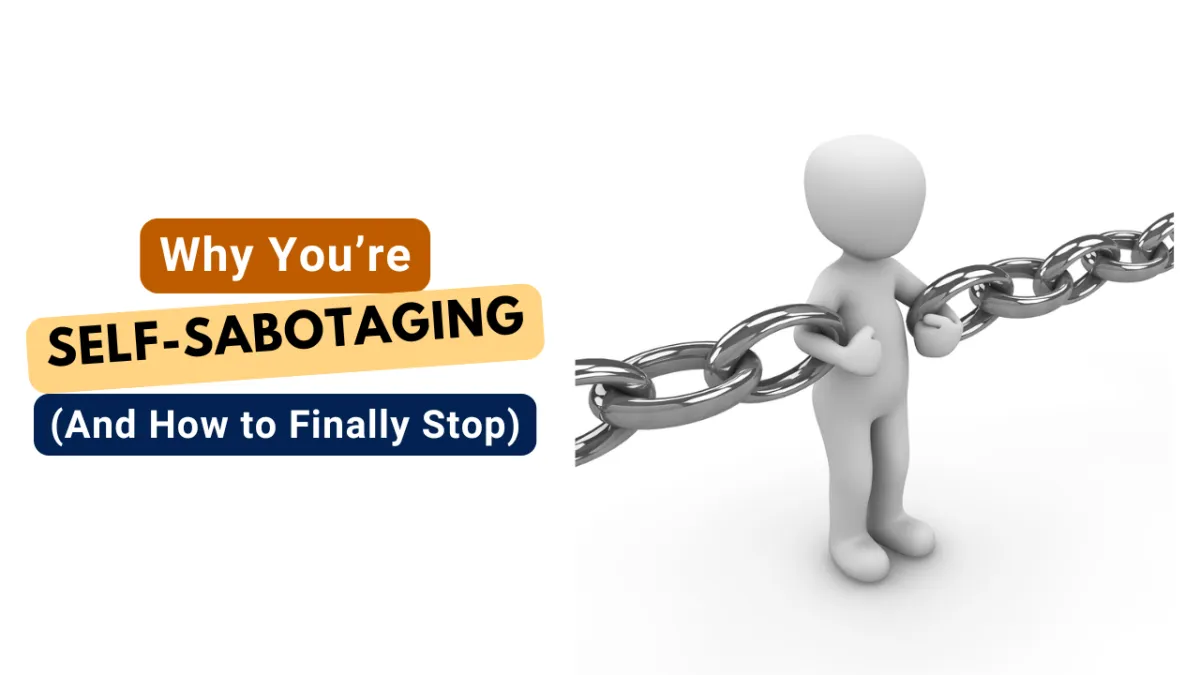
The Hidden Psychology of Success. With Albert Bramante
The Hidden Psychology of Success.
With Albert Bramante & Samia Bano
Tired of setting #biggoals and not following through?
What if #success itself is what you’re unconsciously afraid of?
Listen now to this interview with Albert Bramante, Ph.D. • Talent Agent • Psychology Professor • Author of "Rise Above the Script" to explore #fearofsuccess, identity shifts, and why achieving your goals can sometimes feel more terrifying than failing.
Dr. Albert Vermonte breaks down the psychology behind self-sabotage, #selfesteem and the hidden patterns that keep you stuck — so you can finally shift into alignment and success.
About Albert Bramante, Ph.D.:
For over 20 years, Albert has helped performers, educators, and creators #breakthroughfear and self-doubt—whether that’s #impostersyndrome, self-sabotage, or believing they’re not “enough”—using a unique combination of #psychology, #hypnosis, #NLP, and practical tech skills.
As a professor, talent agent, and certified hypnotist, Albert's mission aligns with making change fun, actionable, and, yes, easy for creatives. He also teaches coaches and creators how to harness AI tools like ChatGPT and Claude to simplify content creation and cut down overwhelm.
Learn more and connect with Albert now at:
https://linktr.ee/albertbramante
To Book your Free HAPPINESS 101 EXPLORATION CALL with Samia, click: https://my.timetrade.com/book/JX9XJ
#MindsetShift #SubconsciousMind #SelfGrowth #PersonalDevelopment #InnerHealing #EmotionalHealing #SelfAwareness #ConsciousLiving #SpiritualGrowth #LawOfAttraction #Manifestation #InnerWork #HealingJourney #MindsetMatters #SelfLove #EnergyShift #EmpowerYourself #AwakenYourMind #InnerPeace #GrowthMindset #LifeTransformation #liveyourbestlifenow #successmindset #successmotivation #successtips #liveyourbestlife
Here's the audio version of this episode:
Transcript Generated Automatically
SAMIA: Hello, Salaam, Shalom, Namaste, Sat Sri Akal, Aloha, Holah, Ciao, Bonjour, Buna, Privet, Mabuhay, and Dzień Dobry…
It's so good to be with you all again. And I know you'll be so happy and excited that you've joined us today because we have a very cool guest with us and it's Albert, and actually, Albert...
ALBERT: Bramante, thanks. First of all, I just, I really want to thank you for being here and I'm just going to say hello. I don't speak that many languages, but I'm just going to say hello and I want to first, I really appreciate you having me on here and I really, I'm happy to chat with you and your audience.
SAMIA: Yay. Thank you so much. We're so happy to have you with us too. And just FYI, I don't speak all of those languages. I only speak four languages, about three and a half if I'm being very accurate, because one of them I can read and write, but I don't speak very well. The other three I'm fully literate in. The rest of the languages, I only know how to say hello.
ALBERT: Okay. Fair enough. That's actually two and a half more than I am, so that's definitely a good thing.
But yeah, I'm happy to be here.
SAMIA: Yay. Albert, will you please tell us more about who you are and what you do?
ALBERT: Sure. So my name is Dr. Albert Bramante. I have a PhD in psychology.
And what I do, I kind of wear a couple of different hats. I'm a college professor. I've been teaching psychology for the past 21, 22 years now.
And I also work with actors. I'm a talent agent, which means I represent actors in New York City for professional opportunities in film, TV theater, commercial print, voiceover. You know, I love what I do.
And it's definitely something that I really just, you know, enjoy doing and just helping an actor land a role, making a dream come true. And one of the things that when I was going for my PhD., one of the areas that I wanted to specialize in, because it was something, a problem that I was noticing a lot with the actors I was going into was, there was a high degree of self-sabotage happening with actors.
And so this was a major problem that I was seeing. Where, you know, the actors were kind of getting in their own way and being their own worst enemy, in a sense. So I wanted to kind of figure out what was going on here.
So I initially went into a PhD program for clinical psychology. That was like my focus. That was like at that time. And while I had the training to be a clinical psychologist, I had not a license one because I didn't, I just completed the doctorate in psychology. I didn't do the clinical practicum and internship. So because I started to become more interested in like, you know, performance mindset coaching and all of that.
So I wrote, you know, I did my dissertation and then several years later, I turned it into a book called “Rise Above the Script”.
SAMIA: Yeah. I like it. I like it.
Tell me more about your book, Rise Above the Script.
ALBERT: So it's a book about, you know, really having to do in detail about self-advocacy. And we look at, like, self-esteem. You know, I have a couple of chapters on self-esteem, which, you know, is a very important concept.
I also have a unit on self-advocacy.
SAMIA: Okay. Okay.
ALBERT: Self-advocacy is about your belief in how capable you are, or how capable you are to do something, or how capable you are to be whatever it is you set out to do, or whatever you're doing, how effective are you? And that's a big factor. Yeah.
SAMIA: Yeah.
ALBERT: And then I looked at personality, too. Which… and the framework that I used in my book was a five-factor model of personality, which refers to, you know, openness, conscientiousness, extroversion, agreeableness and neurosis.
SAMIA: So it's kind of looking at where people land in the context of these five different personality characteristics and given the unique mix that you are, how that plays into your ability to have great self-esteem and so on, so forth.
ALBERT: Yeah. Well, I mean, the idea with self-esteem is that it's a very important concept, but it definitely, you know, having low self-esteem, but also sometimes what I found interesting is sometimes having a bit of an arrogance or high self-esteem can also be detrimental. Like being pompous, being arrogant, and thinking that you're better than anybody else.
And therefore, you no longer become coachable. And because you're no longer coachable, what winds up happening is you will start to, you know, self-sabotage or shoot yourself in the foot.
SAMIA: Yeah.
ALBERT: Because you're not open to be coachable. You're not open to feedback. And a lot of times, if people with really high self-esteem, they get really insulted when you try to give them a healthy feedback or constructive, you know, feedback.
They get, you know, they take it real insulted because in reality, if you don't tie self-esteem, it's actually fragile self-esteem. Your self-esteem is extremely fragile.
SAMIA: Yeah. So actually, maybe I should ask you a more basic question. What is self-esteem?
ALBERT: So that's a million dollar question because you're going to get so many different responses. But it's really your, your own self-worth. How you be yourself?
What is your opinion of yourself? What is your self-worth? And if you believe that you are worthy enough, you have to have self-esteem.
Now, if you believe you're not worthy, you know, where maybe you're not worthy for success, you're not worthy for love or whatever that is, you will then have like a lower self-esteem. So it's kind of your evaluation of yourself. And how well do you evaluate yourself?
SAMIA: Yeah. And what's the basis? I guess there's not necessarily just one basis on which someone can build up their self-esteem, but what are some of the common foundations on which people build up their self-esteem?
Like, how do you come to the conclusion that you're worthy?
ALBERT: Well, it's by, you know, we start with the primary people in our lives, our parents, our family, our upbringing, our siblings, all of that stuff. And depending on, now, if you have a family that uplifts you, there's a good chance that you're going to have at least a chance of having a healthy self-esteem. But if you grew up in a family where everyone else had low self-esteem, where there was abuse of some sort, whether it was emotional abuse or even neglect, that your self-esteem may be challenged.
You know, if you were, you know, even socially, like as a child, if you were picked on a lot or ridiculed or bullied, that can lower your self-esteem. Or if you had a lot of friends, that will build up your self-esteem. So a lot of it is external factors, at least when we're younger. You know, our parents, our siblings, our friends.
And then eventually you start to just have your own internal self-esteem. Once you have like that good foundation, it's not gonna matter if somebody disapproves of you or, you know, ridicules you or says something hostile, it's gonna bounce right off of you.
It's gonna be like, okay, this is not important. However, if you already have a shaky self-esteem, anytime you get criticism, you're more likely going to be affected by it.
SAMIA: Right. And I have also experienced the other side of it where I used to have fairly low self-esteem. And when I had low self-esteem, when someone even gave me like positive feedback, I could not accept it.
I couldn't believe that they were being honest in the praise that they were giving me because I just didn't believe it about myself, you know? And so it's... Yeah.
ALBERT: And, you know, a lot of times when you have like a lower self-esteem, it can be difficult to accept compliments.
SAMIA: Yeah.
ALBERT: And I've even seen people, which is interesting, get angry when they get complimented. And I'm like, this is interesting because, well, I mean, you also want to, I guess you could even break that down as to what's the source of the compliment. Because there are some cases where people may use compliments as manipulation, actually.
But, you know, but I've also seen people get genuinely upset or even triggered by genuine compliments, which makes it really interesting because it's like, well, what's going on here? Why are they getting so upset over something that was good? It was like, and, but it's, well, the reason why, and it's why I think the reason why this might happen, it's changing… it goes against the narrative that you're playing in your brain.
Right. So you see it kind of as a foreign concept, and you're going to be defensive over that. So, but yeah, to answer your question, like, in a long way, that it really starts from day one, you know, from when you were born, your family, your parents, and how they built you up.
SAMIA: Right, right. And so it makes a lot of sense that when you are young, your sense of self-esteem is building on the basis of the external validation or not that you're receiving. But then, once we're grown up and we're like in this situation, let's say someone is struggling with low self-esteem or too high self-esteem that you described where you can also then end up shooting yourself in the foot because you make yourself unapproachable, uncoachable, and so forth.
And so then you want to sort of begin to create and cultivate a more healthy self-esteem for yourself. How do you begin to do that? Then what's the basis of how we begin to do that?
ALBERT: Yeah, well, that's a very good question. Glad you asked. So, I think the notion we start with, by maybe changing the certain people we hang out with and associate with.
So, you know, start hanging out with people that will build you up rather than put you down. So, the company we keep is really important. And so, that's one way.
The other way, I would say, is to do some charity work. As much as it may seem doing for other people, can really build their self-esteem. And I have, you know, friends that are in college or therapists, that… that's one of the things in addition to obviously, you know, any other type of intervention.
But part of the treatment plan is encouraging them to go volunteer for a couple hours a week if they can. So that, and because when we help other people, we feel better.
SAMIA: True, true, true.
ALBERT: So, yeah. And that, and also the third way what I would say that, and this is kind of like the end of the three, would be to take an audit or a stock of all your achievements. Because when people have low self-esteem, they tend to downplay or dismiss any good things that they do.
SAMIA: Yes, that's true. I mean, and sometimes you need like an outside perspective to help you, because I know like when I used to struggle with my self-esteem and I actually had someone, you know, tell me to do this exercise where I'm supposed to write down all the things I'm good at, the things I've accomplished, and I couldn't come out with much. And actually looking at the very little that I could come out with was very depressing because I was like, here's some proof. I'm no good. There's not much good that I can do. And so it really took like outside perspectives of teachers.
Mostly, I will say, like for me, that was, I mean, I just feel so blessed by the teachers I've had in my life because consistently they were among the only people actually for a long time in my life who were giving me like different feedback, more positive feedback… giving… like, sharing feedback with me that, you know, started to make me think better of myself and believe more in my own abilities and stuff. And they're like, yeah, you do this really well, and this is not something everyone can do. And even if it's like little things, like, you know, just being able to lay out an argument really logically, like, when I was, let's say, writing a paper or something like that.
And, yeah, this is actually not a skill that everyone has and you have it. And so, you know, little things like that, that, you know, I never considered for myself as being something good or noteworthy. But, you know, it's like when someone else pointed it out and not just one time, but they kept reinforcing the those positive messages…
ALBERT: Well, and that's what it takes. Sometimes it does take somebody who's outside of you, you know, an outside perspective to kind of like point out to you, and say, look, this is what you achieve. You know, you've done this, you've done that.
Look at how great this is.
SAMIA: Yeah.
ALBERT: So that I would definitely do that, you know, in a sense… I would definitely look at that as really an important thing, is to just really take that into account, what you've done, and reflect on that.
SAMIA: Yes. I remember when I was on a domestic violence crisis hotline, I was one of the crisis counselors on the hotline. And we faced this problem all the time when domestic violence survivors were… because of the abuse that they were subjected to, or that they are subjected to, they oftentimes really struggle with their self-esteem.
And so, you know, it's also like you see, like, again, like, the kind of experience I described with myself, where I couldn't think of any good stuff about me, or what I had done, or what I had accomplished… It's like that with a lot of domestic violence survivors as well. And one of the things that I would often talk to them about is just the fact that they're surviving through that really, really difficult situation of being in an abusive relationship, you know?
And everything that they managed to do to continue to survive in that relationship... I mean, it's not easy. It requires tremendous patience.
Oftentimes, they're so extra compassionate, like in the sense that they're not necessarily being very compassionate to themselves, but they're oftentimes thinking with so much compassion about the person who is actually abusing them and they want to help that person in various ways… or they have to go through all kinds of, you know, like, hustle just to manage the… and contain… and you know, sort of like all the drama that is created by their partner. And so that takes like so much strength and so many different kinds of skills that they do not appreciate about themselves.
ALBERT: Absolutely. I mean, you couldn't even say that better. That's absolutely true, you know, and especially in this type of population.
SAMIA: Yeah. You know, what you said also about helping other people as a way to build up our self-esteem, I want to ask you, what do you think it is about helping other people that helps us build up our self-esteem?
ALBERT: That's a very good question. And I think it has to do with like kin altruism in a sense, the concept of altruism, which from an evolutionary standpoint, help their species survive. So… and plus it makes us feel important.
And when we feel now important, it's almost impossible to feel depressed and important at the same time. So, there's going to be that tension that's going to be like, okay, well, I can't be worthless if I'm helping other people, can I?
SAMIA: Yeah, you feel needed and you feel a sense of purpose and meaning to what you're doing because it's helping other people. And so, you're like, oh, yeah.
ALBERT: Well, again, because, again, usually when people are depressed, it's like they feel worthless, you know, not wanted, not… a burden on society… which you cannot do if you're volunteering. You're going to be now be successful and not successful, but at least needed, you know, and at least doing something with purpose. So, yeah, I totally think that that's just that alone.
It's like you can't be both, you know, you cannot be, you know, like worthless, but then, you know, important at the same time. So I think that's just a way to kind of step out of that mindset.
SAMIA: Yeah. And does it matter what kind of volunteering you're doing? So like, I imagine if you are volunteering, doing something that allows you to interact with other people, is that like more helpful than, let's say, you get put in a position where you're stuffing envelopes, which I've done.
ALBERT: Yeah, I think it's having to do with other people, because at least, you know, when you're stuffing envelopes, yeah, you are doing something technically, but you're not going to see the, you're not going to see what the outcome is because people are going to be opening envelopes at another time and you're not going to be around them.
SAMIA: Yeah.
ALBERT: So whereas if you're directly interacting in the moment, you're being right present in the moment. So I, you know, I would definitely say some community service where you're actually interacting with people.
SAMIA: Yeah, like, I even went volunteering for like community gardens. And so most of the time, even though I was focusing on the work of like, let's say, digging a hole to plant a tree in or something. But nonetheless, there were other people around.
And we got to see the results of what we were doing pretty much immediately. Like, by the end of our workday, we could see we had improved the garden space. It looked much better. There were new plants that had been planted, things like that, you know? And so it made me feel really happy. And there was also just something about working with the earth, with plants, that I think also had its own healing impact, even beyond the interactions with the people.
ALBERT: Yeah, absolutely. And it is quite healing, and it is quite therapeutic. And it's an amazing thing to be able to do for somebody.
SAMIA: Yes. Okay, okay. So tell me a little bit more.
So you help your people with performance mindset. So the self-esteem you mentioned is one of the critical aspects of it, in terms of particularly dealing with self-sabotage. What else, like, if we really want to enhance our performance mindset, what is another key for us to work on?
ALBERT: So you want to work on what I call conscientiousness or productivity. So one of the things I talk about even in my book is the five factor model of personality, or what we call the big five in psychology, which are five fundamental traits that we share. Openness, conscientiousness, extraversion, agreeableness, and neuroticism. Now, with conscientiousness, that refers to how hard working you are, how focused you are, because that's one of the biggest predictors of success. If you are a conscientious person, you're already on the road to success, because you say what you're going to do, you're consistent, and you're hard working. So that alone is going to be a significant predictor of success.
Now, what we can look at, you know, that in a sense, when it comes down to just, you know, conscientiousness, that means being disciplined, being focused. So, you're going to be more likely to take opportunities, take advantage of things, and strike when the iron is hot, in a sense, and do what you need to do, so therefore, your performance is going to increase. So, when we're working with clients, one of the things we should be doing is also getting them into business systems, or some type of setting up a system where they can be productive, and one thing that a lot of people do, and especially I'm guilty of this too, is we plan things a little too far, too much without executing.
You know, some day I'm going to do this, some day I'm going to do that, and we spend more time talking about it than actually doing anything about it. And what we can do is by helping people… is by getting them to do something. You know, let's, okay, talking about it is great, but what are you going to do about it, and when… and holding people accountable.
So, you know, like, if somebody says I want to write a book, okay, well, so when are you going to write your first chapter by? Give me a date… you know, like things like that.
SAMIA: Yeah. Oh, yes. You just made me think about one of the coaches I worked with.
And he had this thing about breaking down your goals. He… like, one of his favorite examples to give was… he was… like, when he was working with one of his other clients and she told him she had a goal to get more fit. So he was like, okay, let's break this down. How are you going to get more fit? So she said, okay, I'm going to start running every day. And so he said, okay, all right, so let's break that down.
How are you going to make that happen? How often are you running now?
She was like, oh, actually, I haven't done any running for years.
So then he is like, okay, so you want to go from a state of, I haven't done any running for years, to you're going to run every day. You really need to break that down.
ALBERT: Yeah.
SAMIA: How are you going to make that happen? Do you even have appropriate running shoes?
She was like, I don't think so.
I was like, okay, first go get the appropriate running shoes. Step one, and when are we going to do that, etc.
But then also, do you have a place where you can go run?
And okay, I think I have some ideas. I'm not sure.
Well, let's figure that out. Step two.
ALBERT: Yeah. Exactly. And it's those first steps.
And one of the things that this is why I believe a lot of the new year resolutions that we make, we don't reach them. Because we set them too large, too far out in advance.
SAMIA: Yeah. Yeah.
And we don't value the little goals, the little steps.
We don't value them enough. We think we're like, yeah, it's like, oh, that's nothing. So I'll go buy the shoes.
You know, that's a big deal. But actually, it's a huge deal.
ALBERT: No, absolutely. It's like, well, I'll just do this. I'll just do that. It is a huge deal. Just to go get out the shoes is like the first step. And even like, if you haven't run or done any, you know, formal exercise, just even going outside and taking a walk for 15 minutes a day.
SAMIA: Yeah.
ALBERT: And start doing that, you know, slowly and then build up and then build up. Cause you know, one of the things we, I see this a lot on social media and it's sometimes comical, is during the new year, the gym memberships like explode.
SAMIA: Yeah.
ALBERT: Cause everyone's like, this is the year I'm gonna get in shape. And they may start going the first week of January every day. But if their body is not used to going to the gym every day, you're gonna run into a bit… you're gonna not… it's not gonna feel so good.
SAMIA: Yeah.
ALBERT: And that's just in general, when you haven’t exercised in a while, your muscles, it's gonna be a little uncomfortable.
SAMIA: Yes.
ALBERT: And I think a lot of times we're so afraid of that, or allergic even to uncomfortable, that we just say, okay, that's it. And our brain's job is to help us survive. So our brain will tell us at any time, come up for reasons of why we shouldn't do this. So it'll be very then easy to say, okay, you don't wanna… stay home today… I'm not gonna go to the gym.
And then eventually one day becomes two days, and the next thing you know, months on end before you went back there, and you're back at square one again. So I think again, realistic thing would be okay, you know, you wanna start exercising, start walking, you know, start doing small steps. And then once you master that, then you add more, and then you add more to that.
SAMIA: Yeah, because also I'm wondering, you know, like when you go overboard in some ways, and like for example, someone who's not used to exercising, and then they start going to the gym every day, and then their body doesn't feel so good, and then they get into that mindset of, oh, maybe I'll miss a day… I mean, maybe there's like actually some wisdom our body is trying to share in terms of trying to slow us down.
ALBERT: Yeah, well, not like slow us down, but also at the same time, you know, you're activating muscle groups that you haven't activated in a really long time. So it's, I mean, it's kind of like the same thing. Like, if I wake you out of a deep sleep, it's going to take you a bit to get adjusted back to your surroundings.
So it's going to take you most of the while to get used to back and working out again. And they take some time, some weeks and months before you are back. If you were, you know, someone who used to work out.
So it's not going to be easy. I think some people think it's going to be, okay, I go to the gym, that's it, every day. But keep in mind, you know, your body is going to do everything possible to avoid any discomfort.
And so that's why it's very easy for us to talk ourselves out of any, any habit that we should be doing.
SAMIA: Yeah, so I'm imagining there's like a balance of some sort to strike between, like pushing our limits, you know, so we can expand our capacity and going too far and trying to do too much.
ALBERT: Well, there is that balance there too. I mean, we definitely should push and not stay comfortable, but we also don't want to go too far either. And again, if you're not the type of person that is accustomed to doing something, then we start up slowly.
Like, even if someone's like, you know, homebound or an introvert, maybe the first thing to do is have them join a virtual networking group of people online. Get them to communicate with other people and then have them go to a meetup group in their area. Now, the good thing about these types of groups, networking and meetup groups, people are already there to meet each other.
SAMIA: Yeah.
ALBERT: So I think that's a good way. The more you just start talking to something or the more you do anything, whether it's talking to people, exercising, working on something, the more comfortable it becomes, the more it becomes a part of you and we don't have to worry anymore.
SAMIA: Yeah. So in general, for most people, take small steps, build yourself up, build up your capacity… that’s a better approach than doing a deep dive, like, deep diving straight into the deep end.
ALBERT: Yes. Yeah, absolutely.
And again, yeah, I wouldn't recommend going right into the deep end, but I definitely would also say that you do have to move closer to the deep end.
SAMIA: Yeah.
ALBERT: And it might get a little scary at first.
SAMIA: Yeah.
ALBERT: We'll get through that bit. Keep going. Because that's the only way we're gonna grow, because again, if we say, you know, the ironic thing is being comfortable feels great, but it's gonna be not so good for us in the long run.
SAMIA: Yeah. Yeah. I mean, there are definitely situations where we can find ourselves thrown into the deep end.
It's like, oh, I didn't choose to put myself in this crisis, but here I am. And it's stretching me a lot. And so then you do what you have to do to deal with the situation.
But that's not necessarily the ideal way to approach it if you have a choice.
ALBERT: Right. It's not the ideal way to do it, but the idea is also to just do it slowly. Because otherwise, again, it is a form of self-sabotage if you hold yourself back.
And this is where a lot of people, you know, either procrastination comes in or perfectionism. You know, because, you know, one thing I always say is… kind of like… not ready is a lie.
You know, because a lot of people will say, well, I'm going to do this, but I'm not ready to do it.
SAMIA: Yeah.
ALBERT: And that's where it comes like, well, who said? You know, and a lot of times, because we're falling into the trap of perfectionism. It's like people will fall into that, I just need one more class, or I just need one more of this before I can do this. And then when I get that done… but I need this now.
SAMIA: Right.
ALBERT: The safety net of not being able to do something. Yeah. I've been through that as well. We all have. I've been too. Plenty of times, so.
SAMIA: Yeah. And I keep coming back to the experience that, like for me, it has oftentimes, I've needed encouragement from someone else to help me see the difference between when I think I don't know enough and so I'm like, I'm going to keep learning more and that is like me making excuses because of my fears and so forth versus when it's a legitimate thing that I actually do have something essential to learn before I can effectively do a particular job.
ALBERT: Yes.
SAMIA: You know, and it's so I just keep coming back to, like, it's so helpful to have that outside perspective, that helpful coach or teacher who can sort of help you figure it out.
ALBERT: Of course, and that's what you want. You want to have somebody that can give you that perspective and can give you… where you can bounce those ideas from them, that can give you that nudge that sometimes you need and, you know, hold you accountable too. It's all about, you know, holding you accountable because otherwise it's very easy to fall into this trap.
SAMIA: Yes. Is there any other key component that you would want to share with our audience?
ALBERT: Sure. I would like to do more things really quickly. Fear of success and also money mindsets too. Because those are, both of those are factors that can hold you back. So, and I like, you know, this kind of even relates to your podcast, Making Change Fun And Easy, because most of us are scared of change. You know, like, change is very, very scary.
So, sometimes it will become successful, whether it's, you know, in my case, with actors landing a role, or it could be someone getting a promotion at a job, or landing a major sales contract, and now all of a sudden, your identity changes, your life is going to change. And yeah, on the surface, that seems great, and that's what you want. But unconsciously, that can be very scary.
And that can be very, you know, terrifying. Okay, now I have added Scrutiny. And usually, a lot of times, even the relationships we're in, too, the personal relationships we're in.
Because we like to think that everyone's going to be supportive, but there are some people that may not be happy that we're succeeding.
SAMIA: Yeah, I mean, there's that. And sometimes, it's just that when you succeed in the context of, let's say, your professional life, it actually does put strain on your personal relationships that you may have never needed to navigate before. It may mean that you're not able to physically be as present in that relationship, or it may bring up new challenges.
Like I know, for example, when one partner becomes famous, gains some fame, I was listening to an interview of a public personality, and he was like, you know, it put a strain on the family, because then you lose not just your privacy as a person, but oftentimes, your family can get caught up in that sort of...
ALBERT: Yeah.
SAMIA: You know, and so, and maybe they didn't sign up for that. They didn't know ahead of time what that would entail or what that would mean.
And now that they're faced with it, they want to be supportive. They want, they are happy for you, but it's like something that they're not finding, that they're not willing or able to deal with in the moment. So it can be, you know, like very real things that change in your life and in your relationship that can make it difficult to maintain those old relationships.
ALBERT: Absolutely. And, well, not only that, but some people are threatened by your success because they have their own insecurity. Watching another interview with someone who landed a TV show, became a host of a TV show, and you would think that this is great, and it became like a syndicated show.
But what happened was a lot of the family turned their back, stopped talking to them. And, you know, unfortunately, I wish I could say that would never happen, but that can happen. Sometimes, it doesn't ever sound like it works, but sometimes that can be, and that's scary because we value our relationships.
We don't want to rock the boat. So sometimes it's like, okay, I'm going to play it safe by not being successful because then and therefore I won't lose this relationship. So definitely relationships are part of it.
The other thing, and I know we have to end soon, but I want to go into the whole idea of money. Yeah. So when it comes to money, I often like to ask, what's your relationship with money?
If you grew up with the mentality that money only grows on trees, your money doesn't grow on trees, money is a root of all evil…
SAMIA: Yeah.
ALBERT: …Which is sometimes conveyed. And what that automatically is setting up is a scarcity mindset. And it's also setting up the subconscious belief that money is bad.
SAMIA: Yeah.
ALBERT: Money is the root of all evil. And we're not evil. So any chance that we can get a hold of money, we're going to get rid of it because that way...
So we need to change our relationship with money. And, you know, and not even close to come to our own self-worth. We're worthy enough for money.
SAMIA: Yeah. Oh, gosh. Albert, thanks so much for all these amazing insights.
And we have so much more to talk about. And I know we're running out of time for today. So maybe we'll just have to bring you back.
Yay.
Thanks so much for that.
Do you have any last words for right now?
ALBERT: I would definitely just want to really encourage everybody who's listening that you are enough. And just really go on and do what you want to do. We only have one life.
Go live it.
SAMIA: Yes. Thank you so much. And for my last reminder, I will just remind you to please make sure you check the show notes because we will be dropping Albert's links in the show notes so you can connect with him and continue to learn with him and get the help and support you need whenever you're ready for it.
And until we connect next time, I wish you lots and lots of peace and joy.
ALBERT: Thank you.

Samia Bano, Happiness Expert
Samia Bano is the #HappinessExpert, author, speaker, podcaster & coach for coaches and healers. Samia is most known for her book, 'Make Change Fun and Easy' and her #podcast of the same name. With the help of her signature Follow Your Heart Process™, a unique combination of #PositivePsychology and the spiritual wisdom of our most effective #ChangeMakers, Samia helps you overcome #LimitingBeliefs, your chains of fear, to develop a #PositiveMindset and create the impact and income you desire with fun and ease… Samia’s advanced signature programs include the Happiness 101 Class and the Transformative Action Training. Samia is also a Certified #ReikiHealer and Crisis Counselor working to promote #MentalHealthAwareness. Samia models #HeartCenteredLeadership and business that is both #SociallyResponsible and #EnvironmentallyFriendly. Samia is a practicing #Muslim with an inter-spiritual approach. As someone who has a love and appreciation for diversity, she is a #BridgeBuilder between people of different faiths and cultures. Although Samia currently lives in California, USA, she has lived in 3 other countries and speaks Hindi, Urdu, and English fluently.
Want to check out even more amazing episodes?
All of our episodes are archived on our vlog page :)





OUR PEACE OF MIND GUARANTEE
Because we’re committed to doing onto others what we would have them do onto us, all our programs come with a Peace of Mind Guarantee.
We know you’re going to love our programs. We’re so confident about the quality of our programs we’ll give you full access risk-free for 30 days. If you decide the course isn’t right for you, then you may request a full refund up to 30 days after your purchase.
Copyright © 2018 Academy Of Thriving