
Blog: Make Change Fun And Easy
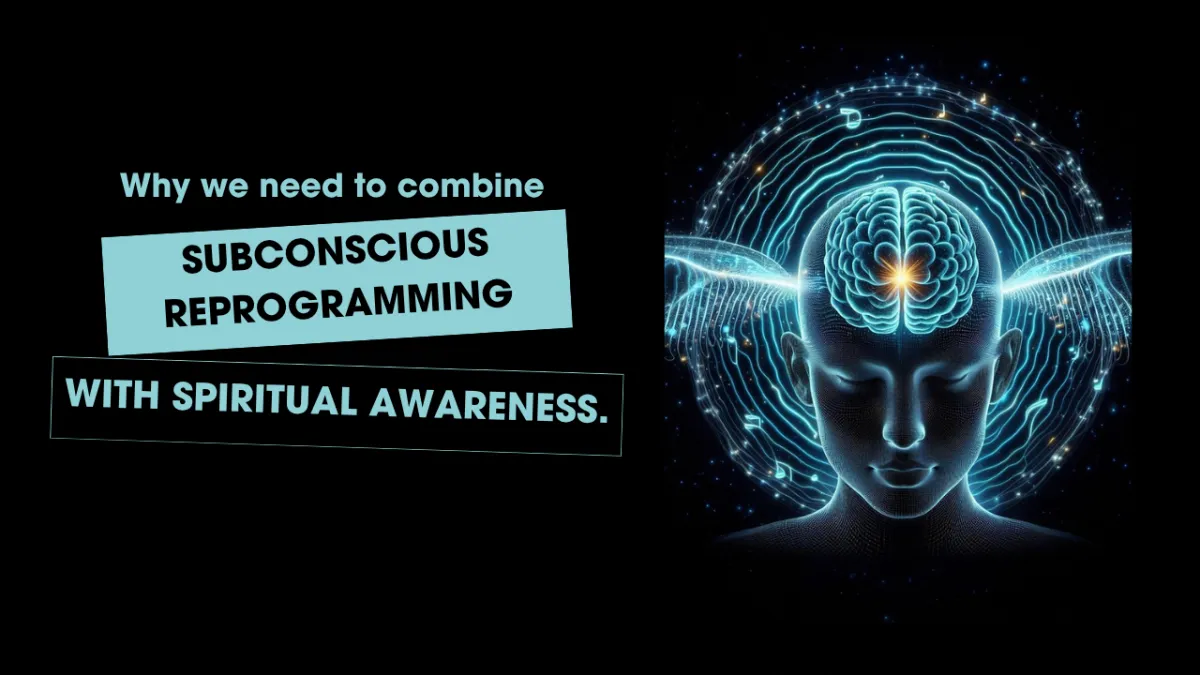
Rewiring The Mind: Why Spiritual Perspective Changes Everything. With Natasha Braniff & Samia Bano
Rewiring The Mind: Why Spiritual Perspective Changes Everything. With Natasha Braniff & Samia Bano
What happens when you combine subconscious reprogramming with spiritual awareness?
Listen now to this powerful conversation with #hypnotherapist and #mindsetcoach Natasha Braniff. Natasha explains why #healingthemind isn’t just about changing thoughts—it’s about expanding perspective. Together, we explore why we need to combine subconscious reprogramming with #spiritualawareness to move #beyondfear, reconnect with our #trueself, and create lasting #transformation in our lives.
Learn more and connect with Natasha now at: www.natashabraniff.co.uk
Plus, check out Natasha's Podcast:
Be Your Best You! With Tash and Becky
Spotify: https://open.spotify.com/show/2MAJ6xZzn2stEkqNB6mxIA?si=oVK6wG4DRZyw_FuVNci38w
YouTube: https://youtube.com/@BeYourBestYouPodcast
Instagram: @natashabhypnotherapy
https://www.instagram.com/natashabhypnotherapy
To Book your Free HAPPINESS 101 EXPLORATION CALL with Samia, click: https://my.timetrade.com/book/JX9XJ
#lastingchange #SubconsciousMind #MindsetTransformation #SpiritualAwakening #SpiritualGrowth #PersonalGrowth #SelfDiscovery #InnerHealing #SelfAwareness #ConsciousLiving #MindBodySpirit #EmotionalHealing #InnerPeace #SelfLoveJourney #AwakenYourMind #HigherConsciousness #PurposeDrivenLife #SpiritualWisdom #TransformYourMind #EnergyAwareness #SpiritualPerspective #MentalReprogramming #HealingJourney #HumanPotential #InnerWork #liveyourbestlife
Here's the audio version of this episode:
Transcript Automatically Generated
SAMIA: Hello, Salaam, Shalom, Namaste, Sat Sri Akal, Aloha, Holah, Ciao, Bonjour, Buna, Privet, Mabuhay, and Dzień Dobry… It's really, really good to be with you again. And I know you'll be so happy and excited you've joined us because we have one of our very cool returning guests. And that is Natasha Braniff, who is a Hypnotherapist and Mindset Coach. And I'm so happy to have you back with us, Natasha.
Welcome back.
NATASHA: Thank you, Samia. I'm so happy to be back. I'm really excited to see what we chat about this time round.
SAMIA: Yes, talking about that, just to encourage our listeners, so please make sure you go and check out the first episode because I mentioned Natasha is a Hypnotherapist and a Mindset Coach and last time around, we sort of talked about what is the subconscious mind and you know, sort of like understanding your own power, particularly in the context of your subconscious mind and understanding it. And I think one of the other big themes that we talked about is the whole like how we can get into people pleasing and over giving and what to do about that. So it was a really, really important episode, but also you gave some amazing tips and just great advice for people.
So I really encourage everyone to go listen to that one again.
NATASHA: Thank you.
SAMIA: Yeah, you know, I was so excited to have you come back because I was like, okay, we have to dig deeper. I had so many more questions to ask you, Natasha. And towards the end of the last episode, you know, one of the things you were talking about is actually how cool it is that one of the things people can do in terms of when they work with you is you're able to provide them with these personalized video, audio where, you know, they can listen to.
And it's basically like a self-hypnosis thing. And you can even do it like as you're falling asleep and your subconscious mind is still listening. And it helps you create the changes that you want with Fun And Easy.
That is so cool.
NATASHA: Yeah, it's like magic, honestly.
SAMIA: Yes, and I know that is really helpful. And at the same time, I was like thinking about some of my teachers who talk about the importance of also doing that kind of work when you're awake and fully alert. And I was hoping we could dig a little bit deeper into that with you.
It's like, why is it important to do it also when you're awake and alert?
NATASHA: Yeah. Oh, yes. And that's such a good point, because though, you know, a big part of my job as a hypnotherapist is to do the hypnotherapy when people are not asleep, but in that kind of state, that's only half of it.
And I think this is where I work differently from other hypnotherapists, particularly as we're taught when we're learning hypnotherapy. It's kind of almost like we work, you know, session by session, and you leave the people, you do the hypnosis, you leave them to get on with it, you come in and check back. And when I was working like that, when I first started out, I could see that in between that time when they were kind of left on their own, they weren't getting the changes that I really wanted them to make.
But I could also understand why, because when you're working with the subconscious mind, you need to have that constant repetition to rewire those neural pathways. And the best way to do that is to include it in your everyday life, to constantly have someone reminding you and keeping you accountable, which is why I created the way that I work in my programs, which includes, as well as the sessions, it includes support outside of the session for the whole time that we work together, for the three and a half or six and a half months where we do that exact thing. Because the hypnosis, as you mentioned, you listen to them as you're falling asleep because you're going into a natural state of hypnosis.
That is absolutely, it works. It rewires your subconscious mind. People will start noticing changes and they have no idea why they're doing it until they realize, oh, it's because that's what was being said in my hypnosis audio.
So you will get changes just from doing that. But if you want the real, deep and lasting change and you want it to affect all areas, you have to put, like anything, you just have to put it into practice. You have to use your everyday life and the experiences that you're having as lessons, as teachers, because I believe that's what we've come in here to learn.
We've come down to earth to learn these lessons, to expand and grow. And so we've chosen to be in these particular scenarios and have these relationships and experiences that help us to learn. And that is where the real change takes place, because then you're actually doing it with every part of your body.
You're using different areas of your brain that you're obviously not using if you're just listening to the hypnosis. And then that's when you really solidify those new neural pathways. It's all about actually putting it into practice, because I think there's a tendency in this kind of work to intellectualize a lot of stuff.
And there's so much information for us. We can listen to podcasts, we can read books, we can absorb all this amazing information that's out there. But eventually, you have to embody it, you have to integrate it by actually doing the work.
SAMIA: Yes, that is such an important insight. Because I was experiencing a similar thing both in the context of my own experience, but also working with my clients. I remember this one particular conversation with a lady I was working with.
And she had done quite a bit of work in terms of lots of reading self-help books, and even having worked with some other coaches, where, I mean, a lot of the works that she was doing was with like spiritual coaches who were sort of like doing like really deep energy cleansing kind of work with her. And she said she definitely found it helpful, and overall, you know, she was perceiving positive changes in her life. But it's sort of like at one level, she felt like it's like she at that time when she and I were working together, she had hit like another sort of plateau, as it were.
Like she was going through another challenging time in her life. She was like, I've already done all of this work, but I feel like I'm stuck again. What's going on?
How can I get myself unstuck? And so then as we started working together, I was like, oh, look, you actually have all the right knowledge. You have the right information and the basics of what you need to know.
A lot of people don't even have that. Like a lot of people have misinformation about how to be happy, how to get themselves to get unstuck when they're, you know, experiencing struggle, how to be more resilient, things like that. But she had the right knowledge, but her issue was exactly that, that there was a lack of implementation.
And not generally, not necessarily in all contexts, but she was struggling to implement in the particular context that she was feeling stuck in at that time. And she wasn't, like, sure how to translate. I don't think she even realized that it was just, and from one perspective, a question of translating what she had learned in one context into the context she was in now.
And I think a lot of it had to do with the fact that, you know, the work that she had done with, like, especially her spiritual mentors and coaches, so much of the change happened at a subconscious level. That she didn't, like, at a conscious level, know how to, you know, repurpose a lot of what she had learned and experienced and do it that way.
NATASHA: Yeah, that makes total sense. You have to, we learn, we can only learn so much when we're, you know, intellectualizing it. I always compare it to riding a bike.
You can read a book on how to ride a bike and you can know all the ins and outs and all the workings, but until you actually get on that bike and start peddling, you're never gonna really know how to learn, you know, how to ride. And it's the same with this work, especially like you said, with that spiritual work and the integration. We can understand it up here, but we don't actually feel it and we don't embody it and you have to live your life and you have to go through these scenarios where you do feel stuck because it's in that stuckness that if you start asking the questions, okay, what do I need to know here?
What am I not doing? Start being curious, you're gonna then be able to have all that information that you've gathered, which is still up in your subconscious mind and then it's gonna start pulling out the relevant information for you that you need to get unstuck. But you have to give it the time and the space and you have to give it the correct instructions.
You have to know how to talk to your subconscious mind, how to access the information and your subconscious mind loves questions. It just loves to find answers. So give it a question, help me, just ask, show me what do I need to know here?
And you can guarantee that's when the information will start, you know, kind of flooding through.
SAMIA: Oh, I love that you just reminded me of one of the sayings. What is it? I don't want to mess it up, so that's why I need just a moment to make sure I'm saying it right.
The quality of your life, if you want to improve the quality of your life, improve the quality of the questions that you ask.
NATASHA: I haven't heard that one, but exactly that, yeah.
SAMIA: Yeah. Oh, gosh. Talking about improving the quality of the questions we ask, I have another question for you.
NATASHA: Yeah.
SAMIA: So, you were talking a little bit about we're here to learn, and sort of the purpose of our... In fact, you even used the terminology of like we... Okay, wait, now I forget exactly how you said it.
I think what you were doing was sharing a more spiritual perspective around why we are here, what's the purpose of our lives. And I want to dig deeper into that with you, because you are one of the few folks that I've found who does your work as a hypnotherapist, mindset coach, and you incorporate this amazing spiritual perspective and understanding into your work. So, first of all, tell me a little bit more about what is the spiritual perspective that you bring, like if there's anything more that you want to see about that.
And then I really want to talk to you about why that is so important for us to know and to be aware of and to live.
NATASHA: Yeah, okay, yeah, thank you. So I think, I suppose it's really important and relevant to say for me, is that I didn't always kind of come from this spiritual perspective. And it was when I lost my mum in 2020, it kind of flipped everything from me, and that's when I dove into it.
So that came first for me before the hypnotherapy, actually, this kind of like going down through, you know, the big questions, why is there life after death? Why am I here? Like, who actually am I?
All those questions. And, you know, that really helped me in my grief journey. But actually, what I found is, as it helped me with my grief journey, actually sent me deeper into actually this resonates with me so much.
And eventually it sent me to hypnotherapy, which now and the work that I do, which is actually so much more than hypnotherapy now. But yet, when I found hypnotherapy and I started learning about the subconscious mind and all these kind of things, it was taught in a very, matter of fact, almost scientific way, if you can say scientific, but on that side of things. And because I had dived into the spiritual stuff just before that, I could see so many ways that it was correlating with each other.
I could see how they were blended together. And when I got my training and I went out and I started working, it was like there was loads of gaps in the hypnotherapy. Things that we've been taught about the subconscious mind, the concepts behind how hypnosis and hypnotherapy works, that didn't make sense.
There were gaps if you didn't come and fill it in with the spiritual perspective. And so a lot of people that I trained with went out and couldn't quite get behind it. They were really struggling to work as a hypnotherapist because they couldn't understand really what they were doing.
Whereas I kind of, I flew because I had this spiritual backup behind it, which made it make total sense to me. And obviously I had that belief in it and so it worked for me. And when I first started doing hypnotherapy, I was very much like, I don't want to talk about the spiritual stuff because I want people to take me seriously and you know, like all the things.
And so I was very much just talking along the hypnotherapy side of things. But eventually I got to a point I thought, I feel like a fraud. I'm talking about how this can help you and how this changed my life and da da da da.
But I actually am missing out a huge section, as in the spiritual side of things, that I'm not talking about. And without that, I would not be where I am today from using it. But also without that, I wouldn't have been able to do with my clients what I could do with them because it just wouldn't have made sense to me.
So I kind of came out online and I was like, I need to talk about the spiritual aspect of things because it just, I think for all of this healing work, in my opinion, all of the healing work, whether it's hypnotherapy or however it is that you're coming from it, I think that it's great, but you can only reach a certain depth until you start thinking on that bigger spiritual level. I think, like I said, even with the hypnotherapy, it's like the spirituality fills in the gaps of this kind of human life and us trying to make sense of it. And when you can see yourself as a soul, when you can see yourself as bigger than this life that you're currently in, it really helps with all the mindset side of things, because you can zoom out, you can detach, it helps you come out of that victim mindset, which is a huge step in being able to go further along in your healing journey and working through this stuff.
SAMIA: Yes, oh my gosh. I think you're so right about this. You're just reminding me of In the recent months, I've been working a lot with folks. So among other things that I do in my life, I'm also, you know, engaged in some community work, like a volunteer in my community. And one of the ways that I volunteer is organizing community conversations at a city level.
And there's all of these different issues that come up, you know, in the city, and we want to promote better human relations in the city. So that's why we organize different community conversations. And in the last year or two, you know, there's been this huge halfway genocide going on in the Middle East, but Gaza, Israel, et cetera.
And so that has become like a huge issue in our local community as well. And I've been working a lot with folks who on both the Israeli but also the Palestinian side are working on the issue. And there's just so much anxiety and fear and concern in the folks.
And like a lot of it is sort of like, especially when it comes to fear, like the issue of safety is, I think, one of the big, big issues that I've been noticing that everyone is sort of experiencing. And that fear of being unsafe and not just in the moment, but in the future, and how do we assure our safety and our security? That question and that fear is driving so much of how people are behaving and acting.
And it's sort of like, how do you help somebody get a handle on that fear? It's been one of the challenges that I've been working with. Because even in the context of organizing the community conversations, when people are so afraid, it's really difficult to have a rational, calm conversation.
NATASHA: Yeah.
SAMIA: You know, let alone come up with good solutions or build up the kind of trust you need for the other side to be able to come up with collaboration ideas or compromises, things like that. And so for me, personally, the way that I have been able to sort of maintain a sense of calm and peace, even as I recognize the perfectness of what's happening is because I have a more spiritually grounded perspective.
So I, and I just, yeah, it's really, from even like the people who are like the peacemakers and who are like really doing a lot of amazing peace-building work in the community. I see them struggling with their own emotions and sort of, you know, heading towards that burnout. Or many people in the community keep actually have already burnt out.
But then it's just because the emotional weight is just so much for people. They're like caring so much. And like, I don't know how to help people release that in the best ways, unless we take on this more spiritual perspective, you know?
NATASHA: Yeah, I totally agree with you. And it's really hard to have conversations with people who don't have that kind of perspective as a person who does, doesn't it? Because I'm very aware that that person is not hearing where I'm coming from and can think that, you know, I'm not being understanding or that, you know, get triggered by...
I'm very, very aware of it. So it is very difficult. But at the same time, I have to stay true to myself and I have to stick with, you know, my beliefs, the way that I see things whilst obviously being respectful for others.
And I think that obviously the most important thing is we can't force people to change the way that they think, can we? It's just that's not up to us. I just believe that we have to be who we are and hope that that has a knock on effect energetically or subconsciously, however you want to see it.
And hopefully at least the calmness that our spiritual view gives us might just rub off on to them. I think that's important. But you are right, I think that, and this is why I'm so passionate about talking about the spiritual side of things, is obviously, you know, I have my podcast and though I'm always weaving the subconscious into the spiritual, I do find that the podcast is more geared to these kind of topics because that's what I feel passionate about getting out into the world because I think that with all these horrific things that are going on in the world, exactly, I agree with you 100%.
I can't see how we can get past them until people start being able to have at least a part of this spiritual perspective until they can zoom out a little bit, like I said, outside of that, this kind of 3D physical world.
SAMIA: Yeah, so like I have my experience and perspective on why, like what's the barrier that people hit in terms of without the spiritual perspective in a situation, like let's say we're dealing with someone experiencing intense fear for their safety. From your perspective, like can you maybe sort of give a little bit of an example of what's the actual barrier? It's like why, like what is the barrier that people hit without the spiritual perspective?
And then what is exactly the mindset shift that we're able to make or what happens when we take the spiritual perspective?
NATASHA: Yeah. Oh, I love this question. Because I think that I can answer it from both sides. Because like I said to you, I wasn't, I didn't always have these views. And I know how I felt in situations where fear was coming up. And you just feel, I think the biggest thing is that you feel alone.
You feel so alone and fear is just, you know, it's the worst thing, isn't it? Because then we know what fear, anything that comes from fear doesn't typically end well. And when you just think that it is just you, it's just this world, it's just the horrors that are happening in this world, you feel really hopeless.
You and I think that our kind of animal, because yes, we're spiritual beings, but we're in a human animal body, aren't we? And I think that our animal body in the, you know, the millennium of evolution that we've had also kicks in and takes over a little bit too. And then you can see that just ultimately, when we're living in this state of fear, we're living in a state of, I'm not gonna survive.
I'm terrified for my survival. And then, you know, going to the biological side of things, when you're living in that state, your logical mind, your prefrontal cortex shuts off and you can't think logically. You can't see the bigger picture.
You can't think bigger than you. And you're just constantly looking out for threats. And then, that leads to, you know, being scared of other people.
And then, fear can lead to anger and all of the things. And so, I think that that's what you're hitting when you can't see it from the spiritual perspective. Because as soon as you come from the spiritual perspective, I mean, the way I see it anyway, if you're coming from a spiritual perspective, you believe in a higher power.
You believe that there's something more than you here. And you believe that it's good, and it's love. And ultimately, you are okay.
And this is just a moment in time. And you're always safe. You're always okay.
So now, if you're coming from the spiritual perspective, then if you have that belief, inherently, it doesn't matter what fear you are experiencing, which is very, very real in this world, if you've got that belief deep inside you, that ultimately, even if the worst happens, I'm going to be okay. I'm going to a place that's better, or there's beings or energies that are actually looking after me and want me to be safe and well, then that fear diminishes, and so do all the behaviors that come from it.
SAMIA: Yeah. Yeah, this feeling alone, it's such a... It's like, to me, it's so amazing that it grips us so much, this feeling alone, because I mean, clearly, certainly in the kind of context that I was giving the example of, that we're, you know, engaging in these community conversations, and the people that I'm dealing with, no one is truly physically alone in these contexts.
You know, most of the folks that I'm dealing with, they are already part of coalitions, of, you know, community groups that they're working with, to try and create the change that they want to create. So, they're not physically alone. And so, it's, like, amazing in some ways that even when we're not physically alone, we can nonetheless feel alone.
NATASHA: Yeah, absolutely. And I think most people feel this way. And if they don't now, they have at some point in their life.
And it is something that I see all the time with the people that I work with. And, you know, I think that's a real... That's what that spiritual aspect of things, it can help you just know that there's something there, that belief that there's something else there, something that you can call upon, something that loves you, because, you know, we have all had experiences in our childhood, and this kind of goes back to the subconscious, and this is how it kind of weaves together, you know, we've had these traumas in our childhood that have led us to believe that, you know, we're alone or we're not loved or we're not lovable.
But when you can... it come from the spiritual aspects, you accept that you are always loved, you are always worthy, and you are perfect exactly as you are. And that's why I think that the hypnotherapy that… where I'm programming, you know, the subconscious minds of people to feel worthy and feel enough and feel loved, it's so much more powerful when you have the spiritual aspect to back that up and say, yes, I am, because really in their reality, they can say, no, I'm not, I have no one around me, or the people around me don't love me, they've, you know, they've been abusive or they've neglectful, whatever. And that's very true in this life. But when you have that spiritual aspect, it kind of overshadows all of that because on that bigger perspective, you can accept that you are loved and you are worthy.
And that is really the key of the work that I do, that I see that the spiritual is needed, it's necessary to really help us all, to push us on further past where we are at the moment.
SAMIA: Yeah, yeah. Yeah. You know, this, if we could just keep digging a little bit into this feeling alone thing, it's like, so it's like, you're not physically alone, you are surrounded by people, and even at one level, you know, you know you're, you have this whole community of people that you're actively working with to try and solve the problem that you're trying to solve, but you're still feeling alone.
And so it's like this clearly something deep going, deeper going on, that's in terms of like, so trying to understand what is this alone feeling and where it's really coming from.
Like, it's sort of like, maybe, like I'm the the alone feeling is not so it's more about. Like, again, thinking of a lot of the folks that I've been working with, a lot of them. It like I remember just like this was a few days ago, I was at one of these community meetings and one of the people who came up to me after the conversation was like, but I hope this is making a difference.
I hope that this all is talking and all of this work that we're doing. I hope it's making a difference. I'm afraid it's not making a difference or it's too slow.
It's too little. People are still dying out there, you know, in the hundreds and thousands. And, you know, there's something about, I think, that sort of is also behind that feeling alone, is that you don't feel powerful enough.
You don't feel, you don't see...
It's like your understanding or your vision of the impact that you may be having is limited. And it just continues to keep you in fear.
NATASHA: Yeah.
SAMIA: And... Like, again, feeling alone because you're not actually... You're like, oh, no, well, here are all these people, but they're not able to help me.
They're not able to have the, you know, the impact that I'm really looking for in terms of actually feeling safe and actually solving my problem, and hence I actually still feel alone.
NATASHA: Yeah. Yeah, that's so true. That aloneness, you know, linked with the powerlessness as well, which obviously does come back to what we said earlier about when you have that spiritual perspective.
You feel like you do have help of higher beings that can help you. But I think, as you were talking, kind of two things came to my mind, really, with this aloneness. And I think there's, like, the way I see it, the subconscious side of it, and then the spiritual side.
So with the subconscious side, what I see and what I work with a lot, I work a lot with inner safety, because all of us, I think, as human beings, need to work on our feeling of safety. And I think it's linked with the aloneness. So, you know, we've disconnected from ourselves.
But what we've done in the process is we look to the external for our safety. And if we always attach our safety to the external, whatever that is, whether that is living in a country that is peaceful, whether that is our house, whether that's our financial safety, a relationship, you know, a parent, whatever, whatever that external thing is, we are never going to truly feel safe. And if we lose those things, it's only going to reinforce our belief that we are always alone.
So something that I think is really, really important for everyone, every human to work on, and it's something that I had to work on a lot in myself, and what I help my clients do, is develop this sense of inner safety, so that you're not looking to the external anymore. You know that you've got yourself, you know that you're safe, and that's where the spiritual aspect can come in too, because you know, though you still have yourself, you also do have people in the background backing you up, but ultimately, you know you can trust yourself to feel that safety. So if you are in a really, you know, unstable environment, and an unsafe environment, whatever that looks like, you can still, and it's not ignoring the fact that the external world is still going on, but you can still feel a sense of safety.
So I think from that subconscious body level, it's really, really important when you're feeling alone to work on that, that inner sense of safety. And there's loads of ways you can do that. Obviously, I use hypnosis, but I also really recommend doing the nervous system work because our safety is within the body.
It's all linked. And so the nervous system, calm in the nervous system, regulating your nervous system is 100% necessary to help you with that, the mind and the mindset work that we do. But then on the spiritual side, so I said there was a subconscious and a spiritual.
I think on the spiritual side, I believe that the reason that we, you know, so many of us have this feeling of aloneness, even though we have people around us, whether they're, you know, good relationships with good people or not, is because ultimately we've disconnected from who we are. We've forgotten that we're these, you know, infinite souls, these beings that don't just exist here in this life that we're in now, we are endless, we are infinite, and we are love, and we are safe. And I think that we've disconnected from that, and that's where I see a lot of this feeling of aloneness come in, where, so then, if you can have that spiritual perspective, again, it helps you with this subconscious and mindset healing work, because when you can believe that, and when you can feel that and reconnect to that, well, that opens up a whole other way of looking at the world and yourself.
SAMIA: Yeah, you know, that is such a good, good point. Are you just making them, what, wow. I mean, the fact is that, like, if you're only considering or experiencing the connections that we can with our conscious mind, or even like from the perspective of like our physical reality, the fact is that, you know, like, consciously we're only experiencing like a tinsy, tiny portion of all the connections that we actually are.
You know? And so no wonder, like, it's like, and our heart knows the reality of just how expansive an existence we are a part of. And so it's like, you know, it's that, you know, that heart and soul, it's like, oh, no, oh, no, no, there's, there, I feel alone because even though they're all of these people, it's, it's like, no, it's still a tiny, tiny portion of the actual existence that I'm a part of.
And so no wonder you still keep feeling alone until you are able to reconnect with more of that whole.
NATASHA: Yeah, exactly. I think that, I think that's it. And that's why I'm, you know, behind, like I mentioned with the podcast and with the spiritual stuff that I talk about, I do it because I want to make or help as many people as I possibly can to remember that, to remember who they are, this, this infinite expansive being so that they can reconnect to all those parts of themselves, or at least some of them, or be open to acknowledging that they exist.
Because I think that when you start remembering your true self and who you really are, that loneliness gets less and less, and you begin to feel more and more whole, I think. It's, it's, that is my, that's what I'm so, so passionate about, just helping people remember that you are more than just Natasha or more than just Samia. You're just like this huge, huge being, and it's all just good and perfect.
SAMIA: Yeah, you know, this was, and actually the last community conversation that I was part of, I'm still thinking about it. As you can see, it keeps, you know, you process through like different things, same experience and you learn over, like I'm still doing it. And one of the big lessons that I was reminded of at this last community conversation is in both the Jewish and Muslim traditions, there's a teaching that if you can, you can kill even a single person.
If you take a single life, it's as if you have killed the whole world. So, and it's specifically, I mean, and that's what the verse, I know in the Quran says, and I know that there's a similar verse in the Torah, and it just says that, that if you kill a single person, if you take a single life, it's as if you have killed the whole world. And it's sort of, you know, to make you really, I mean, this is a teaching that's supposed to make you really be like, oh, gee, I better. All of this, you know, sometimes it's like, especially when we're thinking about war and how war happens and people just be like, oh, oh, yeah. You know, hundreds of people are going to die. Thousands of people are going to die.
Maybe millions of people are going to die. And it's sort of like somehow we number ourselves to that. And we're like, oh, it has to, like, what is this?
It's just, that's just part of how war is or, you know, but it's like, no, no, like, remember, it's like even a single life that's taken. I mean, it's like a whole world being destroyed. And there's just something about that perspective.
But, you know, it's there was a part of it that I never really got about. I was like, well, it's a nice metaphor. It's a nice thought to make a mistake.
Seriously, the idea of not killing.
NATASHA: Yeah.
SAMIA: But I didn't appreciate or realize that there could be a way in which it is actually true that each one of us is a world.
NATASHA: Yeah.
SAMIA: And it's only as I have begun to be more aware of my own spiritual essence that I've been realizing, oh, no, it's actually in some ways literally true. Each one of us is indeed like a world.
NATASHA: Yeah. Oh, it's so, yeah, exactly. It's so true.
We are like our own little universe, but every one of ourselves is conscious and it's listening to us. And if you think about it, if you go down in that small way, our mind, our voice, our subconscious, it's always like our cells see that as God. It does, it speaks and the cells listen and they do.
And that's why it's so important to be careful of what you say about yourself and others. And I think when I hear you say that, about that kind of saying in the Quran and the Torah, to me, it just automatically makes me say, well, yeah, that makes sense because again, going back to this spiritual side of us and remembering who we are, when we remember who we are, we remember we're all connected. We're all one, we're all from the same source.
So of course, when you kill one person, you're killing the whole world because we're all connected. And you can think of that in that big way or you can take it smaller that when you're, you know, in your everyday life, if you're hurting people in your life, you're actually hurting yourself. And when you can have that perspective, it can help you be kinder, be more compassionate, you know, when you see everyone else as you, judgment becomes less, the fear becomes less, and the hatred that causes these wars and these, you know, ancient rivalries between people will have to dissipate because when we can see ourselves as all the same, why are you fighting then, you know?
And this is where it seems overwhelming because you think, how do we get people to see it this way? It just seems too big, and like you said, with your community group, you can think, how am I going to do this? You feel powerless.
And the only way that I can, you know, when I feel like that, the only way that I can look at it is that we can't, we can't go out there and tell everyone, you have to see it like this. Like we said, you can't change people's mind. They have to get to it themselves.
I had to get to this myself. If someone had tried to tell me a long time ago, I would have told them to carry on walking, I don't want to hear it. I wasn't ready.
So we can't do that. So what can we do? The only thing we can do is work on ourselves.
And this comes back to the subconscious work, why I do the work that I do with people, because it's still with that overarching mission for me to help humanity remember who they are, which is that when we can work on ourselves, when we can do all the healing work and we can become more compassionate and we can remember who we are and we can remember that we're love and then we spread that on to other people because we are connected, going back to that verse in the Qur'an, because we are all connected and we are all linked. When you do the work, when you rise up, it's going to affect the whole of the collective. So then all of the people that are kind of starting to see the world from this spiritual aspect, imagine if we could all work on ourselves, you know, instead of panicking and thinking, how can we change that when, you know, obviously do the things you can do.
Like, it's amazing that you're doing the community work. It's brilliant. Do what you can do in your way, but then let go of the rest, work on yourself and know and trust that eventually that is going to have ripple effects that you can't even imagine across the world.
SAMIA: Yes. And not only whatever the impacts happen in terms of the ripple effects in the world, the external world. I mean, again, going back to the idea of, you know, each person is a world in themselves.
It's like even if, for example, I managed to reach one person and truly make a positive difference in that one person's life, I have actually impacted a whole world right there, you know, and so not to, you know, again, that person who came up to me who was like, ah, I hope it's making a difference. I hope it's enough because it feels not enough. It feels too slow.
And I know he's not the only one. He was the one who voiced it to me that day, but I've been hearing this over and over and over again. And even, you know, like for myself, I've had moments in my life where this thought has come up.
And it's like, no, no, it's like... And I think that's the other thing that happens, right? That makes us sometimes feel so hopeless.
And the sense of struggle is that we take on a sense of burden and responsibility for creating change. And so it's, I mean, and that is a huge burden to carry. It's like if I have to be responsible to create world peace and a war or whatever, that big change is that I'm trying to be a part of the solution for.
And it's now been, yes, maybe it's been decades. I mean, you know, there's like literally, like now I'm thinking about so many of my friends in the African American community who, you know, have been dealing with racism, you know, their entire lives. And there's so much tiredness.
You, you, like I was part of these series of community dialogues where, you know, we were basically talking about racism. And so many of the black folks who were part of those dialogues, they were like just expressing the sense of tiredness. Because it's something that they have to deal with every day of their lives, their entire lives.
It's like to just still keep going at it, going at it, going at it. It's like, it can get really tiring. And so, I mean, like for me, the only way to escape that burden is spiritual perspective.
Where I'm like, no, actually, I'm not responsible.
NATASHA: Yeah. I think it's a necessity. It's a necessity for people who do feel that burden because it is too much.
And I think that we have to remember that if we're not, you know, you see it in the everyday world, when you work yourself to the bone and grind it and you're in burnout, you're no good to anyone. And it's the same thing with this kind of perspective as well. If you are putting that much pressure on yourself to save the world, you're not really going to do a very good job of it and you're going to ruin yourself in the process.
And I think we, part of the work, you know, for us to do is to remember that we do have to put ourselves first. I always find with the spiritual stuff, there's always this kind of like, it's contradiction, isn't it? It's a paradox.
Everything's paradoxical. And we are all one, and we are all, you know, of the same. But we are also that separate fragment.
And we have to take care of ourselves to be able to take care of the whole. And I think that that's a really, really important thing for anyone kind of feeling like they're here to make a difference, to help, to make a change. If you want to do it effectively, you have to know that that comes from looking after yourself first and everything.
Any of this work always starts from within us and then it can spread out. I like to think of it as being a lighthouse. The lighthouse doesn't move, it stands there and it just shines its light and it helps the ships find their way.
And that's what I think that people, you know, like us who want to make this difference, we have to see ourselves as lighthouses. The lighthouse has to look after itself, it has to keep its bricks together, you know? It has to keep the light switched on and we can't do that if we're trying to run here, there and everywhere, you know, trying to find every… going out to every single boat.
Just stay, stay still, look after yourself and know that that's the work you're doing and it's enough. And sometimes it can look like people, you know, setting up huge charities and making a huge impact all over the world. And sometimes it can just be giving someone a smile and not knowing what that smile could have done for that person that day.
It's all enough. It's all just as important. And everything you do is always enough.
And I think we have to give ourselves credit for that.
SAMIA: Yeah, it's about recognizing the role that you are here to play and just living fully into that role. It's sort of like we're all like pieces of a puzzle. And so it's like you go stick yourself and you're a part of the puzzle.
And that's how you help the whole be whole. It's like if I like worrying about what all the other pieces are up to, hey, is that piece, where is that piece? It's not in its place.
Let me go get it. Then I displace my own self.
NATASHA: Yes, that's right. And you've left a hole in the puzzle. That can't be filled.
Yeah. Yeah. Exactly.
You're right. And I think that's what's also important. What I truly believe is that when you're in a good place and you're looking after yourself and you're following what lights you up, what brings your soul joy, and there's work there to make sure that you realise that that's not being selfish and it's not being delusional and all those limiting beliefs.
But when you follow your joy, you are in your soul's purpose. And when you're in your soul's purpose, you're doing exactly what you came here to do. You're doing exactly what the earth needs you to do.
And you will be led to doing those things that help the world. So don't try and do everything and save everyone. Follow your joy and know that you will be led to doing the things that will help people in exactly the way, the perfect way that you came here to do.
SAMIA: Yeah, and you just made me think about Gandhiji because he has this like saying, it was, yeah, it's, it's definitely, I'm pretty sure it was Gandhiji, like someone was interviewing him and talking to him about, it seems like, you know, you're always on the go, you're always doing this, that you're working over 80 hours a week. I don't know if they actually specified the 80 hours thing. I might be mixing up memories, but in any case, the part that I remember in terms of what Gandhiji said, he was like, and I won't be able to paraphrase him properly either, but the gist of what he said was, yeah, I'm busy, but because the work that I do is something that I love so much, and it's so meaningful to me, it's me living on the purpose of my life, it doesn't feel like work.
You know, so it doesn't, I'm not, you know, and so it's like, and here was a man who was like trying to, he was part of a movement, you know, where people were trying to free themselves of, you know, oppression and injustice, and the work that they were engaged in, I mean, if you look at it from one perspective, it's like difficult work, it's heavy work, it's, it certainly wasn't fun and games in terms of like, there was literal threat of violence that they were being subjected to, so many people dying and so forth, quite literally, you know. And so at one level, you know, there was all of this trauma and just difficultness of the of the situation. But for Ganviji, like that is not what he was focusing on.
He was focusing on, OK, what do I need to do? And just like, you know, yeah, that I'm doing what I'm passionate about. I'm doing something that I love to do.
And so, like, you know, to even think about, well, what does it mean to follow your light, to follow your joy, to do what you love? It's not that, I mean, it doesn't mean that you're going to be doing something that's ignoring other people or other people's needs or that you're not going to. It's going to take you away from doing good work in terms of creating positive change in society, et cetera.
You can be very much doing all of that and still find the joy and find that is, in fact, what brings you joy. And that's part of living your life in a way that you love.
NATASHA: Yeah, because I also think, you know, again, I believe that we came, yes, we came to this world, this earth to learn lessons. And yes, they're going to be, it's going to be tough. We signed up for that.
But we did also come here to enjoy life, to experience earth and being on all the things you can experience on earth that you can't necessarily experience where we came from. And we have such programming, you know, like societal programming over time and conditioning to think that life is a struggle and life has to be hard. And it doesn’t.
I love working with the beliefs, you know, that say life gets to be easy. You get to have your desires. I love working with those beliefs because why do we have to, why does life have to be a struggle?
And it doesn't mean that you're not going to come across difficult scenarios. Of course you are, but again, that's the purpose, that's why we came here. But when you have the belief that life gets to be easy, or you get to live out your joys, and you get to follow your joy, it makes those tough times so much easier to navigate.
It helps you come from a different perspective. And perspective is everything, right? Because everything is neutral.
It's just the meaning that we put on it. So the more that you can work with your subconscious beliefs to put a good, positive, empowering perspective on it that leads you to feeling joy, the better. Why would we not do that?
And again, the spiritual beliefs will help you to be able to do that. Because when you can see that, yes, you aren't just this being that's on earth, and you're born and then you die, when you can see that you have maybe come in to choose lessons and there's a higher part of you, it makes that easier for that belief to sink into your subconscious. And your beliefs form your reality, and therefore you will live a life that's easy and not a struggle.
SAMIA: Oh, yay. So much more that I would love to talk to you about, Natasha, and I'm thinking, oh gosh, we should probably wrap up for today. And that is a beautiful, beautiful reminder and learning for us to sort of begin to wrap up on.
Do you have any last thoughts that you would like to share?
NATASHA: No, I think really just the whole, the message from our whole conversation today is that if you are on your healing journey and if you're working on your subconscious beliefs, your limiting beliefs and all of those things, if you're not already doing it, it would be really good to just dip your toe into the spiritual side of things. Because as you can see from our conversation, it will make your journey and it will make your rewiring of your subconscious so much easier to do. And also it will make your life much more joyful and expansive as well anyway.
SAMIA: Yes, more fun and easy. That's what we love on this show. Cool, cool, cool.
Thank you again so much, Natasha, for taking the time to be with us again and sharing your wisdom. And my last reminder to our audience is to just please make sure you check the show notes because we will be dropping Natasha's links in there so you can connect with her and continue to learn with her and get the help and support you need whenever you're ready for it. And until we connect next time, I wish you lots and lots of peace and joy.

Want to check out even more amazing episodes?
All of our episodes are archived on our vlog page :)





OUR PEACE OF MIND GUARANTEE
Because we’re committed to doing onto others what we would have them do onto us, all our programs come with a Peace of Mind Guarantee.
We know you’re going to love our programs. We’re so confident about the quality of our programs we’ll give you full access risk-free for 30 days. If you decide the course isn’t right for you, then you may request a full refund up to 30 days after your purchase.
Copyright © 2018 Academy Of Thriving