
Blog: Make Change Fun And Easy
Spiritual Insight: God wants us to be happy! With Samia Bano
Spiritual Insight: God wants us to be happy!
With Samia Bano
If God already knows everything, why test us?
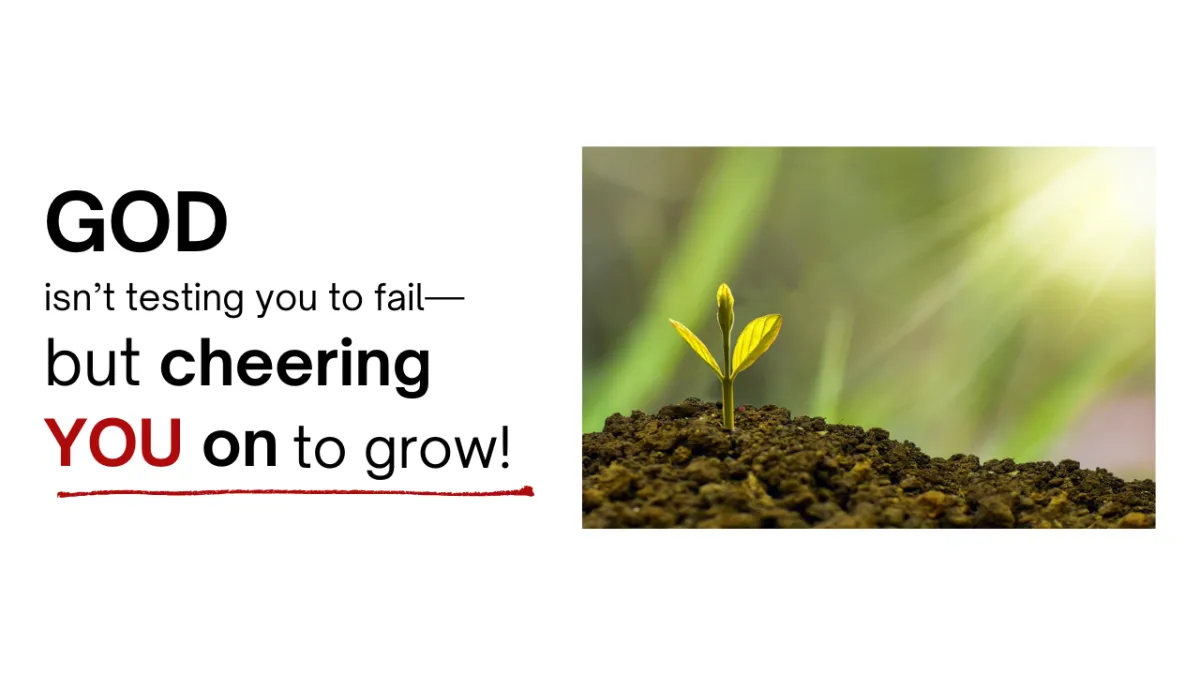
This episode uncovers the real #purposeoflife tests—not to prove anything, but to help us #learnandgrow. Discover the life-changing concept of “desirable difficulties” and how it explains why struggle is necessary for our growth. Samia connects psychology and spirituality to show how God designs challenges perfectly for your evolution.
Listen to this episode now and realize one of the deepest #spiritualtruths -- God wants you to #behappy!
NOTE: This episode is a recording of Samia's last #ramadanspecial live. Although Samia frames the concepts in this episode in the context of #IslamicSpirituality, the lessons are relevant and applicable to other faith and spiritual traditions as well. If you're interested in #interfaith learning or have an #interspiritual approach to your practice of faith, you'll particularly appreciate and benefit from this episode!
To Book your Free HAPPINESS 101 EXPLORATION CALL with Samia, click: https://my.timetrade.com/book/JX9XJ
#unconditionallove #spiritualtruth #SpiritualAwakening #FaithAndGrowth #TrustGod #DivinePurpose #SpiritualGrowthJourney #MindsetShift #HealingThroughFaith #InnerPeaceJourney #SelfGrowth #EmotionalHealing #PersonalTransformation #PurposeDrivenLife #GodsPlan #FaithOverFear #SpiritualWisdom #LifeLessons #GrowthMindset #ConsciousLiving #InnerStrength #OvercomingStruggles #SoulGrowth #SpiritualPerspective #ResilienceMindset #HealingJourney
Here's the audio version of this episode:
Transcript Automatically Generated
Assalamualaykum, Shalom, Namaste, Sat Sri Akal, Aloha, Holah, Ciao, Bonjour, Buna, Privet, Mabuhay, Dzień Dobry and Hello!
It's still Ramadan, although I think we only have one, possibly two days left to go. So we are pretty much at the finish line or very much nearing the finish line. And I'm so excited and happy that we are getting to connect one more time today, right now, because I have so much to share with you. So last time, we talked about a lot of different things.
We started talking about the idea of why we need to struggle. What is really like the nature of Allah's love for us and what is hell? What causes suffering?
But, you know, of course, there's always room for us to go deeper and improve our understanding even more. And so, let's do that. So, the question that I've been asking my own self for years and years and years and years, and that I hear so many of us asking again and again, again and again, is, of course, about, well, why do we have to suffer?
Why is there so much suffering? Why is there so much evil? You know, and I started to address that last time.
And this time, I want to give us somewhat different angle, answer that question from a somewhat different angle, and provide more examples, more concrete examples, because I think last time, I may have been rather theoretical, and I want to give more practical, real life examples. So when we think about, okay, why do we need to struggle? Why is evil allowed to exist?
And so forth. Of course, at one level, if you look at the Quran, an answer that is given on multiple occasions is that, you know, this life is a test. We created life and death so that we may test who among you has the best conduct, who among you has most taqwa, which is God consciousness, and so forth.
Like these, this is like one kind of answer that the Quran gives us on why do we need to suffer and face difficulties in this life, why evil is allowed to exist. So you know, this idea of, okay, this life is a test, it's not meant to be easy. This is not heaven.
Heaven is meant to be a place and a time where there's no evil, there's no suffering, everything's peaceful, everything's happy, even joyful, right? And that's how it's meant to be in heaven for us. But this is not heaven.
This is this world, this life. And that's the point of this life is not that everything be perfect. Um, the point of this life is for us to be tested.
And a lot of times, um, you know, this idea of testing can actually be a little bit confusing as to why does a lot need to test us? Because generally when we think about, um, like for example, being tested in school or in college, like in an academic kind of context, um, somebody is trying to verify how much we know, right? Um, and, uh, we need to prove to someone how much we know.
But Allah is supposed to be all-knowing. Allah is supposed to already know everything. And so why would Allah need to test us?
So the answer to this question, I actually received most clearly when I was in an educational psychology class, uh, while I was in college. Uh, so educational psychology is focusing on understanding what allows people to learn more and, and better. And, um, so like, um, learn more quickly and retain the information that you learn for longer and better and to be able to apply it.
Once you learn something, you also want to be able to apply it most effectively, right? And so, um, how do we help people do that? How do we help people learn better?
That is what educational psychology is trying to understand. And one of the concepts, uh, that we were learning about, that just, I was like, whoa, whoa, I think this is the answer to this question that had been confusing me for my entire life until that point in time. And this is the concept of desirable difficulties, desirable difficulties.
So what research in educational psychology has found is that testing is actually a really helpful and sometimes even necessary tool to help us learn more and better. We retain the information more and better. We are able to apply it more and better.
And just even learning in the first place, just the learning itself is more and better when it happens in the context of being faced with tests. So, you know, it's not just about, oh, you have to prove to someone how much you know. I mean, in the, in our human academic context, yes, that's one of the main goals.
But we know that is a goal that does not apply, really, when it comes to our relationship with God. God doesn't need to verify how much we know because he already knows. But there is this other function of testing, which is to aid in learning, to actually make our learning process more effective.
And I believe that really is the key in terms of why Allah has put us in a situation, in a world, in a life where we are being tested in so many different ways all the time, pretty much.
And in the context of this testing, actually being able to help us learn more and better, there is this concept of desirable difficulties.
So, what this concept teaches us is if you are just hand someone the answers, you know, they don't really learn from that. Or if you make a test too easy relative to that person's capacity and current capabilities and current level of learning, etc., then also the test will not help them learn.
But on the other hand, if you make the test too difficult, then also it does not help people learn because then it actually becomes discouraging for people. For example, if you have a first grader and you give them a test that's designed for a fifth grader or a college student, they're not going to be able to make head or tails out of it, you know, and they will feel very discouraged. If you insist that they take the test and you insist that there's something that they can do, but it's so beyond where their current level of learning is, what their current capacities are, it's not going to be helpful at all, right?
And so you actually have to have the desirable level of difficulty. You know, it can't be too easy, and it can't be too hard. It has to be the just right level of challenge for your current level to actually then, for the test to then help you learn more and better.
And this is, you know, something that the reason why it immediately made sense to me that this is what Allah is actually doing with us and for us is because I immediately remembered this verse in the Qur'an, which is one of my favorite verses in the Qur'an, which is one of the verses when I was going through my darkest periods of life, you know, when I was in the depths of my trauma, this was one of the verses that I found in the Qur'an and I just clung to it and I wanted to believe it to be true, even though I didn't always feel like it was true, because things just felt so hard and like things weren't going anywhere, I wasn't making any progress, at least that's what I felt like, right? Because I was so down and so depressed, I couldn't see any positive, I couldn't see any light in my life at one point, you know? And so, there were times when I was like, I hope this is true, but I don't know if this is really true.
But thank God, you know, it is true. And so, what am I talking about? So, there's this beautiful verse in the Quran in which Allah says, a no soul do we place a burden greater than it can bear.
A no soul do we place a burden greater than it can bear. Meaning like Allah is promising us, Allah is promising us that Allah will never, never put us in a situation, never face us with a test or a challenge that we cannot bear, that is beyond our capacity to be able to learn from and emerge out of having learned something important and valuable and helpful to ourselves. And the reason this was so uplifting and so important and such a point of something that I held on to even through my toughest times is because this is a teaching that says to me, okay, Samia, you can do it.
You can do it. If Allah has put you in this situation, it's because you can get through this, you can manage it, you can learn something from it, some good can be found in it, and you can get through it. And so it creates in me a culture of confidence and hope and optimism that is not really dependent upon me, my opinion of myself, but rather on what faith and trust I'm able to have in this promise that has been made to us by Allah in the Qur'an.
And you know, as my faith has grown, my iman has grown over the years, this confidence, this hope, and the optimism that this teaching generates for me has just become stronger and stronger and stronger and stronger. Right? And so it's like, okay, okay.
And I'm at a place in my life now where, you know, it's, it's actually like fun. Whenever I identify a new challenge, most of the time, I, I, my, my, when I realize, oh, I'm being challenged, I'm feeling challenged, I'm actually finding myself, like, I get a smile, and I get this burst, because I'm like, yes, here's another opportunity to learn and grow. And you know, the thing is, we have to remember what are we trying to learn and what's the point of the growth?
Like, what's so cool about learning and growing? You know, what's the point of that? What are we trying to achieve with that?
That's so exciting and happiness promoting. Because it is exciting and happiness promoting. And so what the thing is, what we're trying to learn is how to get closer to Allah, get more loved by Allah, love Allah even more, because we want to return to Allah, right?
And return to Allah in a state where we can be as close as possible to Allah. Allah is our source of happiness, the source of everything that is good and great and excellent and most beautiful. Right?
And so when we return to Allah, the closer we can be to Allah, the more happy we will be, the more joyful we will be, the more peaceful we will be, right? The more love we will receive, the more love we will feel in terms of what we are able to respond back with to the love, you know, respond to love with love, so we can love more and better. You know?
And so we're trying to also grow. That's the context in which and the reason and purpose for which we're trying to grow. We're trying to grow in our capacity and our ability to love and be loved more and better, more and better, more and better.
And no matter how good you already are in terms of loving and being loved, there's room for improvement. There's room for improvement, right? We keep coming back to this, that there's room for improvement, right?
And so here's another challenge. Yay! Here's another opportunity for me to learn, to love and be loved even more and better.
And you know, the thing is, we need to go through these challenges. We need to go through these tests to be able to actually engage in this learning and growth because I will give you some examples. I'll give you one example from my own life.
A relatively recent example. By recent, I mean, this is like maybe two, three years ago, something like that. Okay.
So, you know, I have already been professionally working as a happiness expert. Like, I got my training and I started working as a happiness expert, as a happiness coach and trainer back in 2012, right? And so by the time it was three, four years ago, I had already been, you know, I had already been, you know, working professionally in this field.
And like for me, what that meant was that I had already been committed to my own happiness and not just in terms of theoretically learning about it, but actually living it, practicing it, you know, and then also sharing it with other people, which actually creates a really positive feedback loop of when you teach and share what you have learned and you see how it's helping other people feel more happy and joyful in their lives, then it makes you even more happy and joyful and it motivates you to learn even more and grow even more yourself, right? And so there's this really positive loop that happens. And so I had already been, you know, like making great progress for several years in my life, and I was in a really happy, happy place.
I mean, way above average, way above average. I don't want to show off. I don't mean to be showing off about that.
I'm just like letting you know what's possible and what was true for me, right? And what is true for me. And I had gotten to a point where I was like, wow, I'm doing really well.
You know, I haven't faced a major challenge in a while. I mean, a major challenge that really caused me some struggle in terms of my resilience, that caused me some struggle in terms of being able to find that happy, joyful knowing of hey, this problem is an opportunity for me to learn and grow and get closer to Allah and so forth. And that's when this challenge came into my life in the form of the person who sexually abused me as a child.
So if you didn't know, I'm a survivor of child sexual abuse. And, you know, I was hankfully like I went through what I went through. And then I was like literally physically removed.
Like my family moved to a different country from where this person who abused me was. And so for so many years of my life, I didn't have to look at him. I didn't have to hear the sound of his voice.
You know, I didn't have to be afraid of him finding me, you know, happening to come up on me, this and that. And this would be... And then after all these years of…
And in all of these years, when I was like physically on a different continent, like not even on the same continent as this person, and I was devoting my life to learning how to be happy, how to heal, how to stop suffering, how to recover from that trauma of child sexual abuse, you know, I committed, I said, okay, yes, you know, one of the keys, one of the keys for how we regain our inner peace and happiness and healing is forgiveness, is to practice forgiveness. And I seriously, I did my very best to cultivate forgiveness. So within myself, including for this person who sexually abused me as a child, and I, there's, I won't lie, when I first started that effort, it was really difficult.
You know, I had a lot of righteous anger towards this person and the whole situation of, you know, being a survivor, of having been victimized as a child, you know, and I felt like I had a right to be angry. And the anger had actually helped me to stop blaming and judging myself, which I had done for many, many years in my life. And it had, you know, really devastating impact on me, all that shame and blame and judgment, right?
And so when I got angry, all those feelings of shame and blame and judgment got redirected from myself to this person who abused me. And so I even experienced the anger that I had as a good thing in that context. And so I was very...
Like, there was parts of me that were not wanting to let it go. You know? There was a part of me that was like, okay, Samia, holding on to anger is like holding on to a burning piece of coal that, you know, is burning you and hurting you.
And so you have to let it go. But, you know, you're holding on to it, hoping, expecting, thinking that it's going to actually do something to avenge you, you know, or hurt the other person. But it doesn't.
When you hold on to that burning piece of coal, you know, you're just hurting yourself. And so this was a lesson that I learned theoretically, right? And so then I was trying to apply it and it was hard.
It was really, really hard. But over time, because I stayed… my commitment to my own healing, to my own peace was greater than my anger and whatever hatred and blame and judgment that I had, you know, I continued with my practice and my… just practice of cultivating forgiveness, right?
And, and I thought after like engaging with that process for years and years and years, when three, four years ago, I came face to face with this person, you know, I thought, I thought I had learned the lesson of forgiveness and I thought I had gone really deep in forgiving. But when I came face to face with this person, after so many years, it just brought up like so many feelings and thoughts and emotions. And, and I couldn't, I couldn't control them, you know, it just brought me down and it brought me back to like how I used to feel years ago and yeah.
And I realized, I realized, oh my gosh, I thought I'd made so much progress and I had, I genuinely had. And yet, as I keep saying, there's always room for improvement. There's always room for improvement.
But the thing was, I didn't know how much room for improvement there still was. And I didn't know how I could improve any further. I mean, I thought I had done the best that I could, and I thought my best was pretty great.
Right. And so I said, OK, Samia, though there is still room for improvement and I want you to improve. I want you to keep learning and growing.
I want you to go even deeper and practice forgiveness even deeper. Right. And so I said, I'm going to face you with this challenge and you are ready for this now.
You're ready to come face to face with this person now. And so thankfully, you know, with everything that I had learned already by that point in time and my continued commitment to my own peace and my own healing and my own learning and growth.
I knew what I had to do, right? Was to continue the practice and go even deeper in the practice of forgiveness. And so, again, took me a while.
It took me a while. But I finally managed to begin to calm myself down, to begin to calm my thinking and the thoughts of shame and blame and judgment mostly directed towards them. I began to calm them down, begin to replace those thoughts with thoughts of more compassion and more love and more mercy, right?
And so on and so forth. And now I'm doing much better. I'm doing much better.
Now I think I'm every, you know, this is like, I will tell you, like, even now, something or the other can happen. And I will remember that that person, what they did to me, our various memories related to what they did to me, right?
And it's a question of how quickly am I able to bounce back from that? How resilient am I able to be? Right?
And so now once again, you know, I'm in a place where I'm able to be pretty resilient. I'm doing pretty well again. Right.
And then when I'm ready to go even deeper, God will, I don't know how in this time, God will put me in another challenging situation that will challenge my capacity to be forgiving and compassionate. Right. And then I'll get another opportunity to go even deeper.
I don't know what that challenge will be yet, because it will come. Maybe it'll come today, later today or tomorrow, or maybe it'll come next week, whenever. Allah knows best what's best for me, what I really need, when I need it.
Right. And so, I can, I know for certain, for certain that some challenge will come up and it'll be for my own good. It'll be for my own good.
And through it all, Allah will be there, protecting me, taking care of me, guiding me, loving me, and rooting for me, you know? Allah is rooting for us, you guys. Allah is rooting for us.
Doesn't want us to settle. You know, this was one of the scholars, Muslim scholars I was listening to a few days ago, talking about some of the names of Allah that relate to Allah being the most merciful, the most forgiving, the one who pardons, you know? And he was talking about how Allah wants us to be really ambitious in our goals when it comes to our relationship with Allah and being able to be really close to Allah.
So for example, in one of the prayers that we are taught, this is in the Qur'an, and also you can see in the prayers that the Prophet Muhammad, peace be upon him, has taught us, you know, we are taught that, okay, there's different levels of heaven, right? And so we are taught to pray, not just, oh, let me please attain heaven. It's like, no, pray to attain the highest levels of heaven.
So like to be really ambitious and to want the very best, to be as close as possible to Allah, to receive as much love as possible from Allah, to love Allah as much as possible, right?
And so to have that, you know, like not only as our goal, but to know that that is Allah's desire for us. You know, I keep talking about in the last so many lives that we have done, I keep talking about how Allah's love for us is unconditional.
There's nothing that Allah really needs from us. There's absolutely nothing that Allah needs from us. Allah is free of all needs.
But if there's anything that Allah wants for us, it is for us to be happy. Yeah, Allah wants us to be happy. Allah wants us to be peaceful.
Allah wants us to feel so loved and so cared for and to know that we are safe. And just, yeah, you know, like we're and that we are connected to Allah himself. You know, we are like that drop in the ocean.
We are the drop and Allah is the ocean. You know, so Allah wants us to know we are one, we are connected. Yeah.
And so Allah is rooting for us, you guys. Allah is rooting for us to just be as close as possible with Allah, to be as loved as we can be and to love, to feel that love back, you know, because when you feel that love back, that makes you so happy, doesn't it? When you feel loved, when you feel truly loved and you feel truly cared for, isn't that the bestest reason to be happy?
Isn't that the best foundation for our happiness? The thing that can sustain our happiness the most? Yeah, it is.
You know, like, when we talk about, you may have heard about gratitude, you know, the power of gratitude in terms of gratitude making us happy, right? Being the fastest spot to happiness. And actually, this is something that's proven through research in positive psychology that the fastest way to happiness is through practicing gratitude.
When you practice gratitude, it immediately gives you a happiness boost. So now, you know, in positive psychology, I'll tell you, like, when I started studying positive psychology and the power of gratitude and how to cultivate gratitude, we were taught different techniques for tapping into our gratitude attitude. So for example, one technique is to keep a gratitude diary in which you know down everything that you have to be grateful for in your life.
And so a lot of times, people will know down things like, I have a wonderful family, I have a wife, I have a husband, I have children, you know, or I have a home that's safe and warm and comfortable, or I have enough food to eat, I have access to clean drinking water, I have my health, you know, there's so many, so many blessings that we actually do have that are present in our lives. And when you allow yourself to actually just be aware that you have these blessings in your life, that these things that you have in your life are actually blessings, right? You feel grateful, you feel grateful, you feel happy.
Right? And so there are these different things, all these different things that you can sort of think about and sort of develop an appreciation for in your life. And for sure, it'll help you tap into your gratitude attitude and help you make, help you feel more happy.
But the thing is that all of these things, all of these things, if you really think about it, you could lose any of them. Anything, anything that you have in your life, you could lose. You know, if it's a person that you love, if it's, you know, access to food, water, health, wealth, whatever, you could lose it.
Right? And so then you'd be like, oh, what do I have to be grateful for now? What do I have to be grateful for now?
Or, you know, these things go up and down. And so if these are the things that you depend on for your happiness and this is what your gratitude, I mean, if this is the best you can do in terms of what you have to be grateful for in your awareness, I mean, you're going to hit a limit in your ability to be grateful, to feel grateful, to feel happiness as a result of that feeling grateful. And, you know, when times are really tough, like when I was really traumatized and I was like, depressed, I was surrounded by all kinds of blessings, but I couldn't even recognize that any of those.
I mean, it was just all meaningless. The fact that I had a loving mother, you know, and brother and sister and food to eat, and that I was actually physically safe, you know, I didn't have to look at that person who abused me any more, because I was in a different content, and none of that mattered. You know, it wasn't enough.
It wasn't enough. But what is enough? What can be enough?
No matter how dark, how depressed, depressing a situation is, what can be enough? That is feeling loved. That is feeling cared for.
You know, no matter how bad your circumstances are, if you can access that feeling, that knowing that you are loved, someone cares about you, you will be able to dap into your gratitude attitude. And you will be able to find happiness in your heart. You will.
That is, you know, the best, the best, strongest reason to be grateful and to the firmest foundation for our happiness. And the beautiful thing is that Allah is always loving us, always, you know. And so if you can focus on recognizing Allah's love, feeling that love, we can always be happy, you know?
We can always be happy. So now I will give you some examples from like the stories of the prophets, right? In the Qur'an and so forth.
That demonstrates this. I mean, think about the really, really difficult tasks or challenges that the prophets had to go through, right? They went through every every kind of challenge you can imagine, whether it is surviving different forms of abuse, whether it is, you know, facing social isolation, or, you know, being labeled as crazy, as outcast, whether it's even being physically attacked.
There were, you know, prophets that are mentioned in the Qur'an, messengers and prophets that were literally killed, that died, because people were, you know, so threatened by them. I mean, think about Jesus, right? Think about the prophet Muhammad got poisoned.
There were multiple attempts on his life, actually. At the end of his life, when he got sick and he passed away, I mean, of course, we know that ultimately, you die when it's your time, and Allah decrees that it's your time. Everything else is just an excuse.
But the worldly excuse for why he got sick in the days preceding his death was that he got poisoned by someone who wanted to kill him. Right? Or think about the way that Jesus was treated and how people plotted to kill him.
Right? And so on and so forth. Facing war, facing famine, you name it, like facing the death of your children, your wife, you name it.
Any suffering that you can think of. Facing genocide, okay? The prophets and the people and those who were with the prophets, they faced it, they faced those challenges.
I mean, think about the Jewish people, right? With the pharaoh, enslaved, being subjected to ethnic cleansing, genocide.
I mean, Muslims faced that too, by the way. But the point is, think of the worst, the worst tests, the worst trials, the most challenging tests and trials. And the prophets faced it, the people who were with the prophets faced them, and they overcame it, they overcame it.
And they didn't just overcome them, they've emerged victorious. You know, even the prophets that were killed, that died, like the Quran gives us this perspective, that we don't think of what happened, their death, we don't think of it as a tragedy, we don't think of it as a bad thing. Because, you know, death is something that happens to all of us.
We're all going to die one day. It's something we're all moving closer and closer to every moment of our lives. Right?
And so death in itself is not a bad thing. If anything, it's us returning to our Lord. So it's actually a good thing.
Right? So the fact that people may die, that's not the problem. The problem is that while you were still alive, what was your attitude?
Were you learning? Were you growing? Were you able to utilize the challenges, the tests that Allah put you in to learn and grow?
Which is the purpose of our lives, which is why Allah has put us in this, in these situations in the first place? Or did we just stay so self-obsessed, you know, so, you know, like focused on our own problems, our own suffering, their own thoughts, concerns, priorities, whatever they are, our own desires, wants, that we totally missed the point of it all and didn't actually manage to learn what we needed to learn and grow in the ways that we needed to grow, you know? So if, so it doesn't, you know, so when we think about who's successful, what success is, how do we know if someone has been successful in their life or is being successful in their life?
You can't measure that or realize or recognize success by any worldly type of criteria, like, oh, how much money do they have? How many children do they have? Do they have a good job?
Do they have a good home? None of that matters. It doesn't really, I mean, from a spiritual perspective, you could be really rich.
You could have, like, a thriving family in terms of lots of children and stuff to carry on your name or whatever else it is that you value. You could have all of that material stuff, but you don't feel loved. You don't feel love for anyone else or you're stagnant.
You're not growing in your capacity to love and be loved. Then you're a failure. If you're not growing in your happiness, you know, in your ability to be more and more grateful, to be more and more compassionate.
If you're not growing in these ways, if you're not learning these lessons, then you're a failure. And it doesn't matter how much money you have, how many children you have, how many chtas or that you have. None of that matters.
And on the other hand, you know, like, just think about the Prophet Muhammad, peace be upon him. Financially, he had, he kept nothing. He had access.
He could have chosen to have all kinds of riches, to live in all kinds of comfort. But he didn't want it, because he knew that's not what was important. That's not what makes us successful, either in this life or in the hereafter.
And you think about Jesus, think about a prophet, any other prophet, Abraham, Noah, you name it. None of them, I mean, we only know about one prophet that's mentioned in the Quran, who was actually wealthy and in a position of great power in the context of how these things are judged in the world. And that was the prophet Solomon, who was a king.
He was a king and he was extremely rich and extremely powerful as a king. I believe in the biblical context, that would be Solomon. I believe that's his name in the Bible.
Well, in the Qur'an, he's called Suleiman, right? So he's the only prophet that we know of who was actually rich and powerful in this world, in terms of being a king and stuff. Every other prophet, if you looked at what they had and their status and station in life, you'd be like, oh, they're like beggars.
You know? I mean, the prophet Muhammad, BZ upon him wore patched clothing. He swept, he washed dishes, he swept the floor, like did all this housework and stuff, right, for himself.
There were days when he and his family went hungry, or all they had to eat was maybe a date or two, you know? And so from like a worldly perspective, they were like poppers. They had nothing.
He had nothing. But spiritually, from a spiritual perspective, we know that he was the most rich, the most living, the most abundant rich life. You know, and he was and even after his death, you know, like I mentioned, if you think about it just from the, if you don't have the spiritual perspective, you'd be like, oh, so tragic.
Somebody poisoned him and killed him.
And, you know, before he died, he died still living like a beggar, like a pauper, like without any material wealth to speak of. All his sons died. So there were like in the Arab culture, the Prophet Muhammad peace be upon him, he was Arab.
There were actually the lineage passes through sons, right? It's a patriarchal patriarchy. Can never say the word.
Your lineage is passed down father to son, right? And so the fact that the Prophet had no living sons, it was seen as a big failure. And so on and so forth, like, you know, so like from a worldly perspective, one could say, oh, he wasn't, he wasn't in good shape.
But that's not what we know. Like we know that's not what's really important. That's not what's really there for us to focus on.
So anyway, I think you get this point. And oh my gosh, look at the time. I got really carried away.
Let me take a quick look at my other device to see if you have any comments or questions. Oh, we do have a few comments.
But I don't really see any questions. I'm going to give you a minute to see if you have any, if anyone wants to ask any questions.
Okay, so if we don't have questions, I did have more I wanted to share, but I have been advised to keep these things shorter than not. And I've already gone pretty long. So I'm going to hold back.
But I encourage you to please go ahead and if you have any questions that you come out with later, if you want to continue this discussion or have a discussion with me on any of this, to just message me. Leave a comment under the video or if you're listening to this as a podcast, you know, my contact information will be in the show notes. So you can definitely get in touch with me.
Send me an email or send me a direct message. I'll be, you know, I'm on all the regular social media channels, etc. So get in touch with me and we will continue the conversation.
And then if even though Ramadan is coming to an end, and so I won't be doing these Ramadan lives anymore this year. But if you do want to, like I said, we can find other ways and other opportunities to stay connected. So until we connect next time, I just wish you lots and lots of peace and joy.

Want to check out even more amazing episodes?
All of our episodes are archived on our vlog page :)





OUR PEACE OF MIND GUARANTEE
Because we’re committed to doing onto others what we would have them do onto us, all our programs come with a Peace of Mind Guarantee.
We know you’re going to love our programs. We’re so confident about the quality of our programs we’ll give you full access risk-free for 30 days. If you decide the course isn’t right for you, then you may request a full refund up to 30 days after your purchase.
Copyright © 2018 Academy Of Thriving