
Blog: Make Change Fun And Easy
Unpacking Suffering and Choice in Our Lives. With Samia Bano
Unpacking Suffering and Choice in Our Lives. With Samia Bano
Can't love a God that tries to control us with the fear of hell? You're not alone!
Listen now to this special episode in which your Happiness Expert Samia Bano shares how being a #survivorofabuse made her averse to being in any relationship where there is an attempt to control her, even if that someone trying to control her is God.
Discover how Samia embraced a loving, guiding, and non-controlling #relationshipwithgod and you can too by unpacking deep #spiritual realizations about:
-- role of suffering and choice in our lives
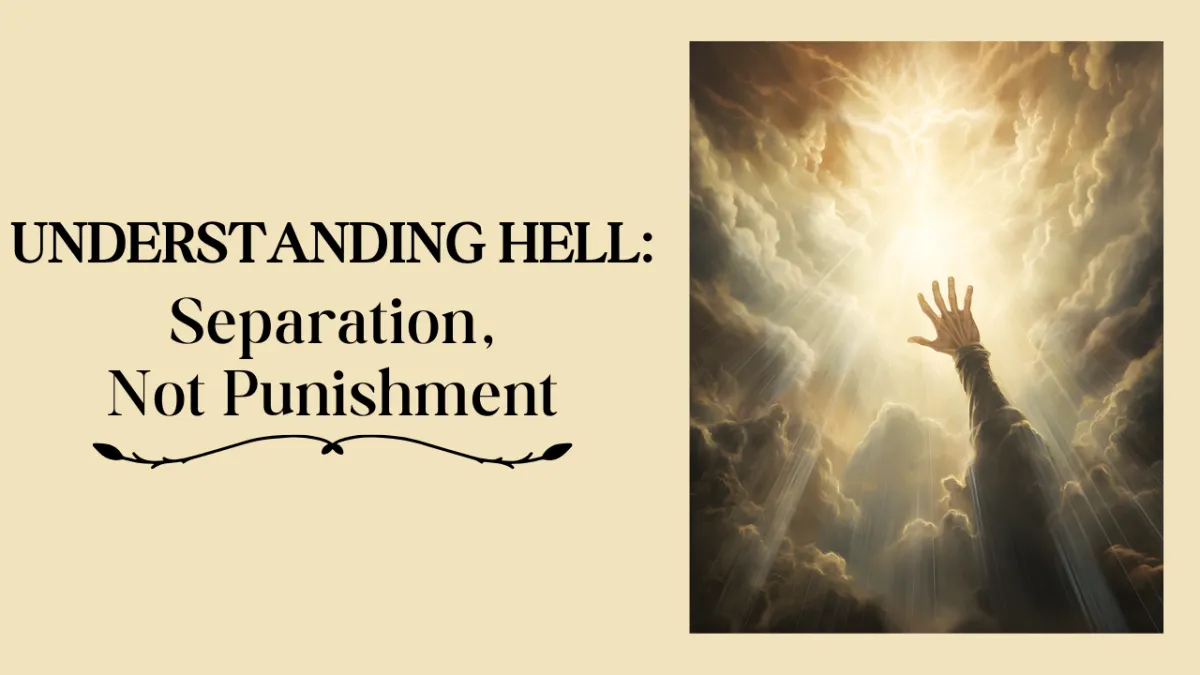
-- understanding the deeper reality of what hell is
-- how God is never on an agenda to control or harm us
-- the truly #UnconditionalLove God has for us
-- and so much more!
NOTE: Although Samia frames the concepts in this episode in the context of #IslamicSpirituality, the lessons are relevant and applicable to other faith and spiritual traditions as well. If you're interested in #interfaith learning or have an #interspiritual approach to your practice of faith, you'll particularly appreciate and benefit from this episode!
To Book your Free HAPPINESS 101 EXPLORATION CALL with Samia, click: https://my.timetrade.com/book/JX9XJ
#sufferingandfaith #spiritualjourney #Ramadan2026 #SpiritualGrowth #LoveAllah #GodConsciousness #Taqwa #FaithJourney #IslamicWisdom #DivineLove #AllahIsMerciful #HeartfeltIslam #IslamicSpirituality #MindfulFaith #ProphetsTeachings #DeepeningIman #Ihsan #ForgivenessFromAllah #QuranicWisdom #LivingInWorship #PeaceAndFaith #SpiritualAwakening #RamadanReflections #FaithAndLove #MercyOfAllah #CloserToAllah
Here's the audio version of this episode:
Transcript Automatically Generated
Assalamualaykum, Shalom, Namaste, Sat Sri Akal, Aloha, Holah, Ciao, Bonjour, Buna, Privet, Mabuhay, Dzień Dobry and Hello!
“It's still Ramadan, and this is our third live during Ramadan. Ramadan is the month of fasting, and more importantly of spiritual growth for Muslims.
And I think the most important aspect of spiritual growth is for us to actually fall in love with Allah even more. No matter how much you think you already love Allah, guess what? If you're still alive, there's room for improvement.
So that's the mission we are on. It's like, how do we fall in love with Allah or God? And to understand and know that this is not just a show, something that you experience one time, or it's not a destination that you just arrive at, and then you just stay.
This is a state of being and feeling that we have to cultivate moment by moment, day by day, as long as we are alive. You know, it reminds me of like when the prophets, Prophet Muhammad, peace be upon him, his companions would question him, Hey, Prophet, you're the prophet. You're already the beloved of God.
You've already been forgiven all your sins. Why do you still pray so much? Like he would spend hours and hours and hours of time in ritual prayer and different forms of formal prayer beyond just even living every moment of his life in worship, you know?
And when I talk about living every moment of his life as worship, I mean, you know, understanding worship in the most expansive way where anything that you do with the intention of doing it for God, for Allah, you know, it becomes an act of worship. So whether it is you're walking or eating or even going to the bathroom, you know, it all becomes an act of worship, of our loving, of our adoring our Lord, our Creator, our Sustainer, when we do it with the right attitudes and we do it with the right intention. And that is the key, right?
And that's what we were trying to cultivate here. Last week, I mentioned that, you know, in the in the Koran, there is two words that are used, that a lot of times in English, they're both translated as fear, fear of God or fear and or and or fear of God. And there's actually a big difference between them.
The word that there's the word hof, that is actually fear as we understand it in English. But then the other word that is in the Koran that often translated as fear and referred to as the fear of God is taqwa. And taqwa is actually nothing like the fear that we think about or feel when we think of fear in the English language.
And so last time I was talking about how taqwa, which is actually my favorite translation of it is God Consciousness. And so you say to yourself, well, why does God Consciousness or rather taqwa, why does it get translated as fear so often, you know, in these translations? That was a question that came up after I did the live last week.
And I realized, oh, yeah, I didn't actually clarify that. So I want to make that the starting one of the starting points for today and to clarify. So I do believe God Consciousness is a deeper, more in some ways, more accurate understanding of what taqwa is.
So think about it as if you're thinking about it as God Consciousness, it becomes a question of, well, when you are conscious of God, what do you experience in terms of the feelings that you feel? Like, you know, when you're when you're experiencing God Consciousness, what are the feelings that you're feeling? Fear is a feeling, right?
So I was making the case last time that actually when we become God Consciousness, we become more and more God Conscious, the qualities of God that come to us that we experience or that we can experience most, strongly and predominately are actually the aspects of God, of the Rahman and the Rahim, which is God as the most compassionate, the most merciful, because this is what actually God tells us in the Quran, that he has decreed upon himself that every other quality that God expresses, it flows through the quality of Rahman, of him being the most compassionate, the most merciful. It's every other quality is expressed under this umbrella of God being the Rahman and the Rahim, the most merciful, the most compassionate. And so no matter what other quality of God you experience or God is sharing with us, allowing us to experience, it's always under the umbrella of him being the most compassionate, the most merciful, the Rahman and the Rahim, right?
And that's not the end. I mean, that's not the end of what we can and do experience. When we experience God, when we become more God conscious, God is also the most powerful, the most glorious, the most majestic, right?
And there's other aspects of God also that God forbid if God was ever to expose us to those qualities of Him without the shade of Him as the most compassionate, the most merciful, the Rahman and the Rahim. Well, they would be like seriously, like they would just terrify us. They would absolutely would terrify us.
We, you know, I mean, and we would have good cause, right? When you are before one who is the most powerful, has, you know, like is responsible for your sustenance, for your very life, for your very existence. If that being is not merciful, if they're not compassionate, if they're not kind, they can and will be a very scary figure for you to have to confront and face.
Right? And so that is sort of like where that whole translating taqwa, as fear of Allah comes from, is that when you become God conscious, you also become conscious of the glory of God, the might of God, the power of God. And there is a certain awe and reverence that you feel as a result.
So actually even like, if you look at the explanations of what does it mean to fear God in Islam, in the context of taqwa, the scholars will tell you, it's not like normal fear that we're talking about in the context of any other relationship that we have. In the Islamic context, in the context of us feeling taqwa, deepening taqwa, it's more about this feeling of awe and reverence that you feel because God is so majestic and glorious and powerful and just, you know. So that is that.
Hey, thanks for tuning in to this episode. Hope you're getting value out of it. For your information, this episode has been sponsored by the Happiness 101 Program.
Are you a ChangeMaker, coach, trainer or healer? Are chains of fear holding you back from making the impact and income you desire? Using a unique combination of positive psychology and the spiritual wisdom of our most effective ChangeMakers, the Happiness 101 Program helps you break through your limiting beliefs and manifest the abundance and success you desire with fun and ease.
Interested? Book a free Happiness 101 Exploration Call with me. Your happiness expert, Samia Bano.
Just use my online calendar link in the show notes. Now back to the show.
And so I think there's also what happens is that there's, as we say, like, you know, love is not an all or nothing experience.
It's not like either you love someone or you don't. There is depth to that experience. You can love someone, yes, and you can love someone even more, even more deeply.
You know, there's room to grow and experience even more love. Same thing with, like, you know, a lot of other emotions like peace, like happiness. So I think that's also like sort of part of where this comes in, where, you know, in Islam, we talk about how the believer, there's actually a saying of the Prophet Muhammad, peace be upon him, where he describes the believer as a tree.
He says, the believer's roots are Islam, meaning submission in this context. So the, you know, the state where the believer is like, okay, I believe in you, God, you are God. I'm going to submit before you.
I'm going to do what you say because you're God. But in this context, you know, a lot of times our concern is really for ourselves. We are submitting to the one that is more powerful than us, that we recognize as someone who we need for our sustenance, for our life and etc.
And so we say, okay, fine, I'll do what you say. But a lot of times, you know, it's sort of like in that sense, a relatively shallow feeling or a shallow, not shallow feeling, but a shallow commitment or a shallow level at which to interact with God. So, but the roots, right, they grow, they produce the stem.
And so in the saying of the Prophet Muhammad, he said, the stem is iman, is the believer when they grow iman, when they grow faith, right? And so you're developing more trust. So it's not just, okay, fine, I'll submit to you, I'll do what you say, but you begin to trust more and more that, oh yeah, God's there for me, taking care of me.
I think this is also where we begin to feel more of the love feeling, you know? And I think like for me, when I was mostly in a slum stage, mostly living in that surrender, trying to submit stage, I felt a lot of fear. I did, and as I've grown, you know, like more and more in my Iman, I've developed more and more faith.
I feel that fear has been consistently becoming less and less and less. And then before I forget to complete this thought of the saying of the prophet, of the believer of the tree, the the prophet said and the and the fruit. And then finally, you know, the tree fruits.
And so the fruit of the tree is Ahsan, which is excellence, which is goodness. And it is, you know, in the Qur'an, God says, and what can be the reward of Ahsan by Ahsan? Like what could be the reward of goodness by goodness, of excellence by excellence?
You know, and it's this in terms of like feeling, you know, and what you're feeling for a loss. So you go from, you know, being all like really focusing on the fear, or the awe and reverence part of things, because you're so concerned about your own safety and existence and well-being. As you grow, that reduces, that goes down, and you're more and more trust, but also more and more love and affection.
And then the fruit, right, is like, I think where like the feeling, maybe the fear completely goes away, huh? Maybe that is where like you're just finally able to realize that you are in that ocean of love, you know, that God is. God is our ocean of love.
We are where the drops in the ocean and God is the whole ocean and we're part of that ocean of love. And so like when you can like really realize, oh my gosh, you know, that's really when we begin to experience and better understand the real unconditional nature of God's love for us. And I want to really dig deeper into that as the next point of what I want to talk about because this was also something that came up after I did The Last Live where, you know, like I again make I'm making the case that God loves us unconditionally, right?
And I stand by that. And at the same time, the pushback from people like you hear, and you know, by the way, this was me as well. And I'll give you some examples of how it manifested for me like doubt on the real and conditionality of Allah's love or God's love for us.
And I was like, is it really inconditional? Is it really for everyone? What about the really evil people, the really evil beings, right?
Because in the Quran, of course, again and again and again, God introduces himself to us as the Rahman and the Rahim, the most compassionate, the most merciful. And at the same time, there's no denying that the Quran is also very explicitly talking about concepts like hell, right? And giving graphic descriptions of how, there'll be immense suffering for anyone who ends up in hell.
It's compared to things like being burned alive, being boiled and like, you know, hot boiling water. There's so many other images that are painted that, you know, really, my gosh, are that can be like, oh my gosh, it's really harsh. There's also even as Allah introduces us to himself as the most compassionate, the most merciful.
There's also names of God like the subduer, the overpowering, the the compeller, right? So the one who subdues, who overpowers, who compels you. And there's no one that can subdue God.
There's no one that can overpower God. There's no one who can compel God. But God can and does subdue and overpower and compel his creation at various times in various ways.
And, you know, so like for me, this was like a major issue because if you're a regular listener of my podcast, I talk about this a lot where I'm a survivor of abuse, right? And so I have like literally spanned decades of my life, being really, really sensitive to power dynamics and having a real issue with anyone or anything that I felt or thought was trying to control me. Because when you are subjected to abuse, no matter what the form of abuse is, because there are so many different forms of abuse, one of the features that is common that makes abuse abuse, regardless of the specific form it takes, is this dynamic of power and control.
The person who is engaging in the abuse of behavior, who is, quote, unquote, the abuser, they are on an agenda. Yeah, they have an agenda to exercise their power over you and to control you. And so they will do it using all kinds of different techniques and tools and different ways to, like they will manipulate you, for example, gaslight you, and you don't even realize a lot of times when you're being mentally, emotionally abused through these, I would say more indirect or less obvious means of control, like mental, emotional abuse, I mean, sorry, techniques of control and manipulation, like gaslighting, right?
Where you begin to doubt your own sanity, you begin to doubt your own judgment, your own ability to tell the difference between good and bad, right and wrong, because you think, oh, something's wrong, something is bad, but then you're told, no, there's, you're crazy, you're wrong. There's nothing wrong. Everything's fine.
Everything's good. Right. And so a lot of times, you know, we don't even realize that we are being manipulated, that someone is using these strategies and tools of manipulation, of power and control over us.
And then there's the more obvious aspect of how someone can try to exercise power and control over you, and that's to literally threaten you. Literally, like, I'll beat you up, I will kill you. Those kinds of things.
Right. And so when you look at our relationship with God, like, I had this huge problem for a long time, for many years, because I was, like, at least the way that I understood, or that I was hearing about God and being taught to relate to God, I was like, this is like being in an abusive relationship. Because, you know, it's like, on the one hand, you're being told, oh, do what I say, and I will give you this, I will give you that.
So it feels like a... But, you know, like human abusers will do that too, oftentimes, where they will act very nice to you and so forth. But behind that niceness, their intention is to control you through, through, you know, that nice behavior.
And at the same time, you know, we're taught, oh, if you don't do this, God will punish you. It's a sin and you will literally burn in hell.
You will suffer, you'll this and that.
And so you're like, you know, you're either... So it's like, OK, I'm going to I'm going to pray because either I am greedy for whatever reward is being promised in terms of benefits to me, right? More wealth, more health, more this, that, whatever I want more of.
We are told, oh, if you want more of what you want, you have to do what God says, right? And if on the other side, at the same time, you know, you hear, oh, if you don't do what God wants, then you will be punished. You know, you literally lose your life and suffer, and the suffering won't even end after you're dead.
And I'm like, this is such a problem. I mean, like for me, as somebody who's a survivor of abuse and who's so sensitive to, you know, like I do not want to be controlled. I do not want to be manipulated by anyone.
And so it's like, why? Why? It's like, would I do this?
Why would I want to even engage in this relationship with a God who is like so much into controlling me? You know, whether it's through dangling the carrots of the various rewards or the threats of punishment. I really, really, really struggled with that.
And my gosh, and that's why now, you know, when I still interact or come across other Muslims, other people of belief and faith, whether it's Muslims or non-Muslims who still think that is actually the essence of our relationship with God. It really bothers me now. I find it very upsetting.
And I'm like, people, don't you see just how wrong that is? And anyone who rejects that kind of relationship, and there's lots of people, you know, both in the Muslim community and other religious communities who have left religion, who have rejected, you know, become atheists, declared themselves atheists, or at least, you know, refuse to follow any organized religions anymore because they recognize this problem of our relating to God in this way, or being subjected to this kind of relationship, even if it is in the context of our relationship with the one who is supposed to be God. I mean, that’s not a very nice idea of who God is.
And that's not the kind of God that, honestly, that I could ever love, you know? I mean, how can you love? I mean, love, I mean, I mean, yes, when you're in an abusive relationship, you're like, oh, I love my abuser.
I mean, that feels like a complex kind of things. I mean, there is that unhealthy, but that's the thing. It's like, we have to get more clear about what really love is.
And we have to get really much more clear on how Allah loves us and how best we can love Allah. Because when you're, again, if you're stuck in an abusive relationship and you think you love the person who's abusing you or you think that the person who's abusing you loves you, I think the problem is that we have a very, very, very wrong definition of love. We have a very, very wrong definition and understanding of how to love and how to be loved.
And it comes from, you know, we have, it's a limitation of our language maybe that, you know, there's all of these different feelings and experiences that we have and we just use this one word to describe and talk about and refer to so many different things that we actually experience and that we do, we label everything as love, just as with the word fear, you know, how we are using the one word fear to describe half, but we're also using that one word fear to translate taqwa. And so it's like, no, but they're not the same thing. They're not the same thing.
So, yeah, so what is Allah's love actually? And how do we actually love Allah more and better in a way that allows us to be in a really healthy relationship? Right?
None of that abuse stuff where you're stuck in this power and control relationship. So I think we have to go back in that context to understanding more just of who the Rahman is, what the Rahim is. And even like when there's talk about hell, for example, suffering in hell, or God being the one who subdues or overpowers, what's actually going on there?
So, I want to assert again, and I asserted this last time, and I want to assert again this time that Allah's love truly is unconditional for us. Allah does not put any conditions on His love for us. And a super important and really beautiful aspect of Allah's love for us is also that Allah never forces us.
That's seriously, because remember, in an abusive relationship, the abuser has an agenda to control you, to force you to do and be as they want. But Allah does not have that agenda. Allah is not on an agenda to control us.
Allah is not on an agenda to manipulate and force us to do this or that or anything. Allah wants us to come to Allah willingly and come to Allah with love. You know, and so, so, so then, you know, how do you understand the idea of, let's say, hell, in terms of like, okay, if you don't do what Allah says, if you don't follow Allah's guidance, you're going to suffer, you're going to, you know, really be, yeah, in pain and suffering.
So I think what I realize is, and this is actually something the Quran talks about again and again and again, and the language that the Quran uses is that Allah never wrongs anyone. It is that we wrong ourself. We wrong ourself.
You wrong your own soul. And I had a hard time understanding what that means, especially at a feeling level. Like what?
I mean, even if I, let's say, even if I am doing something, quote unquote, that is wrong in the sight of Allah, why, I mean, why does, why do I have to suffer for it? You know, why is it, like, why can't Allah just be more flexible and cool? You know, like, give us some grace as ever.
And be like, okay, you know, it's okay, it's okay. Like, there's many different ways of doing anything and there, you know, you have lots of options. It's okay, you don't have to do things in just this one way.
And like, you know, why isn't Allah just more flexible and give us more, just allow us to do things our own way and stuff? And the fact is actually that, first of all, Allah does give us lots and lots of grace. Allah does give us lots and lots of room to experiment and do things our own way.
Right? I mean, that is actually probably one of the core purposes of our life in this world, where we are experimenting and trying to figure out how to get to peace and happiness. And we are experimenting with all the different ways.
We get all of these different ideas about, oh, if I had this, I would be more happy and peaceful. Or if I have that, if I could do this, if I could do that, if I could have more money, more power, more influence, if I could just have more security in terms of having access to the food and the shelter that I need, then you think to yourself, I would be happy, I would be more peaceful and so forth. And so then you go through all the experiments as it were that you can think of to achieve what you think you need to achieve to be happy and to be safe and all of that.
I mean, that's pretty much what we are doing in life, with our lives all the time, pretty much, right? And so actually, Allah is giving us freedom. Allah is not, you know, and letting us and giving us all that grace.
But when Allah says, oh, do this rather than that, or don't do that, that's not Allah trying to force us into doing things Allah's way. That's Allah giving us guidance, right? And we have the choice.
We get to choose if we follow that guidance or not. So Allah is not on this power trap, Allah is not trying to control us and manipulate us and stuff. He's literally like Allah is there as the most compassionate, the most merciful.
He's like, look, for you as a human, you have limited knowledge, you have limited capacity, this and that. If Allah was to leave us all completely to ourselves, to figure things out, we may never figure things out, never ever, probably, right? Most of us, the vast majority of us, maybe one in a trillion person, but like, you know, there are stories of the Buddha who, you know, reached enlightenment.
And who knows, like, I mean, theoretically, I mean, just in terms of the stories we hear or that I've heard about this, it's like, oh, okay, he saw things in his experience, whatever, that disturbed him, so then he abandoned all of that, his wealth and gave everything up, went off into the forest, he was meditating under the tree and some kind of miracle happened and he achieved enlightenment. I mean, okay, even if that is a pathway to achieving enlightenment, how many of us could actually follow that or are willing to follow that path? Most of us are not.
And so the fact that Allah has created these other means for sending some guidance, some help our way, I mean, that's just an expression of Allah's mercy and love for us. So something to be grateful for, not to take as, oh, Allah is trying to control us. And then the second aspect of this, so we have dealt with that, okay, Allah is not trying to control us, a part, just guiding us.
But then still, why the suffering? Why do we need to suffer? Like, surely if Allah wanted, He could just forgive us, right?
And, you know, in terms of forgiveness, this was something that I've learned only in the last few years. That when we talk about the concept of forgiveness, as talked about in the Quran, as referred to, like when Allah talks, reveals himself, one of the names of Allah is the Ghafoor, that is the most forgiving, right? And so when you look at, well, what does it mean for Allah to be the most forgiving?
What actually happens when Allah acts as the Ghafoor, when he forgives us? So actually, the scholars say that it is the removing of every negative impact or consequence of whatever action is being forgiven. So it's like that action never happened.
So if you did something wrong or bad and then Allah forgives you for it, it's like Allah is removing every negative consequence of your deed, of your doing, of whatever it is that you did. And so it's like giving, you're basically able to start anew, start free of the burden and the trauma and the scars of whatever it is that you did in the past. And how beautiful and amazing is that, right?
And I mean, that makes me think about what a beautiful gift it is that Allah taught us that to ask for forgiveness. I mean, how many of us would have even ever dared or thought it was possible to ask Allah to eliminate every negative consequence of anything that we have ever done that created a negative consequence? I mean, I wouldn't even have, I don't think, ever thought that was possible.
I don't think I would have, even if I thought of it as something that I would love, that something that I wanted, I don't think I would have dared to believe that it was something that I deserved or had the right to ask for. And Allah just taught us. Allah just taught us.
He was just like, ask me. He literally gave us the words. He said, say this, ask me to eliminate every negative consequence of any of your doings.
And I will forgive you. I can forgive you. I will forgive you.
And, oh, my God.
Ever since I have come to this understanding of forgiveness, it's completely shifted my mindset, my feeling around asking for forgiveness. Like, for me now, I feel so happy and so loved. Like, can you feel the love that Allah is expressing for us in giving us the gift of forgiveness?
Right? I mean, and in teaching us how to ask, and it's as simple as saying, Astaghfirullah, astaghfirullah, astaghfirullah. Just asking God, forgive me, forgive me.
And just saying, eliminate every negative consequence of anything I've done. And I was like, yeah, I'll do it for you. I'll do it for you.
So, you know, it's just really, I mean, talk about unconditional love, right? I mean, we do all kinds of messed up things, and Allah's response is, I still want you back. I still love you, and I still want you back.
I want you to want me. And so I'm going to do this forgiveness thing that's going to just eliminate every negative consequence of what you have done. So you can come back to me so that I can love you even more, and you can love me even more.
So, Allah is not an abuser. He's not on a power trip to control us. He's not putting conditions on loving us.
He's giving us every guidance, every opportunity to be in a deeper and deeper and deeper and deeper relationship of love.
But still, there is suffering, right? There's still the reality of there are times when we suffer, and all of those warnings in the Quran about, hey, after you die, you can also suffer and suffer massively. So, what's that about?
Well, and I think, like for me, this was actually also something that I referred to in our last live, where what I've come to understand is that, look, Allah is the source of every good, of every blessing, of peace, of happiness, of anything and everything that is positive that is good, that you want, that makes you happy and so forth, that makes you feel safe, that makes you feel protected, you know, everything, everything that is good, Allah is the source of it. And so when you turn away from Allah, when you try to go off and do your own thing in your own way, or you just get really busy with your own stuff, and you like, you literally in that context, block and reject and refuse Allah's love, Allah's mercy, Allah's help, that he's trying to actually give to you.
Of course, you feel suffering. Of course, you feel pain. And so there is, I can't remember who gave this analogy, but it made a lot of sense to me.
And it just clicked something in terms of just helping me really understand where our suffering comes from and why in the Quran it says, Allah doesn't wrong anyone. Allah doesn't wrong you. You wrong your own soul or your own self.
And so the analogy is light and darkness. So it's that darkness is not a thing. There's nothing that makes up darkness.
Darkness is just an absence of light. And in the same way, hate, or you can replace that with, you know, other words like suffering and so forth. But hate, in this particular case, they were talking about the hate.
But like hate is not a real thing. Hate is just the absence of love. Love is the real thing.
Allah is love. Allah is love, right? Allah is the ultimate reality.
So love is reality. Love is something real. Hate is just the absence of love.
And again, it's not an all or nothing. Situation, it's not like either you have love or you don't, either you have hate or you don't. No, we have talked about this before, right?
That there's steps and degrees to the experience. So the more you're connected to Allah, the closer you are that you feel to Allah, the more peace and happiness and abundance you experience. And the further away you are from all of that, the more you block all of that, the more suffering and difficulties and hate and other negative emotions and so forth that you will experience and feel.
And so hell is basically where you are separated to like whatever extent, very significant, great degree and extent. And it's not because Allah doesn't love you. No, Allah still loves you.
Allah still loves you. He's always the Rahman. He expresses every quality that Allah has, is expressed under the umbrella of Allah being the Rahman, unconditionally loving, you know?
And so Allah always loves us. But if we don't love Allah back, if we don't continue to work on growing in our love for Allah, loving Allah even more, we live and because Allah's love does not force, Allah does not force us, Allah is not on a trip to control us, right? And force us, so Allah is like, okay, I'll wait for you to turn back to me, to come back to me, to repent.
The repentance means turning back, turning back towards Allah, right? So it's a choice that we have to make. So Allah can be like, yes.
I mean, we have to say, we have to make the choice first, right? We have to be like, yes, Allah. Yes, Allah, I turn back to you.
I say yes. Okay, yes, to receiving whatever it is that you want to give me, shower me with your love, envelop me with your love. Yes, yes, yes.
When I say yes, Allah is like right there. Allah is right there. He was like, huh, yeah, right there.
You don't have to wait for that love to come to you and all of that. It's already there. We're already in the ocean of love.
We're already in the ocean of Allah's love. We just have to realize it, recognize it, accept it and allow it to do what it's meant to do, what it wants to do in terms of protecting us, sustaining us, loving us, just helping us in every which way. You know, so Allah does not wrong anyone.
We wrong ourselves. So I will take a quick pause. I forgot to check and see if I have any comments on the live.
For those of you who are listening to this later as a podcast, I'm doing this as a live originally. So let me just do a quick check and see if you have any comments.
Oh yeah. Okay. Oh, we do have a few comments.
So one of the comments is Sahabah, that's a companion of the Prophet Muhammad, mentions that he would rather have Allah judge him before even his own mother because Allah subhanahu wa ta'ala would be so much more merciful. True, true, true. Yeah, so do we have, I mean, I could, I just, this is something that I love to talk about.
It makes me so happy to think about it, too, because, oh gosh, it just makes me more conscious, more aware of Allah's love for us. And so I could go on with this for a long time, but I have been told to try and keep things more short. So, anyone have any questions or any further comments?
If not, then we will try to wrap up for today.
I just have to make a comment.
Yes.
That I think if you want to love Allah, I'm trying that. So you should, not should, I mean, I'm trying to learn to love Allah by knowing His 99 names and trying to implement them in my life.
Yeah. Thank you for sharing that. This was something that came up during our first live, where, you know, for those of you who are listening, who are not Muslim, not familiar with the names of Allah.
So basically what it is, is that Allah or God, Allah is just the Arabic word or name for God. And Allah reveals different qualities of himself in the Quran. And there's 99 of them that have been revealed to us.
So we have been mentioning so many of them, like the most compassionate, the most merciful, right? You know, the source of peace, but then also the one who subdues and overpowers and so forth. There's 99 of those qualities.
And you can't love what you don't know or who you don't know. And so one of the ways we get to know Allah more and better is by learning about the names of Allah or these qualities of Allah. And that is a wonderful idea.
It actually...
Yeah, I was having a thought, but now it flew my mind. Okay, so we'll let it go. Any other comments?
Any other comments or questions? Otherwise, we'll wrap up for today. We will connect again next week.
We have at least one more week to do another live during Ramadan. If anyone has any suggestions for what topics or questions or concerns you might want to address during the next live, you can message me, leave a comment about it under the video. So I'll be happy to also take your feedback on that.
So not seeing any further comments or questions, I will thank you so much for joining again today and for your attention and awareness. And until we connect next time, I wish you lots and lots of peace and joy.
Bye!

Want to check out even more amazing episodes?
All of our episodes are archived on our vlog page :)





OUR PEACE OF MIND GUARANTEE
Because we’re committed to doing onto others what we would have them do onto us, all our programs come with a Peace of Mind Guarantee.
We know you’re going to love our programs. We’re so confident about the quality of our programs we’ll give you full access risk-free for 30 days. If you decide the course isn’t right for you, then you may request a full refund up to 30 days after your purchase.
Copyright © 2018 Academy Of Thriving